Suro Senen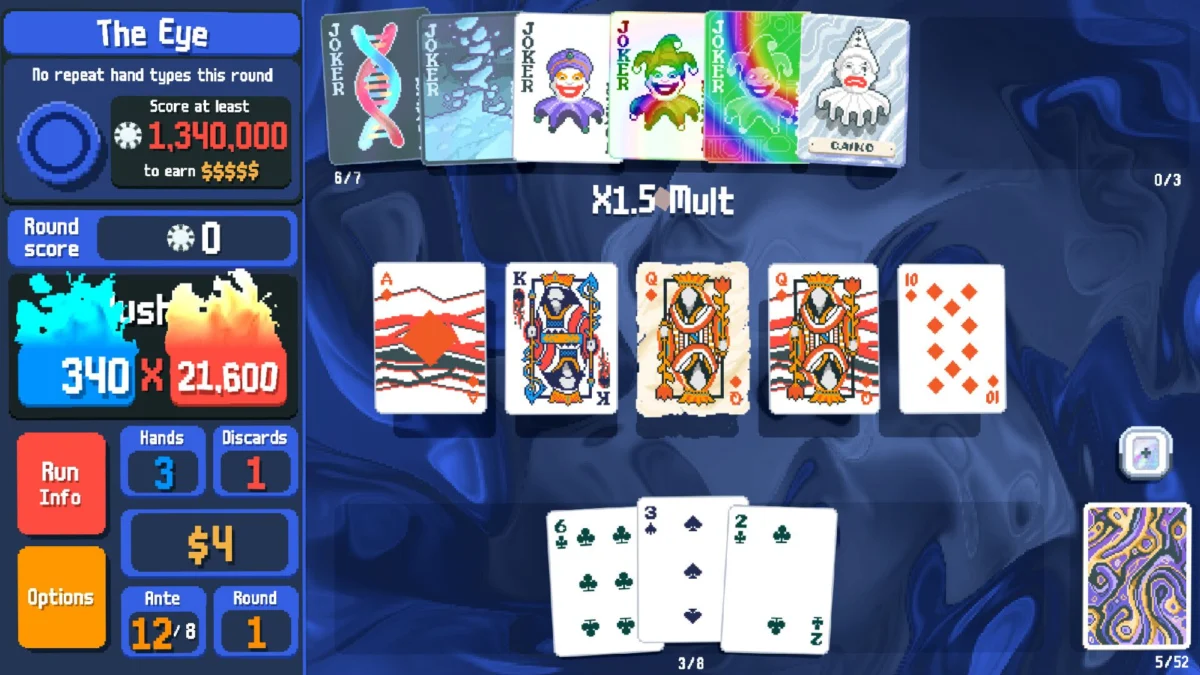
In the annals of computational neuroscience, few events have triggered as much immediate, creative, and chaotic innovation as the recent release of Google’s "FlyWire" project. Less than two weeks after researchers unveiled a high-resolution, AI-powered 3D map of the entire brain and central nervous system of an adult male fruit fly (Drosophila melanogaster), the open-source community has effectively turned the biological masterpiece into a playground for the absurd.
The map, which catalogs over 166,000 neurons and their trillions of synaptic connections, was originally intended to help scientists understand how neural circuits process complex information. Instead, it has become the internet’s favorite "hardware" for running everything from retro games like DOOM and Super Mario 64 to more abstract experiments, including cryptocurrency day trading and parking simulation. The latest entry in this surreal saga? A foray into the high-stakes world of poker-themed roguelike, Balatro.
The Genesis: Google’s Map of the Fruit Fly Connectome
The scientific achievement that started this trend cannot be overstated. Google Research, in collaboration with the FlyWire Consortium, mapped the fruit fly brain at a nanometer-scale resolution. By utilizing advanced AI image segmentation, the team reconstructed the fly’s "connectome"—the intricate wiring diagram that dictates how the insect perceives the world, navigates, and survives.
This data is not just a static image; it is a functional, simulated environment. Because the researchers provided the synaptic weights and connectivity data, programmers have been able to import this structure into virtual environments. By treating the simulated fly brain as a neural network architecture, enthusiasts are essentially "booting up" an insect brain to perform tasks that the fly never evolved to handle, effectively repurposing millions of years of evolutionary refinement for digital entertainment.
Chronology: From Biology to Balatro
The trajectory of this phenomenon has moved with startling speed. The timeline of the "Fly Brain Renaissance" looks as follows:
- Late August 2024: Google and the FlyWire Consortium publish the complete connectome, inviting the global research community to explore the data.
- Early September 2024: Within 48 hours, developers realize the neural model can be compiled into a functional simulation. The first instance of DOOM running on a "fly-brain-inspired" architecture surfaces on GitHub.
- September 10, 2024: The experimental phase expands. One user successfully trains a virtual fly brain to monitor candlestick charts, turning it into a semi-autonomous crypto day trader.
- September 15, 2024: Parallel parking simulations emerge, demonstrating that the fly’s spatial navigation neurons are surprisingly adept at handling automotive physics.
- Late September 2024: The community turns its attention to strategy. A dedicated fan of the hit game Balatro posts a breakthrough on Reddit, claiming to have successfully mapped the game’s decision-making logic onto the fruit fly’s neural structure.
The Balatro Experiment: A New Kind of High-Stakes Gaming
Balatro, the poker-themed roguelike that has captivated gamers with its complex scoring systems and "joker" synergy mechanics, requires a high degree of pattern recognition and forward-thinking logic. For a fruit fly—an organism designed to find food, avoid predators, and mate—the leap to calculating poker probabilities is significant.
The developer behind this project, known on Reddit as a Balatro enthusiast, utilized an algorithmic interface to translate the game’s state—card values, hand types, and available jokers—into inputs that the 166,000 neurons could process. The "brain" receives these inputs, processes them through the synaptic weights established by the fly’s biological architecture, and outputs a decision.
According to the developer’s report, the fly-brain model is currently achieving a 20% win rate. While this might sound modest to a seasoned human player, it is a staggering result for an entity that lacks a prefrontal cortex or any concept of gambling. The fly is effectively learning to "play" by associating specific neural firing patterns with the dopamine-like reward signals provided by a successful hand in the game.
Supporting Data: Understanding the Neural Architecture
To understand how a fruit fly brain handles Balatro, one must look at the specific regions of the Drosophila nervous system. The fly brain contains several critical structures:
- The Mushroom Bodies: Often associated with olfactory learning and memory. In the Balatro experiment, these appear to act as the "memory" bank, storing which combinations of cards yielded higher scores in previous turns.
- The Central Complex: This is the fly’s internal compass and navigation hub. Interestingly, this region seems to be handling the "spatial" aspect of the game—the positioning of cards and the flow of the user interface.
- The Antennal Lobes: Usually responsible for processing smells, these have been repurposed to interpret the game’s numerical data, essentially "smelling" a good hand versus a bad one.
The 20% win rate suggests that while the fly brain is not a master strategist, it has successfully established a "heuristic" for the game. It is not calculating probabilities in the way a traditional supercomputer would; it is reacting to the game state based on the biological biases baked into its neural connections.
Official Responses and Scientific Perspective
The scientific community has reacted to these developments with a mix of amusement and professional intrigue. Dr. Elena Vance, a computational neuroscientist not involved in the project, noted, "We are witnessing the democratization of neural data. While these gaming experiments are whimsical, they demonstrate the robustness of the FlyWire model. If a structure evolved for navigation can learn to play Balatro, it suggests that the core principles of neural processing are far more universal than we previously assumed."
Google’s representatives have maintained a neutral stance, emphasizing that the primary goal of the release was to foster breakthroughs in neurology, particularly in understanding neurodegenerative diseases. However, they acknowledged that the open-source nature of the project was designed to allow for "unforeseen applications," and they have encouraged the community to continue sharing their findings on how the fly brain handles disparate tasks.
Implications: The Future of Neural Computing
The ease with which the Drosophila connectome has been repurposed into a digital agent for gaming and finance has profound implications for the future of AI and robotics.
1. Neuromorphic Computing
These experiments serve as an unintentional stress test for neuromorphic computing—an approach where hardware is designed to mimic the physical structure of the brain. If we can successfully offload complex decision-making tasks onto a biological map of a fruit fly, it suggests that we may be able to build smaller, more energy-efficient AI agents that operate on the same principles as the fly’s nervous system, rather than the power-hungry deep learning models used today.
2. The Limits of Intelligence
The Balatro experiments also raise philosophical questions about the nature of intelligence. If a fruit fly brain—a creature with a tiny fraction of the neurons of a human—can learn to play a complex strategy game, what does that say about the "minimum viable brain" required for complex reasoning? It suggests that intelligence is perhaps more about the efficiency of the wiring and the ability to process rewards than it is about the sheer volume of processing power.
3. Ethical Considerations
As these simulations become more sophisticated, some ethicists are beginning to ask questions about the "simulation of consciousness." While a 20% win rate in Balatro is hardly sentient, the speed at which we are giving these biological maps "jobs" highlights a need for a framework regarding how we use and simulate biological data. Are we merely running code, or are we creating a digital echo of a living creature that deserves a degree of respect?
Conclusion
The Balatro-playing fruit fly is a microcosm of the modern tech era: a collision of high-level biological research, open-source ingenuity, and the internet’s penchant for turning the sublime into the silly. While a 20% win rate will not win any professional poker tournaments, the experiment is a landmark moment in how we interact with the building blocks of life.
As programmers continue to refine the neural inputs and outputs, we can expect the fruit fly to tackle even more complex tasks. Whether it eventually beats the game or simply continues to surprise us with its "dopamine-driven" decision-making, the Drosophila brain has proven itself to be one of the most versatile pieces of software ever developed—even if it was originally designed to navigate a fruit bowl.
For now, the fly sits in its digital poker room, shuffling its cards and waiting for its next hand. For the researchers at Google and the enthusiasts on Reddit, the experiment is already a success; it has proven that the map of the fly brain is not just a scientific record, but a living, breathing, and remarkably playable tool for the future of computation.

 Azzam Bilal Chamdy
 Reynand Wu