Nana Muazin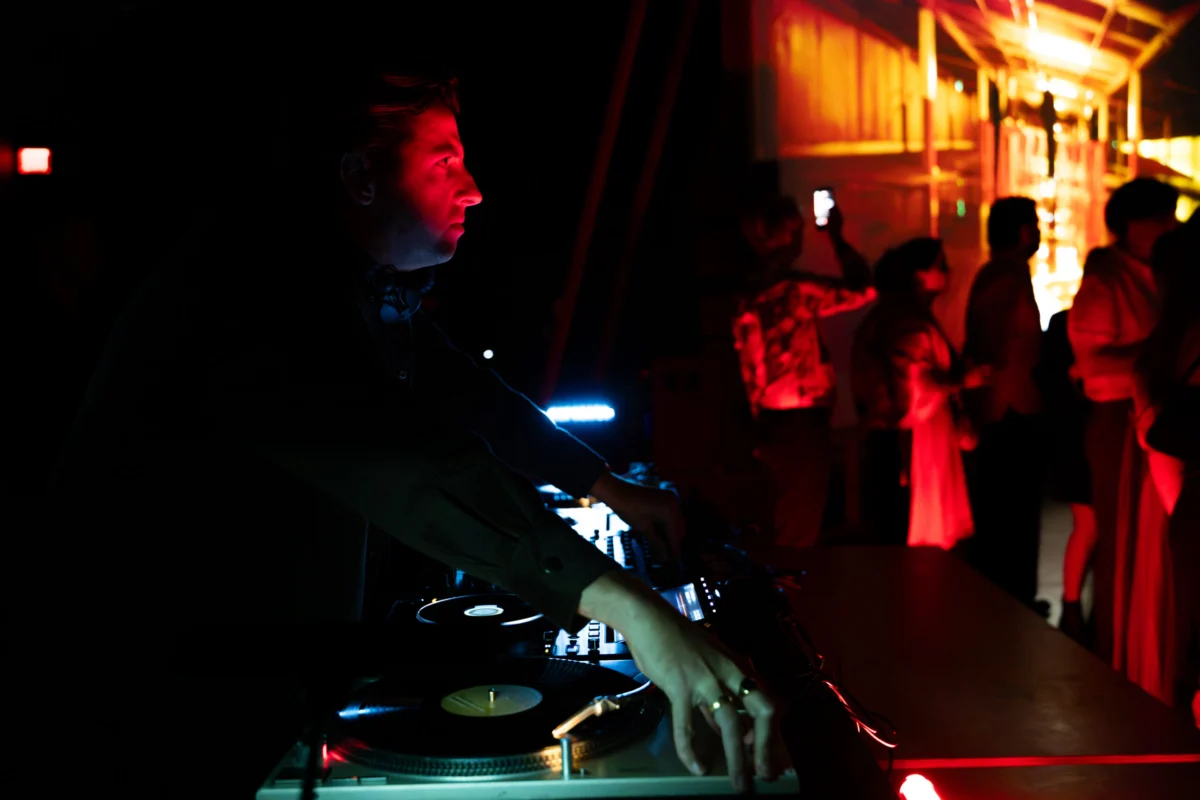
The convergence of visual art and electronic music reached a fever pitch this past Thursday at New York City’s The Shed. During the venue’s annual, invite-only gala, the sprawling 12,000-square-foot Darla Moore Gallery played host to a singular, transformative experience: a live-scored presentation of Doug Aitken’s immersive seven-screen film installation, "Lightscape." While the installation itself had concluded its public run earlier in the week, the gala performance served as a definitive coda, elevating the 65-minute visual odyssey with a bespoke, real-time score provided by the acclaimed producer Jamie XX.
The Anatomy of "Lightscape"
Doug Aitken has long been a master of the panoramic, using film to dissect the fractured nature of contemporary existence. In "Lightscape," he creates a hypnotic, non-linear narrative that spans the vast topography of the American landscape. From the arid silence of the desert to the claustrophobic hum of industrial factories, and from remote mountain peaks to the blur of high-speed highways, the installation acts as a cinematic mirror to the American psyche.
The film is populated by a cast that defies simple categorization, featuring Natasha Lyonne, musician Beck, and members of the Los Angeles Dance Project. Despite the star power involved, the performances are intentionally muted. The characters drift through the frame, occasionally sharing space but rarely interacting. This intentional distance is the heart of the project. As Aitken noted in a conversation with Variety following the performance, the work is a deliberate exploration of the "isolation and dissociation" that defines the modern human condition. By placing individuals in vast, uncaring settings, Aitken forces the viewer to confront the loneliness inherent in a hyper-connected, yet emotionally fragmented, society. The aesthetic is decidedly "Wim Wenders-esque"—a slow-burning, melancholic travelogue through the fringes of society.
A Chronology of Collaboration
The journey of "Lightscape" from a standalone exhibition to a live-scored performance was months in the making. Throughout the summer, the installation served as a rotating laboratory for sound. Visitors to The Shed during the summer months were treated to a variety of sonic accompaniments, featuring live improvisations from heavyweights of experimental music, including the Los Angeles Master Chorale, minimalist pioneer William Basinski, synthesizer icon Suzanne Ciani, and the avant-garde legends of the Sun Ra Arkestra.
However, the collaboration between Aitken and Jamie XX represented a distinct shift in the project’s trajectory. Unlike the improvised sets that preceded it, the gala performance was the result of a meticulously planned, long-term creative partnership. Jamie XX revealed that he and Aitken had been working in tandem for months to sculpt a soundscape that didn’t just accompany the film, but entered into a dialogue with it. The resulting score was a testament to the producer’s versatility, proving that his electronic prowess is equally suited to the sprawling, cinematic canvas as it is to the dance floor.

The Sonic Architecture of Jamie XX
Jamie XX has built a career on the tension between intimacy and scale. While his 2024 album, In Waves, showcased his ability to craft anthemic, song-based electronic music, his work for "Lightscape" leaned into the atmospheric and the abstract.
For the gala, the audience was granted the rare privilege of standing near the console where Jamie XX operated. This transparency allowed the crowd to witness the alchemy of sound manipulation in real-time. His signature style—characterized by the jarring yet beautiful juxtaposition of chopped vocal samples and intricate, percussive beats—remained present, but it was recalibrated for the gallery space. The music was less a soundtrack and more an environment, rising and falling with the sweeping shots of the American wilderness.
The set’s climax was perhaps its most surprising moment. As the final images of the installation faded, the room was filled with the haunting, synth-laden melody of "Doot Doot" by the 1983 Welsh group Freur. It was a nostalgic, melancholic choice that bridged the gap between the film’s retro-futuristic visuals and the timeless nature of longing, providing a perfect emotional resolution to the visual journey.
Supporting Data: The Venue and the Vision
The Shed’s Darla Moore Gallery provides an ideal environment for a work as ambitious as "Lightscape." With 12,000 square feet of unobstructed space, the venue allows for the kind of multi-screen immersion that is impossible in traditional cinema settings. The seven-screen arrangement forces the viewer to curate their own experience, choosing where to focus and how to navigate the physical space as the images transition from one screen to the next.
The statistics of the production underscore its scale. A 65-minute loop of high-definition film, paired with a custom-mixed live audio feed, requires a level of technical precision that few venues can accommodate. The gala served as a showcase not just for the artists, but for The Shed’s capability as an interdisciplinary hub. By moving beyond traditional gallery hours, the venue successfully transitioned from a static viewing space to a living, breathing performance venue.

Implications: The Future of the Film-Composer Relationship
The success of the "Lightscape" gala performance raises significant questions about the future of the film-composer dynamic. We are currently witnessing a shift where electronic artists are no longer relegated to the background of film production but are being invited to serve as primary architects of the cinematic experience.
Jamie XX’s performance suggested that he has a considerable future in film composition. When asked about the potential for a commercial release of the score, the artist remained non-committal, noting that while the music was recorded, its future as a standalone product remains uncertain. This adds a layer of exclusivity and "ephemerality" to the event—a hallmark of contemporary high-art installations. The implication is that the music was designed to exist only in service of the visual, a trend that may influence how future electronic artists approach scoring for the screen.
Reflections on Modernity
Ultimately, the combination of Aitken’s visuals and Jamie XX’s sound created a profound meditation on the state of the world in 2026. The "dissociation" Aitken referenced is not merely a theme; it is a lived experience. By stripping away traditional narrative arcs and replacing them with a rhythmic, pulsing flow of images and sound, the installation forces the audience to confront the "white noise" of modern life.
The gala was more than a party; it was an exercise in collective introspection. In a city as fast-paced as New York, the ability to stop, stand in a darkened room, and watch the American landscape drift by while listening to the delicate, processed beats of one of the world’s most innovative electronic producers is a rare luxury.
As the curtains close on the "Lightscape" run at The Shed, the event leaves behind a legacy of collaboration. It serves as a blueprint for how museums and galleries can revitalize traditional film installations by inviting artists from the music world to "re-score" the narrative, providing new layers of meaning to visual works that might otherwise feel static. Whether or not this specific score is ever released to the public, those who witnessed it at the gala were participants in a unique moment where the barrier between the viewer and the viewed—and between the visual and the auditory—was effectively dissolved.


 Nana
Nana
 Lina Hope