Siti Muinah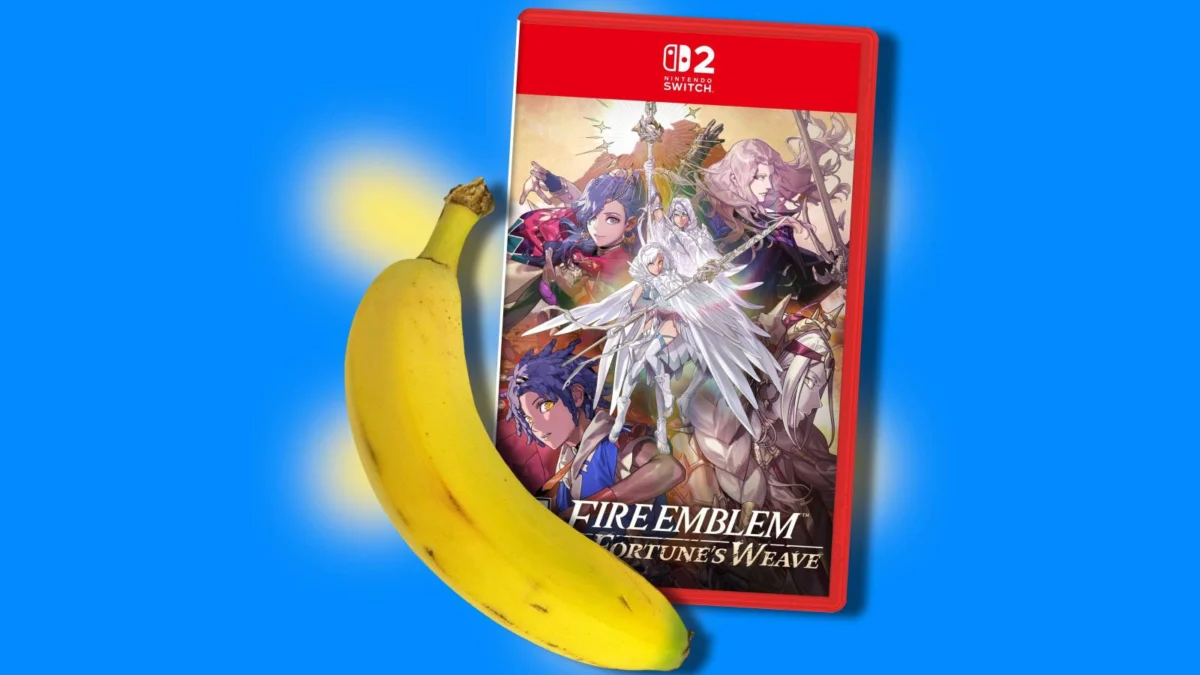
In an era of sophisticated digital storefronts and algorithmic pricing, the most effective "hack" for snagging a deal on the highly anticipated Fire Emblem: Fortune’s Weave for the Nintendo Switch 2 hasn’t been a complex line of code or a leaked security vulnerability. Instead, it has been a single, 20-cent piece of fruit.
Over the past week, thousands of gamers have flocked to Walmart’s online portal, not just for the latest entry in the beloved tactical role-playing series, but to test a peculiar, viral shopping cart phenomenon. By adding a single banana to their orders, savvy shoppers have been successfully triggering promotional codes that otherwise refuse to register, effectively slashing the price of the $79.99 game down to approximately $60.
This bizarre digital quirk has transformed the humble banana into an unlikely mascot for retail arbitrage, sparking a firestorm of discussion across Reddit, X (formerly Twitter), and various gaming forums. While Walmart has remained tight-lipped regarding the technical glitch, the implications for e-commerce, promotional software, and consumer behavior are far-reaching.
The Anatomy of the Exploit: Main Facts
The primary objective for these consumers is the acquisition of Fire Emblem: Fortune’s Weave, a flagship title that carries the standard premium price tag for next-generation hardware. When deal hunter Wario64 first publicized the availability of promo codes like FAST30 and SAVE3X, the intent was simple: capitalize on limited-time site-wide discounts.
However, many users quickly found that the codes were "sticky"—they would intermittently fail to apply to the cart, despite the user meeting the required spending thresholds. This is where the "Banana Protocol" was born.
According to anecdotal reports circulating on the r/switch2 subreddit, the checkout system at Walmart appears to suffer from a logic error in its cart validation script. When a user adds a game, the promo code may be flagged as invalid. By adding a low-cost, perishable item—specifically a single banana—the system seems to re-evaluate the cart’s contents, often "waking up" the promo code and allowing it to apply. In many documented instances, shoppers are then able to remove the banana from their cart while retaining the discounted price for the game, effectively "bypassing" the system’s error.
A Chronology of the Digital "Banana Rush"
Phase 1: The Discovery (Early September 2026)
The phenomenon began on September 15, 2026, when early adopters of the Nintendo Switch 2 noticed that Walmart was aggressively pushing promotional codes to drive traffic to their site. Enthusiasts, looking to shave $20 off the premium $79.99 MSRP, began sharing codes on social media. By September 16, the first reports of "code failure" surfaced, with users complaining that the system rejected the discounts even when they met the minimum purchase requirements.
Phase 2: The "Banana" Innovation
On September 17, a user on a popular gaming forum suggested, perhaps in jest, that "if the code doesn’t work, try adding a banana." The logic was that a banana, as a common, low-cost SKU (Stock Keeping Unit), forces a refresh of the cart’s database. To the surprise of the community, the trick worked. Within hours, screenshots of checkout screens showing a $19.99 discount triggered by a $0.20 banana were flooding the internet.
Phase 3: The Viral Spread
By September 18, the story had gained mainstream traction within the gaming press. Influencers and deal-hunting accounts began documenting the process, turning the "Banana Glitch" into a viral meme. Localized reports of "banana shortages" at Walmart grocery pick-up locations began to emerge, as hundreds of orders in specific regions included exactly one banana, causing inventory management systems to flag the item as out of stock.
Supporting Data: Why the Glitch Persists
While it may seem absurd that a banana affects a multi-billion-dollar retail platform, the underlying technical issues are well-documented in e-commerce architecture.
The Logic of "Cart Refreshing"
Most modern e-commerce platforms utilize asynchronous requests (AJAX) to calculate discounts. When a user applies a promo code, the server runs a validation check. If that check fails due to a latency issue or a conflicting browser cookie, the code is rejected. Adding a new item to the cart—like a banana—triggers a "re-calculate" event. This fresh call to the server often bypasses the initial error state, causing the system to re-verify the promo code against the new, updated total.
SKU Weighting and Categorization
Retailers like Walmart often have complex rules regarding which items are eligible for specific promo codes. It is possible that the system’s backend misidentifies the Fire Emblem title as an "excluded item" in certain regional databases. By adding a grocery item (the banana), the system may be forced to re-categorize the cart as a "Mixed Order," which might inadvertently lift the exclusionary flag on the video game.
Official Responses and Corporate Silence
As of this writing, Walmart has not issued a formal statement regarding the glitch. However, internal sources suggest that the company’s IT department is likely aware of the issue.
The silence is standard corporate procedure. Acknowledging a flaw in a checkout system—especially one that results in direct revenue loss—can invite further scrutiny and "bad actors" looking to exploit other vulnerabilities. Walmart’s current approach appears to be a "soft fix," where they may be silently updating the promo code logic on a regional, server-by-server basis to prevent the specific code trigger from functioning under certain cart configurations.
Retail analysts suggest that the company is unlikely to pursue legal action against users, as the "exploit" requires the user to perform a legitimate transaction. The error lies squarely within Walmart’s software architecture, not the user’s intent.
Implications: The Future of E-Commerce Testing
The "Banana Glitch" serves as a case study in the fragility of modern retail platforms. It highlights three critical areas of concern for major retailers:
- Inventory Management: The fact that local stores ran out of bananas because of a video game promotion is a testament to the unforeseen consequences of digital-physical integration. Retailers must develop better ways to handle "micro-orders" that are purely transactional rather than consumption-based.
- Software Resilience: E-commerce platforms are increasingly bloated with legacy code and third-party integrations. As seen here, the interaction between a promo-code engine and a real-time inventory system can produce unexpected bugs.
- The "Gamification" of Shopping: Consumers have become highly adept at "gaming the system." The banana incident proves that shoppers are willing to engage in increasingly absurd tasks if the financial incentive is high enough. This forces companies to build more robust, "foolproof" checkout systems that are resistant to user-side manipulation.
Consumer Protection and Account Bans
While the trick has saved many gamers money, there is a risk. Retailers monitor "abnormal" account activity. Repeatedly adding and removing items to trigger system errors can, in theory, trigger automated fraud detection systems. While no reports of account bans have surfaced, users should exercise caution.
The Lasting Impact
The Fire Emblem: Fortune’s Weave banana phenomenon will likely go down in gaming history as one of the most eccentric stories of the 2026 holiday season. It illustrates the tension between the cold, hard logic of digital retail and the chaotic, inventive nature of the modern consumer. Whether this glitch is patched by the time you read this, the "Banana Protocol" has already left its mark on retail culture—a reminder that in the world of online shopping, sometimes the shortest distance between two points is a piece of fruit.
For now, the game remains at its standard price for most, but the legend of the 20-cent discount will continue to serve as a warning to retail developers: check your code, test your logic, and beware the unintended influence of the produce aisle.


 Lina Hope
 Basiran