Reynand Wu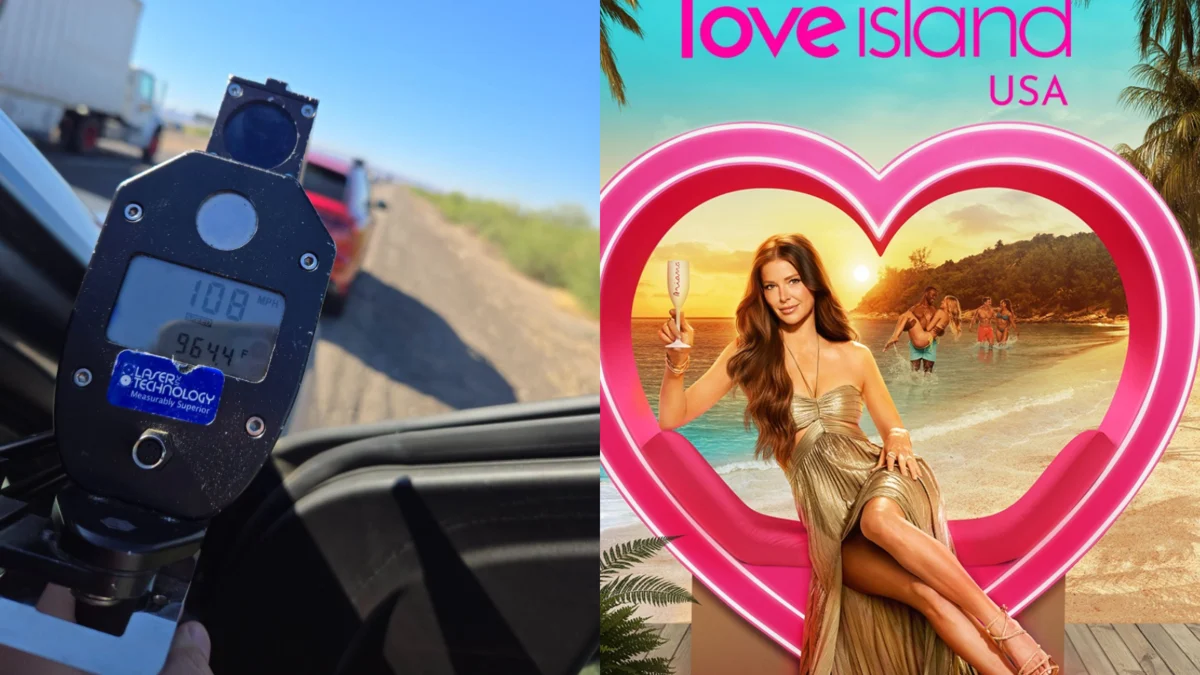
In an era where social media culture, real-time commentary, and the fear of missing out (FOMO) dominate the viewing experience of reality television, the stakes have never felt higher for dedicated fans. However, one Arizona motorist learned the hard way that the desire to avoid spoilers and join the online conversation is not a valid defense under state law.
On June 9, a driver in Pinal County, Arizona, was taken into custody after being clocked at a staggering 108 mph—nearly double the legal speed limit—in a desperate bid to return home in time for an episode of the hit reality series Love Island. The incident has since become a viral cautionary tale, highlighting the intersection of modern streaming culture and public safety.
The Chronology of an Ill-Advised Commute
The incident unfolded on the afternoon of June 9 along the AZ-347, a major thoroughfare in Pinal County. According to the Arizona Department of Public Safety (DPS), a patrol officer monitoring traffic flow identified a vehicle traveling at a rate of speed that posed an immediate danger to other motorists on the road.
The vehicle was clocked by radar at 108 mph in a zone where the speed limit is strictly posted at 65 mph. Recognizing the severe nature of the infraction, the trooper immediately initiated a traffic stop. What followed was a candid, albeit legally disastrous, admission from the driver.
Upon being questioned by the officer regarding her extreme velocity, the unidentified woman reportedly confessed that she was “trying to get home fast” so she could watch the latest episode of Love Island. Rather than serving as a mitigating factor, the excuse confirmed the driver’s intent to operate the vehicle recklessly for the sake of entertainment. The officer proceeded to book the driver for criminal speed and reckless driving, effectively ensuring that she would miss the broadcast entirely.
The Legal Repercussions: Beyond a Simple Ticket
While many drivers might expect a heavy fine for such a significant infraction, the consequences in Arizona are far more severe for speeds exceeding the limit by such a wide margin.
In Arizona, traveling at 108 mph in a 65 mph zone qualifies as "criminal speed," a misdemeanor offense that can carry heavy fines, points on a driver’s license, and potential jail time. Beyond the immediate legal charges, the driver faced the swift administrative penalty of having her vehicle impounded.
In a move that caught the attention of social media users, the Arizona Department of Public Safety posted about the incident on their official Instagram account. With a touch of sardonic humor, officials confirmed that the vehicle had been sent to “car jail” for a period of 20 days. This impoundment serves as a standard enforcement mechanism in Arizona to ensure that repeat offenders or those committing egregious traffic violations are physically prevented from operating their vehicles for a set duration.
The Cultural Phenomenon: Why Reality TV Triggers Risky Behavior
The incident involving the Love Island fan is not merely a story about a bad driver; it is a symptom of a shifting media landscape. Love Island USA, which streams on Peacock, has evolved into a global juggernaut. Unlike traditional television, where viewers might wait for a DVD release or a re-run, Love Island thrives on the "live-tweet" culture.
On platforms like X (formerly Twitter), TikTok, and Instagram, the fan experience is dictated by real-time participation. During the airing of a new episode, millions of users engage in "live-threading," where they react to romantic betrayals, surprise eliminations, and contestant dramas as they occur. For a dedicated fan, being even 30 minutes late to an episode means navigating a minefield of spoilers on social media, effectively ruining the "water cooler" experience of the show.
This pressure to be "plugged in" creates a sense of urgency that, in this specific case, translated into a reckless disregard for the law. The driver’s willingness to risk both her life and the lives of others suggests that for some, the digital community surrounding a television show has become a primary motivator for daily behavior.

Official Responses and the Burden of Public Safety
The Arizona Department of Public Safety has utilized this incident as a broader pedagogical tool to address the rising tide of reckless driving in the state. While the Love Island excuse garnered headlines for its absurdity, it was not the only case of extreme speeding reported by the agency that week.
In a follow-up statement, authorities noted that they had dealt with multiple cases of criminal speed in the same timeframe. One notable example involved a driver who claimed he was rushing home from church and was "unaware" that he was driving at criminal speeds.
“Our troopers are tasked with keeping the roads safe for everyone,” an official spokesperson for the Arizona DPS stated. “Whether you are coming from church, work, or rushing to catch a television show, the laws of physics and the laws of the state of Arizona remain the same. 108 mph is not a safe speed for any driver, and the consequences for such actions are designed to ensure that the individual is no longer a threat to the public.”
The agency has consistently reiterated that there is no "entertainment exemption" to traffic laws. They have warned that with the summer months approaching and traffic patterns shifting, the department will be increasing patrols to deter what they describe as "the culture of haste" that leads to fatal accidents.
The Implications for Road Safety and Media Consumption
The implications of this incident are twofold. First, it underscores the need for continued public education regarding the dangers of high-speed travel. According to the National Highway Traffic Safety Administration (NHTSA), speed-related crashes are among the leading causes of traffic fatalities in the United States. When a vehicle travels at 108 mph, the reaction time required to avoid an obstacle is virtually non-existent, and the force of impact in the event of a collision is exponentially higher than at legal speeds.
Second, the incident reflects the psychological impact of digital connectivity. The need to consume content simultaneously with the rest of the world has created a "race against the clock" mindset. When a television show is framed as a "must-watch" event, the brain’s reward system—triggered by the anticipation of the show and the social validation of participating in the conversation—can override the executive function that governs risk assessment.
In this case, the driver traded her freedom, her vehicle, and her ability to watch the show for an adrenaline-fueled sprint that ended in failure. She not only missed the episode but also gained a criminal record and a significant financial burden through towing, impoundment, and legal fees.
Conclusion: A Lesson in Perspective
The story of the Love Island fan in Pinal County is a poignant, if humorous, reminder of the importance of perspective. While the drama of reality television provides an engaging escape for millions of people, it is ultimately a form of entertainment—one that should never take precedence over the safety of the public or the legal requirements of the road.
As the Arizona DPS continues its efforts to curb reckless driving, they hope that this story serves as a deterrent. The next time a favorite show is about to air, viewers should consider the alternative: if they are running late, it is far better to miss a few minutes of drama than to spend the next 20 days—and perhaps much longer—wishing they had simply hit the record button instead of the accelerator.
For now, the driver remains anonymous, but her story has become a permanent part of the local traffic enforcement lore—a stark warning that in the world of high-speed driving, there are no plot twists that make the danger worth the risk.


 Lina Irawan
 Layla Zulfa