Basiran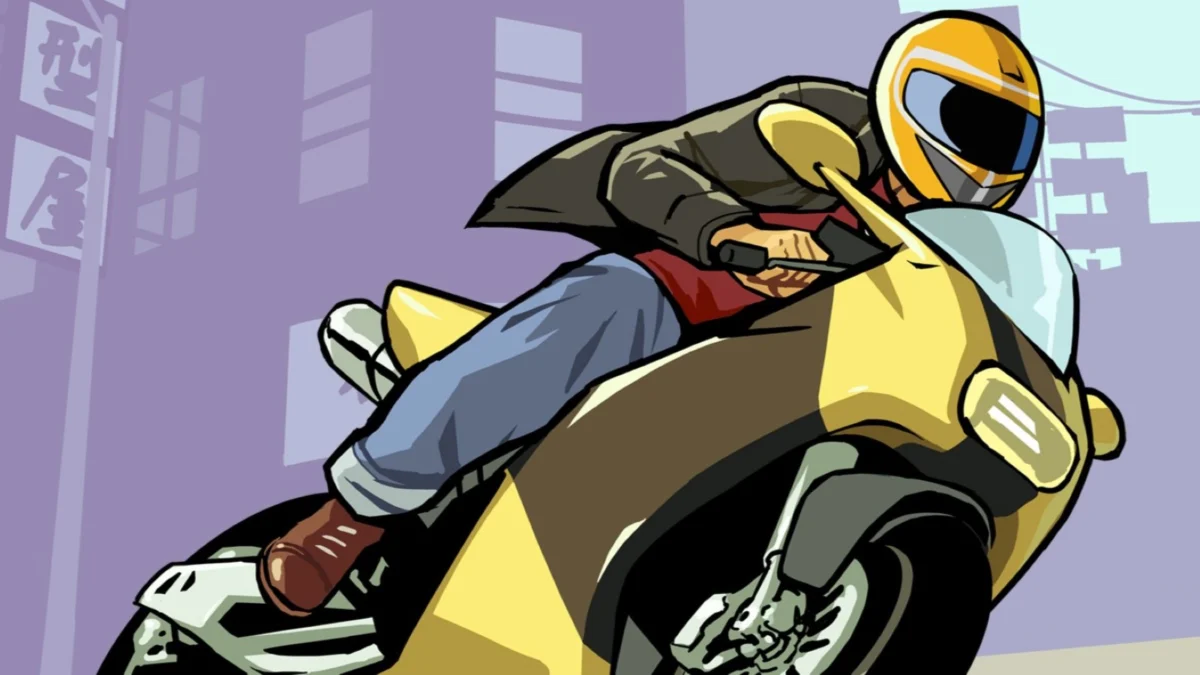
For over two decades, the Grand Theft Auto franchise has defined the open-world genre, transforming from a top-down curiosity into a cultural juggernaut that generates billions in revenue. Yet, beneath the polished surface of the series’ iconic American cities lies a graveyard of ambitious concepts that never saw the light of day. Among the most intriguing of these is GTA: Tokyo—a project that promised to transport the series’ signature chaos to the neon-lit streets of Japan.
New insights from former Rockstar North technical director Obbe Vermeij have finally peeled back the curtain on this “lost” title, revealing not just a dream, but a near-reality that almost changed the course of video game history.
The Vision: A Samurai-Infused Sandbox
The proposal for a Japanese installment was not merely a brainstorming exercise; it was the most advanced iteration of a broader plan to globalize the Grand Theft Auto brand. According to Vermeij, the Rockstar hierarchy explored several international locations, including Rio de Janeiro, Moscow, Istanbul, London, and Paris. However, Tokyo held a unique allure.
The development philosophy for GTA: Tokyo was designed to mirror the successful workflow of Bully. Much like the 2006 cult classic, which saw Rockstar North provide the technological foundation and codebase to the team at Rockstar Vancouver, the plan was for Rockstar North to act as a technological benefactor. They intended to supply an external Japanese studio with their proprietary tools and engine assets, allowing that team to craft an authentic experience while maintaining the core, high-octane gameplay loop that fans expected from the series.
Perhaps the most radical departure from the traditional GTA formula was the integration of melee combat. Vermeij confirmed that samurai swords were intended to be a cornerstone of the gameplay experience. While the series had toyed with melee weapons before, the inclusion of katanas in a dense, urban Japanese environment suggests a gameplay shift that would have favored agility and precision alongside the franchise’s trademark vehicular mayhem.
A Chronology of Missed Opportunities
The journey of GTA: Tokyo is a story of "what could have been," beginning in the early 2000s during the height of the GTA III era.

- 2001–2003: The post-launch success of GTA III created a surge of creative confidence at Rockstar. During this window, the team began exploring the feasibility of international settings.
- The Planning Phase: Rockstar’s New York office, led by co-founder Sam Houser and producer Leslie Benzies, took the lead on the Tokyo concept. While the North team in Edinburgh was aware of the discussions, they remained largely removed from the direct negotiations with potential Japanese partners.
- The Deal That Never Was: Despite the momentum and the vision, the project hit a terminal wall. Vermeij notes that while preliminary discussions were productive, the crucial legal agreements—the contracts—were never signed.
- The Dissolution: By the mid-2000s, the project quietly drifted into the annals of corporate history. The team at Rockstar North eventually pivoted back to refining the American-centric model that would eventually lead to the massive success of GTA IV and V.
Strategic Rationale and Cultural Authenticity
Why go to Tokyo? The motivation was two-fold. First, Rockstar recognized that the Grand Theft Auto series had historically struggled to gain a significant foothold in the Japanese market. By partnering with a local developer, Rockstar hoped to tap into native cultural nuances, creating a game that felt truly "of Japan" rather than a Western caricature of it.
Contrary to popular belief, the presence of the Yakuza in GTA III was not a calculated "seed" for a Tokyo-based game. Vermeij clarifies that the inclusion of the Yakuza was a legacy holdover from the earlier 2D Grand Theft Auto games, rather than a narrative bridge to a future title. Instead, the move to Tokyo was a strategic attempt to expand the franchise’s global footprint, utilizing the specific street-racing culture and urban density of the city as a backdrop for a brand-new narrative.
The Financial and Creative Barriers: Why It Stayed Scrapped
The primary reason GTA: Tokyo—and its counterparts in Moscow, Rio, and Istanbul—never reached production comes down to the staggering evolution of the series’ scale.
In the early 2000s, the technical requirements for a GTA title were significant, but manageable for a medium-sized team. Today, a single Grand Theft Auto title is a multi-billion-dollar enterprise. As Vermeij highlights in his recent interview with Thunderpick, the sheer cost and complexity of modern game development have made international experimentation an immense financial risk.
"The problem really is that it’s so hard to commit to something when you’re creating a game, especially at the scale of a GTA game," Vermeij remarked. This sentiment echoes the current state of the industry, where AAA titles are so expensive that developers are increasingly "stuck" returning to tried-and-true formulas. Rockstar’s reliance on established American cities is not just a creative choice; it is a pragmatic one. The exaggerated, satirical nature of American culture is a brand staple, and it provides a reliable canvas for the specific brand of humor and social commentary that Grand Theft Auto is known for.
The "Stuck" Cycle: Parody and Familiarity
Vermeij has previously argued that Rockstar is effectively trapped in its own success. The series has become synonymous with a specific version of the American Dream—and its subsequent nightmare. Because the GTA brand is built on the foundation of parodying American excess, shifting the setting to a country like Japan would require a fundamental pivot in the franchise’s tone.

Recent leaks surrounding GTA 6 confirm that Rockstar continues to prioritize the refinement of its domestic worlds. The return to Vice City and the expansion into the wider state of Leonida underscores the developer’s commitment to deepening existing maps rather than exploring entirely new, unproven territories. Furthermore, the rumored plans to include Liberty City as a massive update for GTA Online demonstrate that the company is more interested in connecting its existing, beloved maps than in building new international hubs from scratch.
Implications for the Future of the Franchise
The revelation of the scrapped GTA: Tokyo project serves as a poignant reminder of how much the gaming industry has changed. Two decades ago, a major studio could feasibly pivot to a new country and a new cultural context as a "spin-off" experiment. Today, the stakes are too high.
With GTA 6 slated for a November 2026 release, the industry is bracing for a title that will likely set a new ceiling for development budgets—with estimates placing the cost of such a project near the $2 billion mark. In an environment where a single game’s failure could jeopardize a company’s existence, the "safer" route of refining the American experience is the only logical path.
Ultimately, GTA: Tokyo remains a fascinating footnote. It represents the last era of "wild west" creativity for the Grand Theft Auto franchise, a time when developers could sit around a table, get a little creative with their drink-fueled brainstorming, and dream of Tokyo neon or the streets of Moscow. While we may never see a GTA game set in a non-American locale, the legacy of these failed concepts reminds us that at the heart of the world’s biggest game franchise, there was once a dream to see just how far the chaos could travel.


 Lina Hope
 Siti Muinah