Reynand Wu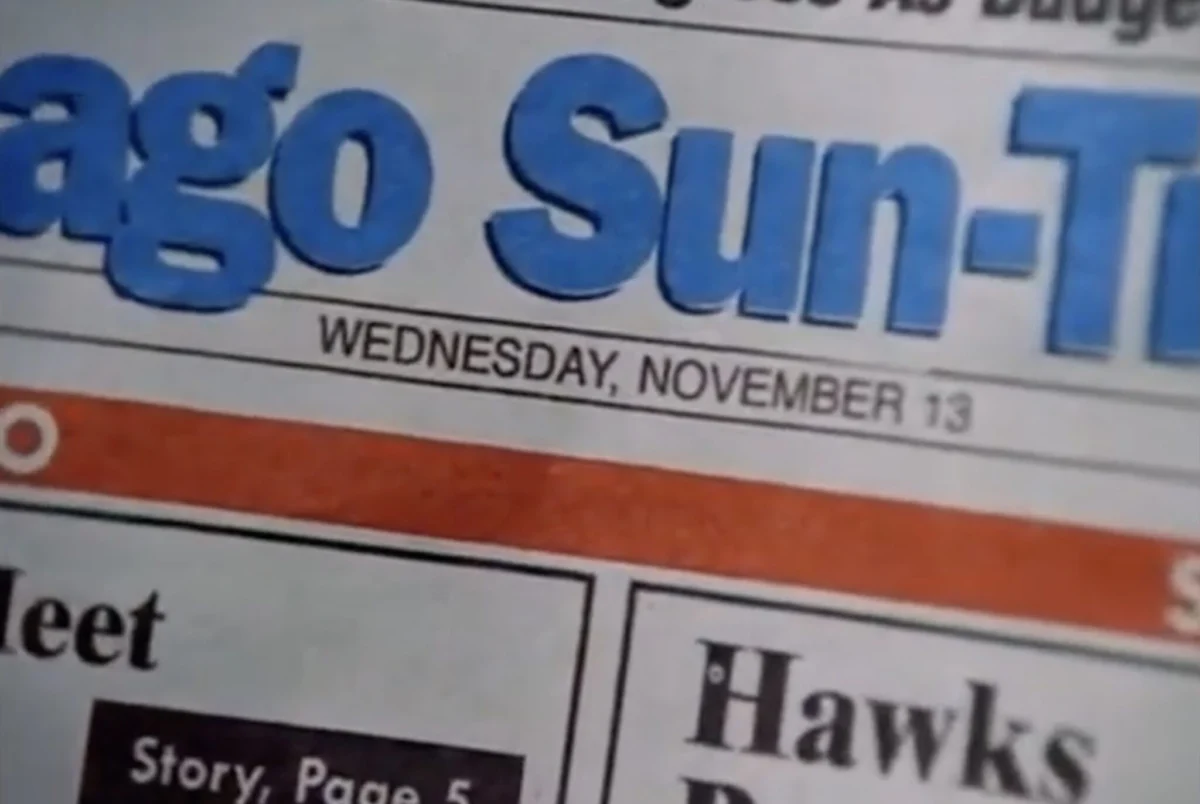
For decades, Kyle Chandler has occupied a unique space in the pantheon of American actors. He is a performer who has built a career defined not by the vapid pageantry of red carpets or the relentless cycle of viral soundbites, but by a consistent, grounded commitment to craft. While his resume boasts an array of memorable roles—from the stalwart authority figures in Super 8 and The Wolf of Wall Street to his intense turn in Zero Dark Thirty—his legacy is most frequently anchored to the sun-drenched, high-stakes football fields of Dillon, Texas. Yet, for a specific cohort of television enthusiasts, Chandler’s most profound contribution remains a far more modest, mid-nineties endeavor: Early Edition.
Debuting in 1996, Early Edition offered a premise that was as simple as it was irresistible: What if you received tomorrow’s newspaper today? For Gary Hobson, a freshly divorced stockbroker living in the grandeur of Chicago’s Blackstone Hotel, this metaphysical disruption became his daily reality. At 6:30 a.m., he would find a copy of the Chicago Sun-Times on his doorstep—a paper detailing events that had not yet occurred. Armed with this knowledge, Hobson was thrust into a perpetual state of intervention, tasked with navigating the chaotic, often dangerous future to save lives and mend broken destinies.
The Genesis of a Cult Classic: A Chronology of Impact
To understand the cultural resonance of Early Edition, one must look at the landscape of the mid-1990s. The show arrived at a time when television was beginning to pivot away from the comfort of the episodic sitcom toward more serialized, emotionally resonant dramas.
- 1996: Early Edition premieres on CBS, immediately establishing a distinct visual language. By choosing to film on location in Chicago—rather than relying on the "fake city" backlots common to shows like Chicago Hope—the production grounded the surreal premise in a tangible, gritty reality.
- 1997–1999: The show hits its stride, refining the "ticking clock" narrative structure that would become a staple of the genre. The dynamic between Gary, his friend and former colleague Chuck Fishman (Fisher Stevens), and their associate Marissa Clark (Shanesia Davis-Williams) provided a necessary anchor of grounded humanity.
- 2000: The final season airs, leaving behind a legacy that would eventually find a second life in syndication, particularly on networks like the Hallmark Channel and Fox Family.
Despite the show’s success, its narrative origins remain shrouded in ambiguity. Unlike the modern "prestige TV" tendency to explain every supernatural occurrence, Early Edition maintained a deliberate, almost graceful silence regarding the origin of the newspaper. Whether the paper was delivered by a divine hand, a temporal guardian, or the personification of fate itself—often signaled by the presence of a mysterious orange cat—was ultimately irrelevant to the show’s central thesis: the burden of knowledge is a duty, not a gift.
The Philosophy of the "Small Change"
Early Edition sits comfortably alongside other seminal 1990s classics that explored the power of the individual. Much like Quantum Leap or Northern Exposure, the show was deeply concerned with the concept of "the ripples in the pond."

In the series finale of Quantum Leap, the protagonist, Sam Beckett, learns that his constant jumping through time had a compounding, exponential effect on history. Early Edition shared this optimistic, humanistic worldview. While the show occasionally flirted with the protagonist using his knowledge for personal gain—such as when Gary attempts to bet on horse races—the narrative almost always course-corrected, reminding the audience that the true value of the paper lay in its capacity to serve others.
This moral framework stands in stark contrast to the cynical, tech-obsessed narratives of its era. As the 90s progressed, cinema and television were dominated by apocalyptic anxieties, mistrust of the government, and the fear of looming technological collapse. Shows like The X-Files or films like The Matrix encouraged a pervasive skepticism. In that environment, Gary Hobson was a radical figure: a man who, instead of retreating into fear or self-interest, chose to walk into the chaos to help a stranger.
The "Third Space" and the Architecture of Altruism
A critical, if often overlooked, aspect of Early Edition is its focus on community space. Gary Hobson’s decision to transition from a high-powered stockbroker to the owner of a local bar was more than a plot convenience; it was a character statement. In an era that celebrated the "yuppie" climb, Hobson chose to become a steward of a "third space"—a location where the community could coalesce.
This setting allowed for a unique storytelling mechanic: the bar became the intersection where the macro-concerns of the newspaper (a disaster, a robbery, a life-or-death situation) met the micro-realities of daily life. The show frequently required Hobson to engage in the "extremely old-fashioned" work of being a good person. There were no shortcuts, no easy power-ups, and no narrative "skip buttons." He had to climb the ladder, face his fears of heights, and suffer the social awkwardness of inserting himself into the lives of people who had no reason to trust him.
Examining the Audience: Why the Demographic Mismatch?
Historically, Early Edition has been pigeonholed as "feel-good Christian television," a category it shared with Touched by an Angel and Dr. Quinn, Medicine Woman. This classification likely stems from the show’s moral clarity and its lack of graphic content, yet it misses the mark regarding the show’s philosophical depth.

While Quantum Leap was explicit about the existence of God, Early Edition remained agnostic. Gary Hobson never received a divine mandate; he simply inherited a responsibility. He discovered that he was not the first recipient of the paper, nor was he the only one. By suggesting that there are "other Gary Hobsons" around the world, the show removed the "Chosen One" trope, effectively arguing that heroism is not a supernatural status, but a daily, iterative choice available to anyone.
Implications for Modern Television
As we stand in a media landscape currently obsessed with multiverses, dark reboots, and nihilistic deconstructions of heroism, Early Edition feels more relevant than ever. The show serves as an essential antidote to the "warning story." It reminds us that being a decent human being is, in itself, a form of labor. It requires constant engagement with the world, even when the world feels broken.
The fact that Early Edition remains largely unavailable on major streaming platforms is a significant oversight in the current archival effort of television history. For a generation of viewers who may only know Kyle Chandler as the stoic coach of a football team, a rediscovery of Early Edition would provide a necessary insight into the roots of his on-screen persona—a man who carries the weight of the world not because he is asked to, but because he sees a newspaper on his doorstep and decides that it is his job to act.
Conclusion: A Call for Revival
On September 28th, the series marks its thirtieth anniversary. It is a milestone that invites reflection on what we prioritize in our storytelling. We live in an age where the "system" is often treated as an untouchable, malevolent force, and where the individual is encouraged to look inward. Early Edition dares to suggest that the system is only as good as the people who intervene in it, and that one person, acting on a small piece of information, can alter the trajectory of a life.
As we look toward the future of television, we should seek to revive the spirit of the 1990s "do-gooder" dramas. We don’t need another show about the end of the world; we need more shows about the people who spend their mornings trying to prevent it, one headline at a time. The paper has been delivered, and the question remains as pertinent today as it was in 1996: You know what’s coming. What are you going to do about it?

 Azzam Bilal Chamdy
 Raul Delapena Setiawan