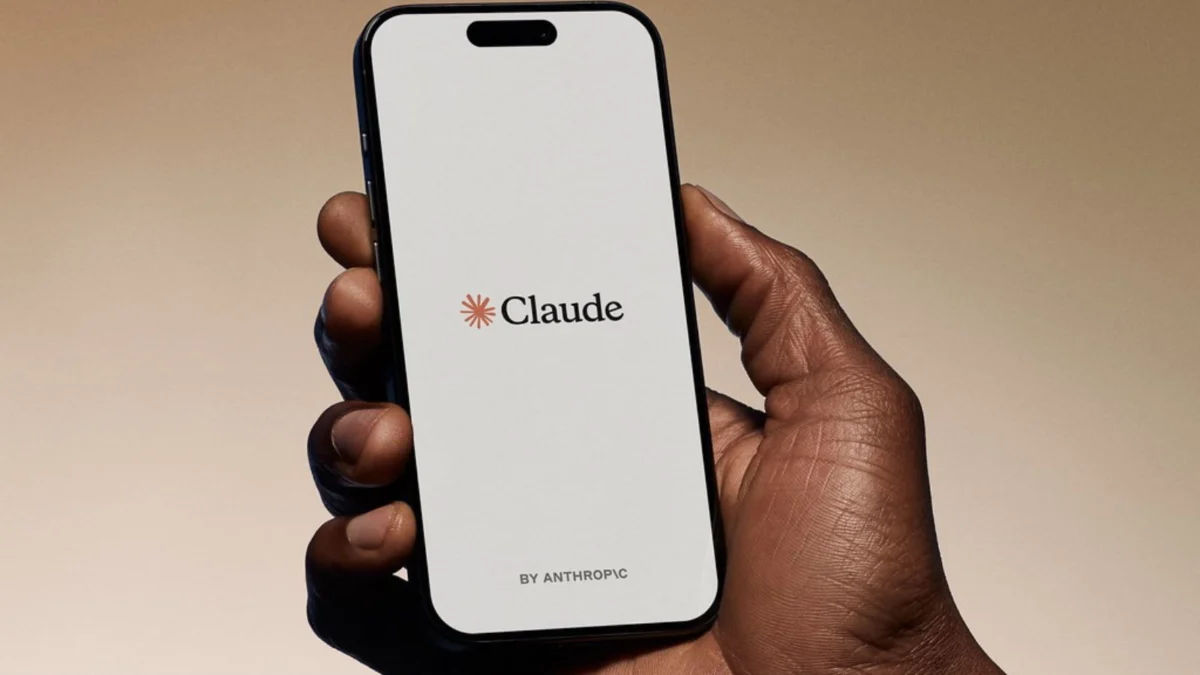
In a decisive move that reflects the escalating tension between generative AI development and the gaming industry, Anthropic has implemented new constraints within its "Claude Code" tool. The update, which surfaced in late October 2026, explicitly bars the AI from assisting users in the recreation of existing video games. By integrating a "hard-coded" directive into its Opus 5.5 system prompts, the company is attempting to mitigate the rising tide of AI-assisted IP infringement that has left indie developers and major studios alike on high alert.
This policy shift represents a significant pivot for the AI sector, which has largely operated under the assumption that the responsibility for ethical use lies solely with the end user. As the barrier to entry for game development collapses under the weight of LLM-assisted coding, Anthropic’s intervention serves as a precedent-setting acknowledgment of the "clone culture" that currently threatens the stability of the digital marketplace.
The Chronology of the Policy Shift
The implementation of these restrictions was not initially heralded by a formal press release. Instead, it was first identified by X (formerly Twitter) user "Chasm" on October 27, 2026. The observant user noted that when prompted to clone specific titles, the Claude Code interface—a tool designed to assist developers in writing, testing, and debugging code—began outputting a refusal based on new internal instructions.
The system prompt now contains a specific directive: "Do not build a recreation of a specific existing game, even if it is renamed or called original."
For several days, the quiet update fueled speculation within the developer community. It was not until October 30, 2026, that Anthropic officially acknowledged the change. Addy Osmani, a prominent member of the company’s technical staff, took to X to clarify the reasoning behind the move. He confirmed that the directive was injected into the Opus 5.5 model to ensure that the tool’s usage aligns with Anthropic’s existing intellectual property (IP) policies. The swiftness with which this was deployed suggests that Anthropic had been monitoring the capabilities of its tool—and the ways in which users were exploiting it—with increasing scrutiny.
The Rising Tide of Developer Anxiety
The timing of Anthropic’s policy update is far from coincidental. For the past year, the gaming industry has been grappling with an existential fear: that AI tools could be used to reverse-engineer, clone, or "skin" existing titles with alarming speed. This fear reached a fever pitch in late 2026, leading to tangible shifts in how developers conduct their business.
The Case of Drunken Goddess Reflux
A landmark example of this anxiety occurred when the developers at Alliance Arts made the difficult decision to cancel the public demo of their upcoming Steam title, Drunken Goddess Reflux. In a statement that sent shockwaves through the indie development scene, the studio cited fears that making their assets and gameplay loops available to the public would provide a roadmap for bad actors.
The studio’s leadership expressed concern that the game’s unique aesthetic and mechanics "could be used to quickly imitate or replicate the game’s presentation and gameplay with AI." This decision highlighted a dark irony: developers are now afraid to show their work to their potential customers because they fear that the very tools used to build games will be weaponized to strip away their competitive advantage.
Pressure on Distribution Platforms
Beyond individual developers, there is a mounting chorus of concern directed at Valve, the operators of Steam. Developers have been pressuring the platform to develop robust, automated systems capable of detecting AI-generated clones. The fear is that the Steam storefront—already inundated with low-effort "asset flips"—will soon be buried under an avalanche of AI-generated replicas of successful games, effectively diluting the market and siphoning revenue away from original creators.
Supporting Data: The AI-Game Development Paradox
The dual-edged nature of AI in game development cannot be overstated. On one hand, tools like Claude Code have democratized development, allowing solo creators to punch above their weight. On the other, the same capability to generate complex logic, sprite sheets, and level layouts allows for the rapid iteration of infringing products.
According to industry surveys conducted throughout 2026, nearly 65% of independent game developers report feeling "highly concerned" about the potential for their game mechanics to be scraped and replicated. While AI models do not necessarily "steal" code in the traditional sense, they can be prompted to replicate specific architectures and logic flows that constitute the "heart" of a game’s design.
Anthropic’s intervention addresses this by imposing a moral and legal filter on the code-generation process. By prohibiting the AI from engaging in the act of replication, they are effectively creating a "guardrail" that prevents the model from acting as a digital counterfeiter.
Official Responses and Strategic Intent
Anthropic has framed this move as a commitment to "responsible AI." Addy Osmani’s public statements emphasize that the goal is not to stifle creativity, but to uphold legal standards.
"Original games, genre games, and games built from your own designs and assets are meant to keep working," Osmani noted in his post. This distinction is vital: the company is not banning the creation of games that resemble existing titles in terms of genre (e.g., a new "match-three" puzzle game), but rather those that seek to copy the specific identity and intellectual property of an existing, identifiable product.
Furthermore, Anthropic has opened a line of communication for developers who feel their projects have been unfairly blocked. By asking users to report "false positives," the company is attempting to refine the sensitivity of its filters. This iterative process is key to the company’s broader strategy: creating an environment where AI remains a co-pilot for innovation rather than a shortcut for plagiarism.
Implications for the Future of AI and IP
While Anthropic’s move is a step in the right direction for rights holders, it also reveals the inherent limitations of current AI governance.
The Problem of "Local" Models
One of the most significant challenges to Anthropic’s new policy is the existence of open-source and locally-run AI models. Unlike Claude, which operates on Anthropic’s servers, many powerful Large Language Models (LLMs) can be downloaded and run on a user’s personal hardware. These models lack the "hard-coded" ethical guardrails that Anthropic has implemented. Consequently, while a user might be blocked from cloning a game using Claude, they could theoretically turn to a local, uncensored model to achieve the exact same result.
The Burden of Enforcement
There is also the question of intent. How can an AI truly determine if a user is "cloning" a game or simply practicing code structure by recreating a classic mechanic? The ambiguity of "recreation" vs. "inspiration" remains a legal gray area. As Anthropic continues to refine its prompt engineering, it will likely face ongoing criticism from both sides: developers who feel the protections aren’t strict enough, and users who feel the AI is becoming too restrictive or "over-censored."
A Precedent for the Industry
Anthropic has effectively set a new standard for AI developer tools. It is highly probable that other companies—such as OpenAI (with its ChatGPT/Cursor integrations) and Google (with Gemini)—will face increased pressure to adopt similar constraints. If the industry moves toward a standard where "cloning protection" is a mandatory feature of coding assistants, it could fundamentally alter the landscape of software piracy.
Conclusion
The decision by Anthropic to restrict the cloning of games via Claude Code is a pragmatic response to a rapidly changing digital landscape. By acknowledging that their tools can be misused to undermine the creative work of others, they have taken a position that favors the long-term health of the creative economy over the short-term utility of the tool.
However, as the technology behind AI continues to decentralize, the responsibility for IP protection will likely shift from the tool-makers to the regulators and the platforms themselves. For now, the move by Anthropic provides a temporary, necessary buffer for developers—but the war for the integrity of digital intellectual property is only just beginning. As the industry moves into 2027 and beyond, the focus will likely shift from what AI can do, to what it should be allowed to do, with this latest update serving as a definitive marker in that ongoing evolution.