After a decade-long hiatus from the director’s chair—a period dedicated to the all-consuming work of raising a family—Indonesian filmmaker Ariani Darmawan has returned to the spotlight. Her debut feature, Jani Be Good, is currently making waves at the Tokyo International Film Festival’s "Asian Future" competition. The film is more than a comeback; it is a meticulously observed portrait of four women across three generations, exploring the complex, often unspoken power dynamics that define the domestic sphere.
For Darmawan, the film is a deeply personal synthesis of her past life as a filmmaker and her present reality as a mother. "I stopped making films for over 10 years because I was having a kid and looking after my family, so getting back to it was all I really wanted," Darmawan tells Variety.
A Portrait of Domestic Fragility
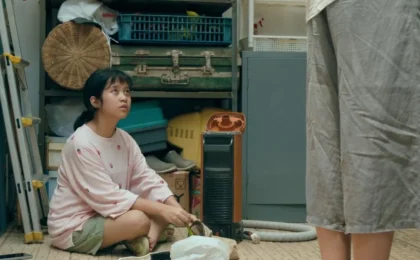
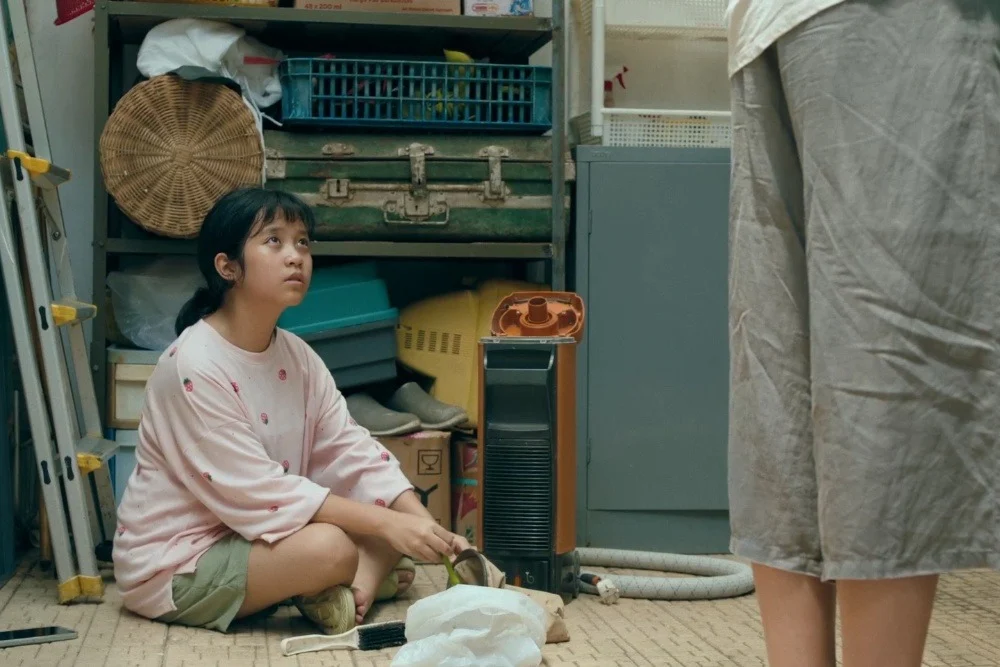
Set over the course of four days leading up to Christmas, Jani Be Good centers on the eponymous 13-year-old Jani. The narrative spark is a domestic fracture: after witnessing a heated altercation between her mother, Winnie, and her 18-year-old sister, Julia, the latter chooses to leave home.
The household, grounded in a Chinese-Catholic tradition, is thrown into emotional disarray. Winnie, a single mother balancing a career as an accountant with the side hustle of preparing fruit hampers, becomes increasingly brittle, projecting her frustration onto the daughter who remained. Meanwhile, Jani navigates the silence by maintaining secret correspondence with her sister and seeking solace with her grandmother, "Oma," who spends her days frying spring rolls to fund her own future cremation.
The film features a powerhouse ensemble cast: Chempa Puteri, Sigi Wimala, Tutie Kirana, and Hyori Mika. Co-written by Darmawan and Cyntha Hariadi, the project was produced by Meiske Taurisia for the Jakarta-based Palari Films.
The Evolution of a Filmmaker: Chronology of a Comeback
Darmawan’s trajectory in cinema has been unconventional. Before her decade-long break, she established herself in the festival circuit with critically acclaimed short films such as Sugiharti Halim, which competed at Clermont-Ferrand, and Silenced, which screened at Rotterdam. These earlier works were characterized by a "small-scale, homebound, and DIY" aesthetic. They served as her training ground, teaching her the value of quiet observation and the power of letting spaces and people breathe within a frame.
The path back to feature filmmaking began in 2022, when long-time friend and producer Meiske Taurisia approached her with an offer to direct a family drama. For Darmawan, the timing was serendipitous. As a working mother in her late thirties, she had begun to view her own upbringing through a new, more empathetic lens.
"As a kid, I watched her keep the family running, rummaging through things at her desk, making phone calls, cooking dinner, but I never wondered how she felt," Darmawan reflects. "It took having my own family to understand how exhausting and all-consuming it is."
The production itself was a testament to efficiency and artistic focus. Filmed in just 13 days in a house in Bandung—a record for Palari Films—the process was intensely collaborative. Two months before production began, the core team and the lead actors engaged in deep script analysis, followed by intensive rehearsals in Jakarta. Because the four lead actors were strangers, the casting process was anchored by chemistry tests focused on Chempa Puteri, who plays Jani.
Unpacking the “Unseen” Care Work
A central thesis of Jani Be Good is that the domestic sphere is a site of constant, invisible labor. Darmawan argues that society often romanticizes all-female households as inherently harmonious, a myth she is eager to dismantle.
"Family problems are the same whether it’s all women or a mix of men and women, if there’s a problem in there to begin with," she asserts. "Communication can break down between women too, especially because of the power dynamics in a family, where the mother, especially if she’s the breadwinner, feels she has the most right to speak the loudest."
Darmawan posits that in many Asian cultures, the instinct to avoid conflict leads to a culture of silence. This silence, while intended to protect family members from emotional pain, often acts as a catalyst for deeper trauma. "If it keeps getting held in and never confronted, it stays a wound and gets passed down to the next generation."
The film captures this through subtle visual storytelling. The house, protected by a locked gate and iron-barred windows, becomes a character in itself—a sanctuary that is simultaneously a cage. Winnie, the mother, is not presented as a villain, but as a woman crushed by the weight of her own responsibilities. "I know how easy it is to feel like the one who has the right to speak the loudest," Darmawan says. "So I didn’t want to judge her."
Institutional Challenges and Industry Implications
Palari Films, founded in 2016, has established itself as a cornerstone of Indonesian independent cinema. From the Locarno-winning Vengeance Is Mine, All Others Pay Cash to the Netflix original Borderless Fog, the company has a track record of supporting visionary directors.
However, the path to distribution in Indonesia remains fraught with structural obstacles. According to Taurisia, while there is no shortage of exhibitors, the country lacks a cohesive distribution network that reaches across the entire archipelago. The current industry standard—where a film’s lifespan is determined by its performance during a single Thursday-to-Sunday opening weekend—creates an environment of extreme volatility.
"Many directors struggle to make a second film after their first, and this gap in the film value chain doesn’t help," Taurisia notes. "How can we build film careers, let alone sustainable ones?"
To mitigate these risks, Palari launched the Kelas Komunitas Palari (Palari Community Class). This initiative trains regional film communities to organize their own screenings and watch parties, effectively decentralizing the distribution model. Jani Be Good serves as the pilot program for this grassroots strategy.
Taurisia also acknowledges a double-edged sword regarding festival success: "On the one hand, it brings recognition and a stronger portfolio. On the other, it can make our films look ‘too artistic’ or ‘not accessible enough,’ and local investors may see the project as risky."
A Future Defined by Intimacy
As Palari Films looks toward a slate that includes collaborations with artists like Baskara Putra (Hindia) and projects by emerging directors like Aditya Ahmad and Khozy Rizal, the company remains committed to the intersection of art and sustainability.
For Ariani Darmawan, the success of Jani Be Good is merely a beginning. While she continues to balance her filmmaking career with her role as the founder of the Kineruku library and bookstore, her creative focus remains clear. She intends to continue exploring the "sad and sweet" relationships that define human existence.
"As the youngest in my family, I grew up being treated as the one who understood the least," Darmawan recalls. "But that’s exactly what gave me the freedom to watch things from a distance. You could say you can only see the constellation when you’re standing outside it."
By stepping back into the director’s chair, Darmawan has proven that her perspective—honed by years of observation, the challenges of motherhood, and the quiet labor of the everyday—is exactly what the Indonesian film industry needs to bridge the gap between artistic integrity and the profound, universal stories that resonate with audiences at home and abroad.