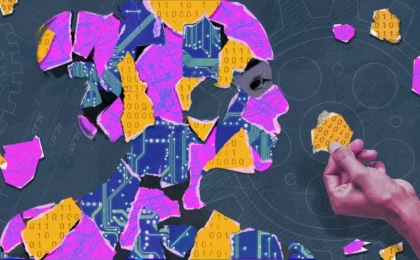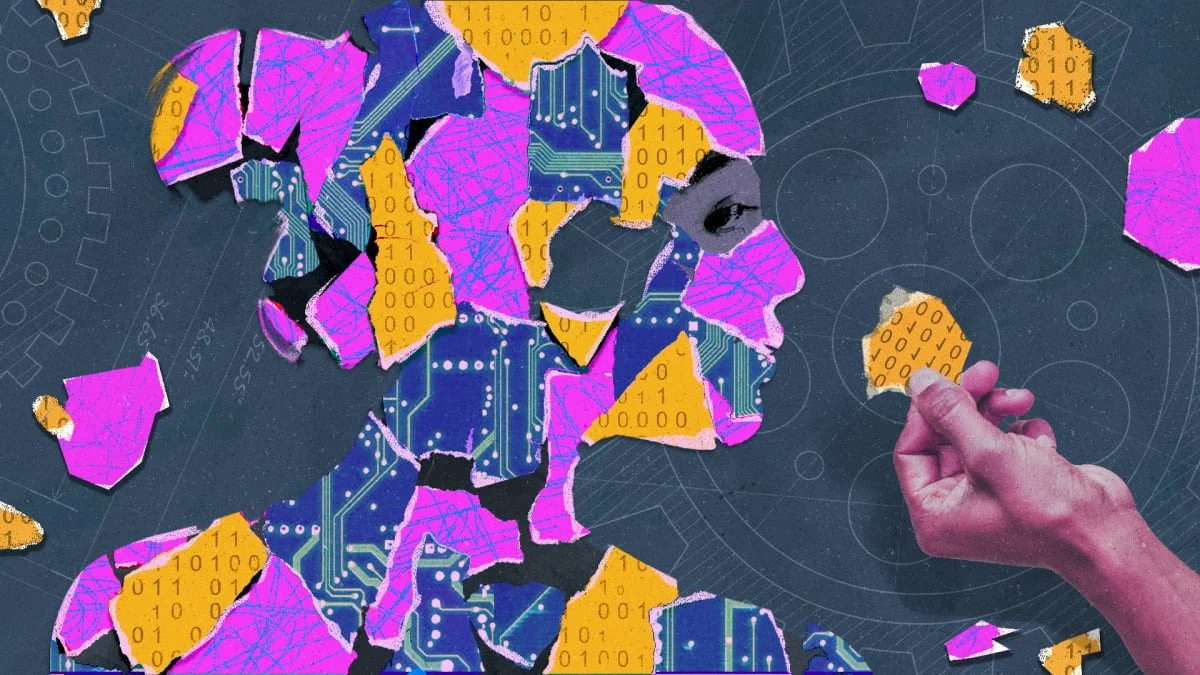
The digital landscape has entered a precarious new era. For years, the casual internet user operated under a subconscious set of rules: if a photo looked slightly "off"—a hand with six fingers, a blurry background, or skin texture that appeared unnaturally smooth—it was almost certainly the work of an algorithm. We relied on these visual glitches as our frontline defense against misinformation.
However, that era has come to a definitive end. As generative AI models reach a level of photorealism that defies the naked eye, the "visual Turing test" has officially failed.
The Erosion of Reality: A New Normal
The discrepancy between the real and the synthetic is no longer a matter of technical imperfection. Consider the recent viral images circulating online: while genuine photographs of Mitch McConnell in hospital attire circulated alongside legitimate footage of Donald Trump meeting with Mike Tyson, these authentic moments were drowned out by a sea of sophisticated forgeries. An image depicting activist Nekima Levy Armstrong as a "far-left agitator" being arrested was revealed to be a complete fabrication. Similarly, reports of an adulterous Georgia mayor, backed by convincing photographic "evidence," turned out to be a digital hallucination.
"Those tells are mostly gone, and whatever replaces them will be gone in a year, too," says Marijus Briedis, Chief Technology Officer at the cybersecurity firm NordVPN. "Any guide built on visual artifacts has a short shelf life. We are no longer looking for technical errors; we are looking for sophisticated, intent-driven fabrications."
The Economic and Societal Toll
The consequences of this shift extend far beyond political embarrassment or internet hoaxes. As deepfakes become indistinguishable from reality, they are being weaponized for high-stakes fraud. In 2025 alone, digital scams—many bolstered by AI-generated audio and video—resulted in losses exceeding $148 billion. This represents a staggering 25 percent increase from the previous year, signaling that the "scam economy" is evolving at a pace that far outstrips our current defensive capabilities.
Chronology of the Digital Mirage
To understand how we reached this point, we must look at the rapid evolution of synthetic media:
- 2022-2023: The Era of "The Tell." AI models struggled with complex physical interactions, such as hands, teeth, and text. Users could easily identify fakes by looking for blurred edges or inconsistent lighting.
- 2024: The Proliferation Phase. Generative tools became widely accessible. The volume of AI content exploded, and the "glitches" began to vanish as models were fine-tuned on higher-quality datasets.
- 2025: The Weaponization Phase. Deepfakes transitioned from social media curiosities to tools for financial fraud and political destabilization. The $148 billion loss threshold was crossed.
- 2026: The Post-Truth Horizon. We are currently in a period where visual verification is effectively dead. The focus has shifted from "detecting the fake" to "verifying the source."
Beyond Pixels: The New Framework for Verification
If we can no longer trust our eyes, how do we verify the truth? Cybersecurity experts are coalescing around a new strategy: Verify the source, not the content.
1. The Contextual Audit
When encountering a shocking video or image, the first step is to discard the visual evidence entirely. Instead, look for the "provenance." Is this clip part of a larger, verifiable event? Has it been reported by multiple, independent, and credible news organizations?
Roei Sherman, senior director of research at the cloud security firm Mitiga, emphasizes that "short clips cut out of context are where most of the manipulation lives." By demanding the full transcript or the raw footage, you force the misinformation back into the light of day.
2. The Danger of "Smart" Search
Paradoxically, the very tools we use to debunk misinformation are becoming part of the problem. Sofia Rubinson, a senior editor at the misinformation watchdog NewsGuard, notes that AI-powered search engines—like Google’s AI Overviews—can sometimes inadvertently validate a hoax. "Fact-checkers used to depend on traditional search platforms to help research the origins of photos," she explains. "But we’ve found that AI-powered search often misattributes imagery as depicting exactly what the misinformers claim."
The lesson here is clear: Do not rely on a single automated summary to confirm the authenticity of a controversial post.
3. The Logic and Emotional Test
Experts advise a two-pronged internal check:
- The Plausibility Test: Ask yourself, "Is this consistent with the known behavior and character of this person?" If a public figure is suddenly acting wildly out of character, treat it as a red flag until confirmed by multiple, non-partisan sources.
- The Ragebait Monitor: AI-generated content is frequently designed to trigger a visceral emotional response. If a post makes you feel immediate, blinding anger or a desperate need to share it, pause. You are likely being "ragebaited." Manipulation thrives on the friction between our emotions and our logic.
Implications for Democracy and Security
The implications of this "post-truth" reality are profound. As federal oversight in the United States continues to lag, the burden of verification is falling onto individual citizens and private organizations.
We are seeing a bifurcated response:
- State-Level Regulation: Individual states are beginning to draft legislation to mandate labeling for AI-generated political content, attempting to fill the void left by federal inaction.
- Industry Provenance: Companies are experimenting with "digital watermarks" and provenance metadata—technologies that would allow a photo to carry a verifiable history from the moment the shutter is clicked to the moment it hits your screen.
- Counter-Detection Tools: Firms like McAfee and AI or Not are building repositories of known deepfakes. However, these are reactive; they track what is already known rather than preventing the next wave of fabrications.
A Call for Digital Literacy
The shift in the landscape requires a fundamental change in our relationship with digital media. We must move from passive consumption to active interrogation.
"None of that requires you to analyze a pixel or a waveform," Briedis says regarding the new verification methods. "That is exactly why it still works."
The advice for the modern internet user is simple but difficult:
- Stop trusting your first glance.
- Verify the source before you share.
- If you cannot confirm the authenticity, assume it is false.
In a world where deepfakes can perfectly mimic the voice of a loved one or the face of a politician, the most effective tool for security is not a software program, but a healthy dose of skepticism. When in doubt, do not share. In the age of AI, silence is the most powerful tool against the spread of misinformation.
As we look toward the future, the goal is not to find a "perfect" detector—because one does not exist—but to cultivate a digital culture that values slow, deliberate verification over the instantaneous, dopamine-driven gratification of the share button. Reality has become a commodity; we must learn how to verify it before it is lost entirely.