
While the traditional retail frenzy of Black Friday is still weeks away, the additive manufacturing sector is already heating up. Bambu Lab, a company that has fundamentally disrupted the desktop 3D printing market with its high-speed, user-friendly, and highly automated machines, has officially launched its early-access Black Friday event. Running from now through December 1, this promotion offers significant price reductions on some of the most advanced multicolour 3D printing ecosystems currently available to consumers and professional designers alike.
For those waiting for the right moment to upgrade their workshop or dive into the world of multi-material manufacturing, the current deals represent a unique opportunity to secure industry-leading hardware at a fraction of the standard cost.
Main Facts: The Early Access Deals
The cornerstone of this sale is the aggressive pricing on Bambu Lab’s flagship and mid-range series. The company is positioning its "AMS" (Automatic Material System) bundles as the highlight of the event, emphasizing that these systems are not just printers, but comprehensive fabrication solutions.
- Bambu Lab P2S: Now retailing at $649 (down from $749). This unit is being marketed as the "best buy" for the majority of users, offering a 256 x 256 x 256mm build volume and a fully enclosed chassis. Crucially, it ships with the AMS 2 Pro unit, which provides both multicolour capabilities and integrated filament drying—a vital feature for maintaining material quality.
- The X2D and H2C Series: These premium tiers have also seen significant price adjustments. While the P2S serves the prosumer market, the X2D and H2C are engineered for those who require higher thermal management and advanced material compatibility.
A Chronology of the Sale and Market Strategy
Bambu Lab’s decision to bypass the traditional "Black Friday window" and launch early is a calculated move. By extending the sale period until December 1, the company is effectively capturing the early-holiday spending market, ensuring their products reach users before the peak shipping congestion of late December.
This strategy mirrors the current trend in tech retail where brands attempt to avoid the "noise" of the final Black Friday weekend. By starting in early November, Bambu Lab allows prospective buyers to conduct thorough research, compare specifications, and integrate these machines into their workflows before the end-of-year project deadlines.
Supporting Data: Understanding the Hardware Tiers
Choosing the right 3D printer in an era of rapid innovation can be daunting. To navigate the current sale, it is essential to understand the technical nuances that differentiate the P2S, X2D, and H2C models.
1. The Entry-Point Powerhouse: The P2S
The P2S is the workhorse of the lineup. Its strength lies in its balance of price-to-performance. Because it comes with the AMS 2 Pro, it allows for four-colour (or four-material) prints out of the box. It is fully capable of handling engineering-grade filaments like ABS and ASA, provided the environment is stable. For designers who need a reliable machine that "just works," the P2S is the primary recommendation.
2. The Professional Edge: The X2D
For users who require more technical precision, the X2D is a logical step up. It introduces active chamber heating (up to 65°C), which is non-negotiable for those printing with materials prone to warping or shrinking. The addition of a secondary nozzle system allows for a separation between build and support materials—a game-changer for printing complex geometries that would otherwise be impossible to clean.
3. The Industrial Beast: The H2C
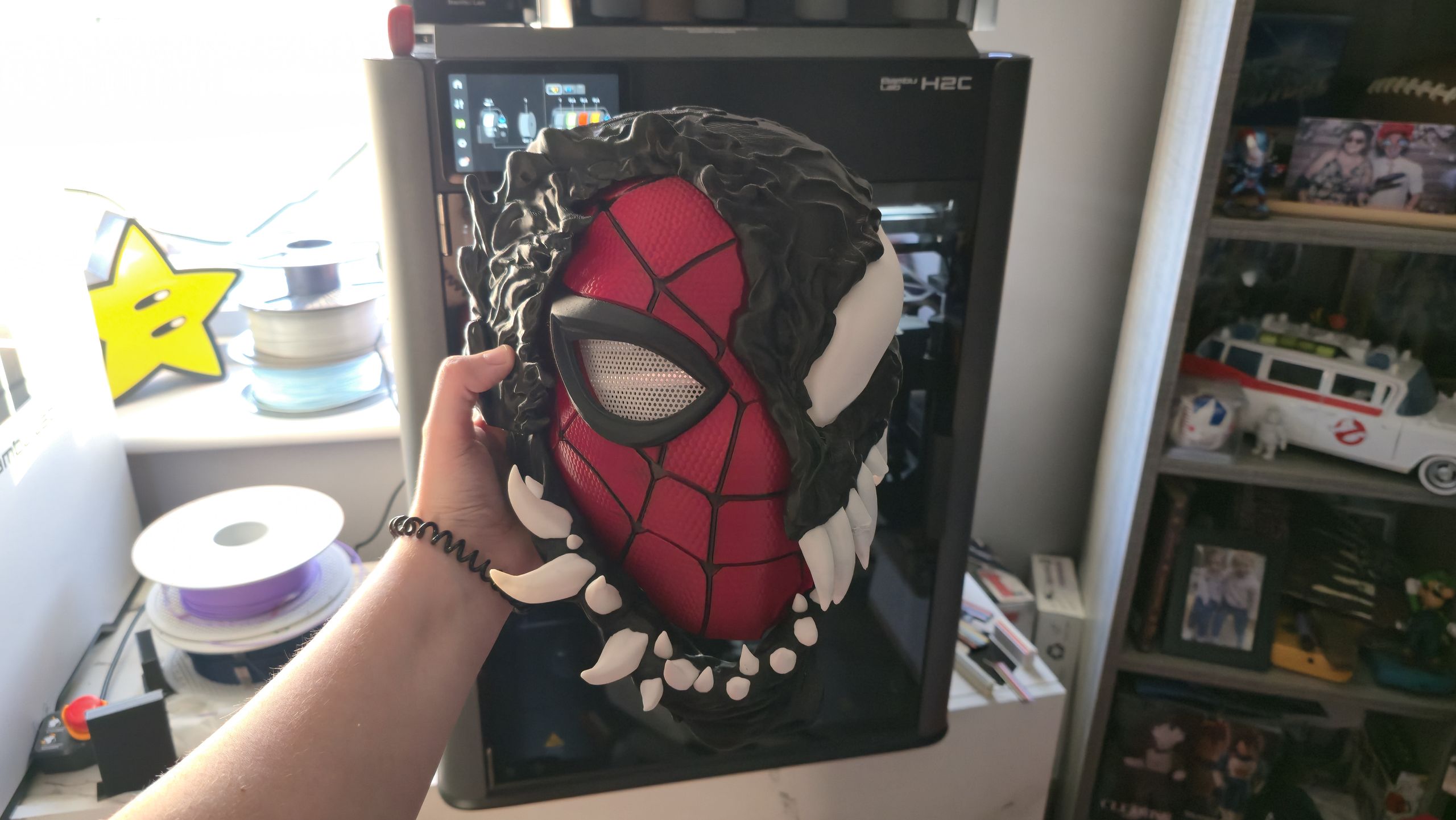
The H2C represents the pinnacle of current desktop technology. Weighing in at over 32.5kg, it is a significant piece of hardware. Its standout feature is an innovative hotend-swapping system that drastically reduces "purge waste"—the filament lost during colour changes. In practical terms, our testing showed that prints requiring three or more days on lesser machines could be completed in just 24 hours on the H2C. This efficiency makes it the clear choice for small businesses or prototyping labs where time is the most expensive commodity.
Official Responses and Industry Context
Bambu Lab has not commented on whether these prices will be further discounted on Black Friday itself, though market analysts suggest that these current prices are likely the lowest the company will offer for the remainder of the calendar year. The focus of the company remains on the "ecosystem" approach. By bundling the printer with the AMS 2 Pro, Bambu Lab is attempting to normalize multicolour printing, moving it from a niche, experimental technique to a standard requirement for modern 3D design.
The industry response to this sale has been largely positive. Tech reviewers and the 3D printing community have noted that Bambu Lab’s aggressive pricing is putting pressure on legacy brands to innovate faster or lower their own entry prices.
Implications for the Creative Community
The accessibility of these machines has profound implications for designers, architects, and hobbyists.
Enhanced Design Freedom
The primary benefit of a multi-material system is the ability to print parts that previously required complex post-processing. With the H2C’s hotend-swapping capabilities, for instance, designers can integrate rigid and flexible materials in a single print, or use support materials that dissolve in water, leaving a perfectly clean surface finish.
Workflow Efficiency
For creative professionals, time is the biggest barrier to rapid prototyping. The speed at which these machines operate, combined with the AI error detection—which pauses prints if a failure is detected—means that designers can run prints overnight with significantly higher confidence. The "limitless colour" potential mentioned by our reviewers allows for the creation of intricate, multi-hued prototypes that were previously only possible through expensive injection molding or professional-grade SLA printing.
The Sustainability Factor
While 3D printing is often criticized for plastic waste, the advanced systems seen in the H2C and the AMS 2 Pro aim to mitigate this. By optimizing purge cycles and using intelligent software to manage material usage, these printers represent a more efficient, less wasteful approach to additive manufacturing than earlier, budget-tier printers.
Conclusion: How to Decide
If you are currently in the market for a 3D printer, the current sale period is an ideal time to act. However, your decision should be dictated by your specific needs:
- The Hobbyist/Designer: The P2S is the gold standard for value. It offers the full Bambu Lab experience without the industrial-level cost.
- The Engineering Enthusiast: If you are working with complex geometries and need specific material properties, the X2D’s active heating and secondary nozzle make it worth the investment.
- The Professional/Prototyper: If your time is valued at a premium, the H2C is not an expense; it is an investment. The time saved in purge reduction and print speed will pay for the machine’s higher price point within a few months of heavy use.
As we approach the end of the year, the landscape of desktop manufacturing is shifting. Bambu Lab’s early sale is not just a promotional event; it is an invitation to upgrade to a more sophisticated, automated, and colourful future. Whether you are a seasoned engineer or a creative looking to expand your toolkit, these machines offer a glimpse into the next generation of digital fabrication.