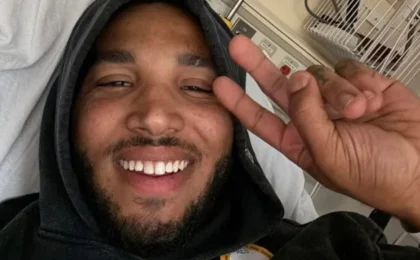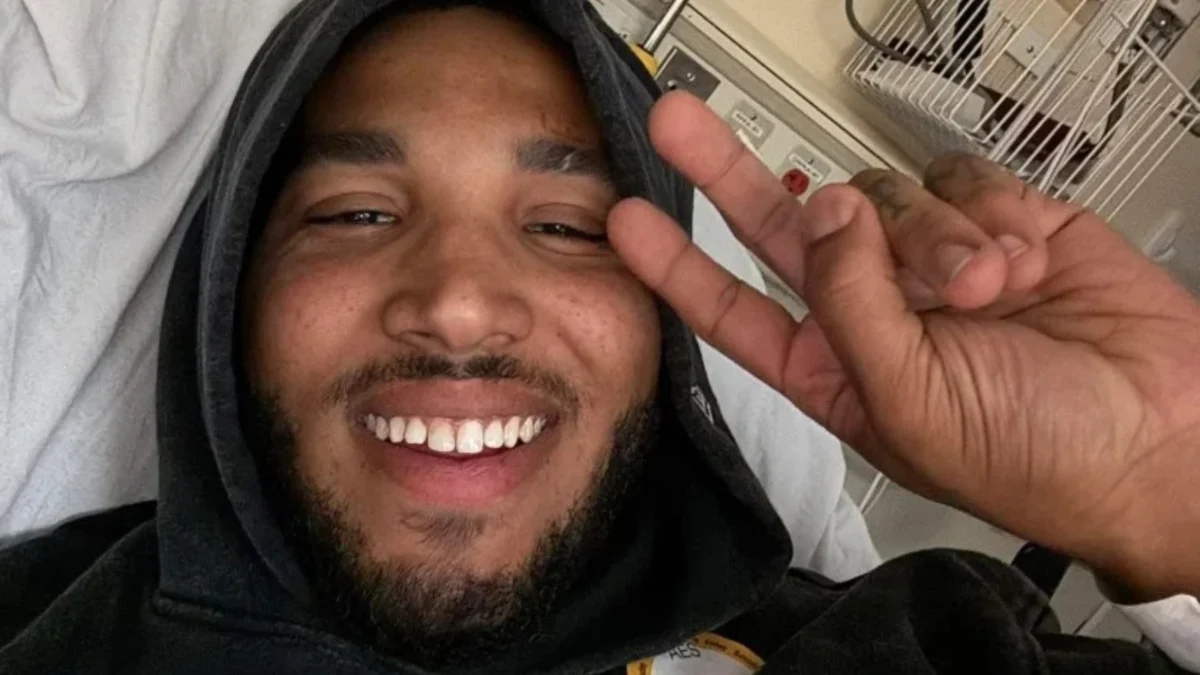
The digital landscape has long served as a double-edged sword, offering both a platform for superficial escapism and a profound space for raw, unfiltered humanity. For the hundreds of thousands who followed Marcel Johnson—known to his community as "celnoshell"—the latter proved true. On Monday, November 2, the 32-year-old Michigan father, small business owner, and social media advocate passed away following a grueling 15-month battle with stage 4 adenocarcinoma. His death marks the end of a journey that invited the world into the most intimate corridors of his life, transforming a personal medical crisis into a public testament of resilience, love, and the fragility of human existence.
The Final Moments: A Heartbreaking Farewell
The confirmation of Johnson’s passing came from his wife, Taylor Johnson, in a statement that captured the agonizing duality of grief: the relief that his suffering had ended, and the crushing weight of his absence. In a poignant social media post, Taylor shared that Marcel died at 4:45 PM, surrounded by the love that had sustained him through the darkest days of his illness.
"I lost a whole entire half of me," Taylor wrote. "He fought so hard for so long. He was so tired and exhausted and in so much pain."
The intimacy of their final hours was underscored by the grace with which Marcel approached his end. Taylor revealed that earlier that same day, in a moment of clarity and profound acceptance, Marcel spoke his final words to her and his son, Dedric: "I’m ready to go." Despite the peace found in those words, Taylor described the struggle of the final hours, noting that Marcel fought to hold on as long as he could, granting his family a few final, precious moments of connection before he finally succumbed to the exhaustion that had claimed his physical strength.
For Taylor, the immediate aftermath has been a surreal landscape of mourning. "I love him with my whole entire being and life will absolutely never ever be the same," she stated, echoing the sentiments of a widow grappling with the sudden silence of a home that was once filled with the vibrancy of a man who fought to stay for his family.
A Chronology of a Courageous Fight
Marcel Johnson’s journey into the public eye was never intended to be a spectacle; it was a byproduct of his desire to document a life suddenly interrupted. The timeline of his battle is a harrowing reminder of how quickly the course of a life can shift.
The Diagnosis (August 2025)
The ordeal began in August 2025, when Johnson sought medical care for persistent stomach pain. What he expected to be a routine visit to urgent care transformed into a life-altering event. Within just five days of his initial consultation, doctors delivered the devastating news: stage 4 adenocarcinoma. The diagnosis was not merely a medical classification; it was a sentence. He was told by his medical team that he would require chemotherapy for the remainder of his life—a prospect that forced him to reconcile his role as a father of five with the harsh reality of a terminal prognosis.
The Documented Struggle
Throughout the subsequent 15 months, Johnson utilized TikTok as both a diary and a support system. He shared the mundane—the daily joys of raising his children—and the excruciating—the side effects of treatment, the fear of the unknown, and the emotional toll of knowing his time was limited.
Perhaps the most visceral moment of his online presence was a video in which he broke the news to his four-year-old son that his cancer treatments were no longer working. The video, which went viral, served as a stark, unfiltered look at the intersection of parenting and terminal illness. It was not just a video about cancer; it was a masterclass in how to attempt to protect one’s children while being unable to protect oneself.

Community and Commerce: The Life Behind the Screen
Beyond his digital presence, Marcel Johnson was a cornerstone of his local community in Mount Clemens, Michigan. Alongside Taylor, he operated Lil Daddy’s Cheesecakes, a business that served as more than just a shop—it was a symbol of their partnership and shared dreams.
When news of his diagnosis broke, the community response was immediate and overwhelming. Local businesses, neighbors, and strangers rallied to support the family. Fundraisers were organized, and the community pooled resources to help the Johnsons navigate the financial ruin that so often accompanies stage 4 cancer. This outpouring of support highlighted the bridge between Johnson’s online identity and his real-world relationships. To his followers, he was an inspiration; to his neighbors, he was a friend, a father, and a local entrepreneur who deserved a fighting chance.
The Ethics of Remembrance in the Digital Age
As tributes continue to pour in from across the globe, a significant point of contention has emerged regarding how we memorialize the dead in the age of generative artificial intelligence. Taylor Johnson has issued a specific and heartfelt plea to her husband’s fans: please do not use AI to generate images or videos of Marcel.
"Can we please not AI Marcel and my family?" Taylor wrote on Facebook. "I know everyone means well, but like that does not look like him or us and I feel it’s a slap in the face."
This request highlights a growing tension in modern grief. While AI tools are frequently used to create "tributes," they often result in uncanny, inaccurate representations that can feel invasive to the grieving family. Taylor’s stance serves as a reminder that behind every "content creator" is a human being with a family who prefers authentic memories over digital facsimiles. It is a necessary boundary in a world that often prioritizes viral engagement over the sanctity of personal loss.
The Lasting Implications: Why We Watched
The death of Marcel Johnson leaves behind more than just a void; it leaves a legacy of transparency. By documenting his battle, Johnson contributed to a cultural shift in how we talk about cancer. He stripped away the sanitized, "warrior" rhetoric often forced upon the sick and replaced it with a nuanced, often painful, reality. He allowed his followers to witness the exhaustion, the fear, and the profound love that defines the human experience.
His death serves as a sobering reminder of the gaps in modern oncology and the socio-economic burdens placed on young families facing terminal illness. Furthermore, his story prompts a reflection on the role of social media in our lives—how it can transform a singular, private tragedy into a collective, communal experience of mourning.
Marcel Johnson is survived by his wife, Taylor, and their five sons. As they navigate the difficult path forward, they do so with the awareness that Marcel’s story—his bravery, his love for his children, and his refusal to hide from the truth—has left an indelible mark on thousands of lives.
In the final analysis, Marcel Johnson did not just document his death; he documented his life. He lived, he struggled, and he loved, and through the lens of his phone, he taught a digital generation how to face the end with as much dignity as one can muster when the time comes to say, "I’m ready to go."