Introduction: An Unconventional Response to Crisis
In a scene that defies both engineering logic and standard safety protocols, a utility worker in the Venezuelan town of Valle de la Pascua has captured global attention—and widespread alarm—after utilizing two-liter bottles of carbonated soda to extinguish a raging electrical transformer fire. The incident, which took place on November 2, has sparked an intense debate regarding workplace safety, the decaying state of infrastructure in the region, and the desperate measures employees are sometimes forced to take in the absence of proper equipment.
While the worker, employed by the state-owned electricity provider Corpoelec, successfully managed to suppress the blaze, the maneuver was described by industry professionals as a "near-death experience" that highlights a broader crisis in Venezuela’s utility sector.
The Chronology of the Event
The incident began on the morning of November 2, when residents of Valle de la Pascua reported a transformer failure. When the maintenance crew arrived on the scene, they were confronted with a high-voltage transformer engulfed in flames, threatening to plunge the local grid into further instability.
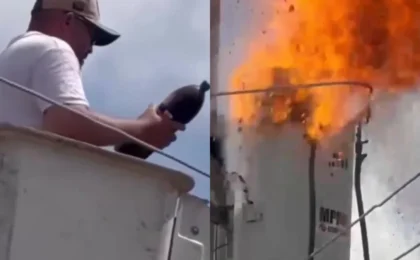
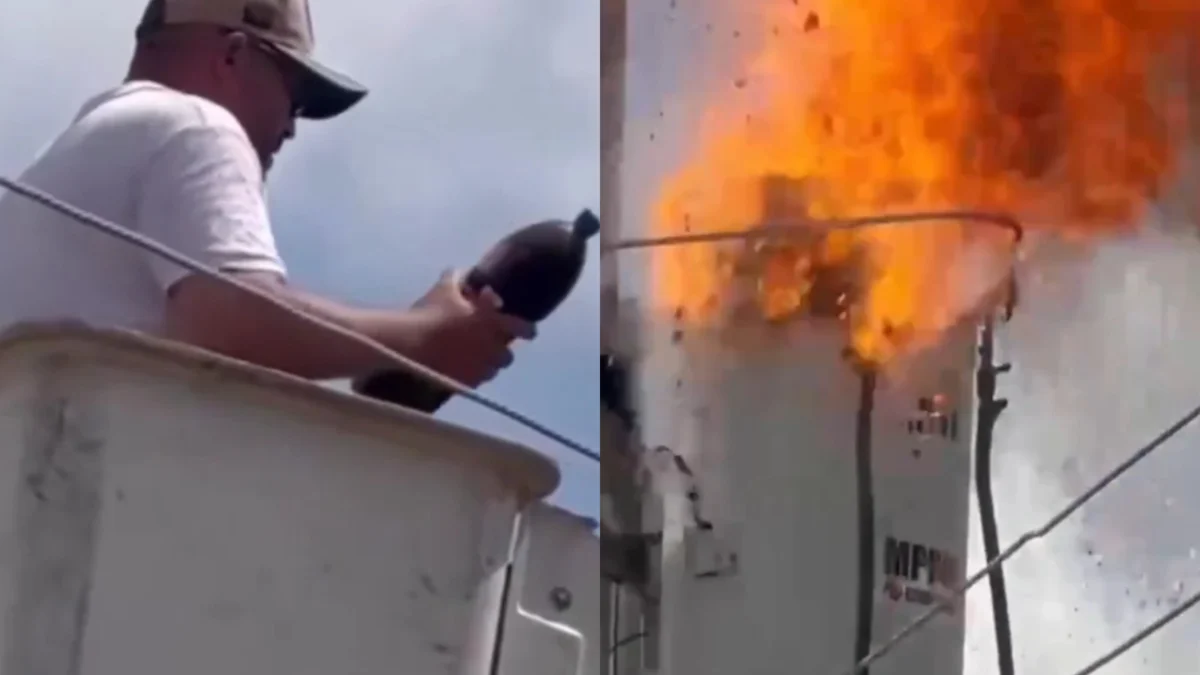
According to eyewitness footage that has since gone viral, the worker was positioned in the elevated bucket of a maintenance truck, bringing him within mere feet of the volatile equipment. Instead of utilizing a CO2 or dry-chemical fire extinguisher—the standard tools for electrical fires—the worker reached for a stash of "Glup," a local brand of Venezuelan soda.
The chronology of the maneuver was as follows:
- The Approach: The worker, suspended in the air, began vigorously shaking the two-liter plastic bottles.
- The Deployment: He launched the pressurized bottles directly into the heart of the electrical fire.
- The Reaction: Upon impact, the bottles ruptured, releasing a spray of liquid and carbon dioxide. In the footage, the worker is seen ducking violently to avoid a sudden eruption of flames that surged toward the bucket as the soda hit the electrified components.
- The Resolution: After three consecutive attempts, the flames subsided. The worker was seen descending, having apparently "solved" the immediate emergency through sheer improvisation.
Scientific Analysis: Why It Worked (and Why It’s Dangerous)
The question of how a soft drink could extinguish an electrical fire has fascinated internet observers, but scientists and electrical engineers are quick to provide a sobering reality check.
The Physics of the "Glup" Method
From a purely chemical perspective, the mechanism behind the stunt is rooted in the properties of carbonation. Fizzy drinks are pressurized with carbon dioxide (CO2). When the bottles were shaken and burst, they released a concentrated jet of CO2. Carbon dioxide acts as a fire suppressant by displacing the oxygen in the immediate vicinity of the flames, effectively "starving" the fire. Furthermore, the rapid expansion of the liquid provided a cooling effect on the heated metal components of the transformer.
The Fatal Flaws
However, the scientific utility of the CO2 content is vastly outweighed by the extreme risks of the method. Electrical engineer Jesús Olivares, speaking to the Venezuelan outlet El Pitazo, emphasized that the risks were twofold:
- Conductivity: Unlike specialized fire extinguishers designed for electrical equipment, which use non-conductive agents, soda is largely composed of water, sugars, and dissolved minerals—all of which are highly conductive. By throwing a liquid into a live electrical circuit, the worker created a direct path for the current to travel from the transformer to the bucket, and potentially through his own body.
- Explosive Potential: The sudden interaction between the liquid and the high-voltage arc caused a "flashover" or rapid expansion of energy, as seen when the worker ducked to avoid the flames. Had the transformer exploded—a common occurrence in failing electrical grids—the worker would have been severely burned or killed instantly.
Infrastructure and Safety: The Context of the Crisis
The incident has become a lightning rod for criticism regarding Corpoelec’s operational standards. For years, Venezuela’s power grid has suffered from chronic underinvestment, lack of maintenance, and the exodus of qualified technical staff.
The Absence of Basic Gear
One of the most glaring aspects of the video is the apparent lack of Personal Protective Equipment (PPE). The worker is seen wearing minimal protection while operating in a high-risk environment. Industry experts point out that for a job involving a burning transformer, standard procedure requires fire-resistant clothing, dielectric gloves, insulated boots, and, most importantly, the de-energization of the line before any firefighting attempt is made.

The fact that the worker felt compelled to use soda suggests a total absence of functional firefighting equipment in the company’s maintenance vehicle. This has led to accusations that the state-owned utility is operating in a "state of neglect," leaving its employees to face lethal hazards with nothing more than consumer goods to protect themselves.
Official Responses and Public Reaction
As of this writing, there has been no official statement from Corpoelec regarding the incident. The silence from the state utility has been criticized by local labor unions and energy activists, who argue that the company is failing to protect its workforce.
The public reaction in Venezuela has been a mixture of dark humor and profound indignation. On social media platforms, many users have dubbed the act "The Venezuelan Way," a term often used to describe the extraordinary ingenuity citizens display when coping with the collapse of public services. However, the prevailing sentiment remains one of horror. Many viewers have noted that while the worker is a hero for saving the transformer, the fact that he was forced into such a position is a national scandal.
Implications for Industrial Safety Standards
The incident in Valle de la Pascua serves as a grim case study for occupational health and safety professionals worldwide. It raises significant questions:
1. Training and Preparedness
When an organization fails to provide the basic tools for safety, employees may resort to "workarounds" that defy common sense. This creates a culture of risk-taking where safety becomes secondary to the immediate goal of keeping the lights on.
2. The Liability of State Utilities
In many jurisdictions, the failure to provide proper equipment for high-voltage work would result in immediate regulatory fines and investigations. The lack of an official response from the Venezuelan authorities suggests a lack of accountability, which potentially emboldens other workers to engage in similar high-risk, unapproved "fixes" to restore power in their communities.
3. The Future of the Grid
The fire itself is symptomatic of a wider issue: the aging and neglected transformers throughout Venezuela are prone to short-circuiting and catching fire. Until the underlying issues of the electrical grid—such as outdated hardware and poor insulation—are addressed, incidents like this are likely to repeat.
Conclusion: A Wake-Up Call?
The viral video of the "soda-firefighter" is more than just a bizarre internet clip; it is a harrowing snapshot of the human cost of infrastructure failure. The worker’s survival was, by all technical accounts, a matter of luck rather than skill. As the footage continues to circulate, it remains a stark reminder that when the infrastructure of a nation is allowed to deteriorate, the burden of that collapse falls squarely onto the shoulders of the workers who are tasked with maintaining it—often at the risk of their own lives.
Whether this event triggers a review of safety standards within the Venezuelan energy sector remains to be seen. For now, the image of the worker throwing bottles of "Glup" at a high-voltage inferno will remain a defining, albeit deeply troubling, image of the year in Venezuela. It is a testament to the resilience of the human spirit, but also a haunting warning about the dangers of a society running on improvisation rather than safety.