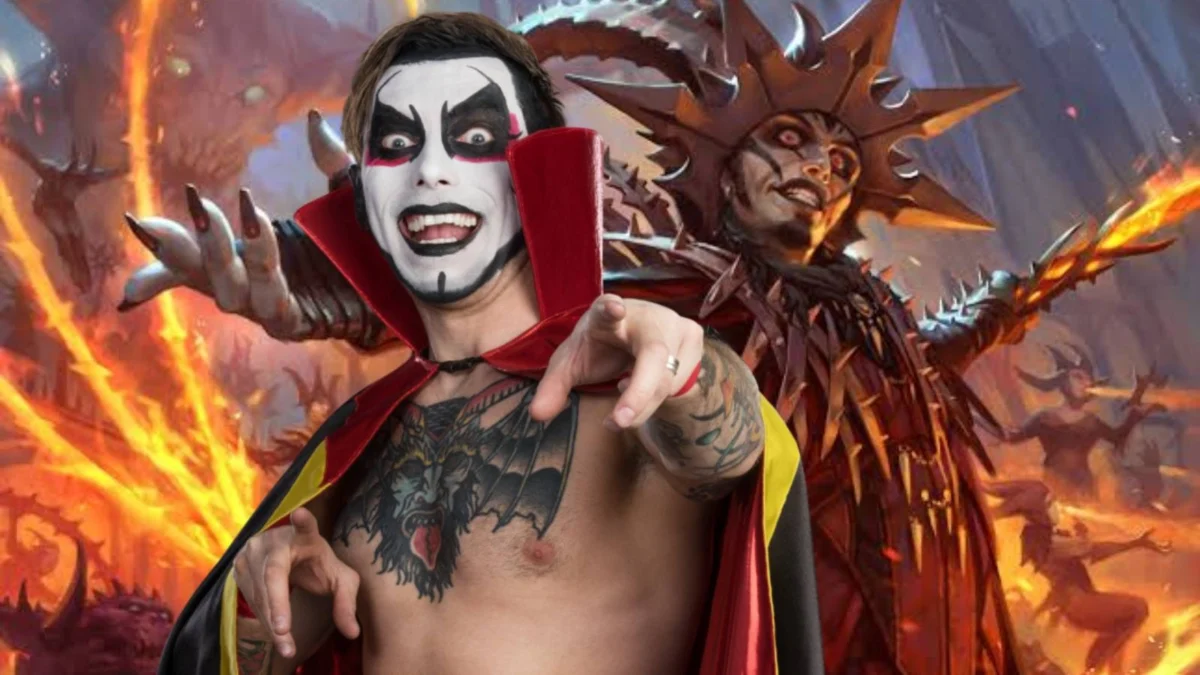
The professional wrestling landscape is often defined as much by intellectual property and personal branding as it is by in-ring athleticism. For WWE superstar Danhausen—the character created by Donovan Danhausen—his black-and-white facepaint is not merely a stylistic choice; it is a legally protected asset. However, a resurfaced interview clip recently ignited a firestorm of criticism within the gaming community, forcing the eccentric performer to clarify his stance on trademark protections and his relationship with the popular trading card game Magic: The Gathering (MTG).
The controversy centers on a 2025 appearance on Insight with Chris Van Vliet, where Danhausen discussed the strategic necessity of trademarking his iconic aesthetic. Some fans, interpreting his comments as a threat of legal action against Wizards of the Coast (the publisher of MTG), took to social media to express their outrage. As the situation escalated, the "Very Nice, Very Evil" performer was forced to intervene, dispelling rumors and reinforcing his personal affinity for the gaming giant.
The Origins of the Conflict: A Resurfaced Conversation
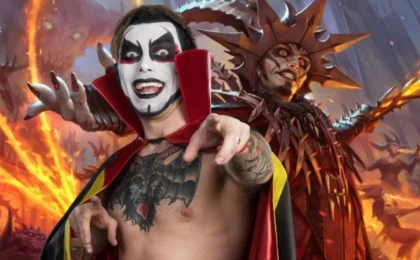
The root of the current discourse lies in a specific segment of his 2025 interview with Chris Van Vliet. During the conversation, the subject of trademark law arose, specifically regarding how wrestlers protect their unique visual identities. Danhausen recounted an anecdote in which he encountered a card from Magic: The Gathering—identified by internet sleuths as "Juri, Master of the Revue"—which featured a character design bearing a striking resemblance to his own signature makeup.
For many fans viewing the clip out of context, it appeared as though Danhausen was accusing Wizards of the Coast of intellectual property theft or suggesting that he intended to initiate litigation against the company. Given the intense devotion of the Magic: The Gathering community, the accusation prompted an immediate and vocal backlash. Critics argued that the visual similarities were coincidental and that the performer was overstepping his bounds by suggesting legal territorialism over a common aesthetic style.
Chronology of a Viral Misunderstanding
To understand the gravity of the reaction, one must look at the timeline of events that propelled this story into the spotlight:
- 2020: Donovan Danhausen files for a trademark on his stylized facepaint with the United States Patent and Trademark Office (USPTO). The filing covers the use of the aesthetic across various mediums, including merchandise and professional wrestling entertainment.
- 2025: Danhausen appears on Insight with Chris Van Vliet, where he discusses the business side of his persona, including the inspiration for his makeup (derived from the demon Pazuzu in The Exorcist) and the necessity of trademarking his look to prevent legal interference from others.
- November 2026: A clip from the 2025 interview begins circulating widely on social media platforms, specifically X (formerly Twitter). The discourse quickly turns hostile, with fans labeling the performer as litigious.
- November 3, 2026: Amid a busy week of professional commitments—including hosting a WWE YouTube special and the NXT Halloween Havoc event—Danhausen responds directly to the accusations on X to set the record straight.
The Strategy Behind the Trademark
While the public viewed the interview through a lens of potential litigation, industry insiders and legal experts suggest that Danhausen’s actions were standard practice for modern wrestling performers. In an era where a wrestler’s "brand" is their primary source of income, securing the rights to one’s visual presentation is a protective measure rather than an aggressive one.
During his discussion, Danhausen revealed that he was among the first wrestlers of his generation to treat his facepaint as a formal trademarked asset. He further claimed that his success in securing these protections paved the way for other legends, including Sting, to work with the same legal counsel to solidify their own visual legacies.
By trademarking his look, Danhausen is not attempting to sue existing characters for "copying" him; he is creating a legal shield that prevents third parties from claiming he infringed upon them. In the litigious environment of modern entertainment, this is an essential preemptive strike designed to maintain his creative freedom.
Official Responses and Public Clarification
As the backlash against him intensified, Danhausen took to X to address the misunderstanding directly, employing his signature blend of humor and bluntness. His response was unequivocal, aimed at cooling the tempers of the gaming community.
"If you’re mad about this, you’re stupid," Danhausen wrote, cutting through the noise. "This isn’t so Danhausen can willy-nilly try to sue people. It’s literally so no one can yell at Danhausen."
He further clarified his stance by explicitly stating his appreciation for the game in a follow-up reply to a fan, noting, "Bingo. Danhausen loves Magic." This simple clarification effectively neutralized the narrative that he was engaged in a corporate feud with Wizards of the Coast. By positioning the trademark as a defensive tool rather than an offensive weapon, he shifted the perception of the debate from one of corporate greed to one of necessary professional survival.
Implications for Wrestlers and Intellectual Property
The Danhausen incident serves as a microcosm for the broader intersection of professional wrestling and intellectual property law. As wrestlers move away from the "territory" era—where characters were often loosely defined—and into a globalized entertainment model, the value of a brand rests on its legal defensibility.
1. The Defensive Nature of Trademarks
Many fans mistakenly assume that a trademark is used solely to sue others. In reality, as Danhausen correctly identified, trademarks are primarily defensive. They serve as a "prior art" claim. If a major entity like Wizards of the Coast or a competing wrestling promotion were to introduce a character that looked identical to Danhausen, his trademark filing would provide the legal foundation to protect his brand from dilution or claims of infringement from the other party.
2. The Influence of the "Very Nice, Very Evil" Persona
Danhausen’s persona is built on a mixture of absurdism and high-level business acumen. He often blurs the lines between his character and his real-life professional decisions. This can lead to confusion, as fans sometimes struggle to discern when he is speaking as the character and when he is speaking as a businessman. The Magic: The Gathering controversy is a prime example of the friction that can occur when the public consumes business-related content without the proper context.
3. The Future of Character Protection
As the landscape of wrestling continues to evolve, we can expect more performers to follow the path set by Danhausen and others. With the rise of digital avatars, video game appearances, and global merchandising, the "look" of a wrestler is now a digital asset. Protecting that asset is no longer optional; it is a requirement for anyone looking to build a long-term career in the industry.
Conclusion: A Lesson in Context
The resurfacing of the 2025 interview provided an opportunity for the public to better understand the nuances of intellectual property in the wrestling industry. While the initial reaction was one of frustration, the resulting dialogue ultimately served to clarify that Danhausen’s actions were those of a savvy entrepreneur, not a litigious aggressor.
For the Magic: The Gathering community, the news should come as a relief: one of the game’s most visible and eccentric fans remains an ally, not a legal threat. For the wrestling community, the episode stands as a testament to the importance of branding and the necessity of legal foresight. As Danhausen continues his high-profile run in the WWE—having recently headlined major events like Halloween Havoc and featured in dedicated SmackDown content—he remains a case study in how to navigate the complex, often "evil," world of modern celebrity branding while keeping his fans—and his cards—very, very nice.