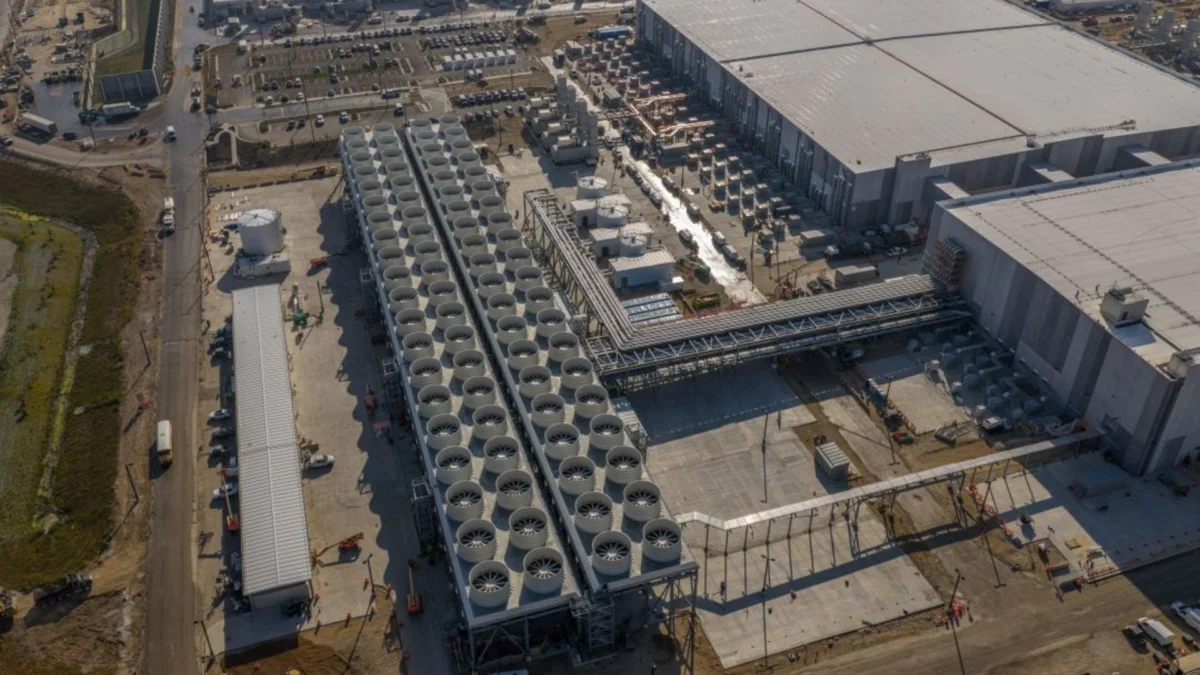
In the race to dominate the global artificial intelligence landscape, computing power has become the new currency. To train the next generation of large language models, tech giants are building massive data centers at an unprecedented pace. However, a recent development in Memphis, Tennessee—where Elon Musk’s AI venture, xAI, has established a sprawling facility—has thrust the company into the center of a growing environmental firestorm. The controversy centers on a novel, yet highly criticized, approach to power generation: the deployment of eight converted jet engine turbines to sustain the facility’s gargantuan energy demands.
As xAI races to bring its "Colossus" supercomputer cluster to full capacity, the use of industrial-grade jet turbines has prompted immediate backlash from environmental advocates, local community members, and legal watchdogs. While the company has secured the necessary state-level permits, the decision to utilize these engines—which operate with significantly higher pollutant allowances than traditional grid-connected or standard backup generators—has sparked a national debate over the hidden environmental costs of the AI boom.
Chronology of a Power Crisis
The trajectory of xAI’s Memphis facility is a study in the sheer velocity of modern AI development.
- Mid-2024: Elon Musk announces the rapid construction of a massive AI training cluster. The facility, housed in a former Electrolux manufacturing plant, is designed to be one of the most powerful computing sites in the world.
- Late 2024: As the facility nears completion, xAI encounters a bottleneck: the local power grid, managed by the Tennessee Valley Authority (TVA) and Memphis Light, Gas and Water (MLGW), cannot provide the instant, massive electrical load required for the facility’s GPUs to run at peak capacity.
- Early 2025: Facing delays in grid infrastructure upgrades, xAI opts for an unconventional stopgap: the installation of mobile power units powered by jet engines.
- Mid-2025: Regulatory filings reveal that the state of Mississippi (and local entities) have granted permits allowing the facility to operate these turbines. These permits specifically authorize emission levels for volatile organic compounds (VOCs) that are 25% higher than standard industrial thresholds.
- November 2026: The New York Times reports on the specific environmental impacts of these turbines. Simultaneously, the Southern Environmental Law Center (SELC) files a formal challenge, arguing that the permitting process was rushed and failed to account for the cumulative air quality degradation in the surrounding Memphis area.
Supporting Data: The Cost of "On-Demand" Compute
The technical specifications of the jet turbines currently powering the xAI data center are alarming to environmental scientists. Unlike natural gas-fired combined-cycle power plants, which are optimized for efficiency and emission controls, jet turbines are designed for thrust, not stationary power generation.
The Emissions Profile
Data obtained through regulatory filings indicates that these engines are significant emitters of:
- Nitrogen Oxides (NOx): A primary contributor to ground-level ozone and smog, which is particularly problematic for residents with respiratory conditions.
- Carbon Monoxide (CO): A toxic byproduct of incomplete combustion.
- Volatile Organic Compounds (VOCs): The 25% allowance increase mentioned in state permits allows for a higher concentration of these chemicals, which are linked to various long-term health complications.
While the facility serves as a "bridge" until the local utility can reinforce the power grid, the scale of consumption is vast. A data center of this magnitude can consume as much electricity as a small city. By bypassing the grid to generate power on-site, xAI is effectively creating a localized power plant that lacks the advanced filtration and carbon-capture technology required of modern utility-scale energy projects.
Official Responses and Regulatory Maneuvers
The response from the regulatory bodies has been one of defensive pragmatism. State officials in Mississippi and Tennessee have argued that the permits were granted under the premise that the turbines are a temporary solution to a grid infrastructure gap. The argument holds that without these turbines, the facility—which promises significant economic investment and high-tech jobs—would be forced to remain idle or relocate to another state.
The Southern Environmental Law Center (SELC) Stance
The SELC has taken a firm, adversarial position. In their filings, they argue that the permitting process did not provide adequate public notice or environmental impact assessment. "You cannot simply bypass the spirit of the Clean Air Act because a company is in a hurry to build a chatbot," a spokesperson for the group stated. The legal challenge seeks an immediate stay on the operation of the turbines, demanding that the facility undergo a full environmental impact study before being allowed to run at full capacity.
xAI and the "Move Fast" Philosophy
Elon Musk and xAI have remained largely silent on the specific technical complaints, maintaining that their operations are in full compliance with state and local laws. Internally, the company views the energy bottleneck as a logistical challenge to be solved with engineering ingenuity. By bringing in the jet turbines, they have effectively circumvented the sluggish pace of traditional utility grid upgrades, a strategy that mirrors Musk’s approach at Tesla and SpaceX: prioritize speed and iterate later.
Implications: The Future of AI Infrastructure
The xAI case is a bellwether for the broader tech industry. As AI models grow more complex, their energy requirements are scaling exponentially. The transition to AGI (Artificial General Intelligence) will require not just gigawatts of power, but reliable, 24/7 baseload power that the current aging electrical grid is increasingly ill-equipped to provide.
1. The "Grid-Edge" Dilemma
We are seeing a shift where tech companies are no longer just customers of the electrical grid; they are becoming their own utility providers. This "grid-edge" strategy allows companies to move at the speed of software, but it creates a dangerous precedent for local communities. If tech giants can simply install jet engines in a residential or industrial zone to bypass grid constraints, the regulatory framework governing air quality becomes effectively obsolete.
2. The Environmental Cost of AI
There is a growing movement to quantify the "carbon footprint per query." While companies tout the efficiency of their H100 and B200 GPUs, the total cost of ownership—including the energy needed to power them—is often ignored. The use of jet turbines highlights the "dirty" reality of the AI gold rush. If the industry continues to rely on high-emission, on-site generation, the climate goals set by major corporations will become impossible to achieve.
3. Legal and Regulatory Precedent
The outcome of the SELC’s challenge will likely set a precedent for future data center construction. If the courts rule in favor of the environmental groups, it could force tech companies to invest in cleaner, albeit more expensive and slower-to-deploy, micro-grid solutions like hydrogen fuel cells or battery storage arrays. If the court sides with xAI, it may trigger a wave of similar "off-grid" power solutions across the United States, as other companies look to follow the Memphis model to avoid grid-lock.
Conclusion: A Turning Point for Tech Policy
The deployment of jet engines in Mississippi is a stark reminder that the digital world is inextricably linked to the physical one. While the pursuit of superintelligence is a historic endeavor, the cost of that progress must not be borne solely by the local communities surrounding these data centers.
The clash between xAI’s rapid innovation and the regulatory caution of the SELC is more than a local dispute; it is a fundamental test of how our legal system handles the collision between 21st-century technology and 20th-century environmental protections. As the world watches the outcome of this case, one thing remains clear: the era of "invisible" AI energy consumption is coming to an end. The industry must now grapple with the physical reality of its digital dreams, ensuring that the quest for intelligence does not leave behind a legacy of pollution and respiratory illness for the communities that host them.