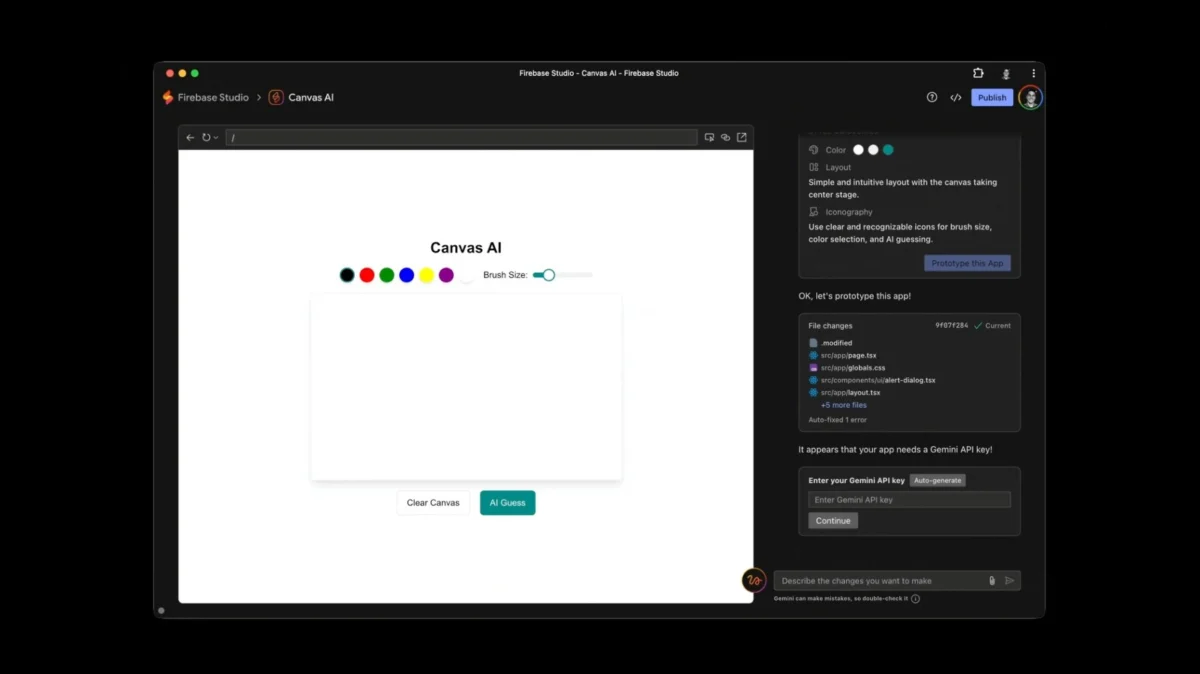
The landscape of software development is undergoing a seismic shift, one where the traditional Integrated Development Environment (IDE) is being rapidly supplanted by AI-native platforms. In a move that signals the definitive end of the "code-first" era for Google’s web-based tooling, the tech giant has officially initiated the sunsetting of Firebase Studio. This decision, first announced in March, marks a strategic consolidation of Google’s developer resources, pushing users toward a new generation of tools: Antigravity and Google AI Studio.
For the community of developers who relied on the browser-based Firebase Studio for backend integration and rapid prototyping, the transition represents more than a mere software update; it is a fundamental change in philosophy regarding how applications are built, iterated, and deployed.
The Chronology of the Sunset
Google’s exit from the Firebase Studio ecosystem is not a sudden severance but a phased, deliberate departure. The timeline for this transition is as follows:
- March 2026: Google officially announced the sunsetting of Firebase Studio, citing a need to streamline its development workflow and align with its broader AI-centric product roadmap.
- June 22, 2026: The window for creating new workspaces and onboarding new users to Firebase Studio was officially closed.
- March 22, 2027: The final "hard" deadline. After this date, Firebase Studio will be permanently decommissioned. Access to the environment will be revoked, and any data remaining on the platform will be subject to permanent deletion.
During this window of "limbo," developers are tasked with the migration of their existing projects to alternative IDEs. Google has provided documentation to assist with the export process, yet the onus remains on the development teams to secure their assets before the final curtain falls in early 2027.
Supporting Data: The Shift to AI-Centric Development
The retirement of Firebase Studio is a direct consequence of the rapid evolution of "vibe coding"—a paradigm where natural language prompts increasingly replace traditional manual syntax entry.
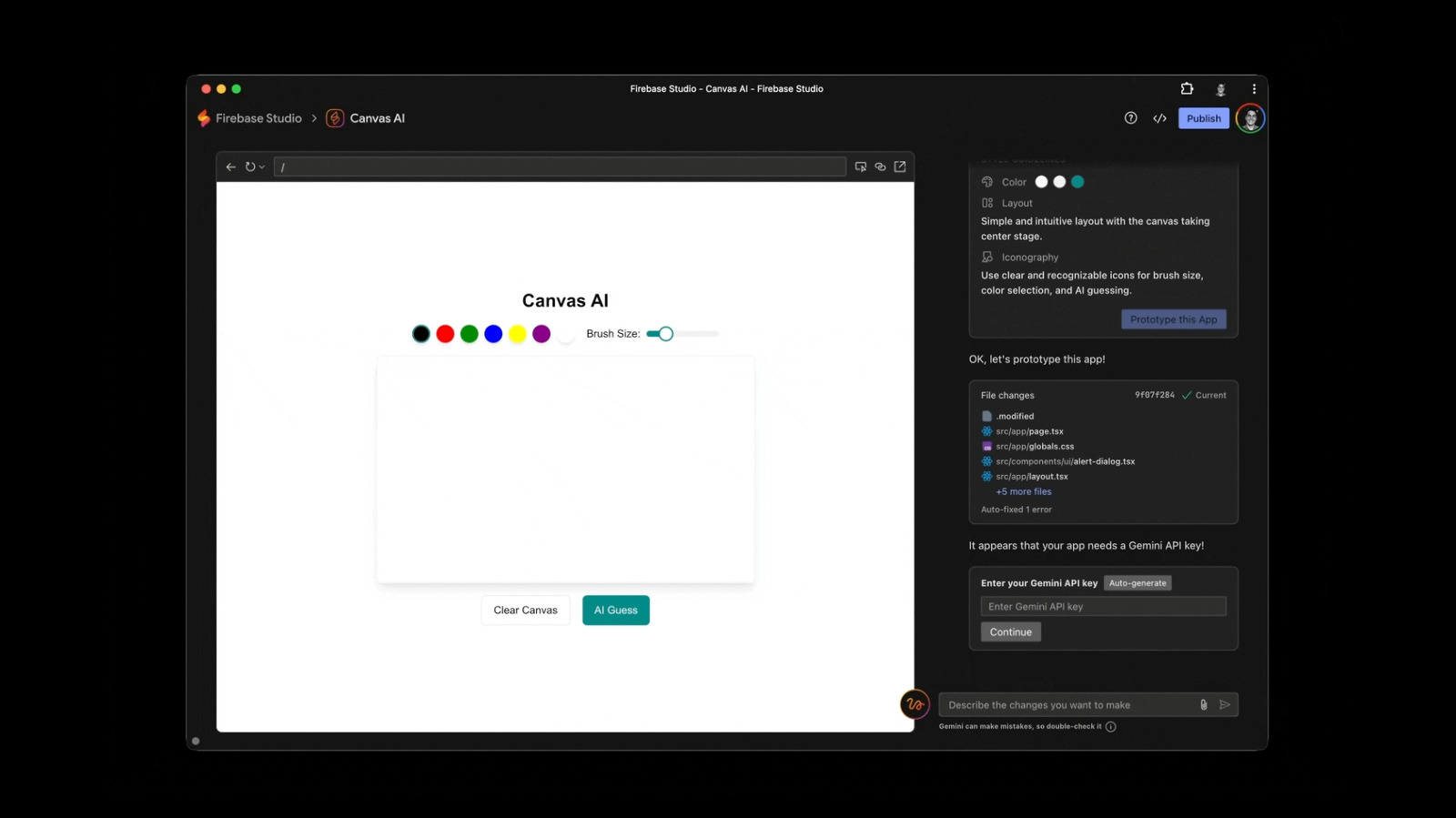
When Firebase Studio launched in 2025, it was marketed as a revolutionary tool that bridged the gap between backend services and frontend development. It offered a sophisticated AI chatbot capable of assisting in app prototyping. However, as of mid-2026, the industry has seen a massive surge in AI agents that are capable of handling end-to-end coding tasks without human intervention in the raw code.
The disparity in user behavior is stark. Data from the broader developer ecosystem suggests that:
- Prompt-Driven Development: Over 60% of junior and mid-level developers are now utilizing AI-first environments for more than half of their daily coding tasks.
- Agentic Workflows: The rise of autonomous agents, which can manage file structures, debugging, and deployment, has rendered the traditional "editing window" of an IDE secondary to the "prompting window."
- Tool Fatigue: Google’s internal metrics indicated that maintaining a dedicated Firebase-integrated IDE was redundant when the underlying Firebase services could be accessed via more powerful, model-agnostic platforms.
Official Responses and Strategic Rationale
Google’s official stance on the retirement is one of optimization. In their March announcement, the company stated, "To streamline your workflow and make it clearer where you should start building, we’re beginning the process of sunsetting Firebase Studio."
The logic provided by the company is that the Firebase backend—a core set of services including databases, authentication, and hosting—does not require a specialized, proprietary IDE to function. By offloading development to platforms like Antigravity and Google AI Studio, Google is essentially "decoupling" its backend infrastructure from its developer tools. This allows Google to focus its R&D budget on the Gemini model integration and agentic capabilities rather than maintaining the overhead of a general-purpose code editor.
The New Frontier: Antigravity and Google AI Studio
With the departure of Firebase Studio, developers are being funneled into two primary Google-backed alternatives, each catering to a distinct style of development.
Google AI Studio: The Browser-Based Fast Track
For those who enjoyed the web-native nature of Firebase Studio, Google AI Studio is the direct successor. It is positioned as the "fastest path from prompt to full-stack production app." Its interface is minimalist, stripping away the clutter of traditional file explorers and focusing entirely on the interaction between the user’s intent and the AI model. It is ideal for rapid prototyping and developers who want to minimize the friction between "thought" and "deployed code."
Antigravity: The Power-User’s Local Alternative
For developers who require more granular control, Antigravity offers a stark contrast. It is a desktop-based application designed for local execution. Unlike the web-based AI Studio, Antigravity allows for deep interaction with the local file system. It is built to support the orchestration of multiple AI agents simultaneously. Crucially, Antigravity is model-agnostic; it does not force the user into the Gemini ecosystem, allowing for the integration of various third-party LLMs. This makes it a more robust solution for complex, large-scale software architecture.
Implications for the Broader Developer Ecosystem
The retirement of Firebase Studio is symptomatic of a larger trend: the commoditization of the IDE. As AI models become better at writing code, the value of an IDE is shifting from "how it helps you write code" to "how it helps you manage AI agents."
The Rise of Competitive Alternatives
The void left by Firebase Studio is not just being filled by Google’s own products. The market for AI-integrated coding environments is currently one of the most competitive spaces in software technology.
- Cursor: Now under the ownership of SpaceX, Cursor has become the gold standard for developers who want a VS Code-like experience with deep, built-in AI agent capabilities. It represents the "local agent" philosophy that rivals Antigravity.
- Claude Code and Codex: Anthropic and OpenAI are aggressively pushing their own specialized interfaces. The presence of these tools means that developers are no longer "locked in" to a platform-specific IDE.
Economic Considerations
Migration is rarely free. Beyond the time cost of porting projects, developers must consider the "hidden" cost of AI-centric development. Whether through subscription fees for premium agents or token-usage charges for API calls, the financial model of software development is shifting from a one-time license or open-source model to a usage-based, continuous billing model.
Conclusion: The "Vibe Coding" Reality
The decision to sunset Firebase Studio is a clear indicator that Google is betting everything on the integration of its Gemini models into the developer workflow. By narrowing its focus, the company aims to ensure that its backend services remain the standard, regardless of which IDE or AI agent a developer chooses to use.
For the individual developer, the path forward is clear: the era of the static IDE is over. The coming months will be a period of experimentation as teams evaluate whether they prefer the frictionless, browser-based environment of Google AI Studio or the deep-dive, local-agent control of Antigravity. Regardless of the choice, the mandate remains the same: adapt to the agentic workflow, or be left behind as the landscape of software engineering continues its rapid, AI-driven transformation.
As March 2027 approaches, the tech community will be watching closely to see if this consolidation truly results in a more streamlined workflow, or if the fragmentation of the IDE space will force developers to seek refuge in more stable, third-party alternatives. For now, the transition is underway, and the "vibe" of development has fundamentally, and perhaps irreversibly, changed.