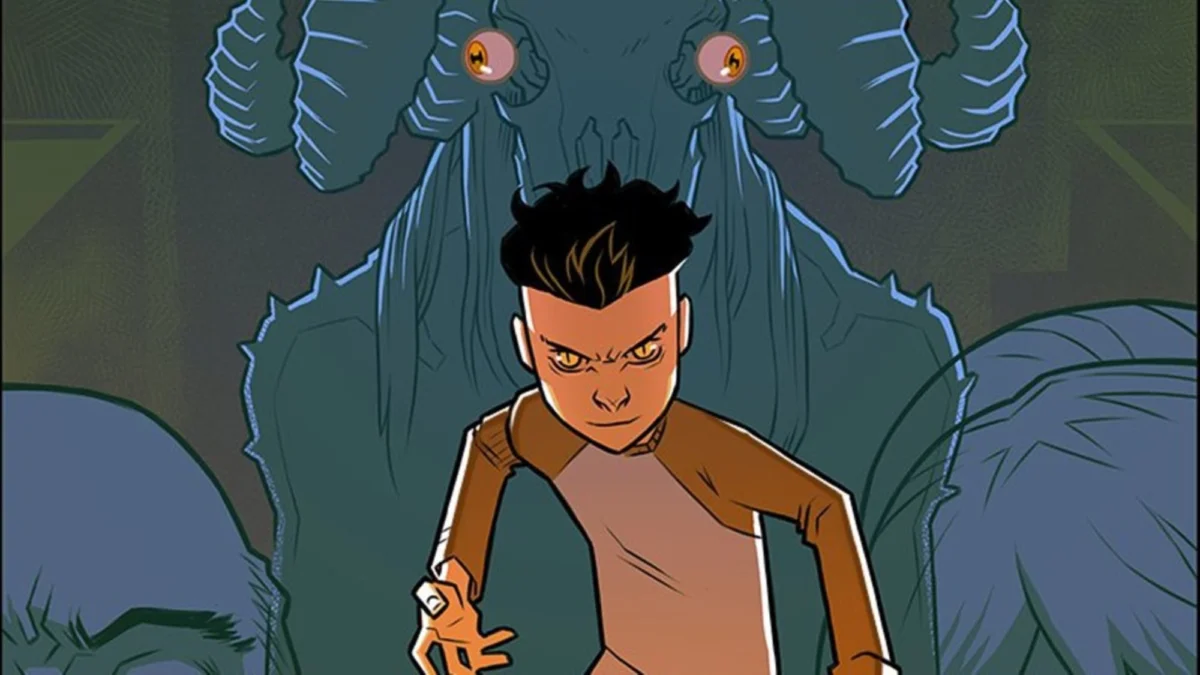
The landscape of South Korean cinema is currently undergoing a transformative shift, increasingly fueled by the rich, narrative-dense world of domestic webtoons. At the forefront of this movement is the highly anticipated production of Concrete Utopia (working title), a cinematic adaptation of Kim Sung Nyung’s acclaimed webtoon, Happy Boy. With an ensemble cast featuring industry heavyweights Lee Byung-hun, Park Seo-joon, and Park Bo-young, the project is shaping up to be one of the most significant releases in the Korean film industry’s recent history.
The Core Narrative: From Webtoon to Screen
Happy Boy, originally created by Kim Sung Nyung, is a psychological thriller that operates on two distinct narrative levels. The first arc centers on the harrowing experiences of a group of high school students who find themselves trapped within the crumbling remains of their school following a sudden, catastrophic disaster. This segment is deeply rooted in the perspective of Donghyun, a social outcast whose experiences provide a lens through which the audience explores themes of trauma, survival, and the fragility of adolescent social hierarchies.
The second arc, titled "Pleasant Neighbors," shifts the focus to the broader social implications of such a disaster. It explores the darker side of human nature, specifically how ordinary people—driven by the primal instinct to survive—can undergo profound moral corruption. The upcoming film, Concrete Utopia, will primarily draw from this second, more volatile narrative. By focusing on the shifting power dynamics that emerge when the infrastructure of daily life collapses, the film promises to be a visceral examination of societal breakdown.
Chronology of Production and Development
The trajectory of Concrete Utopia reflects the calculated expansion of Lezhin Studios, the production arm of the global webtoon giant Lezhin Entertainment. Since the studio was acquired by Lezhin Entertainment in 2018, its mandate has been clear: to leverage the massive, pre-existing fanbases of its webtoon intellectual properties to create high-budget, prestige cinema.
- 2018: Lezhin Entertainment acquires the production studio, signaling a strategic pivot toward cross-media content creation.
- August 5, 2020: The official announcement regarding the star-studded cast and the adaptation of Happy Boy is released, generating immediate buzz across both the domestic Korean market and international webtoon communities.
- August 25, 2020: Further details regarding the production pipeline, including director attachment and distribution partnerships with Lotte Entertainment, are confirmed.
- 2021 (Projected): The industry anticipated the commencement of principal photography, setting a rigorous timeline for the high-profile cast to bring the dystopian vision to life.
The studio has been aggressively building its portfolio. In addition to Concrete Utopia, Lezhin Studios has been active in producing television dramas such as Method and Chomi’s Interest. They are also concurrently managing the pre-production of Method: A Second Attempt and the much-hyped Netflix original series Hell, which has further cemented their reputation as a premier house for dark, genre-bending storytelling. Furthermore, the webtoon D.P Dog’s Day is currently in development for a film adaptation, highlighting the studio’s dominance in the webtoon-to-screen pipeline.

The Artistic Vision: Directorial Leadership
The film is being helmed by director Uhm Tae-hwa, a filmmaker whose portfolio is noted for its thematic depth and technical precision. Known for his work on The Hidden Time and The Fighting, Uhm was chosen for his ability to handle complex psychological landscapes within high-concept environments.
Uhm’s direction is expected to lean into the claustrophobic and tense atmosphere inherent in the Happy Boy source material. By balancing the character-driven drama of the trapped survivors with the external, apocalyptic stakes of the narrative, Uhm aims to capture the precise moment when the veneer of "civilized" behavior is stripped away, leaving only the raw, often brutal, mechanics of survival.
Official Perspectives and Creative Intent
In a statement reflecting on the project, the original creator, Kim Sung Nyung, expressed cautious optimism and profound interest in the adaptation process. "I’m looking forward to seeing how the movie depicts the change people go through when placed in extreme situations," Kim stated. "The core of the story is not just the disaster itself, but the challenge of preserving one’s humanity when the world around you demands you shed it to stay alive."
The collaboration between Lezhin Studios and the cast represents a significant financial and creative gamble. By securing top-tier talent like Lee Byung-hun—who has seen success in both Korean cinema and international projects like the G.I. Joe franchise—the producers are ensuring that the film possesses the necessary gravitas to handle the heavy emotional toll of the script. Similarly, the inclusion of Park Seo-joon and Park Bo-young, both of whom possess immense domestic and international appeal, ensures that Concrete Utopia will likely serve as a massive commercial anchor for the studio’s 2021/2022 slate.
The Broader Implications for the Webtoon Industry
The transition of Happy Boy from a digital, serial format to a major motion picture is a testament to the maturation of the South Korean webtoon industry. With over 10 million readers worldwide, the platform has transcended its origins as a niche digital medium to become the primary incubator for mainstream South Korean entertainment.

The "Lezhin Model"
Lezhin Studios has perfected a vertically integrated model. By owning both the source material (the webtoon) and the production apparatus (the film studio), they eliminate many of the friction points typically associated with optioning intellectual property. This allows for a more faithful translation of the webtoon’s tone and visual style into the film format.
Psychological Thrillers as a Cultural Export
South Korean cinema has historically excelled in the thriller and horror genres, with films like Parasite and Train to Busan resetting global expectations for what Korean narratives can achieve. Concrete Utopia falls squarely into this tradition. It serves as a social commentary on modern inequality—using the "collapsed school" or "collapsed society" as a metaphor for the rigid, and often unfair, hierarchies of the real world. By focusing on how ordinary people turn on one another in the face of resource scarcity, the film aligns with current global anxieties, making it a prime candidate for international distribution and critical acclaim.
The Impact on Casting and Star Power
The casting of Lee, Park, and Park also signals a change in how A-list stars view digital media adaptations. Previously, there was a perceived hierarchy where "serious" actors favored original screenplays or literary adaptations. The success of Concrete Utopia—which is all but guaranteed given the pedigree of the participants—will likely further legitimize webtoons as "prestige" source material. This will inevitably drive more capital and more talent toward the sector, creating a feedback loop of higher-quality productions.
Conclusion: A New Standard for Adaptation
As the film enters its production phase, the eyes of the global entertainment industry remain fixed on the progress of Concrete Utopia. It is more than just a movie; it is a proof-of-concept for the viability of webtoons as the next great frontier of cinematic storytelling.
By marrying the gritty, uncompromising realism of Kim Sung Nyung’s Happy Boy with the polished, high-octane production values of Lezhin Studios and the sheer star power of its lead cast, the film is poised to redefine the dystopian genre. Whether it manages to replicate the massive, culture-shifting success of its predecessors remains to be seen, but one thing is certain: the era of the webtoon-based blockbuster has arrived, and it is here to stay.