

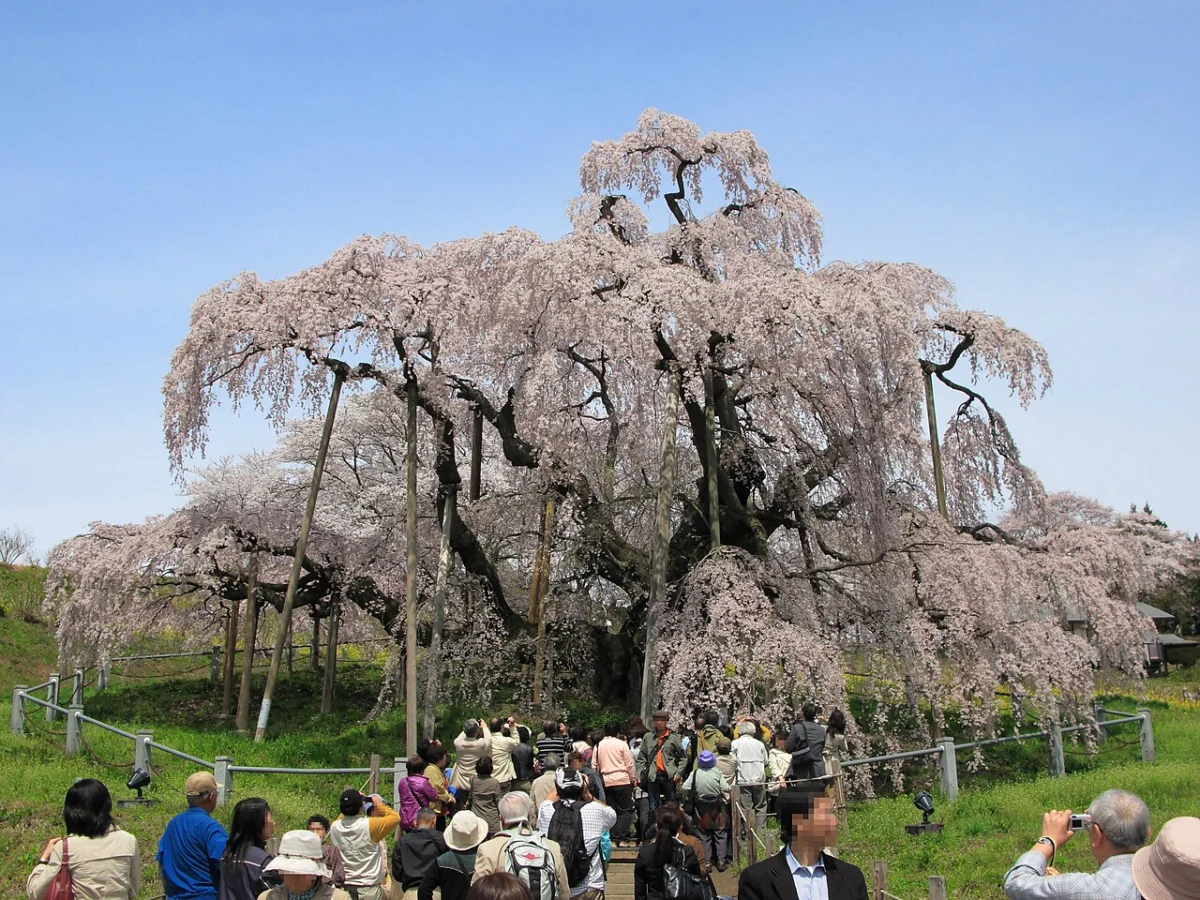
In the rolling foothills of Fukushima Prefecture, amidst the quietude of rural Japan, stands a living monument that has witnessed forty human generations. Every April, as the frost retreats from the Tohoku region, the Miharu Takizakura—the "Waterfall Cherry Tree of Miharu"—transforms from a stoic, gnarled trunk into a celestial cascade of vibrant, weeping pink petals. It is a spectacle that defies the typical, fleeting nature of the sakura season, drawing nearly 200,000 pilgrims within a narrow ten-day window.
To stand before this tree is to confront the intersection of deep time and ephemeral beauty. At over 1,000 years old, the Takizakura is not merely a botanical specimen; it is a cultural anchor, a survivor of feudal wars, and one of the "Three Great Cherry Trees of Japan."
Main Facts: The Anatomy of a Legend
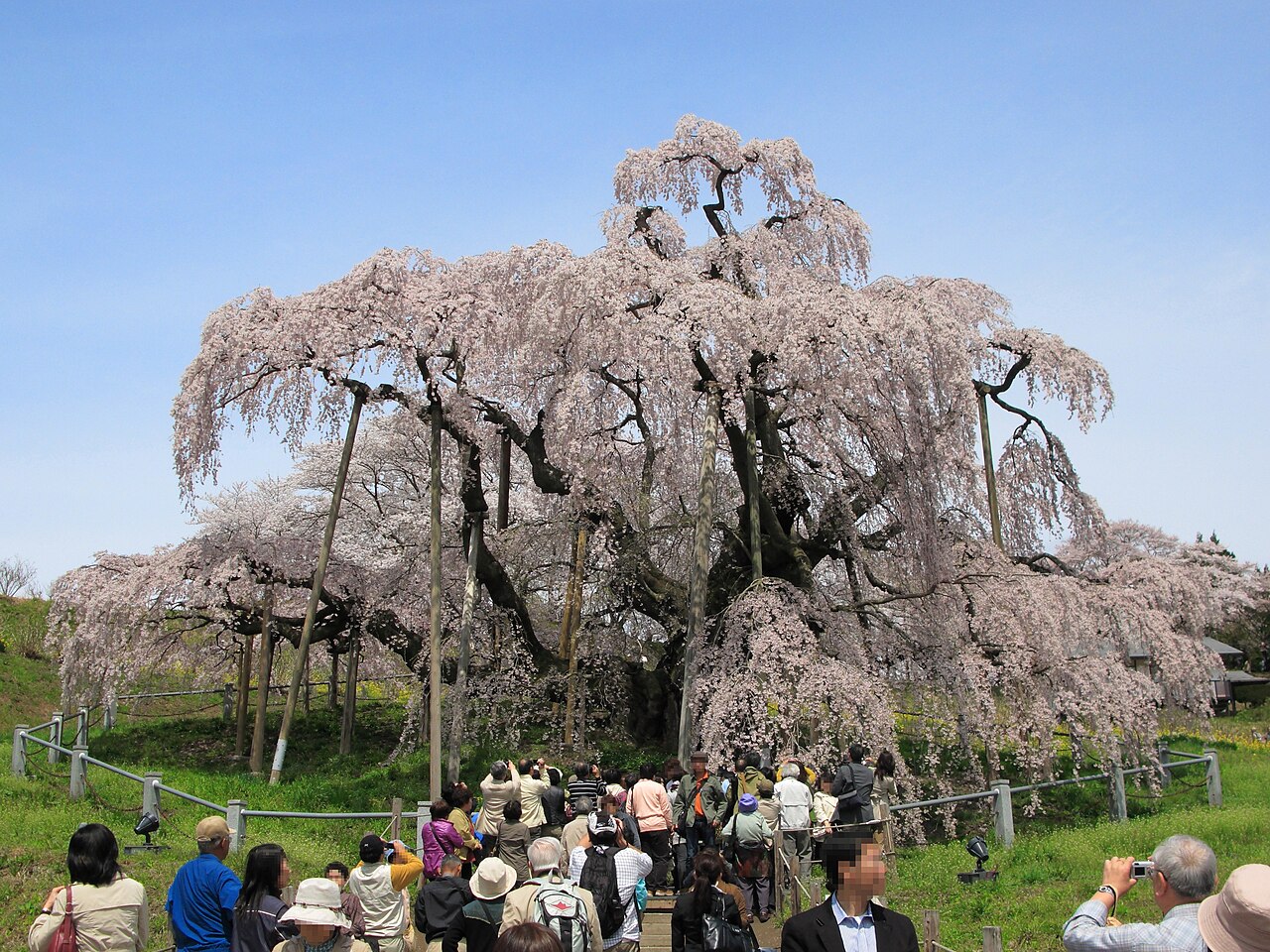
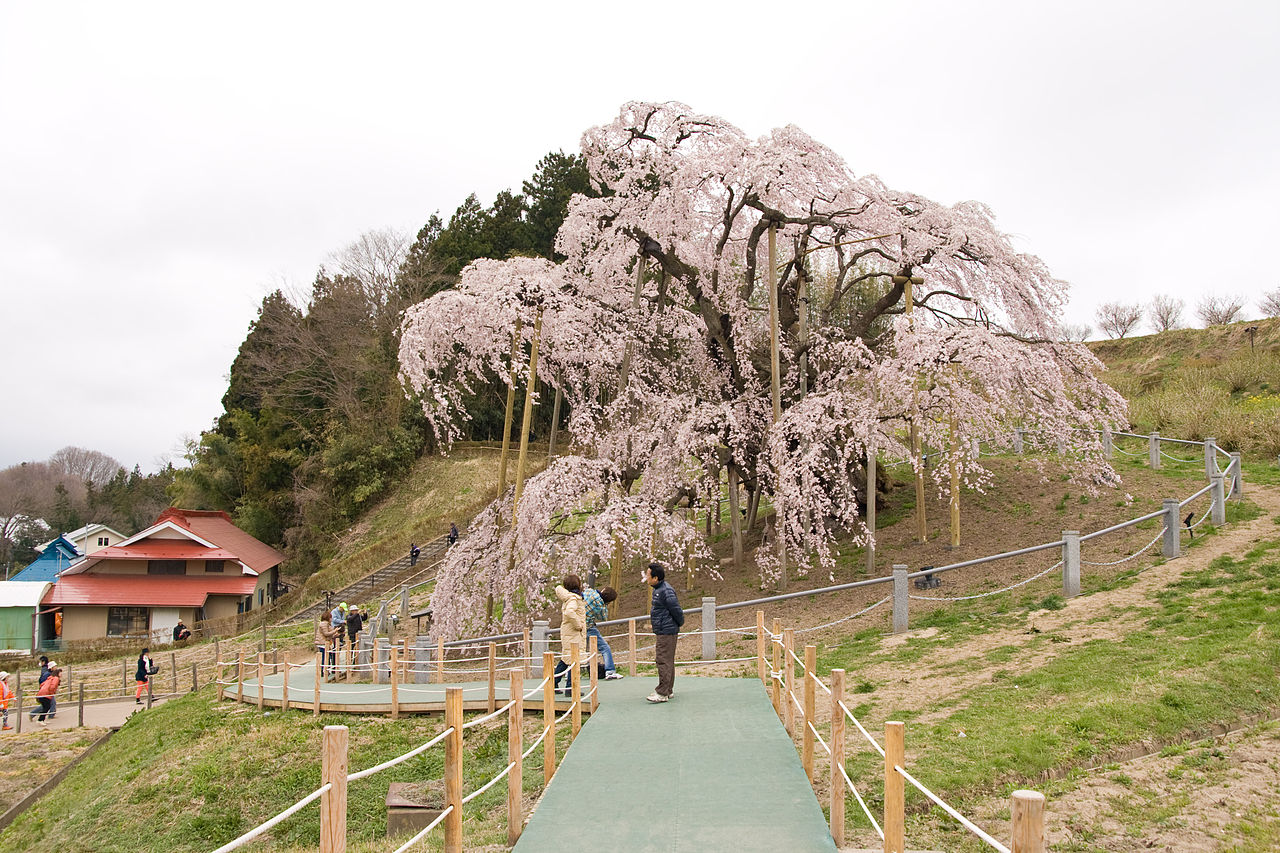
The Miharu Takizakura belongs to the beni-shidare (Prunus pendula) cultivar, a variety of weeping cherry distinct from the ubiquitous Somei-yoshino that defines the Tokyo cityscape. While the common Somei-yoshino is a genetic clone with a lifespan rarely exceeding 80 years, the Takizakura’s longevity is rooted in its natural propagation and resilience.
Vital Statistics
- Age: Estimated at over 1,000 years.
- Height: 13.5 metres.
- Trunk Circumference: 8.1 metres at chest height—an expanse comparable to the floor plan of a small studio apartment.
- Branch Spread: 14.5 metres (South), 14.0 metres (West), 11.0 metres (East), and 5.5 metres (North).
- Status: Designated as a National Natural Monument of Japan (October 12, 1922).
The tree’s distinct, asymmetrical reach is a historical record written in wood. Its eastward lean is not a random occurrence but a centuries-long navigation of the sun, reflecting the persistent environmental pressures of the Tohoku slope it has called home for a millennium.
Chronology: From Feudal "Official Tree" to Global Icon
The history of the Takizakura is inextricably linked to the Miharu-han, the local feudal domain that identified the tree’s significance long before the modern tourism industry.
- Late Edo Period (1800s): The tree was protected as an oya-boku (official tree). During this time, the poet Kamo no Suetaka immortalized the tree in verse, describing blossoms "reaching to every corner of Oshu," effectively enshrining the Takizakura in the national imagination.
- 1922: The Japanese government officially designated the Takizakura a National Natural Monument, the first cherry tree in the country to receive such protection.
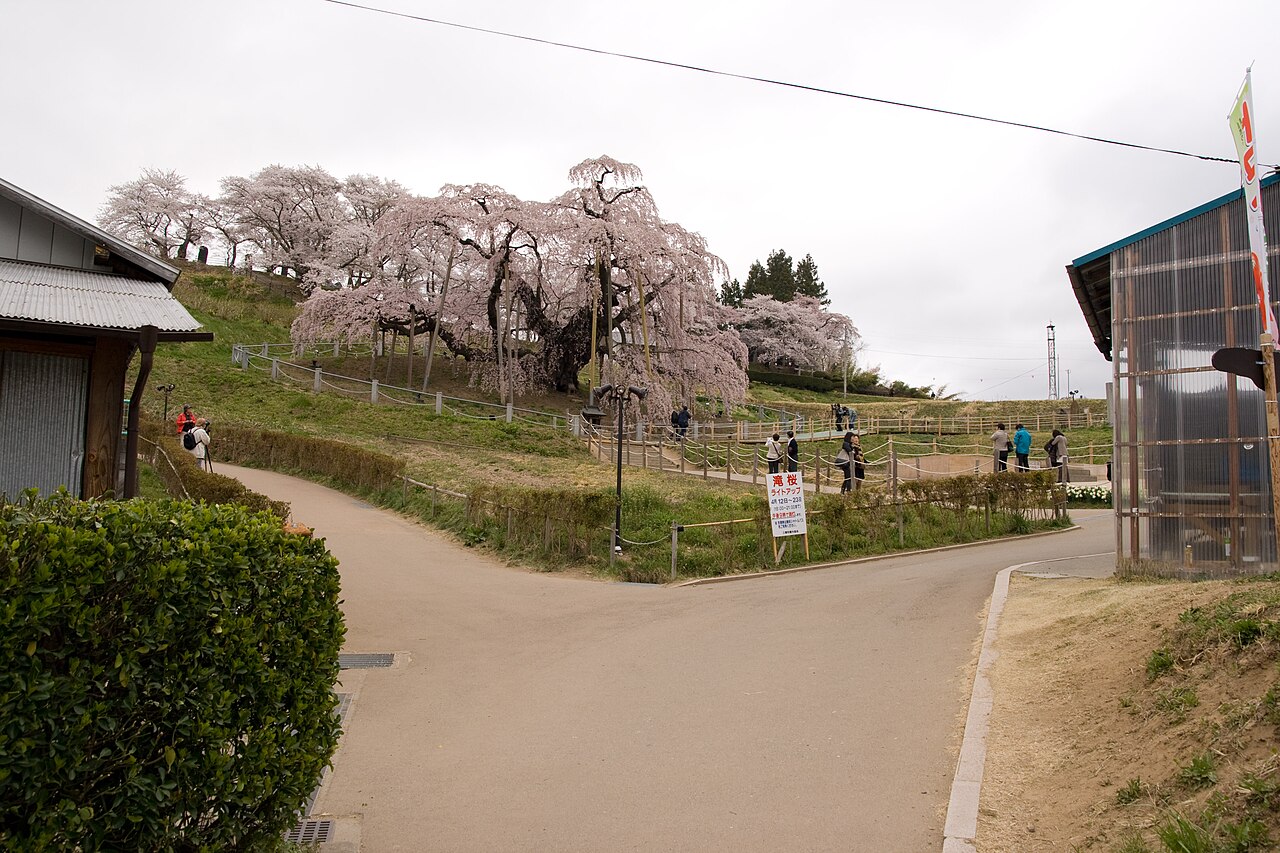
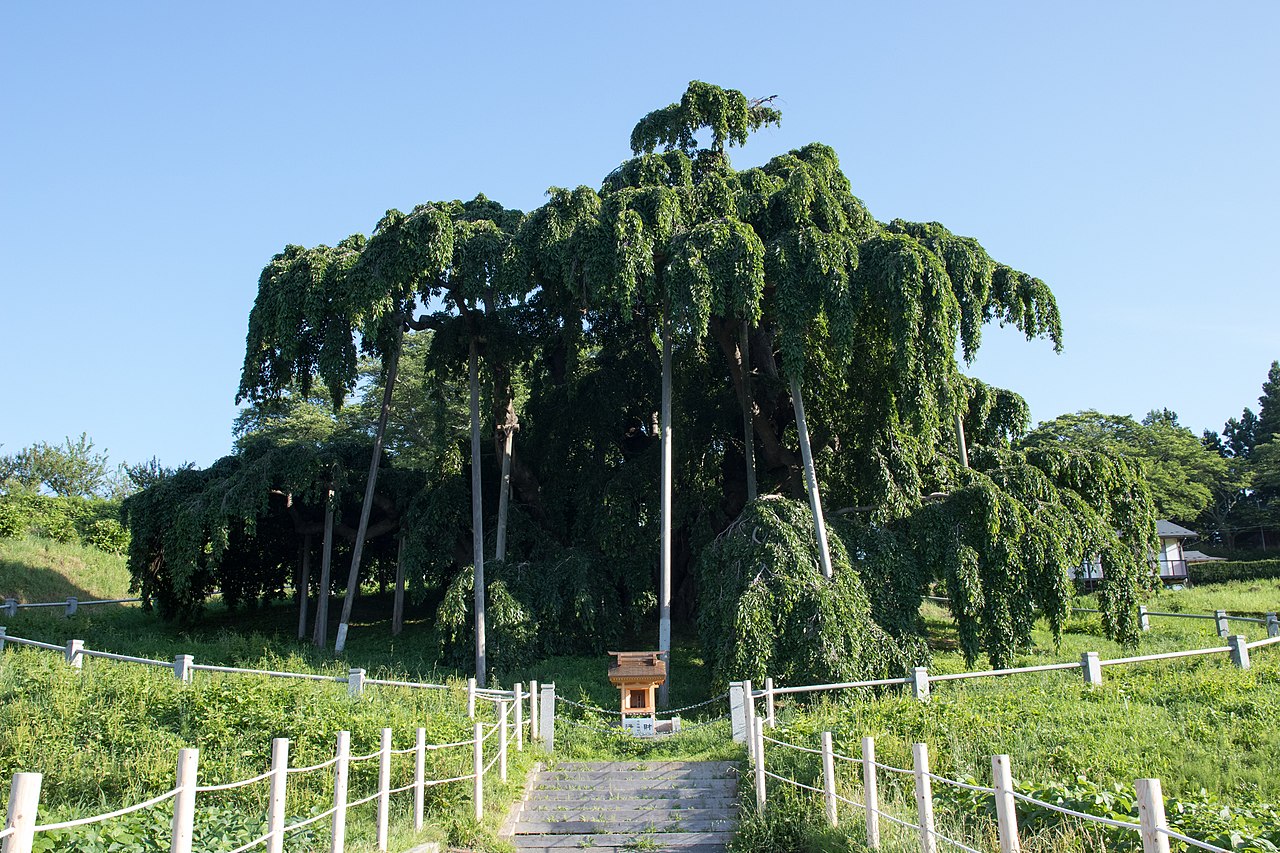
- 1970s–Present: Due to the extreme weight of its sprawling branches, a sophisticated system of wooden and steel support poles was installed, a permanent fixture that ensures the tree’s structural integrity while preserving its "waterfall" silhouette.
- 2011–Present: Following the Great East Japan Earthquake and the subsequent Fukushima Daiichi nuclear accident, the tree became a symbol of regional resilience. Rigorous monitoring confirmed that radiation levels in the area remained safe, and the tree has continued its annual bloom without interruption, serving as a vital point of normalcy for the prefecture.
Supporting Data: The Logistics of the Pilgrimage
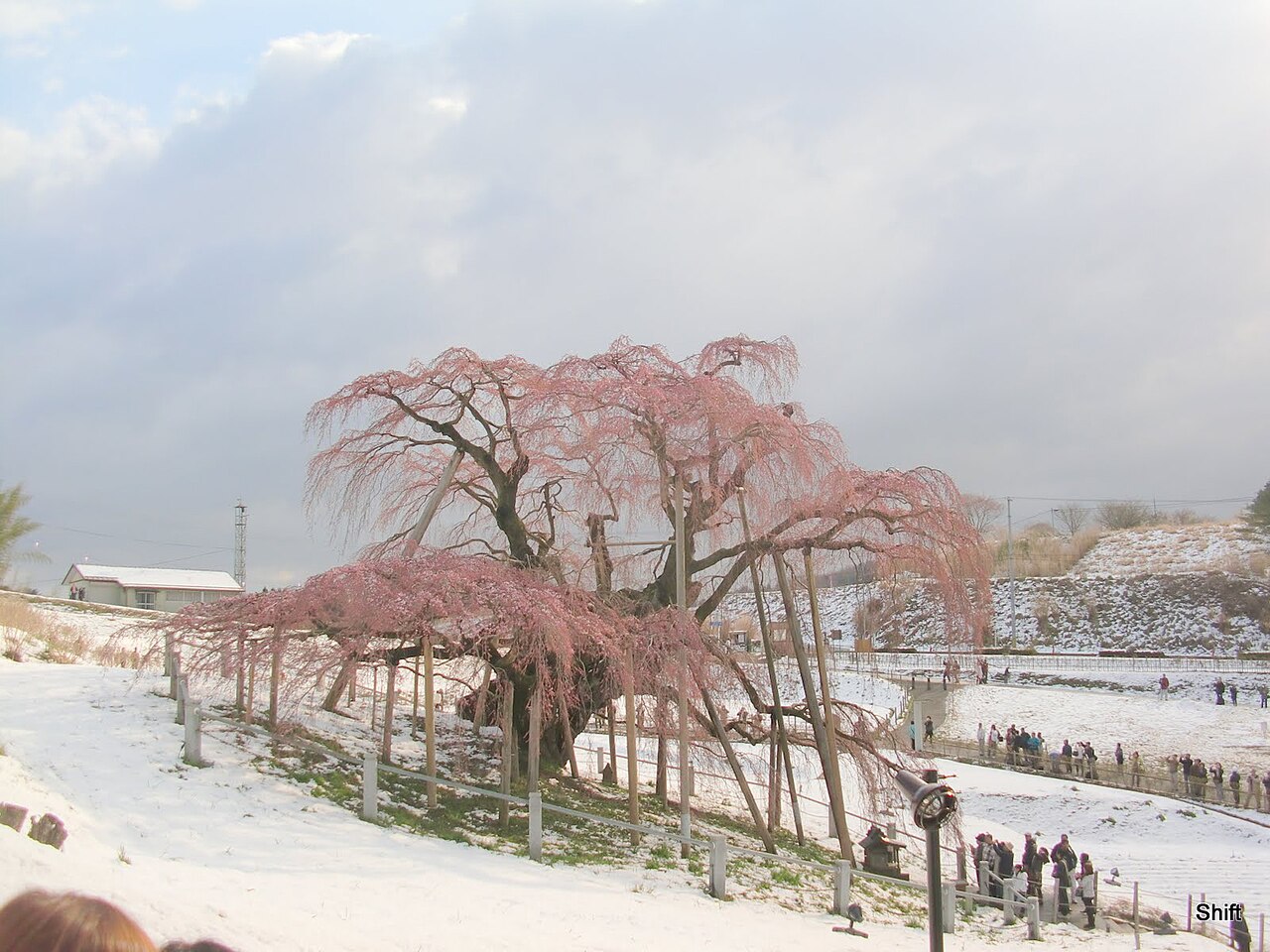
Traveling to Miharu is an exercise in strategic planning. The bloom window, known as mankai, is notoriously fickle, dictated by the late-winter temperatures of the Tohoku mountains.
The Timing Problem
In a standard year, the bloom occurs in the third week of April. However, climate variations can shift this by as much as two weeks in either direction. The Miharu Tourism Association provides real-time updates on their official portal, categorizing the tree’s status from tsubomi (bud) to mankai (full bloom).
Travelers are advised to build a 48-hour buffer into their itineraries. Relying on fixed hotel bookings made months in advance is risky; instead, booking flexible accommodation in the nearby transport hub of Koriyama—only 12 minutes away by local train—is the gold standard for success.
Navigating the Crowds
With 200,000 visitors funneling through a site with a viewing area of roughly 80 by 40 metres, the experience is intense.
- The "Golden Hours": Arrive at the parking field by 07:00 or wait until after 16:00.
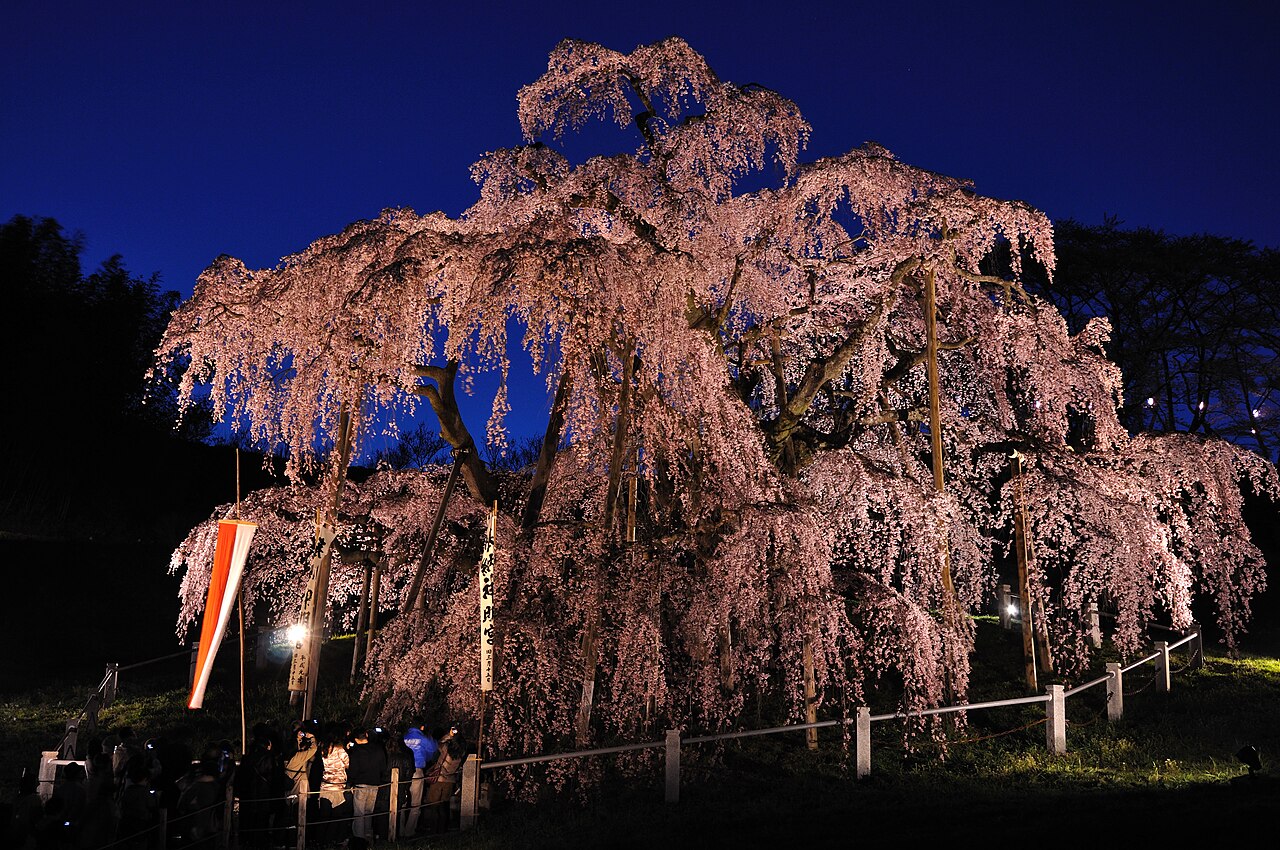
- The Light-Up: The evening illumination (18:00–21:00) is the superior experience. As the sun sets, the artificial lighting—positioned at ground level—transforms the petals into glowing, molten gold against the deep blue of the twilight sky.
- The Circuit: The path is one-way. Visitors should allow at least 60 minutes. The first pass is for observation; the second is for photography.
Official Responses and Conservation Efforts
The stewardship of the Takizakura is a collaborative effort between the town of Miharu, environmental scientists, and the national government. The "official" approach has shifted from passive protection to active arboriculture.
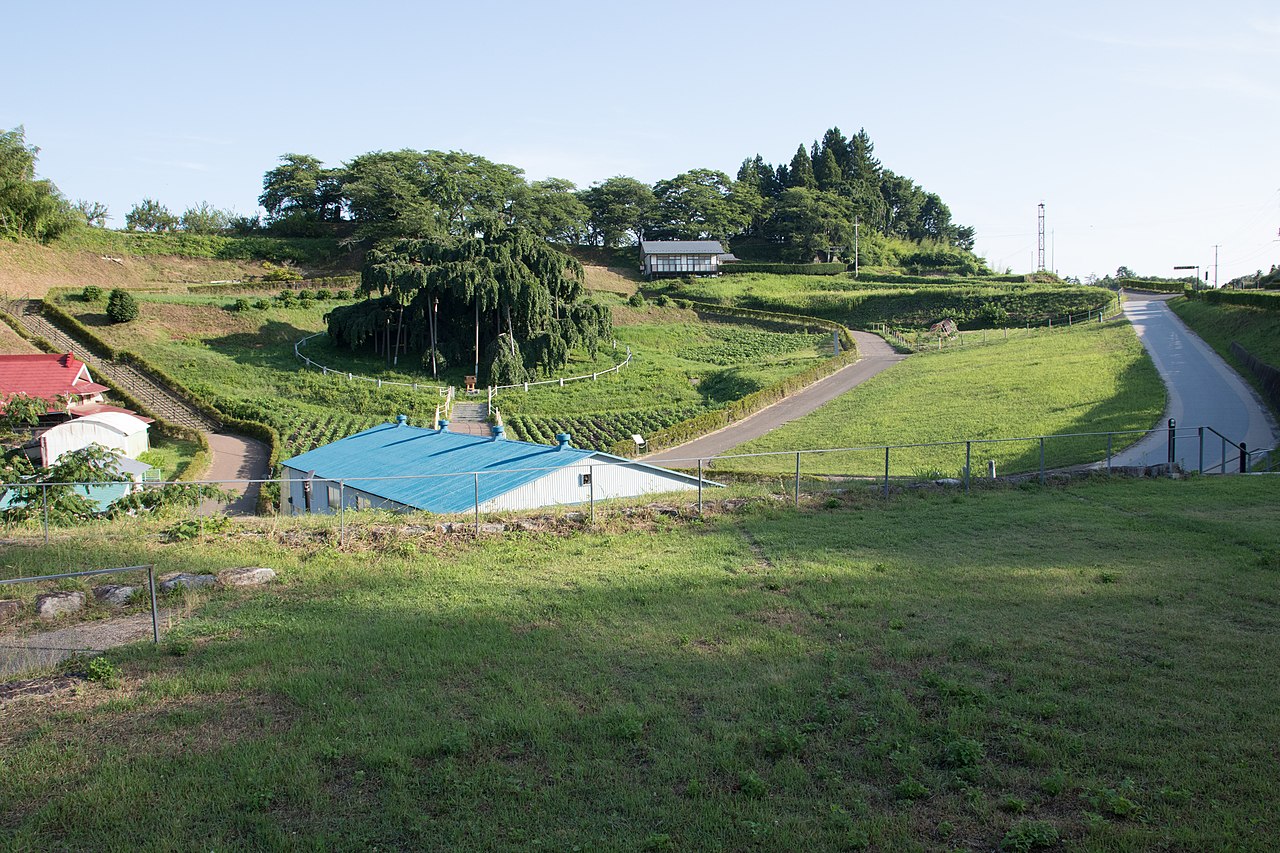
When asked about the tree’s future, local conservationists emphasize that the Takizakura is not merely a static object but a living organism requiring constant intervention. This includes soil enrichment, the removal of invasive pathogens, and the delicate management of the support system that holds up its cascading limbs. The admission fee of ¥300 is directly reinvested into the "Takizakura Fund," which supports the maintenance of the tree and the surrounding park grounds.
Furthermore, the town of Miharu has successfully leveraged the tree’s fame to promote "Sakura-meguri" (cherry-tour) maps. These documents guide tourists to over 40 other historic trees in the region, successfully distributing the tourist load and providing a deeper cultural context for visitors beyond the singular headline act.
Implications: A Broader Cultural Context
Is the Miharu Takizakura worth the effort? For the casual traveler looking for a quick photo opportunity, the answer may be nuanced. However, for those seeking a profound encounter with Japan’s natural and cultural history, the Takizakura is unparalleled.
Comparison to the "Three Great Cherries"
While the Usuzumi-zakura in Gifu is older and the Yamataka Jindai-zakura in Yamanashi holds the title for the oldest cherry tree in Japan, the Takizakura is widely considered the most aesthetically dramatic. It possesses a scale, a color palette, and a physical presence that the others lack.
Beyond the Bloom
The region surrounding Miharu offers a holistic experience for those who look beyond the blossoms:
- Takashiba Dekoyashiki: A historic hamlet where the Miharu-goma (a traditional black-lacquered wooden horse) has been crafted since the Edo period. It provides a rare glimpse into the continuity of Japanese folk art.
- Commutan Fukushima: An essential, if sobering, stop. This environmental education center provides a transparent, scientifically backed account of the 2011 disaster and the subsequent recovery efforts, offering visitors a mature perspective on the region’s modern history.
- Abukuma Cave: For those interested in geological time, this massive limestone cavern system offers a striking contrast to the ephemeral, biological beauty of the Takizakura.
Final Assessment
The Takizakura serves as a reminder that some of the world’s most precious sights are not meant to be consumed in a hurry. It is a destination that demands patience and rewards those who respect its rhythm. Whether you are walking the perimeter under the golden glow of the night light-up or sitting on a bench above the paddy fields watching the blossoms sway in the April wind, the experience is one of profound tranquility.
If you travel to Tohoku in the spring, do not simply pass through. Stop, wait, and allow the "Waterfall of Miharu" to reveal why it has been the heartbeat of this valley for a thousand years. It is more than a tree; it is a testament to the endurance of beauty in an ever-changing world.












No comments yet. Be the first to join the conversation!