Asro
Asro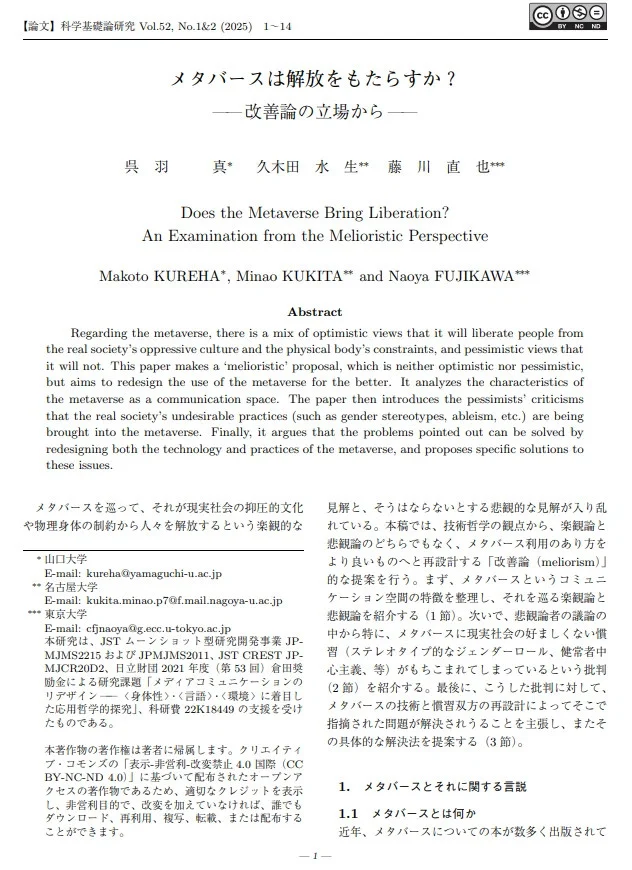
The landscape of digital identity has undergone a seismic shift over the past decade, driven primarily by the rise of Virtual YouTubers (VTubers). What began as a niche subculture within the Japanese internet ecosystem has evolved into a global phenomenon, prompting serious academic inquiry into the nature of performance, technology, and social connection. A recently published research paper in the Journal of Basic Studies (Kisoron), Vol. 52, Issue 1-2 (April 2025), provides a critical lens through which to view this evolution, exploring how VTuber culture is redefining the boundaries between human performers and digital avatars.
Main Facts: The Intersection of Avatar and Identity
At the core of the current discourse is the "melioristic" approach to virtual identity. Unlike traditional content creation, where the creator’s physical body is the primary vehicle for expression, VTubers utilize 3D computer graphics (CG) and motion-capture technology to inhabit an "avatar." This technological layer acts not as a mask, but as an extension of the performer’s psyche.
The academic study highlights several key facets of this phenomenon:
- Technological Mediation: The use of real-time motion capture—often accessible via tools like iPhone X facial tracking—allows for a high degree of emotional fidelity.
- Performance Dynamics: The performer is no longer tethered to their physical appearance, allowing for a radical reimagining of persona that transcends age, gender, and physical limitations.
- The "VRSNS" Integration: The rise of Virtual Reality Social Networks (VRSNS) like VRChat has created a sandbox for VTubers to interact with their audience in shared virtual spaces, effectively turning a broadcast performance into an immersive, community-driven event.
Chronology: From Subculture to Global Phenomenon
The trajectory of VTuber culture is marked by distinct phases of technological and cultural maturation:
- 2016–2017: The Genesis. The term "VTuber" was popularized, and the first wave of pioneers began utilizing basic motion-capture setups. At this stage, the concept was seen as a novelty—a digital puppetry experiment.
- 2018–2020: The Professionalization Phase. Agencies began to emerge, providing performers with high-end equipment, professional management, and curated character designs. This period saw the transition from independent hobbyists to corporate-backed virtual talent.
- 2021–2022: The VR Integration. With the accessibility of VR hardware and the growth of platforms like VRChat, the VTuber experience shifted from 2D/3D screen-based content to full-body, immersive virtual presence.
- 2023–2025: Academic Recognition and Societal Integration. The publication of comprehensive studies in journals like Kisoron signals that the phenomenon is no longer considered "fringe." It is now being analyzed alongside traditional media studies, sociology, and digital anthropology.
Supporting Data: Understanding the Scale
The sheer volume of data surrounding the VTuber industry underscores its economic and social weight. Recent reports indicate that the top-tier of the VTuber industry—comprising hundreds of established talents—regularly draws live audiences ranging from 3,000 to over 9,000 concurrent viewers.

Furthermore, academic surveys of the "VTuber Association" and related research groups suggest that:
- Over 60% of the active VTuber demographic identifies the "freedom of expression" provided by an avatar as their primary motivation for adopting the persona.
- The crossover between YouTube content creation and virtual reality social platforms has seen a 40% year-over-year growth in collaborative events, indicating that VTubers are becoming the primary drivers of user-generated content in the metaverse.
Official Perspectives and Academic Analysis
The research published in April 2025 draws on contributions from scholars like Liudmila Bredikhina, who have meticulously documented the shift in how society views these digital performers. According to the research, the "VTuber" is not merely a character played by a human, but a symbiotic relationship where the technology shapes the performance, and the performance shapes the social norms of the virtual space.
Key takeaways from the research include:
- The "Prix Genre" of Performance: The study notes that the genre has developed its own set of aesthetics and tropes, which are now being codified by fans and creators alike.
- Economic Sustainability: As the industry matures, the research points to the increasing importance of "Direct-to-Avatar" monetization, where fans support the digital construct as a standalone entity, independent of the human performer’s "real-life" identity.
Implications for the Future of Human Interaction
The implications of this research are profound. If the digital avatar can command the same emotional resonance as a human performer, what does this mean for the future of employment, education, and social interaction?
1. The Decentralization of Identity
The research suggests that we are moving toward a future where "identity" is a modular concept. Just as a professional might wear different "hats" in a corporate environment, individuals in the future may inhabit different avatars for different social or professional contexts.

2. The Normalization of Virtual Presence
The integration of IT and virtual social networks into daily life means that the "Uncanny Valley"—the point at which a digital character feels unsettlingly real—is being bridged by high-fidelity motion capture. As the technology becomes more accessible, the distinction between a "physical" meeting and a "virtual" meeting will continue to blur.
3. Ethical and Societal Challenges
With the rise of virtual performers, new ethical questions arise regarding privacy, digital labor rights, and the potential for deep-fake exploitation. The academic community is currently debating how to protect the rights of performers whose identity is inextricably linked to a character design that may be owned by a corporate agency.
Conclusion: A New Frontier
The findings published in the Journal of Basic Studies serve as a vital marker in our understanding of digital culture. VTubers are not just a trend; they are a manifestation of a human desire to transcend physical limitations and engage in play and performance in a way that was previously impossible.
As we look toward the latter half of the 2020s, the "Virtual YouTuber" will likely cease to be a descriptor and instead become a standard mode of digital existence. Whether through the lens of sociologists, technologists, or the millions of fans who tune in daily to watch their favorite virtual creators, one thing is certain: the screen is no longer a barrier, but a portal to a new kind of human experience. The evolution from a webcam-based hobby to a sophisticated, tech-driven performance art form confirms that our digital and physical lives are becoming irrevocably intertwined.


 Muslim