Basiran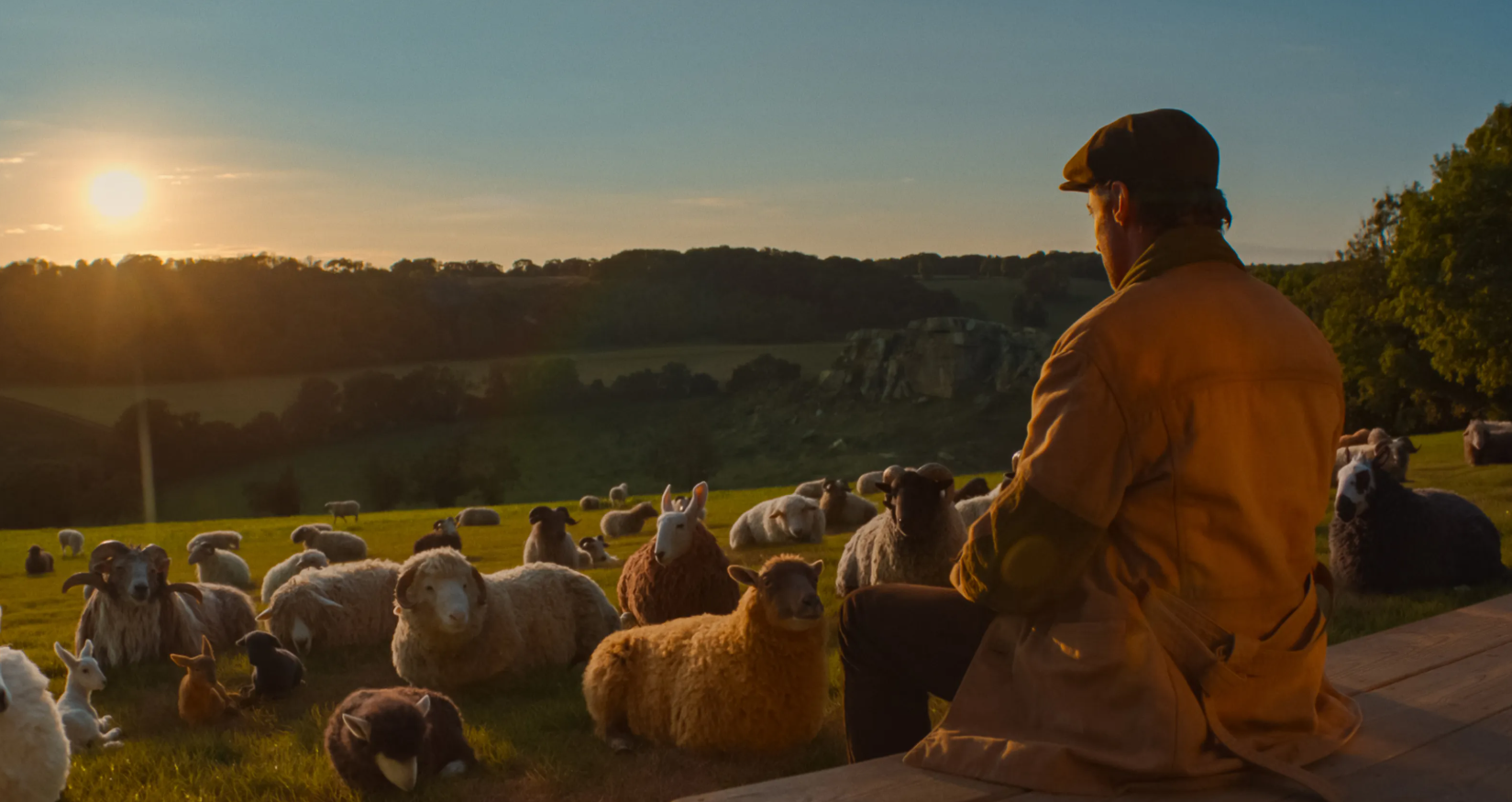
In an era defined by rapid digital acceleration and an unrelenting news cycle, there has emerged a paradoxical, deeply human urge to reconnect with the physical world—and the celestial one beyond it. Whether it is the viral internet mantra of "touching grass" or the global fascination with the Artemis II mission, our modern cultural landscape is increasingly dominated by an "accidental" theme: nature, science, and the profound sense of scale that accompanies them.
This phenomenon is not merely a hobby; it is a psychological necessity. As we navigate a world that feels increasingly fragmented, documentaries and space exploration provide a unifying tether. They offer a rare, collective experience where, for a fleeting moment, millions of people look at the same stars or the same forest floor with shared awe. This article explores the cultural intersection of environmentalism, space exploration, and the media that helps us make sense of our place in the cosmos.
The Chronology of Awe: From Earth to Orbit
The human relationship with nature has historically been one of observation, but never before has that observation been so democratized.
- 1981: David Attenborough captures the world’s imagination with Life on Earth, setting the gold standard for natural history broadcasting.
- 2024–2025: A massive resurgence in space exploration, headlined by the Artemis II mission, brings human eyes back to the moon, shifting the public consciousness toward our interplanetary future.
- May 2026: A convergence of cultural milestones occurs: David Attenborough celebrates his 100th birthday, while new, high-concept television adaptations—such as The Terror: Devil in Silver and the whimsical The Sheep Detectives—offer audiences a reprieve from the existential weight of the real world.
- May 2026: The New York Times podcast The Daily releases an episode featuring the Artemis II crew, framing the vastness of space through the inquisitive lens of children.
Supporting Data: The Science of "Touching Grass"
The phrase "touching grass" may have begun as a dismissive retort on social media, but environmental psychologists argue it carries significant weight. Research suggests that exposure to "green space" and "blue space" (water) reduces cortisol levels and enhances cognitive function.
Furthermore, the data on viewership for nature programming remains a consistent outlier in streaming metrics. According to recent industry reports, documentaries—specifically those narrated by figures like Sir David Attenborough—see higher completion rates and longer viewing durations than almost any other genre. This indicates that viewers are not just "consuming" this content; they are using it as a form of grounding.
When we watch a nature documentary, we are reminded of a scale that ranges from the microscopic—the tiny mites inhabiting the bark of a centuries-old oak—to the macroscopic, such as the flight paths of raptors or the migration patterns of whales. This awareness of scale is a powerful antidote to the isolation often felt in digital spaces.
Official Perspectives: The Artemis Crew and the Voice of a Century
The recent New York Times interview with the Artemis II crew—Victor Glover, Jeremy Hansen, Christina Koch, and Reid Wiseman—offered a rare look at how space travel affects the human psyche. When asked questions by children about everything from "what do you eat in space?" to "how do you handle the silence?", the astronauts responded with profound vulnerability.
The significance of these interactions lies in the erosion of the barrier between "expert" and "layperson." By treating the wonder of a child with the same respect as a technical query, the crew reinforced the idea that space belongs to everyone. This is not just a triumph of engineering; it is a triumph of empathy.
Simultaneously, the celebration of Sir David Attenborough’s 100th birthday has served as a global reminder of the power of consistent, dedicated advocacy. As The Guardian noted in their tribute, Attenborough is more than a broadcaster; he is a bridge. By helping the public engage with the natural world for over seven decades, he has single-handedly cultivated the environmental consciousness of multiple generations.
The Intersection of Fiction and Reality
It is perhaps fitting that while we look to the stars, we also turn to stories that explore the darker, stranger corners of the human experience. The current television landscape is proving that audiences crave both the beauty of the natural world and the "existential rollercoaster" of high-quality fiction.
The Victor LaValle Phenomenon
The adaptation of Victor LaValle’s work, specifically The Terror: Devil in Silver, marks a maturation in horror television. By grounding supernatural horror within the stark, institutional reality of a mental hospital, the series forces viewers to confront the "monster" as both a literal and metaphorical entity. Dan Stevens’ performance, described by critics as having a "real joie de dirtbag quality," provides a gritty anchor for a show that is as much about the human condition as it is about the spectral.
The Existential Sheep
Conversely, the film The Sheep Detectives—adapted from Leonie Swann’s novel Three Bags Full—offers a bizarre, charming counterpoint. With a cast including Emma Thompson, Regina Hall, and Patrick Stewart (voicing a sheep), the film defies traditional genre expectations. It is a testament to the current media climate that a film about sheep solving a murder mystery can be described by critics as an "existentialist rollercoaster." It forces the audience to engage with the absurdity of existence, much like a nature documentary forces us to engage with the brutal efficiency of the food chain.
Implications: A Call to Action
The recurring theme across these cultural touchpoints is clear: we are looking for a way to feel connected. Whether we are watching a hermit crab navigate the tide, listening to an astronaut describe the curvature of the Earth, or watching a fictional sheep grapple with the death of its shepherd, we are seeking meaning.
However, the implication of this search is not just passive consumption. It is an invitation to engage. The call to "call your reps," to "hug your pets," and to "sit in a park" is a vital bridge between the screen and the world.
Why This Matters for the Future
- Environmental Stewardship: The more we understand the interconnectedness of our ecosystem—a lesson taught by decades of nature programming—the more we are likely to act as stewards of that environment.
- Scientific Literacy: By normalizing questions about space and science, we foster a culture that values inquiry and evidence, which is essential for solving the global challenges of the coming decades.
- Mental Health: In a world of infinite, high-speed information, the "slow media" of nature and space provides a much-needed psychological reset.
As we look toward the next century, our greatest assets will not be our digital tools, but our capacity for wonder. Whether we are gazing at the moon through a telescope or watching a century-old icon narrate the life cycle of a plant, we are participating in a fundamental human act: the recognition of our place in a vast, beautiful, and fragile system.
The advice remains simple, yet profound: Go outside. Pay attention. Listen to the stories that remind us how small we are, and recognize that in that smallness, we are finally part of something truly grand.


 Pevita Pearce