

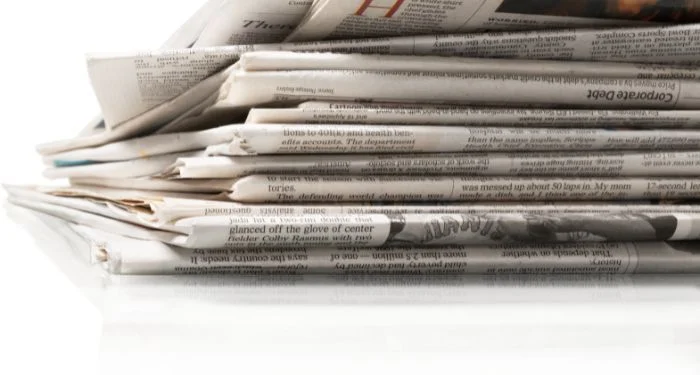
Welcome to "Today in Books," your comprehensive daily briefing on the pulse of the literary world. From the halls of federal courtrooms to the shifting shelves of local bookstores, we track the intersections of politics, culture, and media that define our reading lives.
The Trump Administration’s Humanities Cuts Deemed Unconstitutional
In a landmark legal development for the cultural sector, a federal judge has ruled against the Trump administration’s attempt to unilaterally dismantle federal humanities grants. This decision marks a significant turning point in a series of legal challenges regarding the administration’s aggressive approach to federal agency oversight and fiscal policy.
Main Facts and Context
The litigation centered on the administration’s decision to slash over $100 million in federal funding intended for writers, researchers, and scholars. These grants, distributed through various humanities and library-focused agencies, have long been a lifeline for independent research, public history projects, and cultural preservation.
The court’s ruling specifically bars the administration from terminating these programs. Perhaps most notably, the presiding judge issued a scathing critique of the administration’s reliance on automated artificial intelligence systems to evaluate and reject grant applications, suggesting that the "dehumanization" of the review process failed to meet the standards of administrative due process.
Chronology of Legal Challenges
The path to this victory was paved by months of intense legal scrutiny:
- Initial Action: Following the administration’s "gutting" of agencies like the Institute of Museum and Library Services (IMLS), a coalition of 21 state attorneys general filed suit, arguing the cuts lacked statutory authority.
- The IMLS Victory: The first major win occurred when the court upheld the legitimacy of the IMLS, effectively protecting its core functions from executive overreach.
- The ALA Settlement: Shortly thereafter, the American Library Association (ALA) and the American Federation of State, County, and Municipal Employees (AFSCME) successfully reached an out-of-court settlement, ensuring the continuity of essential library programming.
- The Current Ruling: This latest decision serves as the capstone, reinforcing the judicial branch’s stance that executive discretion does not grant the power to bypass Congressional budget mandates for cultural enrichment.
Implications for the Cultural Sector
The implications of this ruling are profound. For independent scholars, the restoration of these grants is not merely a financial reprieve; it is an affirmation that intellectual inquiry is a public good worthy of federal protection. Furthermore, the judge’s commentary on AI in government decision-making sets a legal precedent that may influence how future administrations utilize algorithms in public policy, signaling that automation cannot replace the expertise and deliberation required for fair governance.
The Cognitive Landscape: Screen vs. Page
The ongoing debate over whether we absorb information more effectively on paper or via digital screens has moved from the classroom to the center of neuro-pedagogical research. As digital integration in education deepens, the question remains: are we sacrificing comprehension for convenience?
The Myth of the "Superior Format"
Recent studies suggest that the binary narrative—"print is inherently superior to digital"—is fundamentally flawed. The research is far more nuanced, pointing toward a "contextual effectiveness" model. Key factors identified in recent academic discourse include:
- Digital Friction: The cognitive load increases significantly when a digital device introduces secondary distractions, such as hyperlinked advertisements, notifications, or poor text justification.
- Tactile Engagement: Reading on paper provides spatial markers—the physical weight of the book, the thickness of pages read versus remaining—that assist in memory retention.
- Device-Specific Performance: Research indicates that dedicated e-ink readers often yield comprehension levels nearly identical to physical books, whereas high-frequency tablets and laptops often result in "skimming" behaviors that hinder deep reading.
Why Reading Remains a "Difficult Skill"
The study of reading is, at its heart, a study of why the human brain struggles with literacy. Unlike spoken language, which is hard-wired into human evolution, reading is a cultural invention that requires the brain to repurpose its visual and linguistic circuits. When we read on screens, we often trigger the same neural pathways used for rapid scanning and information retrieval rather than the "slow-burn" immersion required for deep, analytical thought.
The Metamorphosis of Chick Lit: From Genre to Obscurity
The release of The Devil Wears Prada 2 has reignited a fascinating academic and industry-wide discussion: what happened to the once-dominant category of "chick lit"?
Historical Context: The Rise and Fall
In the early 2000s, chick lit was the undisputed titan of the publishing industry. Titles were ubiquitous, and new imprints were created specifically to capture the booming market. However, by 2003, industry monitors like Publishers Weekly were already documenting a "turning point" due to market over-saturation.
Sociocultural Analysis
Critics argue that the disappearance of the label was not a result of reader disinterest, but rather a reflection of the pervasive sexism of the era. The term "chick lit" was frequently deployed as a pejorative—a way to categorize female-centric literature as "less than" serious fiction. This mirrored the treatment of female celebrities and the broader devaluation of women’s interests during that period.
Research into gendered perceptions—specifically the phenomenon where women speaking for as little as 30% of a conversation are perceived as "dominating" it—offers a parallel to the publishing industry’s reaction. By labeling the genre as "chick lit," the industry effectively marginalized the audience and the authors, creating a self-fulfilling prophecy of decline.
Where Did the Stories Go?
The stories did not vanish; they evolved. Much of what was once branded as "chick lit" has been absorbed into the modern "rom-com" category. This shift represents a broader movement toward more inclusive, less dismissive marketing strategies, acknowledging that stories centered on women’s experiences are central, not niche, to the literary canon.
2026: The Year of Romantasy
As we move further into 2026, the publishing industry is witnessing a massive surge in "Romantasy"—a subgenre that bridges the gap between high-stakes fantasy world-building and the emotional intimacy of romance.
The Appeal of the Genre
Why is Romantasy capturing the zeitgeist? Experts suggest it is a reaction to an era of global uncertainty. Romantasy offers:
- The "Happily Ever After" (HEA) Guarantee: In a world where real-world outcomes often feel precarious, the promise of a satisfying resolution provides a necessary psychological refuge.
- Escapism with Agency: Unlike passive escapism, Romantasy often features protagonists who must navigate complex magical systems and impossible odds, reflecting the reader’s own desire for agency and resilience.
- The "Rooting" Effect: The subgenre excels at creating intimate, stakes-driven relationships where the protagonist is never truly alone, providing a sense of collective success that resonates with the modern reader.
Looking Ahead
The 13 most anticipated Romantasy titles of 2026 underscore the genre’s maturation. No longer just a sub-category, Romantasy has become a cornerstone of the industry, proving that readers are hungrier than ever for magic, myth, and the enduring power of love. As publishers continue to invest in these narratives, we can expect the genre to push further into experimental structures, perhaps even challenging the traditional tropes that once defined it.
For more in-depth coverage of these stories and access to our exclusive 2026 reading lists, subscribe to our "All Access" program. Stay tuned to Today in Books for your daily dose of the literary world, where we believe every page turned is a step toward understanding our complex, unfolding reality.










No comments yet. Be the first to join the conversation!