

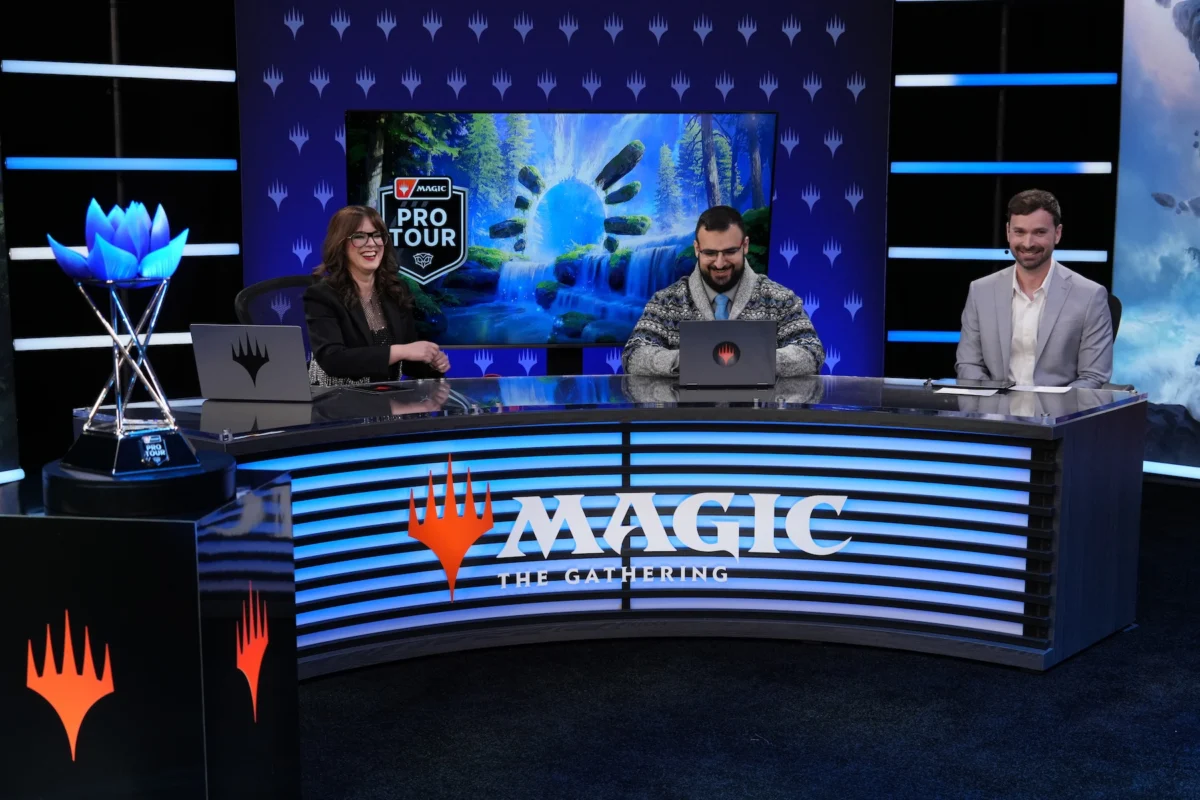
For three electrifying days in Las Vegas, the desert heat outside the convention center was eclipsed by the sheer intensity of 25,000 fans gathered inside. This was not a summit for card sharps or magicians in the traditional sense; it was MagicCon 2026, the pulsating heart of the modern trading card game (TCG) universe. Centered around Hasbro’s flagship juggernaut, Magic: The Gathering (MTG), the event served as a definitive declaration that the tabletop giant has fully evolved from a niche hobbyist pastime into a global entertainment powerhouse.
For this week’s episode of Strictly Business, Variety went on the ground to explore how a game born in the early 90s has managed to sustain, and eventually explode, its influence to the tune of $1.7 billion in annual revenue as of 2025.
The Evolution of a Cultural Titan: A Chronological Perspective
To understand the scale of MagicCon 2026, one must first look at the trajectory of the game itself. Magic: The Gathering was released in 1993, a creation of Richard Garfield and Wizards of the Coast. Almost immediately, it captured a dedicated audience, leading to the inception of the Pro Tour in 1994—a competitive circuit that has remained the backbone of the game’s professional identity for over three decades.
However, the "MagicCon" brand is a relatively new development in this storied history. According to show manager Brandon Owen, who was hired in 2022 to conceptualize the event, the goal was to create a destination that bridged the gap between elite competition and the casual community.
"I got hired to create MagicCon. It had never existed," Owen told Variety. "The idea was that we had this Pro Tour, and people were watching it, but we wanted to build a world around it. We asked ourselves, ‘What can we build to honor this history while inviting new fans into the fold?’"
From its inaugural event in 2023 to the sprawling, multi-faceted Vegas convention in 2026, the growth has been exponential. The event now encompasses everything from high-stakes professional play—featuring a massive $500,000 prize pool—to whimsical, community-focused initiatives like the "Cat Lair," a partnership with a local Las Vegas kitten rescue that allowed attendees to adopt pets on-site.
The Competitive Engine: The Pro Tour’s Staying Power
At the epicenter of the convention remains the Pro Tour. While the game has expanded into digital arenas and multimedia adaptations, the physical, high-stakes competition remains the gold standard for the community. The $500,000 prize pool is more than just a purse; it is a signal of the brand’s commitment to its competitive roots.
Professional players gathered in Vegas, many of whom have spent years honing their craft, to compete in what is widely considered the most difficult tournament structure in TCG history. The presence of high-profile figures—including director Matt Johnson, who was spotted backstage conducting research for the upcoming live-action Magic film—underscored the reality that these players are now viewed as the architects of a high-value intellectual property.

Supporting Data: By the Numbers
The business metrics surrounding Magic: The Gathering are staggering. In 2025, the brand achieved its strongest financial year ever, generating $1.7 billion. This revenue is not derived solely from the sale of card packs; it is the result of a diversified portfolio that includes digital integration (MTG Arena), strategic partnerships, and a robust secondary market that keeps the hobby relevant.
The sheer scale of MagicCon 2026 is a microcosm of this success. With 25,000 attendees, the event demonstrates a "sticky" fan base—users who are willing to travel, spend, and engage with the brand across multiple channels. Hasbro’s strategy, executed through their Wizards of the Coast subsidiary, has been to treat Magic not just as a game, but as an entertainment platform capable of hosting crossovers with the most significant franchises in human history.
Strategic Shifts: Collaborations and IP Expansion
Perhaps the most significant development revealed at MagicCon 2026 was the aggressive expansion of the "Universes Beyond" initiative. The convention featured a headliner panel with MCU star Paul Bettany, who helped unveil a massive collaboration with Marvel. This partnership, which integrates Marvel’s roster of Super Heroes into the Magic card ecosystem, represents a massive leap for the brand.
Furthermore, the team unveiled upcoming sets based on J.R.R. Tolkien’s The Hobbit, as well as their own original intellectual property, Reality Fracture. These moves are designed to widen the funnel, pulling in fans of cinema, literature, and general pop culture who may have never picked up a trading card in their lives.
However, this growth comes with inherent tension. As the brand expands, the pressure to cater to disparate fan groups—from the competitive "spike" players to the casual "Commander" enthusiasts—becomes immense.
Official Responses: Leading the Brand into the Future
The challenge of balancing the needs of a diverse, global audience was a recurring theme among the brand’s leadership. Mark Rosewater, the head designer for Magic: The Gathering, and Gavin Verhey, a principal designer, spoke candidly about the difficulty of maintaining the game’s soul while scaling its reach.
"There’s this dual idea of making sure all the different things are addressed, and it’s a challenge," Rosewater explained. "One of the things that’s really hard is that Magic is so many different things to so many different people, but every Magic set has to talk to everybody, in some way."
Verhey echoed these sentiments, noting that the intensity of fan scrutiny has grown in lockstep with the game’s popularity. "There’s never been a time in Magic history where so many eyes are on it," Verhey said. "We are truly acutely aware of how many people we’re trying to design for because the voices are always louder."

Implications for the Future of Entertainment
The implications of the 2026 convention extend far beyond the tabletop. Magic: The Gathering is currently undergoing a "Hollywood transition." With an animated series in active development at Netflix and a live-action film in production at Legendary, the game is poised to follow the path of other major IPs like Dungeons & Dragons.
The fact that director Matt Johnson was observed interviewing professional players for research on the live-action film suggests that the filmmakers are looking to capture the specific, high-tension atmosphere of the Pro Tour—a world where a single decision can lead to a victory worth hundreds of thousands of dollars.
As the lines between tabletop gaming, digital gaming, and cinema continue to blur, Magic stands at the precipice of a new era. By successfully hosting an event as complex and massive as MagicCon, Wizards of the Coast has proven that it has the infrastructure to support a global media empire.
Conclusion: A Game of Infinite Possibilities
As the final cards were packed away and the convention floor emptied, the sentiment among attendees and staff was one of momentum. Magic: The Gathering is no longer just a "card game." It is a cultural institution that has successfully survived the transition from the analog age into the digital, and now, into the world of mainstream film and television.
The success of MagicCon 2026 serves as a bellwether for the gaming industry at large. It proves that if a brand can maintain its core integrity while embracing the scale of modern entertainment, there is no limit to its reach. For now, the game continues to grow, the prize pools continue to climb, and the stories—both on the card table and on the screen—are only just beginning.
For more in-depth analysis on the business of media and entertainment, listen to the full episode of "Strictly Business" on Apple Podcasts, Spotify, or your preferred streaming platform. Subscribe to the Variety newsletter to receive the latest updates on the intersection of gaming, film, and corporate strategy.











No comments yet. Be the first to join the conversation!