Raul Delapena Setiawan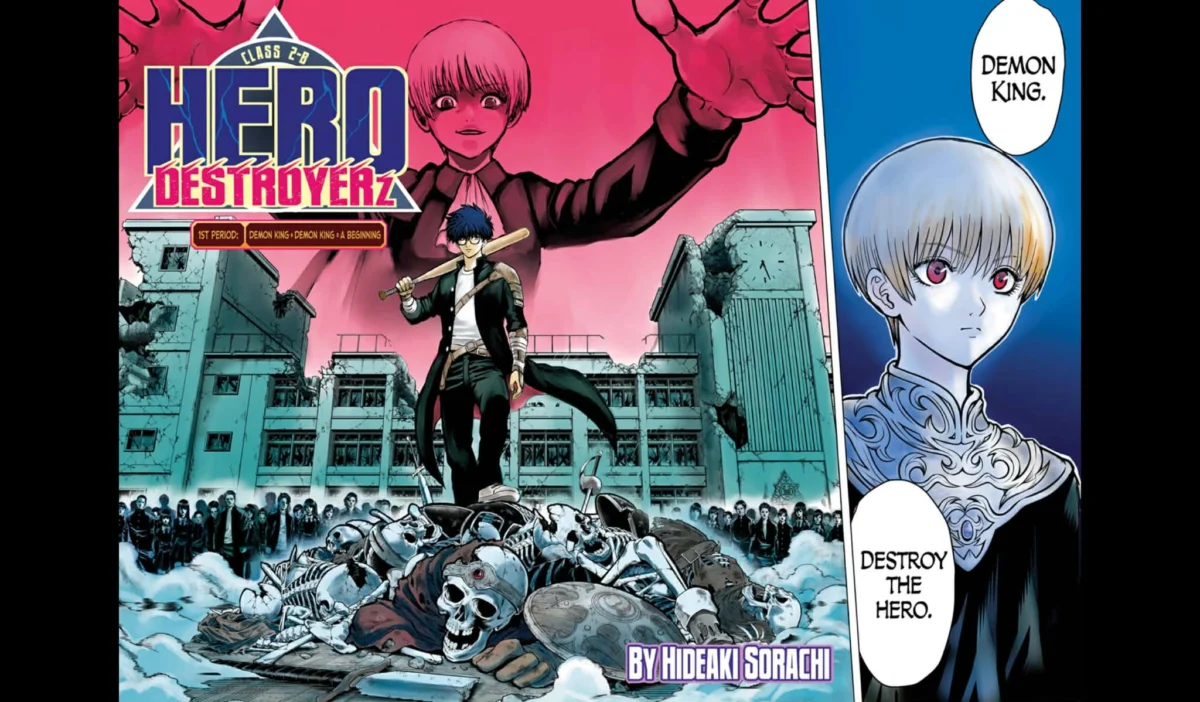
By Editorial Staff
After a silence that felt like an eternity to his dedicated fanbase, Hideaki Sorachi—the visionary mind behind the legendary Gintama—has officially returned to the pages of Shonen Jump. His latest creation, Class 2-B Hero Destroyerz, marks a triumphant and unapologetic return to the genre-bending, irreverent humor that defined his career. With the aid of translator Adrienne Beck and letterer Thom Kilcourse, Sorachi has launched a series that feels simultaneously like a nostalgic homecoming and a fresh, unhinged assault on the sensibilities of the modern manga landscape.
The Return of an Icon: Main Facts and Premise
Class 2-B Hero Destroyerz wastes absolutely no time in establishing its identity. The premise is a masterclass in "reverse isekai" absurdity: The Demon King Valaris, having suffered a crushing defeat at the hands of a hero, transfers their essence into a clone, Valaris III. Through a series of subterranean tunnels, this magical entity emerges in the most mundane, unceremonious location imaginable: a toilet in a modern Japanese school.
The juxtaposition of high-fantasy stakes with the drab, sterile environment of a classroom is the engine that drives the comedy. It is a premise delivered with absolute confidence, signaling to the reader that the narrative will prioritize comedic rhythm and character dynamics over traditional world-building. At the center of this collision is Akira Kumon, a transfer student who appears to be the story’s grounding force—or perhaps its most chaotic wild card. The dynamic between the fish-out-of-water Demon King and the unnervingly stoic Kumon serves as the anchor for the series, creating a tension that is as hilarious as it is intriguing.
Chronology of a Comedy: A Breakdown of Chapter One
The narrative flow of the debut chapter follows a structured madness that only a veteran like Sorachi could execute.
- The Defeat and Migration: The chapter opens with the fall of the original Demon King, establishing the fantasy stakes. This segment is brief, serving only to justify the "reverse isekai" hook.
- The Bathroom Arrival: The shift from the epic fantasy battlefield to a school restroom acts as a comedic reset button. This is where the "Sorachi touch" becomes apparent—the transition is jarring, intentional, and perfectly paced.
- The Encounter: Akira Kumon meets Valaris III. Rather than panicking at the sight of a supernatural entity, Kumon reacts with a deadpan indifference that borders on sociopathy. He treats the Demon King’s illusions and grand declarations as if they were the quirks of a socially awkward foreign exchange student.
- The Domestic Humiliation: The middle portion of the chapter focuses on the Demon King’s inability to navigate basic human infrastructure. Stairs, sports equipment, and architectural transitions become the new "boss fights" for the once-mighty villain, proving that Sorachi still possesses the unique talent for making god-tier characters look utterly pathetic.
- The Escalation: The chapter concludes by hinting at a larger, more structured plot, moving away from pure gag-manga territory and setting the stage for long-term development.
Supporting Data: The Anatomy of the ‘Sorachi Style’
To understand why Class 2-B Hero Destroyerz is making waves, one must examine the stylistic pillars that support Sorachi’s work.
Comedic Timing and Pacing
Sorachi’s rhythm is distinct. It relies on a rapid-fire delivery of toilet humor, meta-commentary, and historical anachronisms. He frequently breaks the fourth wall, often mocking the very medium of manga composition (panel sizes, speech bubble placement, and character expressions). For those familiar with Gintama, the sensation of reading this debut is akin to slipping into a well-worn coat—it is comforting, chaotic, and consistently surprising.
Visual Language
The artwork is unmistakably Sorachi. His character designs utilize thick, bold lines and, more importantly, the signature "nightmare face" shift. A character may appear perfectly normal in one panel, only to be contorted into a grotesque, exaggerated expression in the next to emphasize a punchline. This energetic, expressive flow ensures that the humor remains visual, preventing the dialogue-heavy segments from feeling stagnant.

The Role of Localization
A significant portion of the success of this English release must be attributed to the team behind the scenes. Translating a work as self-referential and pun-heavy as a Sorachi manga is a monumental task. Adrienne Beck’s translation maintains the natural, conversational flow of the original, ensuring that even the most nonsensical jokes land with precision. Thom Kilcourse’s lettering acts as the final piece of the puzzle, using font variations and spatial placement to give the characters distinct "voices," which is essential for maintaining the manic energy of the script.
Official Responses and Industry Reception
While the series is in its infancy, the industry response has been overwhelmingly positive, particularly among fans of the "absurdist comedy" sub-genre. Critics have noted that while the series may not "convert" readers who have historically disliked Sorachi’s loud, messy, and self-aware approach, it serves as a love letter to his existing audience.
The decision by Shonen Jump to feature this series prominently signals a confidence in Sorachi’s brand. In an era where many hit series lean heavily into high-octane battle shonen tropes, Class 2-B Hero Destroyerz stands out as a defiant celebration of the "gag manga." It is a reminder that the genre is not just about silly jokes; it is about utilizing the medium of manga to subvert expectations at every turn.
Implications: Where Does the Series Go From Here?
The most critical question facing Class 2-B Hero Destroyerz is its longevity. Gag manga often struggle to maintain momentum once the initial novelty of the premise wears off. However, the final pages of the first chapter offer a subtle pivot. By introducing stakes that go beyond the initial "demon in a school" gag, Sorachi is signaling that he is capable of evolving this into a more narrative-driven work.
If his previous work on Gintama is any indication, the audience should expect a slow burn. Sorachi is a master at balancing the mundane with the profound, often sneaking in genuine, heartfelt character development between bouts of absolute nonsense. The primary implication here is that we are likely in for a series that will start as a loud, messy farce and eventually reveal a layer of surprising emotional depth.
Final Verdict
For the reader looking for a series that challenges the status quo of modern shonen, Class 2-B Hero Destroyerz is an essential addition to the reading list. It is, by its own admission, "loud, messy, and proudly immature." But in a market that often takes itself too seriously, the return of "the gorilla" (a nickname often used by the author for himself) is a welcome injection of chaos. Whether you are a long-time follower of his work or a newcomer looking for a fresh dose of high-concept comedy, this series promises to be one of the most unpredictable rides of the year.
As the story moves forward, the primary intrigue remains: can Sorachi successfully pivot from the pure absurdity of the opening to a long-form narrative that keeps readers hooked for years? Based on the evidence in Chapter One, the answer is a resounding yes. The king of chaotic comedy has returned, and he has brought the entire classroom down with him.

 Sagoh
Sagoh
 Ammar Sabilarrohman