

The past week in the science fiction and fantasy (SFF) community has been a whirlwind of creative innovation, poignant professional reflection, and necessary industry discourse. From the release of new digital tools for aspiring authors to serious inquiries into the health of intellectual freedom in schools, the landscape of speculative fiction remains as vibrant as it is contentious. As we navigate the evolving medium of storytelling, we take a moment to honor the titans who shaped our imaginations while looking ahead to the next generation of genre-defining narratives.
I. Creative Tools and Fandom Innovation
The Super Mega SFF Story Ideator
Joe Stech, editor of Compelling Science Fiction, has unveiled a playful yet sophisticated tool for writers: the "SUPER MEGA SFF STORY IDEATOR." Inspired by the pixelated, high-contrast aesthetic of 16-bit Super Nintendo games, the generator is designed to spark creativity in authors experiencing the dreaded "blank page" syndrome.
Stech notes that the tool was curated to offer unique, unconventional prompts that avoid tired tropes. A random roll through the system might yield an unexpected combination, such as a Hopepunk story set in an asteroid mining colony, centered on a traumatized protagonist navigating a world where "doing nothing is the worst option." By providing these structured, yet randomized constraints, Stech hopes to help writers bypass initial friction and dive directly into the "juice" of their creative process.

Beta Readers and Independent Voices
In the realm of independent publishing, long-time fan and convention organizer Jonathan Gleich is seeking beta readers for his latest project: a novel centered on a "vampire priest." Drawing from a deep well of fandom experience—having run the first-ever Star Trek radio talk show in New York City and worked alongside genre legends—Gleich is offering a free audiobook version of his work to the public. His call for feedback underscores the enduring importance of community-driven support in the independent SFF sphere.
II. The State of Intellectual Freedom: A Deep Dive into Book Bans
A critical report from PEN America, as detailed in Publishers Weekly, has sounded the alarm regarding the changing nature of book censorship in American schools. The data reveals that between July 2024 and June 2025, there were 6,780 instances of book removals across 23 states, affecting 3,743 unique titles.
The Shift Toward Nonfiction
Perhaps the most alarming trend identified is the rise in bans targeting nonfiction. While fiction remains the primary target, the ratio of banned fiction to nonfiction has shifted dramatically. In the 2023–2024 period, nonfiction comprised only 14% of bans; by 2025, that figure had ballooned to 29%.

These removals are not merely anecdotal. Kasey Meehan, director of the Freedom to Read program, clarified that the narrative of "removing obscene material" is a smokescreen. Instead, schools are increasingly targeting educational materials, including textbooks, dictionaries, and guides on mental health, puberty, and identity.
Demographics of Censorship
The data underscores a clear bias in these challenges:
- BIPOC Representation: 44% of targeted titles involve work by or about BIPOC individuals.
- LGBTQ+ Content: Books featuring LGBTQ+ themes rose from 25% of the list to 39% in a single year.
- Neurodivergence and Disability: 10% of targeted titles focus on disability representation, including widely respected books like A Boy Called Bat.
The implications of this movement are profound. By removing factual and diverse narratives, the current wave of censorship seeks to narrow the scope of student inquiry and limit the visibility of marginalized identities under the guise of "parental concern."

III. Cinematic Perspectives and Industry Evolution
Ian McKellen on the Magic of Panto
In a wide-ranging interview with the Guardian, legendary actor Ian McKellen offered a spirited defense of pantomime—a uniquely British theatrical art form. Addressing his love for the stage, McKellen compared the moral depth and technical variety of panto to the works of Shakespeare. He noted that while American audiences often find the genre baffling, its reliance on community, song, and "anything goes" spirit is a foundational element of his own patriotism and craft. He also took the opportunity to settle a long-standing nerd debate: "Of course Gandalf would beat Dumbledore in a fight."
The Return of the "Family-Friendly" PG Film
A New York Times review of The Sheep Detectives—an adaptation of Leonie Swann’s Three Bags Full—sparked a conversation about the "lost art" of the PG-rated live-action film. The critic argued that in the 1990s, films like The Princess Bride or Babe balanced dark themes with humor, intended for a multi-generational audience. The film, directed by Kyle Balda and scripted by Craig Mazin, serves as a poignant reminder that cinema can be both emotionally complex and broadly accessible without resorting to the "cutesy" tropes that currently define much of the family market.
Musical and Narrative Innovation
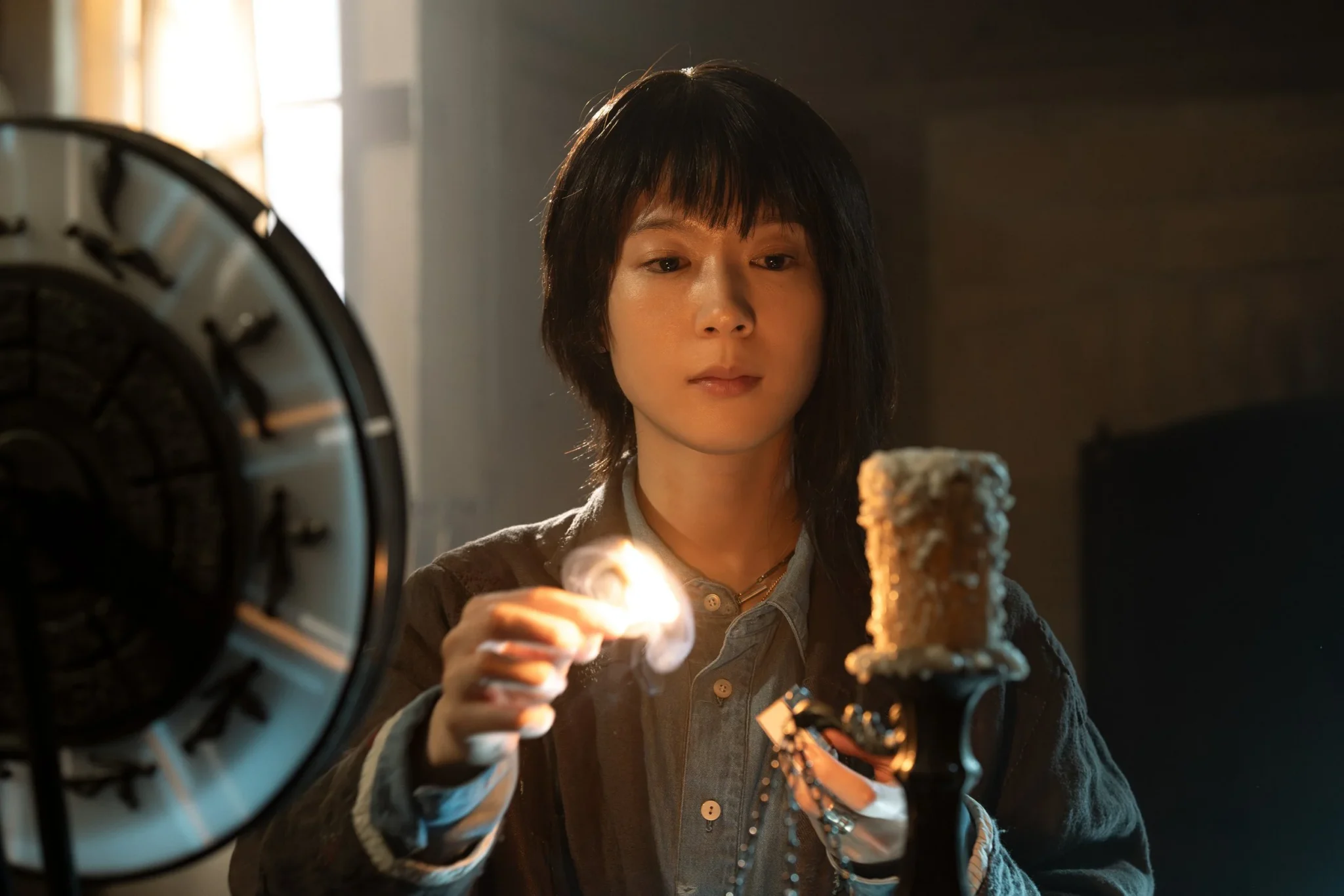
The Murderbot series adaptation for Apple TV continues to generate buzz, specifically regarding its sound design. Composer Amanda Jones revealed that she blended traditional Korean instruments, like the saenghwang, with modern synthesizers to capture the character’s internal anxiety and mechanical nature.

Furthermore, the announcement that Sophie Thatcher has joined Jennifer Kent’s adaptation of James Tiptree Jr.’s The Girl Who Was Plugged In signals a major move for the surreal, dystopian classic. The film, which explores the commodification of the human body and the desperate search for connection in a technological age, appears to be moving from "optioned" status to active production.
IV. Literary Analysis: The Hugo Finalists and Gene Wolfe
The 2026 Hugo Landscape
Cora Buhlert’s analysis of the 2026 Hugo finalists provides a roadmap for readers navigating this year’s ballot. The "Best Novel" category features a mix of returning heavyweights and exciting newcomers. Notable mentions include Nnedi Okorafor’s Death of the Author and Alix E. Harrow’s The Everlasting. Buhlert also highlighted the inclusion of Antonia Hodgson, whose work in historical mystery translates seamlessly into the SFF sphere. The notable absence of R.F. Kuang’s Katabasis serves as a reminder of the stiff competition within the genre’s most prestigious awards.
Remembering Gene Wolfe
May 7 marked the birthday of the late Gene Wolfe (1931–2019), a writer whose influence on the genre is immeasurable. Paul Weimer’s tribute noted that Wolfe was essentially "Umberto Eco in full SFF guise." Whether discussing the New Sun series or the Latro books, Weimer emphasized that Wolfe’s work demands a level of intellectual rigor—the "homework" of the reader—that few other authors command. His legacy remains a cornerstone of the genre, inviting endless re-reading and academic study.

V. A Final Farewell: Gary Kelley (1945–2026)
The artistic community is mourning the loss of Gary Kelley, a legendary illustrator whose work defined the visual language of American magazines and literature for decades. Known for his masterful use of pastels, Kelley’s contributions ranged from the New Yorker and Rolling Stone to iconic book covers and murals in Barnes & Noble stores nationwide.
Inducted into the Society of Illustrators Hall of Fame in 2007, Kelley held a record 29 gold and silver medals. His work was not merely decorative; it was a bridge between the literary and the visual, bringing classic tales like The Legend of Sleepy Hollow to life with haunting, evocative precision. He is survived by his wife of 57 years, Linda, and his children, Cydney and Kyle. His passing marks the end of an era for traditional illustration, though his influence will undoubtedly continue to inspire the next generation of visual storytellers.
VI. Implications for the Future
The state of the SFF community, as reflected in this week’s news, is one of transition. We are seeing a move toward the preservation of historical craft—exemplified by Gary Kelley’s legacy and the intellectual rigor of Gene Wolfe—alongside a fierce, ongoing struggle for the future of information and education in the form of the fight against book bans.

As technology continues to reshape how we tell stories—from AI-assisted ideation to the synthesis of human and machine sound in television—the core values of the community remain centered on the human experience. Whether it is through the lens of a sheep-detective movie or a deeply complex novel about a vampire priest, the industry continues to prioritize the same fundamental goal: to challenge, to comfort, and to expand the boundaries of the possible.









No comments yet. Be the first to join the conversation!