

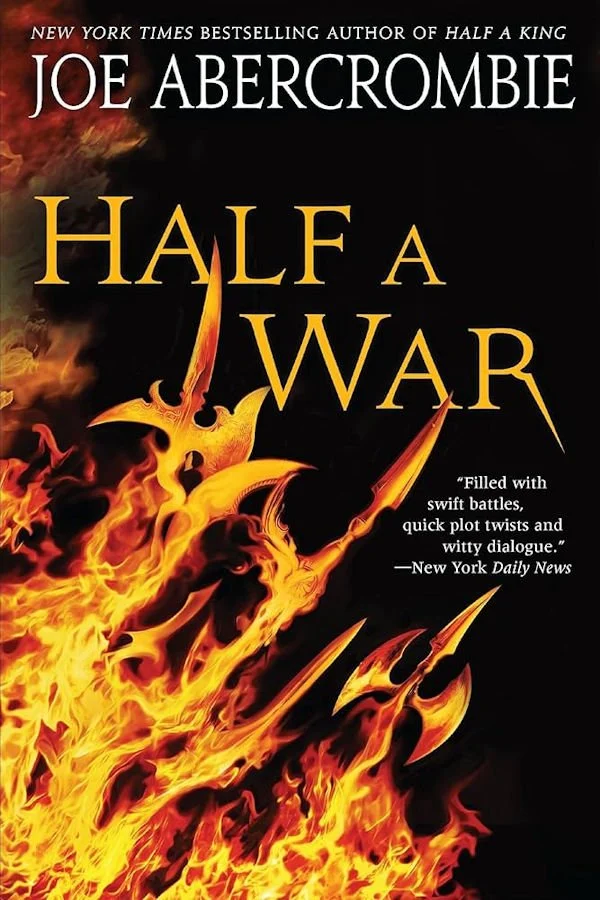
Imagine, for a moment, that Half a King arrived on bookstore shelves in 2014 without the "Young Adult" (YA) sticker plastered across its spine. Picture the cover art—the jagged, icy aesthetics of a brutal, unforgiving world—sitting alongside the latest installments of the First Law series. No disclaimers, no demographic marketing, just a new novel by Joe Abercrombie: a story of a maimed prince, a world of slave ships and raiding parties, and a narrative defined by the crushing, inevitable weight of power.
Would we view it differently? It is a provocative question, yet one that has lingered in the peripheral vision of fantasy criticism for over a decade. When Joe Abercrombie, the man who earned the moniker "Lord Grimdark" for his unflinching, cynical, and morally grey epics, stepped into the YA arena, it sent ripples through the genre. For some fans, it was a curious experiment; for others, a potential dilution of his signature style. As we look back, the Shattered Sea trilogy stands as a testament to the power of genre labeling—and how such labels can obscure the true nature of a story.
The Chronology of a Genre Shift
The publication of Half a King in 2014 marked a pivotal moment in Abercrombie’s career. Having solidified his reputation with The Blade Itself (2006) and the subsequent First Law trilogy, Abercrombie was known for characters who were not just morally compromised, but often actively loathsome, yet inexplicably lovable.
- 2014: Half a King is released, marketed as a YA crossover. The industry reaction is immediate, focusing heavily on the "crossover" nature of the work.
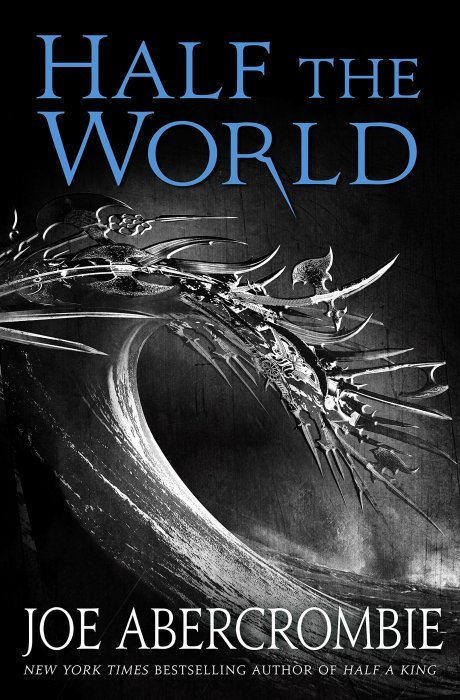
- 2015: Half the World hits the shelves, further expanding the scope of the Shattered Sea. It becomes clear that while the protagonist has changed, the world’s grim sensibilities remain firmly intact.
- 2016: Half a War concludes the trilogy, solidifying the series as a tightly plotted, high-stakes exploration of power dynamics.
- 2017–Present: The legacy of the series persists as a subject of debate. Is it "YA-lite," or is it simply a different facet of the same literary diamond?
The Anatomy of the "YA" Misconception
To understand why the YA label proved so polarizing, one must first deconstruct what that tag implies for the modern fantasy reader. In the contemporary publishing landscape, "YA" has become shorthand for specific narrative conventions: clear-cut morality, central romances that dictate the plot, and a "coming-of-age" journey where the stakes, while high, rarely threaten the foundations of the world in the way they do in adult high fantasy.
Abercrombie’s First Law universe, by contrast, thrived on the death of such conventions. His worlds are characterized by political cruelty, the futility of heroism, and the cynical reality that power is rarely earned—it is stolen. When readers expecting the razor-sharp cynicism of The Blade Itself encountered Half a King, the "YA" label acted as a filter. Many assumed the sharpness had been filed down.
However, this assumption overlooks the core of what Abercrombie does. He does not write for a demographic; he writes for a specific thematic obsession: the corruption of the soul under the pressure of necessity.
Character Study: Prince Yarvi as the Anti-Hero
At the heart of the trilogy stands Prince Yarvi. Born with a withered hand, he is an outcast in a society that prizes physical martial prowess above all else. His destiny is the Ministry—a path of quiet, scholarly influence—until a political betrayal forces him into a role he is fundamentally unsuited for.
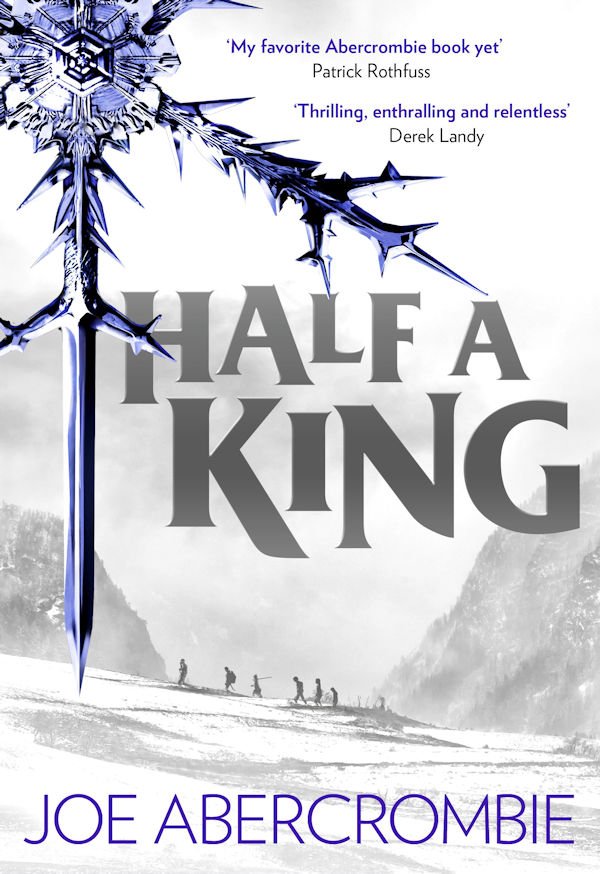
Yarvi is the quintessential Abercrombie protagonist, yet he serves as a counterpoint to the brawny, violent archetypes like Logen Ninefingers. Yarvi’s strength is not in his sword arm but in his mind. He is a master of observation, a student of human failure, and a practitioner of the kind of brutal, calculated patience that would make Glokta proud.
His journey is not one of "finding himself" in the traditional YA sense; it is a harsh education in the reality that the world is a cold, indifferent place. The Shattered Sea trilogy forces Yarvi to shed his ideals, one by one. His growth is not toward nobility, but toward a pragmatic, often ruthless, survivalism.
The Structural DNA of a Grimdark Author
If one strips away the marketing, the narrative skeleton of Half a King is identical to Abercrombie’s adult works. It is a story of an unlikely band of companions navigating a hostile, uncaring world, driven by shifting political tides and the looming specter of betrayal.
Whether it is the journey in The Blade Itself or the ensemble cast of The Devils, Abercrombie consistently utilizes the "misfit fellowship" trope to explore the tension between personal morality and institutional power. Half a King is no different. The dialogue retains that signature dry, nihilistic wit—the kind of humor that feels like a defense mechanism against a world that is actively trying to kill you.
Furthermore, the world-building, while more streamlined, remains rooted in the same cynical foundations. The hatred of "elves" (a recurring, almost obsessive trope in his work), the fragility of alliances, and the fact that good intentions are almost always the precursor to a tragedy—these are the hallmarks of a writer whose voice is immutable, regardless of the age rating on the cover.
Supporting Data: The Impact of Scope
Why does Half a King feel different, even if the "voice" is the same? The answer lies in the scope.
- Ensemble vs. Individual: Where the First Law novels use multiple, shifting perspectives to weave a tapestry of global chaos, the Shattered Sea trilogy is laser-focused. By centering the narrative on Yarvi and his evolving cast of companions, the series gains a sense of momentum that is arguably faster and more relentless than his sprawling epics.
- Political Density: The geopolitics of the Shattered Sea are more localized. This isn’t a flaw; it’s a stylistic choice. The tighter focus allows for a deeper exploration of the psychological toll of leadership. We aren’t watching empires fall from a distance; we are watching a young man realize that he must become a monster to save his people.
This narrowing of focus acts as a lens, concentrating the heat of the narrative. The stakes may feel more "personal," but in the world of Joe Abercrombie, the personal is almost always the political.
Implications: The Failure of Categorization
The most significant implication of the Half a King discourse is the failure of the "YA" label to capture the nuance of contemporary genre fiction. By cordoning off the book into a separate category, the publishing industry unintentionally created a barrier for adult readers who might have found its leaner, sharper style refreshing.
Conversely, it placed the book in a strange limbo: too grim for the traditional YA market, which often prizes hope and agency, and too "labeled" for the adult grimdark market, which often ignores anything not explicitly marketed as "epic" or "adult."
The irony is that Half a King is, in many ways, a perfect entry point for readers curious about Abercrombie’s work. It serves as a distillation of his themes. It is the "grimdark" essence stripped of its maximalist baggage.
Conclusion: Looking Beyond the Cover
Ultimately, Half a King succeeds not in spite of its constraints, but because of them. It is a testament to the fact that a master craftsman can adjust the scale of their work without sacrificing the core tenets of their style.
The distance between YA fantasy and grimdark is not as wide as critics once suggested. Both are concerned with the transition from the innocence of childhood to the harsh, disillusioning reality of the adult world. The difference lies only in the degree of mercy the author shows their characters.
If we look past the marketing, beyond the labels, and into the pages themselves, we find the same Joe Abercrombie we have always known. The world is still broken, the heroes are still flawed, and the path to victory is still paved with the sacrifices of those who weren’t clever enough to survive. Half a King is not a departure from the First Law—it is a reminder that in the right hands, the darkest stories can be the most compelling, regardless of who the publisher thinks is reading them.










No comments yet. Be the first to join the conversation!