Siti Muinah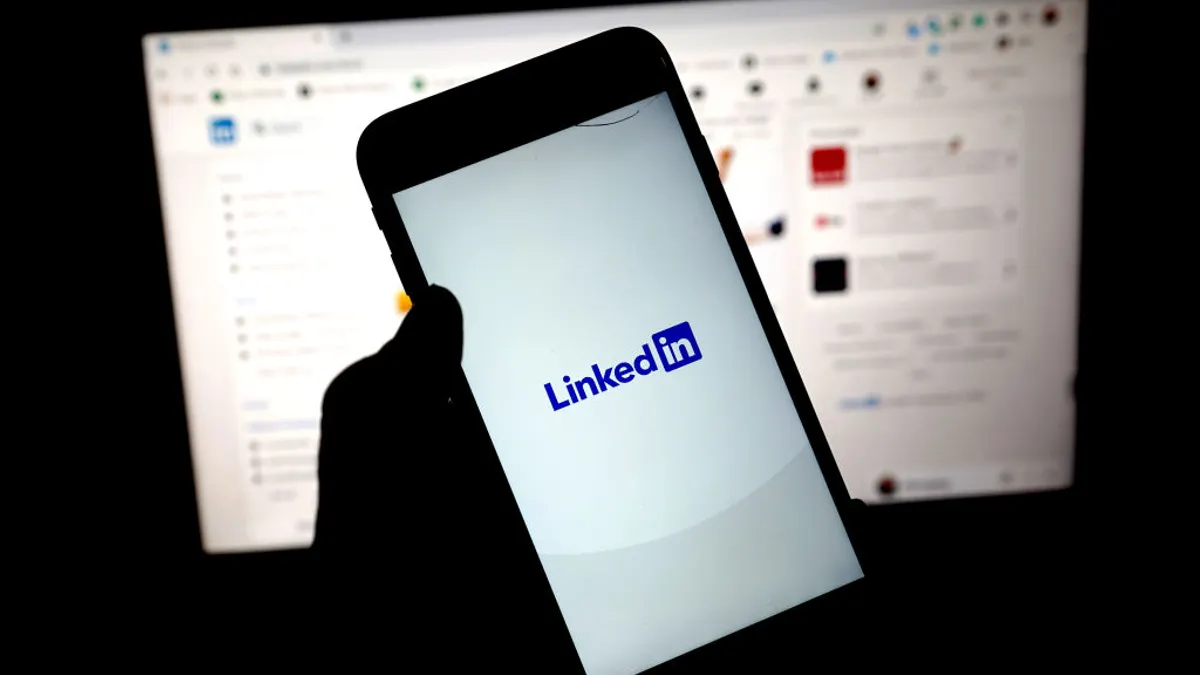
In a move that signals a significant shift in the digital advertising landscape, Amazon Ads and LinkedIn have announced a strategic collaboration designed to bridge the gap between B2B professional networking and the booming Connected TV (CTV) marketplace. By integrating LinkedIn’s robust professional audience data into the Amazon Demand-Side Platform (DSP), the partnership empowers marketers to deliver hyper-targeted advertising campaigns directly to decision-makers within the streaming television environment.
This integration represents a strategic evolution for both tech giants. As the media landscape becomes increasingly fragmented, advertisers are under mounting pressure to consolidate their efforts while maintaining precision. With this new capability, B2B brands can now leverage LinkedIn’s professional insights—including job title, industry, and seniority—to refine their reach on Amazon’s expansive streaming inventory.
The Core Strategic Shift: Why This Partnership Matters
For years, B2B marketers have struggled to marry the high-intent targeting of professional networks with the brand-awareness power of television. Traditionally, CTV advertising has been viewed as a B2C stronghold, dominated by broad demographics and lifestyle segments. However, the rise of professional content consumption on streaming platforms has created an opening for B2B advertisers to reach their audience in a high-engagement, "lean-back" environment.
By utilizing Amazon DSP, marketers can now execute full-funnel strategies that encompass streaming TV, display ads, online video, and audio. The inclusion of LinkedIn’s first-party data acts as the "connective tissue," ensuring that the ads appearing on a household’s smart TV are not just reaching viewers, but are specifically targeting the C-suite executives, procurement officers, or technical leads who make significant enterprise purchasing decisions.
Chronology of an Evolving Ad Ecosystem
The road to this partnership was paved by a series of strategic moves by both Amazon and Microsoft (LinkedIn’s parent company). To understand the significance of this development, one must look at the recent timeline of the ad-tech consolidation:
- 2023: Microsoft signaled a major pivot in its advertising strategy by announcing the sunsetting of "Microsoft Invest," its legacy DSP. This move forced a restructuring of their ad-tech stack, positioning Amazon as a key transition partner.
- Late 2023 – Early 2024: Amazon Ads aggressively expanded its footprint in the CTV space, securing supply-side partnerships with major players including Netflix, Samsung, Tubi, and Comcast. These moves transformed Amazon DSP into a "one-stop shop" for premium streaming inventory.
- Q1 2026: Amazon reported a staggering $17.2 billion in advertising revenue, a 22% year-over-year increase, signaling that their investment in DSP technology is yielding massive returns.
- May 2026: The formal announcement of the LinkedIn-Amazon DSP integration occurs, marking the first time LinkedIn’s professional audience segments are natively accessible within the Amazon ecosystem for CTV activation.
Supporting Data: The Convergence of Video and B2B
The logic behind this partnership is supported by a clear shift in B2B marketing behavior. LinkedIn’s own research suggests that the perception of B2B advertising is changing rapidly. According to a recent survey conducted by the platform, 81% of B2B Chief Marketing Officers (CMOs) now believe that video content is a superior medium for accelerating sales cycles and improving lead conversion rates compared to traditional static formats.
Furthermore, the financial health of both entities underscores the move. LinkedIn recently reported a 12% revenue increase for the fiscal quarter ending March 31, 2026. This growth is being driven by a deliberate strategy to make the platform more "video-forward." By partnering with industry leaders like The Trade Desk—and now Amazon—LinkedIn is successfully positioning itself as an essential component of the modern media mix, moving far beyond its roots as a simple digital resume database.
Official Responses and Industry Sentiment
The collaboration has been met with optimism from leadership at both organizations, who view this as a necessary evolution to meet the needs of modern enterprise clients.
"B2B marketers want to reach decision-makers where they’re spending time—and streaming TV is an essential part of that mix," said David Roter, senior director and head of global agencies and video solutions at LinkedIn. "This collaboration with Amazon DSP expands how advertisers can buy LinkedIn CTV Ads, while still reaching the buyers that matter most to deliver measurable business outcomes at scale."
Industry analysts have similarly praised the move as a "win-win." By offloading the complexity of ad-tech infrastructure to Amazon’s robust DSP, LinkedIn can focus on its core competency: data integrity and audience quality. Conversely, Amazon gains access to the highly lucrative B2B ad spend, a category that historically has been difficult to capture within the standard retail-centric DSP model.

The Strategic Implications for Advertisers
For the average marketing department, this partnership changes the "rules of engagement" for CTV. The implications are three-fold:
1. The Death of "Spray and Pray" B2B Marketing
Previously, advertising on TV for a B2B product was akin to a shotgun approach—expensive and largely unmeasurable in terms of direct B2B conversion. Now, a cloud computing provider, for example, can run a campaign on a popular streaming service, but limit the ad delivery to only those viewers who hold "IT Manager" or "CTO" titles on LinkedIn. This drastically reduces wasted ad spend.
2. Full-Funnel Consolidation
The ability to manage a full-funnel strategy—from initial brand awareness on streaming TV to retargeting via display and online video—all within a single DSP interface, reduces operational friction. Marketers can now track the customer journey from the living room couch to the final B2B purchase, creating a more cohesive view of ROI.
3. Increased Competition for Premium Inventory
As more B2B brands flock to the Amazon DSP to utilize these targeting features, the competition for prime CTV ad slots will likely increase. This could lead to a rise in CPMs (cost per thousand impressions), but for many marketers, the increase in cost will be justified by the superior quality of the leads generated.
Looking Ahead: What’s Next?
The success of this partnership hinges on data privacy and the accuracy of audience matching. As regulators tighten controls around third-party tracking, the use of first-party data—like that held by LinkedIn—is becoming the "gold standard" for digital advertising.

As we move through the remainder of 2026, industry observers will be watching to see how quickly adoption grows. If the early results show a measurable uptick in lead generation for B2B advertisers, we can expect a wave of similar partnerships across the industry. The "walled garden" approach to ad-tech is slowly giving way to a more integrated, data-sharing ecosystem where audience intelligence is the primary currency.
Ultimately, the Amazon-LinkedIn alliance serves as a bellwether for the future of B2B advertising. It confirms that the professional sphere and the consumer entertainment sphere are no longer separate universes. In the age of streaming, the office—and the decision-maker—is everywhere. For brands that can master this new hybrid landscape, the opportunities for growth are, quite literally, on the big screen.


 Basiran