

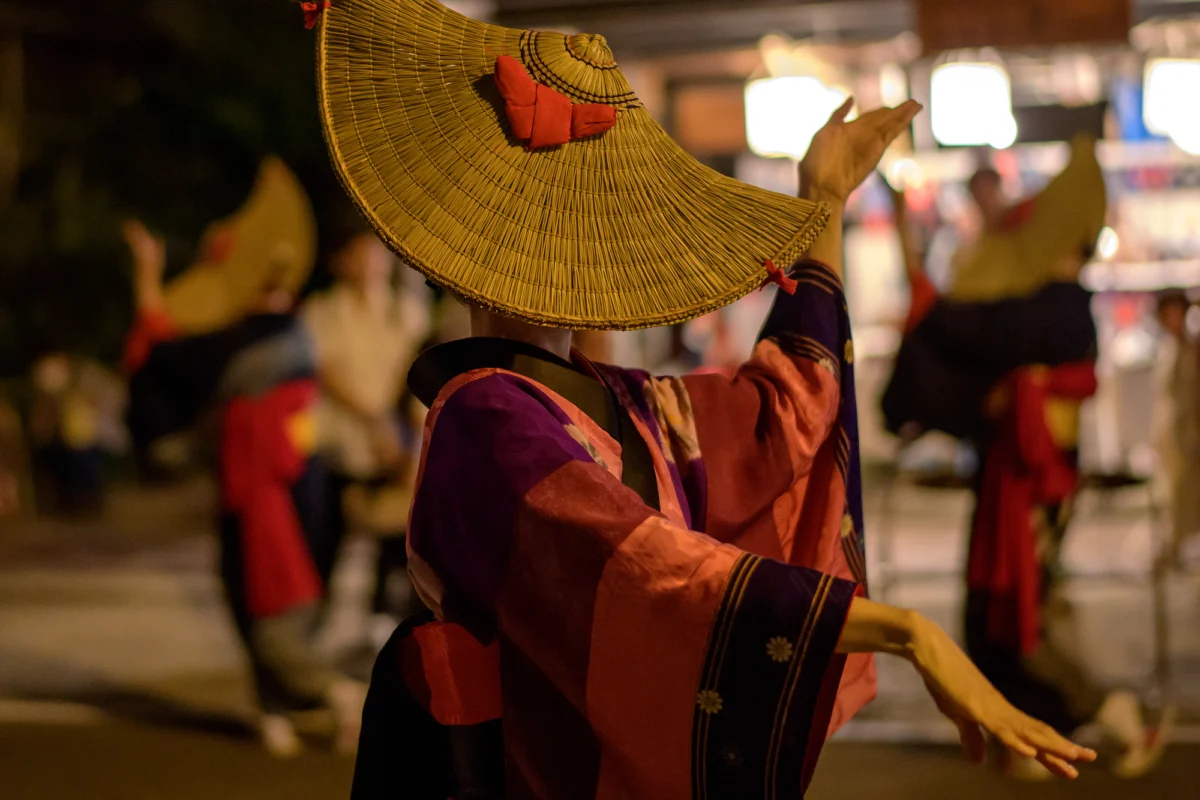
Every summer, as the sweltering heat of the Japanese archipelago reaches its peak, the streets, temple courtyards, and local village squares transform. The air fills with the rhythmic beat of taiko drums, the melodic lilt of flutes, and the synchronized footsteps of thousands of people moving in harmony. This is Bon Odori—a centuries-old dance tradition that serves as both a vibrant community celebration and a profound spiritual bridge between the living and the dead.
While to the casual observer it may appear to be merely a festive street party, Bon Odori is, in fact, a complex cultural tapestry woven from deep religious roots, communal resilience, and a perpetual dance with history.
The Genesis: From Buddhist Devotion to Public Ritual
The origins of Bon Odori are inextricably linked to Obon, the Buddhist-Confucian custom of honoring the spirits of one’s ancestors. The roots of the dance lie in odori nenbutsu—a practice of chanting Buddhist prayers while dancing, which gained prominence in the 10th century through the efforts of the monk Kūya.
By the Kamakura period (1185–1333), the monk Ippen had popularized this practice, traveling across Japan and integrating it into the fabric of local spiritual life. Over the subsequent centuries, this religious fervor converged with the urabon-e festival—the tradition of welcoming the souls of the deceased back to their family homes. Bon Odori evolved as a communal method of "welcoming" these spirits with joy and music before "sending them off" at the end of the festival.
By the Edo period (1603–1868), the dance had transcended the confines of the temple. It became the centerpiece of village life—a vital opportunity for agricultural communities to congregate, socialize, and celebrate after months of grueling labor in the rice paddies. It was, and remains, a practice that blurs the lines between sacred ritual and secular social cohesion.
A Chronology of Survival: From Meiji Suppression to Modern Revival
The history of Bon Odori is not without its trials. During the Meiji Restoration in the late 19th century, the Japanese government embarked on a radical mission of modernization, aiming to align the nation with Western standards. In this push for industrial and social "progress," many traditional customs were labeled as "superstitious" or "outdated."
Bon Odori found itself in the crosshairs of these reforms. The government attempted to suppress or sanitize these public dances, viewing them as impediments to productivity and secular order. For a time, the tradition faced the threat of near-extinction. However, the intrinsic human need for community and the deep-seated cultural reverence for ancestors proved more resilient than political mandates.
By the 20th century, the dance experienced a significant cultural resurgence. It was reclaimed not just as a religious duty, but as an expression of regional identity. Today, in the 21st century, Bon Odori has grown into a diverse cultural phenomenon, with thousands of unique variations practiced across the country, each reflecting the specific history and character of its local prefecture.
The Great Debates: Defining the "Three Great" Festivals
While Bon Odori is celebrated throughout Japan, a prestigious—and often debated—title of the "Three Great Bon Odori" (Sandai Bon Odori) exists. While scholars and enthusiasts often contest the list, the most widely recognized trio includes the Nishimonai Bon Odori in Akita, the Gujō Odori in Gifu, and the Awa Odori in Tokushima.
1. Nishimonai Bon Odori: The Dance of the Dead
Located in Ugo-machi, Akita, the Nishimonai festival is widely regarded as the most solemn and evocative of the tradition. It is frequently called the mōja odori (dance of the dead). Performers often wear hanuii—intricate, patchwork kimonos stitched from remnants of silk—or indigo-dyed yukatas paired with black hoods that obscure the face. The dance is slow, graceful, and haunting, designed specifically to appease the spirits and provide a bridge between the living and the spiritual realm.
2. Gujō Odori: The 31-Day Marathon
In Gifu Prefecture, the Gujō Odori takes a radically different approach. Spanning a full 31 days, it is centered around ten traditional folk songs that have anchored the region for centuries. Unlike the somber tone of Nishimonai, Gujō is characterized by an open, egalitarian spirit, inviting residents and visitors alike to join the circle. Its four-night "all-night dance" is a testament to the endurance of community, where the spirit of the bon gathering is kept alive through relentless, joyful movement.
3. Awa Odori: The Parade of Millions
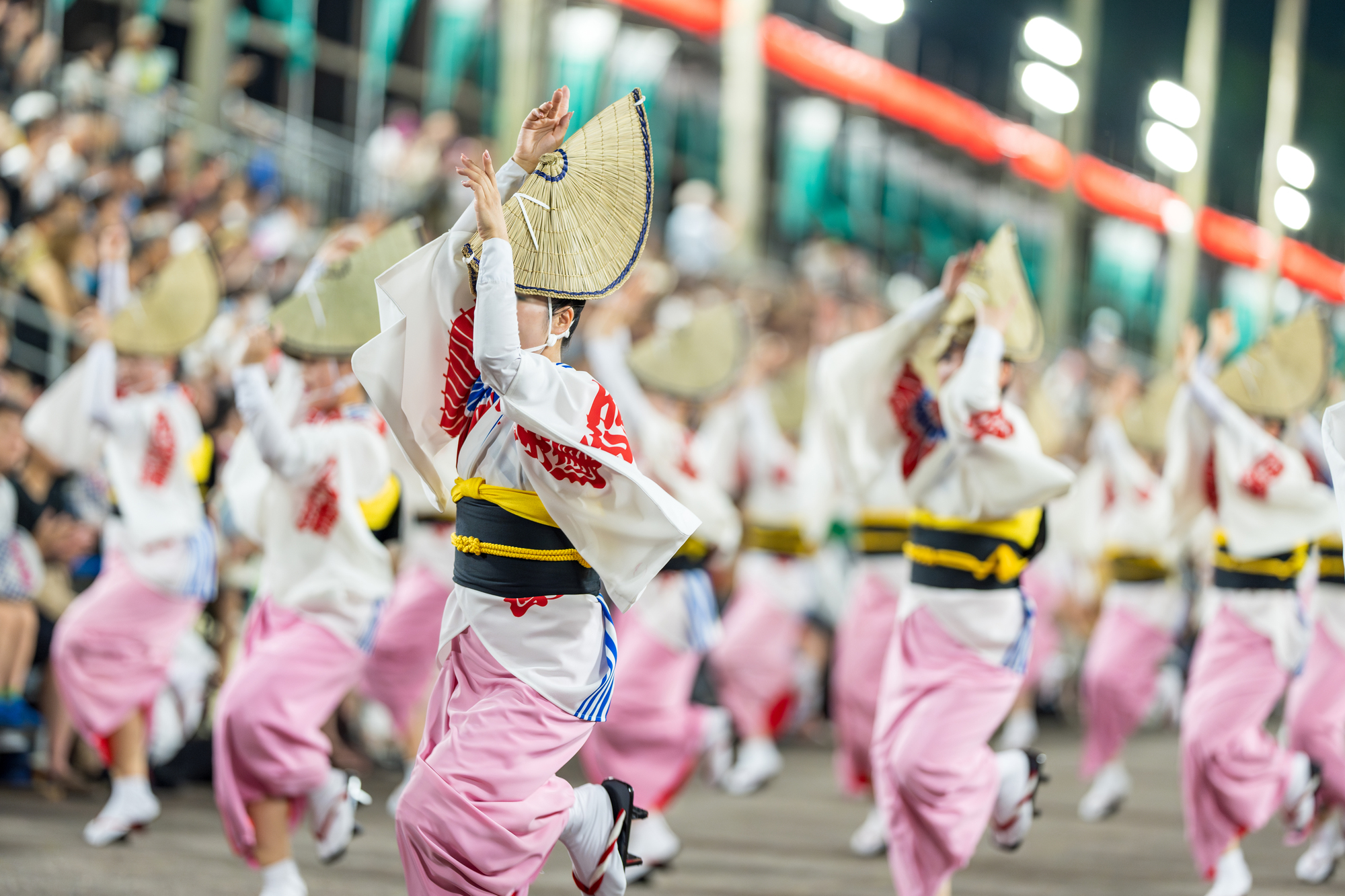
The Awa Odori in Tokushima is perhaps the most famous, often drawing upwards of a million spectators. Unlike the circular, stationary dances of other regions, this is a nagashi-odori—a processional, marching dance. The sheer scale of the event, with its vibrant uniforms and rhythmic, forward-marching energy, often sparks debate among traditionalists as to whether it fits the classical definition of Bon Odori, yet its cultural impact is undeniable.
A Contender for the Throne: Himeshima Bon Odori
Some experts, such as those at Nippon.com, argue that the Himeshima Bon Odori in Ōita should replace Awa Odori in the "Big Three." On the tiny island of Himeshima, with a population of fewer than 2,000, the festival is a remarkably intimate yet visually spectacular affair. It retains a purity of form that many feel better honors the ancient roots of the custom.
Regional Variations and Cultural Significance
Beyond the "Big Three," Japan is home to hundreds of local iterations, each providing a window into the nation’s diverse regional history.
- Ayado Yonenbutsu (Aichi Prefecture): An Important Intangible Folk Cultural Property, this dance is a direct descendant of the early odori nenbutsu. It is a vital link to the 10th-century origins of the practice and serves as a living museum of Japanese religious performance.
- Kemanai Bon Odori (Akita): Held in Kazuno City, this festival is distinct for its use of a large bonfire as the focal point of the dance. The performance is split into two halves: one accompanied by the rhythmic sounds of flutes and drums, and another that is entirely a cappella, emphasizing the power of the human voice in ritual.
- Owara Kaze no Bon (Toyama): Though technically a nagashi-odori, this event is a masterpiece of atmospheric performance. Dancers move through the streets of Toyama in a dignified procession, illuminated by thousands of paper lanterns, accompanied by the melancholy, soulful sounds of the kokyū (a bowed, three-stringed instrument) and the shamisen.
Implications for Modern Japan
The survival and growth of Bon Odori in the 21st century provide significant insights into the nature of Japanese cultural identity. In an era of rapid technological change and urban migration, these festivals act as a "social glue." They force a pause in the modern pace of life, requiring participants to return to their ancestral homes, reconnect with extended family, and engage in a communal activity that transcends the individual.
The festival’s resilience during the Meiji era suggests that traditions with strong communal foundations are difficult to legislate out of existence. Today, the challenge is not government suppression, but rather the preservation of these dances in the face of an aging population and declining rural demographics. Yet, as seen in the popularity of festivals like Awa Odori, the younger generation continues to find meaning in these rituals, blending historical preservation with modern enthusiasm.
Conclusion: A Living Legacy
Bon Odori is far more than a summer distraction. It is a profound, living manifestation of Japan’s historical relationship with life, death, and the community. Whether one is watching the haunting, face-obscured dancers of Akita or joining the energetic, all-night circles in Gifu, the message remains the same: we are part of a continuous chain of history.
For those planning to experience these festivals firsthand, a word of caution: the Japanese summer is notoriously intense. Engaging in these traditions requires not only respect for the solemnity of the ancestors but also a strategy for surviving the "sauna-level" humidity. Yet, for the traveler or the cultural enthusiast, the effort is well rewarded. In the flickering light of the yagura (dance tower) and the steady, hypnotic beat of the drums, one finds the heartbeat of Japan—a nation that never truly stops dancing with its past.












No comments yet. Be the first to join the conversation!