

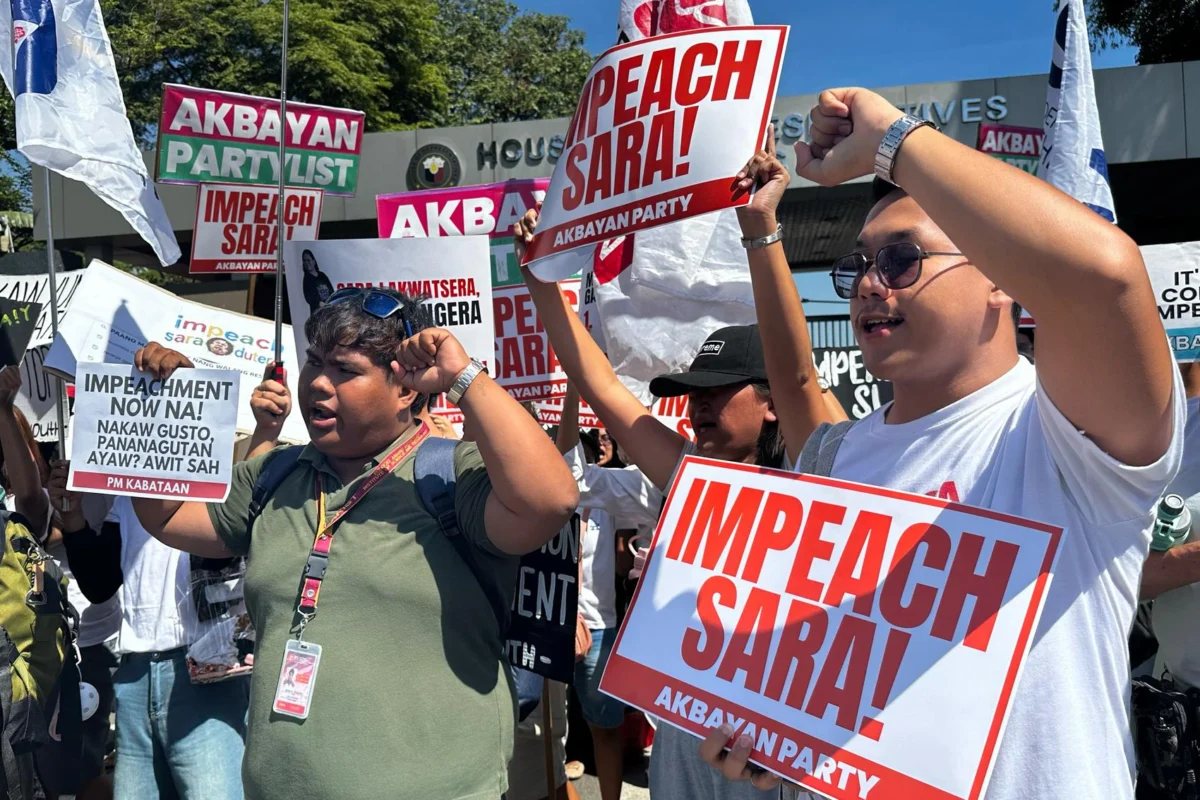
MANILA — The political landscape of the Philippines was irrevocably altered on Monday as the House of Representatives delivered a crushing blow to Vice President Sara Duterte, voting overwhelmingly to impeach her. The development marks the culmination of a protracted and bitter power struggle between the nation’s two highest-ranking officials, threatening the stability of the current administration and casting a long shadow over the 2028 presidential race.
In a landslide vote of 255-26 with nine abstentions, the House—firmly controlled by allies of President Ferdinand Marcos Jr.—paved the way for a formal impeachment trial in the Senate. The articles of impeachment, which focus on allegations of unexplained wealth, the misuse of public funds, and incendiary threats against the President’s life, represent a defining moment in the history of the Philippine Republic.
The Charges: Unexplained Wealth and Security Threats
The impeachment proceedings were spearheaded by the House Justice Committee, led by Representative Gerville Luistro. The charges leveled against Vice President Duterte are both administrative and criminal in nature, painting a picture of systemic fiscal mismanagement and dangerous political rhetoric.
Financial Impropriety
Central to the impeachment case is the allegation of massive, undeclared bank transactions. Rep. Luistro presented evidence suggesting that the Vice President and her husband, Manases Carpio, moved significant sums of money through private accounts that were not disclosed in the mandatory Statement of Assets, Liabilities, and Net Worth (SALN). Furthermore, the committee scrutinized the use of confidential and intelligence funds allocated to her office during her tenure as Vice President and, concurrently, as the Secretary of the Department of Education.
The "Assassination" Rhetoric
Perhaps the most inflammatory element of the impeachment trial stems from an online press conference held in late 2024. During the broadcast, Duterte stated that she had instructed an associate to assassinate President Marcos, First Lady Liza Araneta-Marcos, and House Speaker Martin Romualdez should she herself be murdered.
While Duterte later walked back the comments, claiming she was merely expressing concern for her own safety, the remarks triggered a national security crisis and a criminal investigation. The House has characterized these statements as an explicit threat to the stability of the state, arguing that such rhetoric is unbecoming of the second-highest official in the land.
A Chronology of a Collapsing Alliance
The current crisis is the final act of a failed political marriage. To understand the gravity of the present situation, one must look back at the shifting sands of the 2022 elections.
- May 2022: The "UniTeam" alliance of Ferdinand "Bongbong" Marcos Jr. and Sara Duterte secures a landslide victory, signaling a return of the Marcos dynasty to power.
- 2023: Early signs of friction emerge. Policy disagreements and internal jockeying for influence within the Cabinet lead to a visible cooling of relations between the Marcos and Duterte camps.
- 2024: The rift turns public. Duterte frequently critiques the administration’s handling of foreign policy and economic issues, accusing the President’s inner circle—specifically Speaker Romualdez—of orchestrating a smear campaign against her.
- Late 2024: The Vice President issues the "assassination threat," which becomes the primary catalyst for the current impeachment proceedings.
- December 2025 – Early 2026: The House Justice Committee accelerates its inquiry, disregarding protests from the Vice President’s camp regarding the constitutionality of the proceedings.
- Monday, 2026: The House plenary votes to impeach, effectively transferring the case to the Senate for trial.
Official Responses and Legal Battles
The Vice President’s camp has remained defiant, though their legal strategy has shifted toward accusing the Marcos administration of political persecution.
The Duterte Defense
Duterte’s legal counsel has vociferously challenged the integrity of the House proceedings. In a statement released following the vote, her lawyers asserted that the House Justice Committee’s actions "departed from the constitutional design," claiming that the entire process is a partisan witch hunt intended to neutralize her as a political rival ahead of the 2028 elections.
Furthermore, Manases Carpio, the Vice President’s husband, has initiated a counter-offensive. He has filed criminal complaints against Rep. Luistro and other legislators, alleging that the public disclosure of the couple’s bank records violated the Philippines’ stringent bank secrecy laws.
The House Perspective
The Marcos-allied majority maintains that they are simply upholding the rule of law. Rep. Luistro has stated that the evidence against the Vice President is "overwhelming and undeniable," emphasizing that the House has a duty to protect the institution of the presidency from those who would undermine it through corruption or threats of violence.
The "Duterte Factor" and the International Context
The impeachment trial does not exist in a vacuum. It is inextricably linked to the broader "Duterte legacy." Former President Rodrigo Duterte, the Vice President’s father, remains a central figure in the drama, even as he faces a trial at the International Criminal Court (ICC) in the Netherlands for alleged crimes against humanity linked to his brutal anti-drug war.
Observers note that the Vice President’s popularity, which remains robust according to independent surveys, provides her with a significant base of support. However, this base is increasingly polarized against the Marcos administration, creating a volatile environment that could spill over into mass protests.
The involvement of the ICC and the potential for a "Duterte vs. Marcos" showdown in the Senate trial will likely dominate Philippine headlines for the foreseeable future. If the Senate—which acts as the impeachment court—votes to convict, Duterte would be removed from office, permanently barred from holding public office, and potentially face imprisonment.
Implications for the 2028 Election
The impeachment is undeniably a major setback for the Vice President’s presidential ambitions. By forcing her into a defensive posture, the Marcos camp has effectively drained her resources and limited her ability to campaign or cultivate allies.
However, political analysts warn that the impeachment could also serve as a rallying cry for the Duterte base. If the Vice President successfully positions herself as a martyr of an "elitist" and "corrupt" administration, she could potentially galvanize voters who feel alienated by the current government’s policies.
Potential Outcomes
- Conviction and Removal: If the Senate votes to convict, the Duterte political machinery may face a period of forced hibernation, potentially clearing the field for a Marcos-backed successor in 2028.
- Acquittal: A failure to secure a conviction in the Senate would be a catastrophic defeat for President Marcos, likely leading to a complete breakdown of governance and a surge in the Vice President’s political capital.
- Constitutional Crisis: Given the Vice President’s previous success in appealing to the Supreme Court to invalidate a 2025 impeachment bid, there is a high probability that the judiciary will once again be drawn into the fray, testing the limits of the separation of powers.
Conclusion: A Nation at a Crossroads
As the Senate prepares for the high-stakes impeachment trial, the Philippines finds itself at a critical juncture. The fallout from the impeachment will determine not only the fate of Sara Duterte but the future direction of the nation’s democratic institutions. With deep divisions in the government, a looming ICC trial for the former president, and an upcoming election cycle, the path forward remains shrouded in uncertainty.
For now, the country waits to see if the Senate will confirm the House’s verdict or if this latest chapter in the Marcos-Duterte saga will lead to an even deeper institutional crisis. One thing is certain: the era of the "UniTeam" is officially over, replaced by a battle for survival that will shape the Philippine political landscape for years to come.











No comments yet. Be the first to join the conversation!