

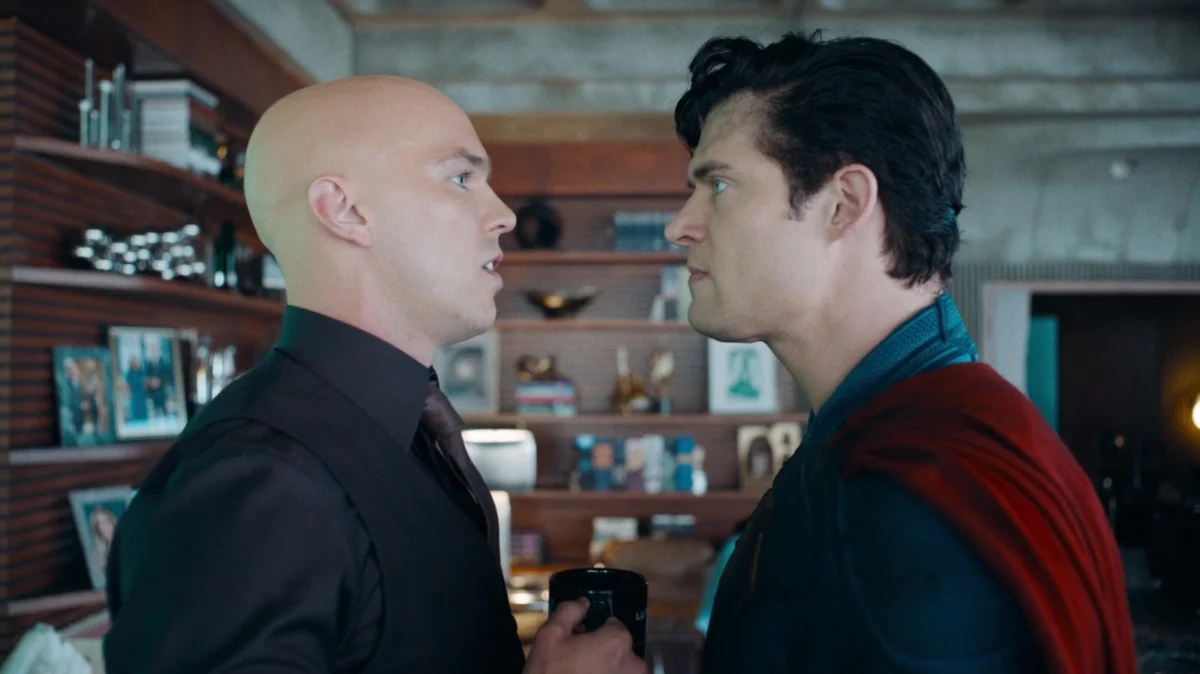
For nearly a century, the dual identity of Clark Kent and Superman has been the cornerstone of DC Comics’ most enduring mythology. While fans have spent decades debating the logistical feasibility of a pair of thick-rimmed glasses acting as a high-level security clearance, the question of why a genius-level intellect like Lex Luthor cannot connect the dots has become a recurring point of contention. With the release of James Gunn’s Superman, featuring David Corenswet as the Man of Steel and Nicholas Hoult as his iconic adversary, the debate has reignited.
Addressing the skepticism surrounding this narrative trope, James Gunn recently took to social media to offer a multi-faceted explanation for Luthor’s blind spot. His breakdown provides not only a character-driven justification for the film’s narrative choices but also a fascinating look at how modern blockbusters adapt comic book logic for contemporary audiences.
The Core Dilemma: Why Can’t Lex See the Truth?
The central frustration for many viewers stems from the perception of Lex Luthor as a hyper-intelligent, omniscient antagonist. In many iterations, Luthor is defined by his ability to see what others miss—he is a master of genetics, geopolitics, and advanced technology. To the audience, Clark Kent’s transformation into Superman—which involves little more than a slouch, a change in posture, and a pair of glasses—seems woefully inadequate.
However, Gunn argues that this perspective is flawed because it projects human social norms onto an alien entity. In the context of the new DC Universe (DCU), Lex Luthor operates under a specific set of biases. If the most brilliant mind on Earth is fundamentally convinced that Superman is an extraterrestrial conqueror, he is unlikely to search for a human alter ego in a mundane office building.
The "Disconnected Alien" Bias
Gunn’s first point of defense is psychological. Luthor views Superman as a "disconnected alien" with grand designs on global hegemony. By definition, a god-like being from another planet would have no reason to cultivate a secret identity as a small-town reporter. To Luthor, the idea that Superman would concern himself with the day-to-day operations of the Daily Planet is not just unlikely; it is beneath his comprehension of how a "superior" being would function.
The Role of Hypno-Glasses
Perhaps the most intriguing part of Gunn’s explanation involves the "Hypno Glasses" concept. While it sounds like a silver-age gimmick, Gunn suggests that the glasses serve a functional purpose in maintaining Clark’s anonymity. In the lore, these lenses—sometimes crafted from Kryptonian materials—project an image of an "inferior" or less threatening version of the person wearing them. By subtly influencing the perception of those around him, Clark is able to blend into the background, effectively rendering himself invisible to those who aren’t looking for a hero.
The Specialized Genius Fallacy
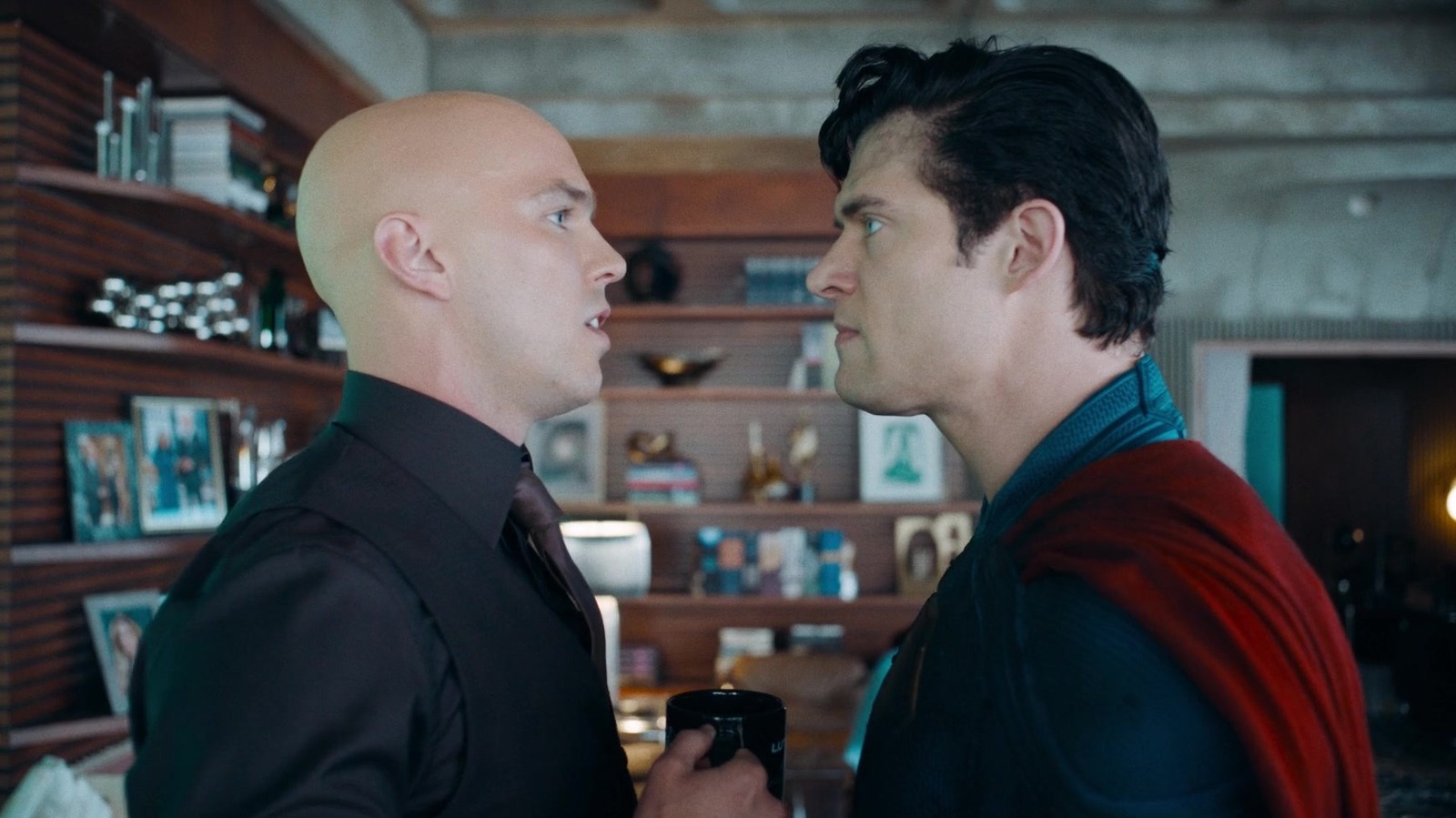
Finally, Gunn touches upon the nature of intellect. He points out that being a genius in fields like nanotechnology, quantum physics, or electrochemistry does not make one a master of all human observation. "Like many scientists (and artists!), he can miss basic things," Gunn explained. This humanizes Luthor, framing his inability to identify Clark Kent not as a failure of intelligence, but as a byproduct of his own rigid, scientific worldview.
A Chronological Look at the Identity Debate
The "secret identity" debate is as old as the character himself. When Jerry Siegel and Joe Shuster first introduced the concept in 1938, the idea was simpler: a hero needs a life outside of saving the world. Over the decades, writers have struggled to justify how this ruse holds up in an era of facial recognition and constant surveillance.
- 1930s–1950s: During the Golden Age, the disguise was accepted as a staple of the "pulp" genre. The suspension of disbelief was high, and the focus remained squarely on the action.
- 1970s–1980s: This era saw the introduction of more complex explanations, including the aforementioned Hypno-Glasses and the idea that Superman’s mere presence—a being of such immense power—is so overwhelming that people simply refuse to believe he would have a human life.
- The Modern Era: With the rise of the internet, the "glasses disguise" became a meme. Audiences began demanding more realistic portrayals of how an identity could be hidden in the digital age. This led to films like Batman v Superman: Dawn of Justice, where Jesse Eisenberg’s Lex Luthor was portrayed as a man who knew exactly who Clark was, using that knowledge as a tactical weapon.
Gunn’s Superman opts to return to a more traditional, grounded approach, prioritizing the psychological distance between the man and the god, rather than relying on technological hacking to solve the mystery.
Supporting Data: Intelligence vs. Perception
Why does the "genius" argument fall short for so many fans? It comes down to the dichotomy between data and intuition.
Lex Luthor is a data-driven antagonist. He collects information, runs simulations, and analyzes threats. However, his hatred of Superman is deeply personal and ideological. This obsession creates a cognitive filter. When Luthor looks at the world, he is looking for evidence that supports his belief that Superman is a threat.
In psychology, this is known as confirmation bias. Because Luthor is convinced that Superman is an alien interloper, he filters out any data that contradicts this view. He does not see a reporter named Clark Kent; he sees an alien threat. This psychological barrier is far more durable than any technological disguise. By framing the secret identity issue through the lens of human psychology rather than comic-book "magic," Gunn makes a compelling case for why the disguise remains effective.
Official Responses and Implications for the DCU
The reception to Gunn’s comments has been largely positive among fans who appreciate the depth being applied to the new DCU. By engaging directly with fans on platforms like Threads, Gunn is setting a precedent for a more transparent, collaborative relationship between filmmakers and the audience.
The "Man of Tomorrow" Trajectory
The upcoming Man of Tomorrow project promises to further explore the relationship between the two. With reports that Superman and Lex Luthor may be forced into a reluctant alliance to combat a larger threat—specifically Brainiac—the stakes for the secret identity reveal are higher than ever.
If they are forced to work side-by-side, the proximity between them will increase. This creates a "ticking clock" dynamic:
- Shared Danger: A common enemy necessitates cooperation, breaking down the traditional "hero vs. villain" barrier.
- Increased Scrutiny: As they work together, Luthor will naturally observe Superman more closely.
- The Reveal: If the identity is eventually discovered, it will likely be a result of this forced collaboration, making the betrayal feel more earned and emotionally impactful for both characters.
Conclusion: The Power of Perspective
James Gunn’s explanation for Lex Luthor’s ignorance serves as a masterclass in character-driven storytelling. By focusing on the "why" rather than the "how," he has managed to provide a rational, logical, and deeply human explanation for one of the most enduring tropes in comic book history.
The strength of the Clark Kent persona has never truly been the glasses; it has been the humility of the man wearing them. In a world of gods and monsters, the fact that a being as powerful as Superman chooses to be a humble, unassuming reporter is the most effective disguise of all. It is a psychological blind spot that even the most brilliant, ego-driven genius like Lex Luthor cannot overcome, because it requires one to understand the value of humanity—a concept that, for all his intelligence, remains fundamentally beyond Lex’s reach.
As the DCU continues to expand, it is clear that Gunn is committed to honoring the history of these characters while providing the narrative framework necessary for modern audiences to engage with them. Whether Lex discovers the truth in Man of Tomorrow or remains in the dark, the debate surrounding the "glasses" is unlikely to end—and that, perhaps, is part of the fun of being a Superman fan.











No comments yet. Be the first to join the conversation!