Reynand Wu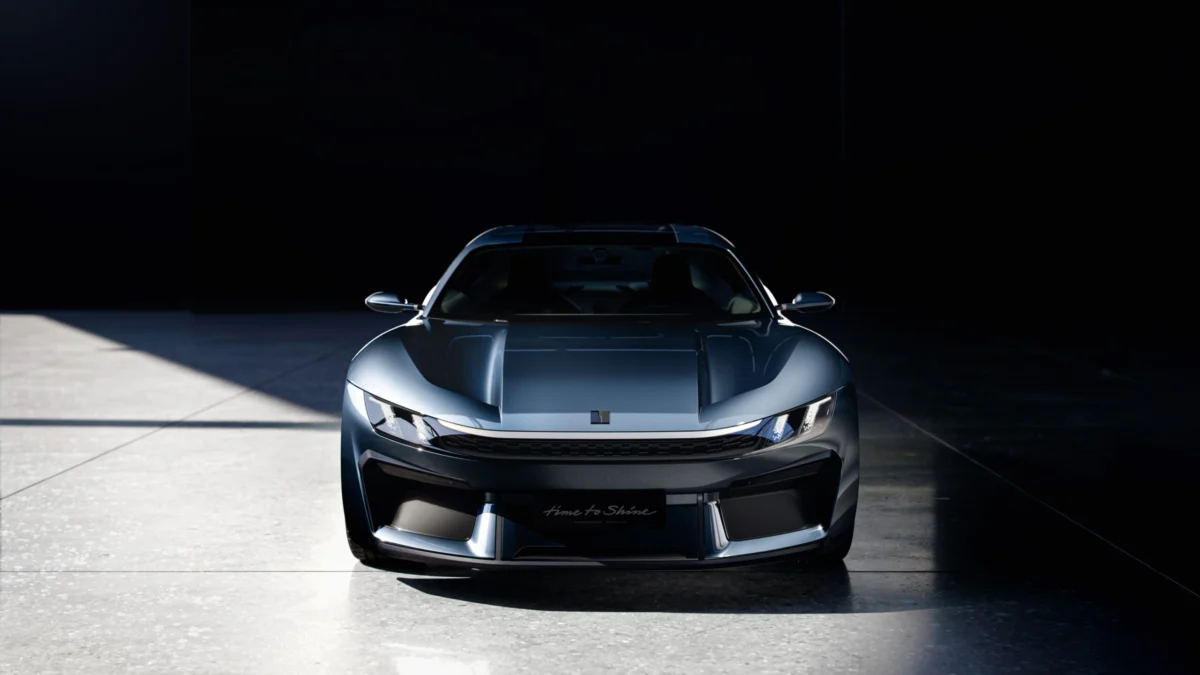
While traditional automotive strongholds in Europe and the United States are grappling with downsizing, venue closures, and a pivot toward smaller-scale, regional events, the Beijing International Automotive Exhibition—Auto China 2026—has shattered all previous records. With 1,451 vehicles on display and 181 world premieres, it stands as the largest auto show in history, both in total footprint and sheer volume of new hardware.

This record-breaking scale is more than just a logistical achievement; it is a profound signal that the center of gravity for the global automotive industry has shifted decisively eastward. The 2026 exhibition proved that China is no longer merely a high-volume manufacturing hub; it has become the primary laboratory for the future of mobility, where artificial intelligence, advanced autonomy, and “drive-by-wire” architectures are being industrialized at a speed the West has yet to match.

The New Paradigm: Beyond the "Cheap vs. Premium" Dichotomy
For years, the automotive narrative was defined by a simplistic binary: high-end, technologically superior European luxury vehicles versus low-cost, utilitarian Chinese alternatives. Auto China 2026 effectively erased that distinction.

Today, Chinese manufacturers are dominating the cutting edge of AI-integrated cockpit systems, high-performance electric powertrains, and, most notably, the democratization of advanced driver-assistance systems (ADAS). Technologies previously reserved for six-figure luxury sedans—such as Lidar sensors and steer-by-wire systems—are now standard features in vehicles priced under 100,000 yuan ($14,500).

Furthermore, the industry is seeing a remarkable convergence of tech and automotive manufacturing. Partnerships between local EV makers and domestic tech giants like Huawei, ByteDance, and Xiaomi have transformed vehicles from mechanical machines into "embodied intelligence" platforms. Even legacy titans like Toyota have pivoted, utilizing Chinese-made powertrains and smart cockpit operating systems to remain relevant in the world’s most competitive market.

Chronology of Innovation: A New Era of Development
The show floor in Beijing functioned as a timeline of the industry’s rapid acceleration. The following highlights demonstrate the leap from conceptual design to mass-market reality:

- January 2026: China implements new national standards for passenger car braking systems, formally incorporating requirements for electromechanical brakes. This regulatory agility allows manufacturers like Li Auto to deploy “drive-by-wire” technology immediately.
- March 2026: Toyota’s bZ7, a sedan larger than a Tesla Model S, receives 3,100 orders within its first hour, signaling that foreign OEMs are finding success only when they fully integrate into the Chinese supply chain.
- July 2026: The Denza Z Convertible is set to debut at the Goodwood Festival of Speed, challenging established supercar brands like Porsche and Ferrari on their own turf.
- Late 2026: Leapmotor prepares to launch the B03X in Europe, bringing Lidar-enabled ADAS to the global mass market at a price point that undercuts most European competitors.
Supporting Data: The Scale of Transformation
The 2026 exhibition provided quantifiable evidence of a shifting industrial hierarchy. Consider the technological specifications emerging from Chinese R&D:

- Compute Power: XPeng’s GX SUV boasts a computing power of 3,000 tera operations per second (TOPS), approximately 12 times the capacity of a single Nvidia Orin chip, underscoring the industry’s shift toward "AI-native" vehicle design.
- Mass-Market Accessibility: The Leapmotor A10, priced at roughly $12,800, includes Lidar sensors, proving that advanced safety and autonomy are no longer premium-tier luxuries.
- Hybrid Range: Volkswagen’s ID. Era 9X demonstrates the pragmatic approach needed for China’s vast geography, offering a 990-mile total range by pairing electric drive with an on-board generator.
- Efficiency: The Arcfox S3, starting at under $10,000, offers 410 miles of range and battery-swapping technology that takes only 99 seconds to complete.
Official Perspectives and Strategic Shifts
The sentiment among executives at Auto China 2026 was one of urgent transformation. Nissan Motor’s CEO, Ivan Espinosa, used the debut of the Terrano PHEV Concept to confirm that Nissan is aggressively focusing on the Chinese market as a bridge to global exports.

Perhaps most striking is the shift in strategy for brands like Volkswagen. Once the leading advocate for a rapid, exclusive transition to pure EVs, VW is now embracing range-extended models (EREVs) for the Chinese market to accommodate the regional disparities in charging infrastructure. This flexibility highlights a broader trend: global automakers must now adopt a "China-first" development cycle to keep pace with the market’s pace of innovation.

The collaboration between Chery and Jaguar Land Rover to revive the "Freelander" name as an independent, China-centric EV brand further illustrates this point. By combining Western design heritage with Chinese electrification and Huawei’s software stack, these new entities represent a hybrid future that was unthinkable a decade ago.

The Implications for Global Markets
The implications of Auto China 2026 are sobering for legacy manufacturers in Europe, Japan, and the United States.

1. The Death of the "Premium" Margin
Historically, European manufacturers have relied on the strategy of introducing high-tech features in premium vehicles first, then trickling them down to lower segments over several years. Chinese manufacturers have bypassed this lifecycle entirely, introducing high-value features across their entire portfolio simultaneously. This puts intense pressure on the business models of global incumbents who cannot match these price-to-performance ratios.

2. Software as the Core Product
The emergence of "AI-native" vehicles—such as the SAIC Roewe Jiayue 07, designed around ByteDance’s Doubao LLM—marks a fundamental shift in design philosophy. Cars are increasingly being treated as mobile platforms for software, where the vehicle is essentially a hardware shell for an AI agent. The ability to update these systems over the air (OTA) and integrate them with home ecosystems, as seen with Xiaomi’s integration, is becoming the primary metric of vehicle quality for the modern consumer.

3. The "Land Aircraft Carrier" and Beyond
While niche, vehicles like the Aridge Land Aircraft Carrier demonstrate that Chinese companies are not just catching up—they are exploring new frontiers of mobility. The integration of eVTOL (electric vertical take-off and landing) technology into a ground-based "mothership" highlights a bold, long-term vision that views transport as a multi-modal, three-dimensional experience.

4. Regulatory Synergy
The success of Li Auto’s L9 Livis shows how the Chinese government and domestic industry move in lockstep. By creating regulatory frameworks that match technological advancements (such as the 2026 braking standards), China is creating an environment where innovation is not slowed by bureaucracy but accelerated by it.

Conclusion: A New Global Standard
Auto China 2026 was more than a display of new cars; it was a demonstration of a new industrial civilization. The barriers that once kept Chinese manufacturers confined to the low-end of the market have been dismantled, replaced by a sophisticated, high-tech infrastructure that is as comfortable in the world of hypercars and smart homes as it is in the budget-conscious sedan segment.

For the rest of the world, the message from Beijing is clear: the era of playing catch-up is over. The global automotive industry has moved into a new, accelerated phase where AI, software integration, and rapid industrialization are the keys to survival. As these Chinese manufacturers look outward, moving from the exhibition halls of Beijing to the highways of Europe and beyond, the global market must prepare for a radical, permanent, and highly competitive transformation.


 Laily UPN
 Azzam Bilal Chamdy