

For years, the professional workstation and the high-end gaming rig have faced a persistent ergonomic dilemma: screen real estate. As monitors grow larger, wider, and more immersive, the challenge of managing auxiliary tasks—system monitoring, streaming dashboards, chat windows, and shortcut management—has forced users to either clutter their primary display or resort to cumbersome, mismatched secondary monitors.
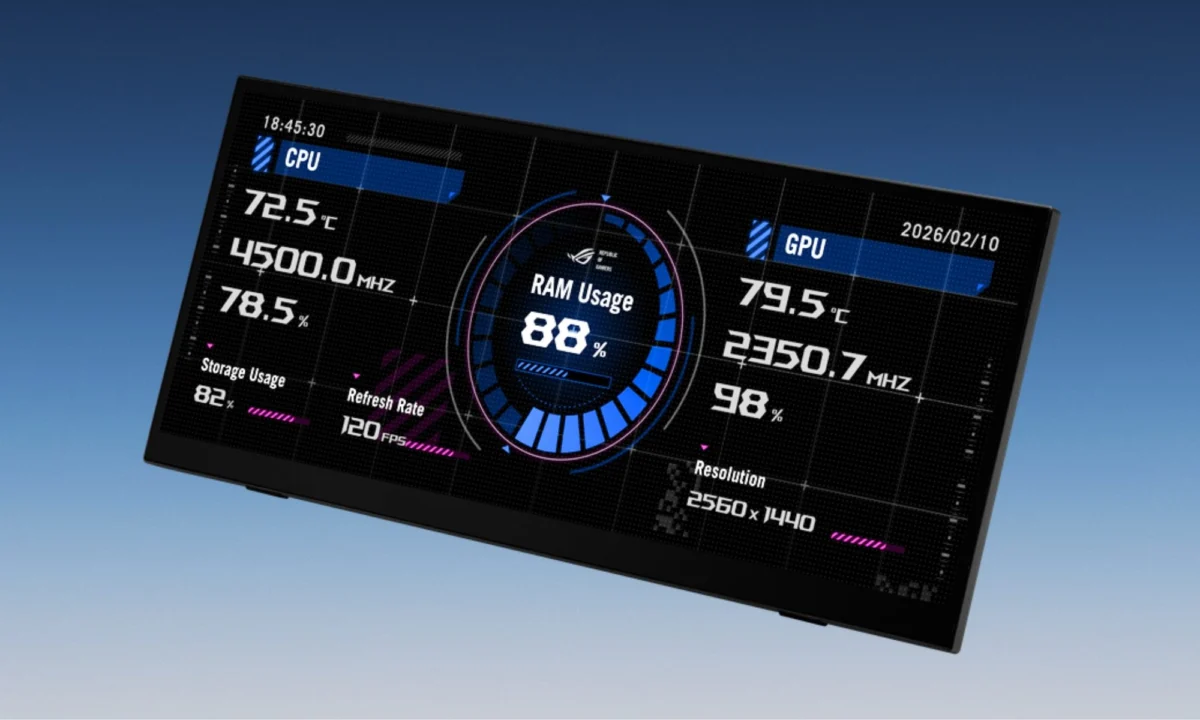
Asus has finally addressed this niche but growing demand with the introduction of the ROG Strix XG129C. Priced at $199, this 12.3-inch touchscreen secondary display is designed not just to sit on your desk, but to live underneath your primary monitor. By blending high-fidelity color reproduction with deep integration into the Republic of Gamers (ROG) ecosystem, Asus is attempting to standardize a category that has long been defined by DIY hacks and overpriced, underpowered hardware.
Main Facts: A New Tier of Secondary Displays
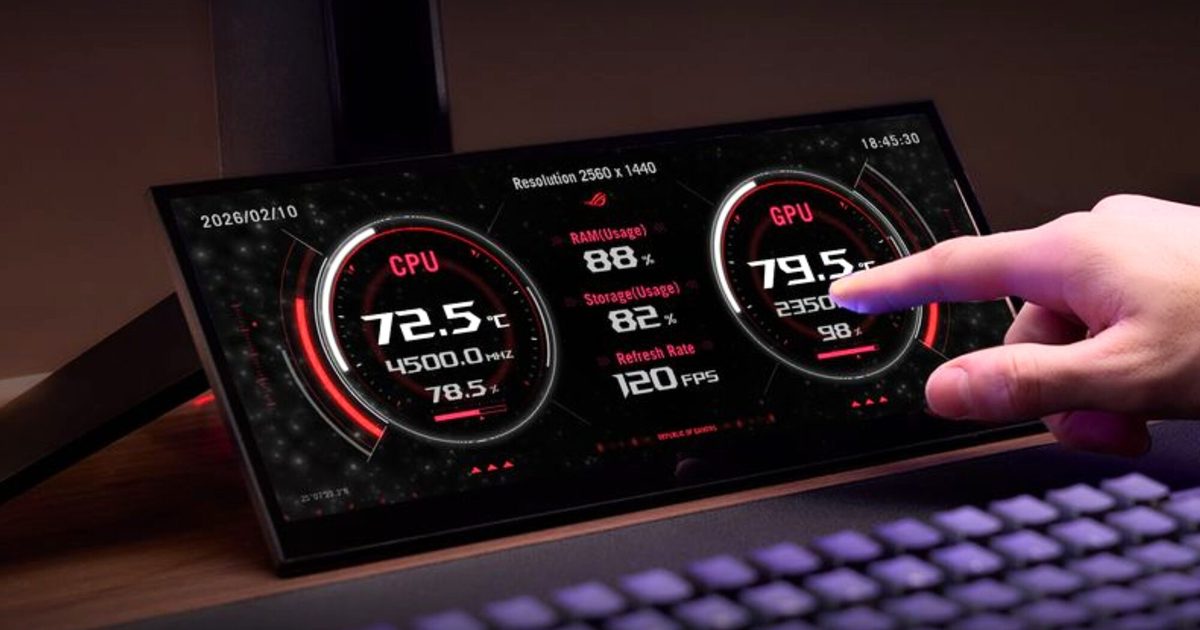
The ROG Strix XG129C is a purpose-built hardware solution for the modern power user. Unlike generic portable monitors that occupy significant vertical space, the XG129C features a 1920 x 720 resolution IPS panel with a 24:9 aspect ratio. This ultra-wide, short-height form factor is engineered specifically to tuck neatly beneath standard gaming monitors, filling the "dead space" between the bottom of your primary screen and your keyboard.
Key Technical Specifications
- Display: 12.3-inch IPS Touchscreen
- Resolution: 1920 x 720 (24:9 Aspect Ratio)
- Color Gamut: 125% sRGB / 90% DCI-P3 coverage
- Touch Input: 10-point capacitive multi-touch
- Connectivity: USB-C (Power, Video, Touch), Secondary USB-C (20W PD), and HDMI 1.2
- Software Integration: Bundled with a one-year AIDA64 Extreme subscription and custom ROG SensorPanel themes.
The display is designed to serve as a hub for system telemetry. With the inclusion of AIDA64, users can transform the device into a real-time dashboard tracking GPU load, CPU temperatures, fan speeds, and memory usage, all presented through sleek, customizable ROG-branded interfaces.
The Chronology of the "Desk-Side" Display
To understand the significance of the XG129C, one must look at the evolution of auxiliary computing.
The Early Days (2015–2019): Enthusiasts began experimenting with small, cheap 5-inch or 7-inch LCD panels (often repurposed Raspberry Pi displays) mounted inside PC cases or taped to desk stands to monitor system vitals. These solutions were notoriously difficult to configure, requiring manual calibration and custom AIDA64 coding.
The Rise of the Stream Deck (2019–2022): Elgato’s Stream Deck series dominated the market by offering physical tactile buttons for macros and streaming control. While it revolutionized productivity, it lacked a "display" in the traditional sense, relying on tiny icons rather than a true secondary monitor interface.
The Hybrid Era (2023–2025): Brands like Corsair entered the space with the Xeneon Edge, a 14.5-inch secondary monitor designed for mounting. These devices proved that there was a massive market for wide-aspect-ratio screens, but they were often limited by color accuracy and high price points.

The Present (2026): With the launch of the Strix XG129C, Asus has synthesized these trends. By combining the touch capabilities of a tablet, the professional color accuracy of an IPS panel, and the software ecosystem of the ROG brand, Asus has moved the concept from a "tinkerer’s mod" to a consumer-ready peripheral.
Supporting Data: Why the 24:9 Ratio Matters
The choice of a 1920 x 720 resolution is a strategic decision based on the current landscape of gaming hardware. Standard 16:9 monitors, when tilted or raised on monitor arms, leave a triangular or rectangular void on the desk.
- Ergonomics: The 24:9 aspect ratio is specifically calibrated to match the footprint of full-sized mechanical keyboards, ensuring the screen feels like a natural extension of the input area rather than an afterthought.
- Color Fidelity: Many small secondary screens suffer from "washed-out" colors due to cheap TN or low-grade VA panels. The XG129C’s 90% DCI-P3 coverage puts it on par with entry-level professional color-grading monitors, ensuring that even secondary windows—like OBS previews or video editing timelines—look vibrant and accurate.
- Connectivity Efficiency: The inclusion of USB-C Power Delivery (20W) means the screen can act as a minor hub, potentially charging a peripheral or a phone while simultaneously receiving the display signal, reducing cable clutter—a primary pain point for the modern desk setup.
Official Responses and Strategic Positioning
In press releases accompanying the launch, Asus representatives emphasized that the XG129C is a "desktop version" of the technology found in their high-end Zephyrus Duo laptops. For years, Asus has pioneered the "ScreenPad" technology—a secondary screen built into the deck of the laptop. The XG129C is, in essence, the democratization of that feature.
"We listened to the community," an Asus spokesperson noted. "Gamers don’t just want a screen; they want an integrated experience where their hardware, their software, and their control surfaces communicate seamlessly. The XG129C isn’t just a monitor; it’s a command center."

Industry analysts note that this is a strategic move to lock users further into the ROG ecosystem. By bundling AIDA64 and providing exclusive themes, Asus is creating a "walled garden" of aesthetics that makes it difficult for a user to switch to a competing display without losing the cohesive look and feel of their desktop.
Implications for the Peripheral Market
The arrival of the XG129C carries several implications for the future of desktop computing:
1. The Death of the DIY Dashboard
The "modding" community that built custom screens for their PCs will likely see a decline in popularity for purely functional displays. When a $199, plug-and-play solution with a 1-year software subscription is available, the effort required to build a custom housing and code an Arduino/Raspberry Pi display becomes harder to justify.
2. The Shift Toward "Control Surface" Displays
We are seeing a convergence between the "monitor" and the "controller." The XG129C suggests that future monitors will increasingly feature touch-input capabilities as standard. As operating systems like Windows 11 and various Linux distributions continue to optimize for touch-based shortcut management, the need for a physical mouse to navigate secondary windows may vanish.

3. Price Pressure on Competitors
The $199 price point is aggressive. It undercuts larger competitors who have historically charged a premium for "niche" aspect ratios. This will force companies like Corsair and Razer to either drop their prices or significantly improve the feature sets of their next-generation secondary displays to remain competitive.
A Synthesis of Form and Function
The ROG Strix XG129C is more than just a small screen; it is a testament to how far peripheral hardware has come. It represents a transition from "more is better" (the era of stacking multiple 27-inch monitors) to "smarter is better" (the era of specialized, dedicated auxiliary displays).
For the streamer, the XG129C offers a dedicated place for chat and scene switching without hiding the gameplay on their main monitor. For the content creator, it offers a space for timelines and asset folders. For the pure gamer, it offers a real-time health check on their hardware.
While the device will not replace the primary monitor, it serves to refine the desktop experience. It addresses the friction of multitasking in an age where our primary screens are increasingly consumed by high-fidelity gaming or complex creative work.

Asus has succeeded in creating a product that feels "refined and intentional," as the early feedback suggests. By bringing the Zephyrus Duo’s ScreenPad experience to the desktop, they have provided a solution that is as much about aesthetics as it is about utility. Whether the market at large will adopt this "secondary display" trend remains to be seen, but with a sub-$200 price point and the backing of a major manufacturer, the barrier to entry has never been lower.
In a world where we spend more time than ever at our desks, the ROG Strix XG129C offers a glimpse into a future where our hardware is as versatile and dynamic as the tasks we perform. It is a quiet, sleek, and highly functional addition to the modern desk—and for many, it will likely become an indispensable tool.










No comments yet. Be the first to join the conversation!