

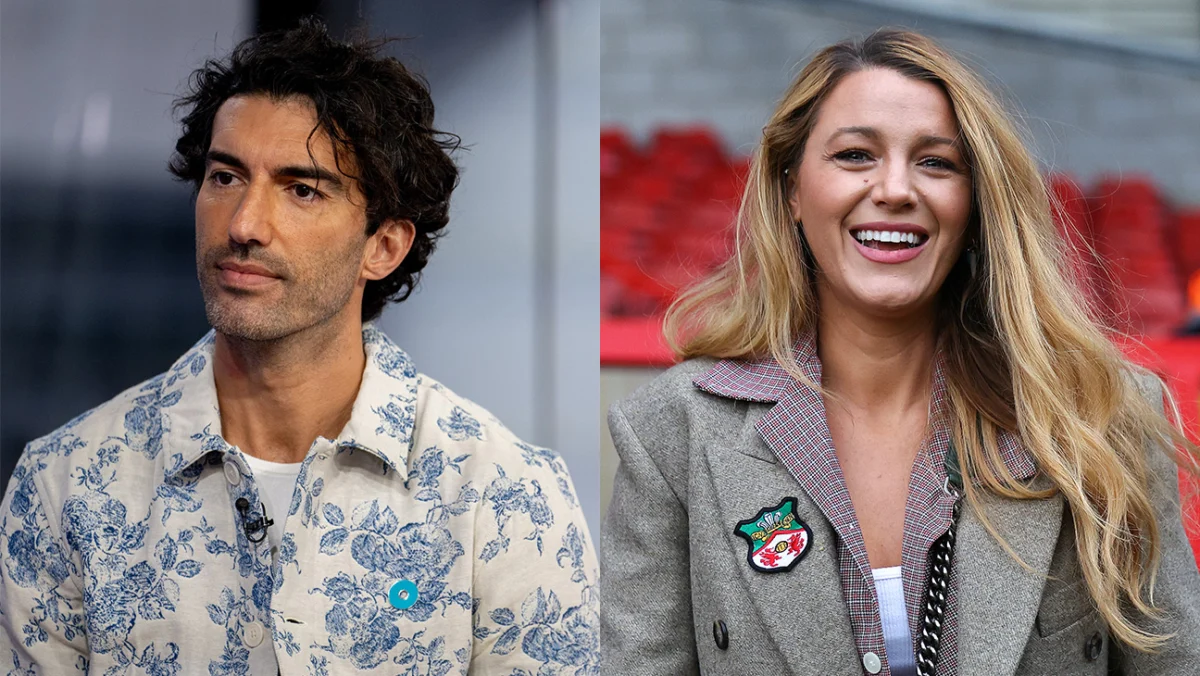
While the legal storm surrounding It Ends With Us may have dissipated following the surprise settlement of sexual harassment claims between Blake Lively and Justin Baldoni, the industry’s internal temperature remains icy. The resolution of the case, which effectively averted a high-profile trial, has done little to mitigate the professional volatility facing both stars. In an industry where reputation is the primary currency, the messy, public, and highly contentious nature of their creative disagreement has left both Lively and Baldoni in a state of professional purgatory.
A Fractured Success Story: The Core Facts
The 2024 adaptation of Colleen Hoover’s novel, It Ends With Us, was objectively a financial triumph. Produced by and starring Blake Lively, with Justin Baldoni serving as director, producer, and co-star, the film defied mid-budget expectations by grossing $351 million worldwide against a modest $25 million production budget.
However, behind the scenes, the project was marred by a breakdown in the relationship between its two leads. The conflict did not stem from traditional disputes over profit sharing or billing, but rather from fundamental disagreements regarding the film’s creative direction, the atmosphere on set, and the subsequent public relations strategies employed during the press tour. Accusations of sexual harassment, coupled with allegations of smear campaigns, turned what should have been a crowning achievement into a legal and reputational quagmire.
Chronology of a Contentious Production
The friction between Lively and Baldoni became increasingly evident to the public as the promotional cycle for It Ends With Us progressed.
- The Production Phase: Reports began to surface suggesting a divide on set, with conflicting accounts of how the film’s heavy subject matter—domestic violence—was being handled by the creative team.
- The Promotional Split: The film’s press tour was marked by a distinct absence of joint appearances between Lively and Baldoni, fueling industry speculation that the collaboration had effectively collapsed.
- The Legal Escalation: Accusations evolved into formal litigation, with both sides filing lawsuits and countersuits. The discourse shifted from creative differences to allegations of workplace misconduct, creating a toxic narrative that threatened to overshadow the film’s commercial success.
- The Settlement: Earlier this week, both parties agreed to a surprise settlement, effectively ending the prospect of a public trial. While the terms remain confidential, the impact on their industry standing is far from settled.
The Verdict from the Executive Suite
In the aftermath, The Hollywood Reporter surveyed an array of agents, producers, and studio executives to gauge the industry’s appetite for re-engaging with either star. The consensus is stark: both Lively and Baldoni are currently viewed as "radioactive" assets by many in the power-broker class.
"They’re in jail. Both of them," one high-ranking studio executive noted, capturing the prevailing sentiment. While industry leaders acknowledge the undeniable talent and proven box-office draw of both actors, the risk-reward ratio has shifted. "Who wants to work with people that go this far?" the executive added, referencing the scorched-earth approach taken during the legal battle.
Supporting Data and Financial Fallout
The economic impact of this conflict is quantifiable. Prior to the It Ends With Us debacle, Lively was operating at the peak of her marketability. Estimates suggest that the actress was on track to command paydays in the $10 million to $15 million range for future starring vehicles. Post-settlement, some industry insiders estimate her current market value has dropped significantly, potentially as low as $3 million for certain projects.
This aligns with Lively’s own court filings, where she claimed the reputational fallout and the alleged smear campaign cost her over $100 million in potential career earnings.
Baldoni, conversely, faces a distinct set of challenges. His role as a director—a position that requires the management of complex, high-pressure environments—is under scrutiny. "The allegations of an unsafe set make it hard to imagine he could cast a movie," one executive remarked. While he remains a recognizable television talent, the path back to the director’s chair appears significantly narrower than it was before the litigation.
The Gendered Lens of Hollywood Comebacks
A recurring theme in the discussions regarding these two stars is the disparity in how Hollywood handles male versus female talent during periods of controversy. Many industry insiders point to the case of Johnny Depp and Amber Heard. Despite the acrimonious nature of their public divorce, Depp has managed a return to studio film-making—most notably with his role in Paramount’s forthcoming Ebenezer: A Christmas Carol.
"You don’t ever hear Amber’s name," an agent noted, suggesting that the industry’s collective memory is often selective, tending to favor established male figures while penalizing women more harshly for public scandals. This suggests that while Lively may face a difficult road, the expectations for her conduct and the timeline for her return are subjected to a different, perhaps more rigorous, standard.
The Ryan Reynolds Factor
The controversy has also acted as a gravitational force, pulling in Ryan Reynolds, Lively’s husband. Named in Baldoni’s now-dismissed countersuit, Reynolds’ proximity to the drama has had tangible consequences.
Industry sources indicate that Apple hesitated for several months before committing to a release date for his action comedy Mayday. While his status as a marquee star remains relatively secure—thanks largely to the massive success of the Deadpool franchise—his reputation has suffered "collateral damage." Analysts suggest that for Reynolds to regain his status as a "safe" investment for studios, he may need to pivot toward smaller, lower-profile projects to soften his public image. One agency partner suggested he "do a Van Wilder movie for scale," a hyperbolic but illustrative point about the need to regain "coolness" and humility.
Implications: The Path Forward
For both Lively and Baldoni, the road to rehabilitation will require a fundamental shift in strategy.
Strategic Recommendations for Lively
Casting directors and producers have suggested that Lively needs to step out of the spotlight and focus on strategic, perhaps unexpected, role choices. One producer recommended a "villain role," noting that leaning into the "baggage" could be a way to reclaim the narrative. By embracing a more complex or unlikable character, she could demonstrate professional growth and distance herself from the "protagonist" archetype that was so central to the It Ends With Us drama.
Strategic Recommendations for Baldoni
Baldoni’s path is more complex. While he has the backing of billionaire Steve Sarowitz via his company, Wayfarer—which theoretically allows him to self-finance his own projects—the barrier to working with major studios remains high. Casting director Jen Rudin emphasizes that the industry is currently prioritizing "kind human beings." If Baldoni is to return to a position of authority, he must work to reshape the perception of his set management style. For the immediate future, he may be relegated to acting roles, with his directing aspirations remaining on an indefinite hiatus.
Conclusion: A Cautionary Tale
The It Ends With Us dispute serves as a potent reminder of the fragility of professional capital in the digital age. In an era where every set disagreement can escalate into a public relations crisis, the industry is increasingly risk-averse.
As casting director Matthew Barry noted, "They’re both in for a tough time." Whether they can successfully navigate the current climate of skepticism will depend on their ability to demonstrate, through actions rather than words, that they are collaborators who can be trusted with the massive budgets and sensitive environments that define contemporary Hollywood. For now, the verdict remains: they are on probation, and the industry is watching.











No comments yet. Be the first to join the conversation!