

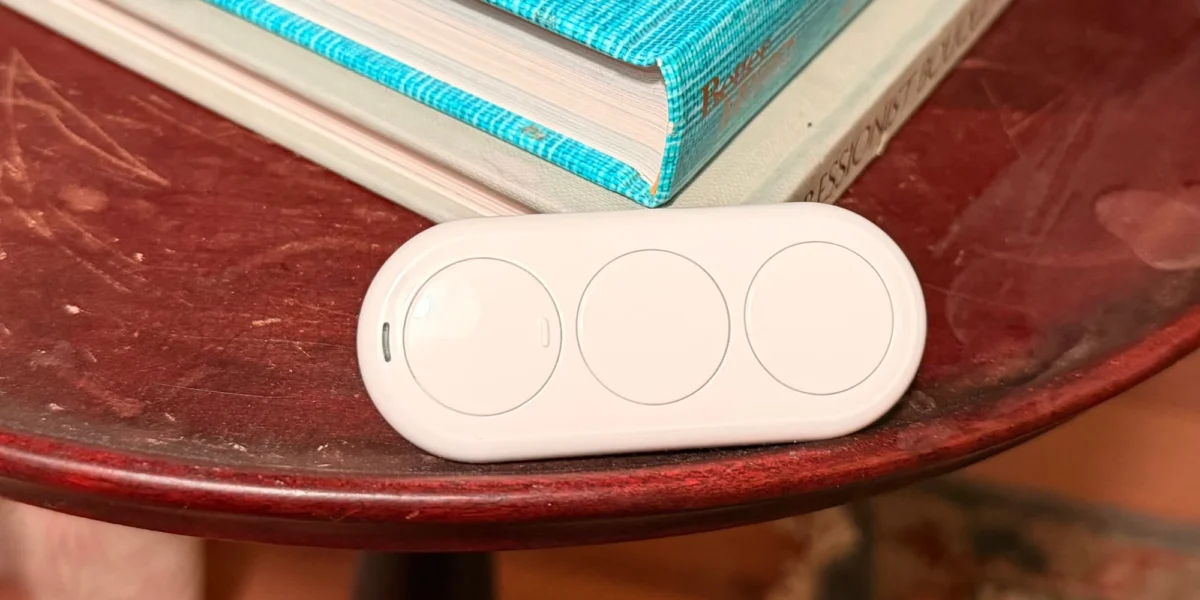
In the rapidly evolving landscape of the Apple Home ecosystem, smart buttons have transitioned from niche novelty items to essential infrastructure for the modern connected home. However, for enthusiasts seeking the "holy grail" of physical controllers, the search has often been fraught with compromise: unreliable Bluetooth connections, sluggish response times, or the ongoing annoyance of replacing proprietary coin-cell batteries.
The recently released Airversa QliQ enters this competitive space with a clear mission: to resolve these long-standing pain points through superior hardware engineering. By pivoting away from the limitations of Bluetooth and embracing the Thread networking protocol—while integrating a rechargeable internal power supply—Airversa has created a device that feels less like a gadget and more like a permanent, reliable piece of home utility.
Main Facts: The New Standard for Smart Controllers
The Airversa QliQ is a three-button physical controller designed specifically for Apple Home. Unlike many competitors that act merely as a bridge between the user and a proprietary cloud, the QliQ integrates directly into the Apple Home framework via Thread. This is a critical technical distinction; Thread creates a self-healing, mesh network that significantly reduces latency and improves reliability compared to traditional Bluetooth LE devices.
Key Specifications at a Glance:
- Connectivity: Thread (Matter-compatible architecture).
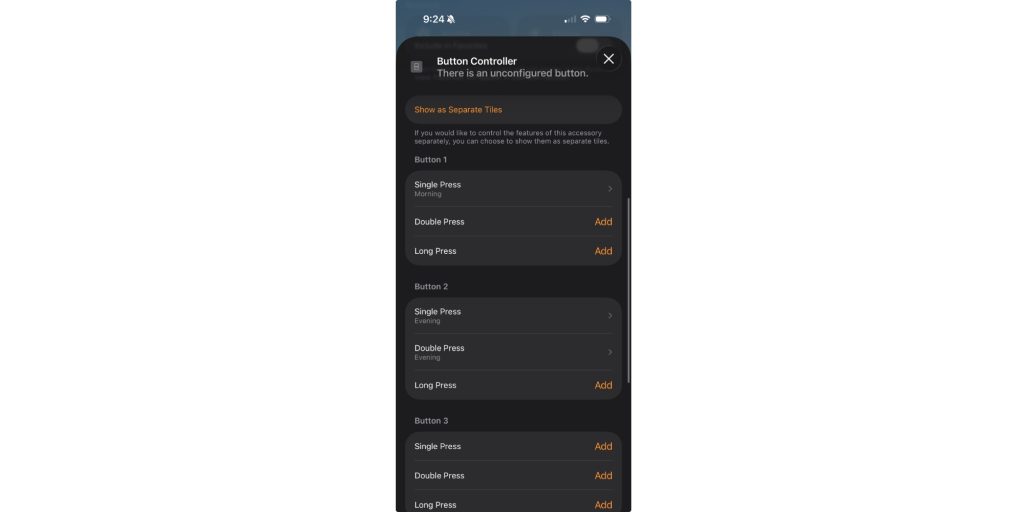
- Input Methods: 3 physical buttons, each supporting single-press, double-press, and long-press actions.
- Capacity: Up to 9 unique automations per unit.
- Power: Integrated rechargeable battery via USB-C.
- Form Factor: Compact, magnetic wall-mountable chassis.
- Feedback: Haptic vibration and audible chime options (configurable).
By offering three distinct inputs per button, the QliQ effectively replaces multiple traditional switches, allowing a user to consolidate complex home management tasks into a single, palm-sized remote.

Chronology: The Evolution of Smart Control
The history of smart home buttons has been one of incremental, yet often frustrating, progress.
Phase 1: The Bridge Era (2015–2018)
Early smart buttons were largely dependent on proprietary hubs. These devices were often unreliable, requiring a bridge plugged into your router, and suffered from significant lag. If the hub lost power, the buttons became useless paperweights.
Phase 2: The Bluetooth Boom (2019–2023)
As HomeKit matured, manufacturers shifted toward Bluetooth Low Energy (BLE). While this removed the need for a proprietary hub, it introduced new problems. Bluetooth signals can be temperamental, struggling to penetrate walls or maintain a consistent connection in homes with high interference. Furthermore, the reliance on CR2032 coin batteries led to "battery anxiety," where users were forced to stock up on small, non-recyclable batteries every few months.
Phase 3: The Thread Revolution (2024–Present)
The introduction of Thread—a low-power, IP-based mesh networking protocol—marked a turning point. Thread devices talk to one another, creating a robust network that doesn’t rely on a single point of failure. The Airversa QliQ represents the pinnacle of this phase, combining the networking stability of Thread with a modern approach to power management, signaling a move toward more sustainable, "install-and-forget" smart home hardware.

Supporting Data: Why Thread and Rechargeability Matter
To understand why the Airversa QliQ is being hailed as a premium upgrade, one must look at the performance data inherent in its architecture.
The Thread Advantage
In a typical Bluetooth-enabled button, the delay between a button press and the execution of an automation—such as turning on a light—can range from 500ms to over 2,000ms. In a high-traffic smart home, this latency is noticeable and frustrating. Because the QliQ utilizes Thread, which operates on an IP-based mesh, the command is routed through the most efficient path to the Border Router (such as a HomePod or Apple TV). This typically brings response times down to under 100ms, providing an instantaneous, "hard-wired" feel that users expect from traditional light switches.
The Sustainability Factor
The environmental and financial impact of disposable batteries in smart home devices is often overlooked. A standard CR2032 battery can last between 6 to 12 months in a smart button. If an average household uses ten buttons, that’s up to 20 batteries a year destined for a landfill. The QliQ’s shift to USB-C charging isn’t just a convenience—it’s an architectural shift toward circular design. A single charge on the QliQ provides months of use, and the device can be fully replenished in under an hour, eliminating the ongoing maintenance costs associated with older models.
Official Perspectives and Onboarding
The onboarding process for the QliQ is a testament to the maturation of the Matter/Thread ecosystem. Airversa has opted for a "native-first" approach.
"We wanted to strip away the barriers that typically prevent users from fully integrating their homes," says the product design team at Airversa. "By allowing direct pairing with the Apple Home app, we’ve removed the need for users to create yet another account on a third-party server. Privacy and simplicity were our design pillars."
How to Onboard:
- Power On: Wake the device using the provided USB-C cable.
- Scan: Open the Apple Home app on your iPhone or iPad.
- Add Accessory: Select "Add Accessory" and scan the HomeKit QR code located on the back of the device.
- Assign: Once recognized, the QliQ immediately appears in your Home dashboard.
- Customize: Assign your triggers. While the "Sleekpoint" app by Airversa allows for advanced customization (such as toggling haptic feedback or audio chimes), it is entirely optional.
This "no-account-required" setup is a refreshing departure from competitors that force users through multi-step account creation processes just to change a button’s sensitivity settings.
Implications: The Future of Interior Home Design
The Airversa QliQ is more than just a remote; it is an implication of where the smart home industry is heading. We are moving away from the era of "tinkering" and into the era of "utility."
The End of the "Smart Home Mess"
For years, the smart home was defined by messy cables, hubs, and complex apps. The QliQ, with its magnetic wall mount, allows for a clean, minimalist aesthetic. Because it can be placed anywhere—on a fridge, a nightstand, or a drywall surface—it effectively decentralizes the smart home control scheme. No longer are users tethered to a voice assistant or a smartphone screen.

Complex Automation Simplified
The ability to trigger nine distinct scenes means the QliQ can function as a "Scene Controller" for an entire floor.
- The "Morning Routine": A single press of the top button could raise the shades, start the coffee maker (via a smart plug), and read the morning news on your HomePod.
- The "Deep Focus" Mode: A long press on the middle button could set the office lights to 4000K, lock the front door to prevent interruptions, and activate a white-noise machine.
- The "Security Sweep": A double press on the bottom button could trigger a "Leaving Home" scene, ensuring every window sensor is active, the thermostat is in Eco mode, and all lights are extinguished.
These automations, previously buried deep in the menus of the Apple Home app, are now accessible at the touch of a button. By bringing the complexity of the digital home to the physical realm, the QliQ makes technology feel more human.
Conclusion: Is It Worth the Investment?
The Airversa QliQ is, without question, one of the most capable smart home controllers on the market today. While it carries a premium price tag compared to generic Bluetooth buttons, the value proposition is found in its reliability.
If you have grown tired of replacing batteries, or if you are frustrated by the sluggish response times of your current setup, the transition to a Thread-based, rechargeable controller is the logical next step. It offers the stability of a hard-wired switch with the flexibility of a portable remote, all while maintaining the stringent privacy and security standards of the Apple Home ecosystem.

In the long run, the QliQ is an investment in stability. As the smart home continues to grow in complexity, the importance of a reliable, physical interface cannot be overstated. Airversa has delivered a product that doesn’t just work—it disappears into the background of your home, waiting for your input, and executing your commands without a second of hesitation. Whether you are a casual user looking to turn on a lamp or a power-user managing dozens of scenes, the QliQ stands as a benchmark for what smart home hardware should be in 2026 and beyond.












No comments yet. Be the first to join the conversation!