

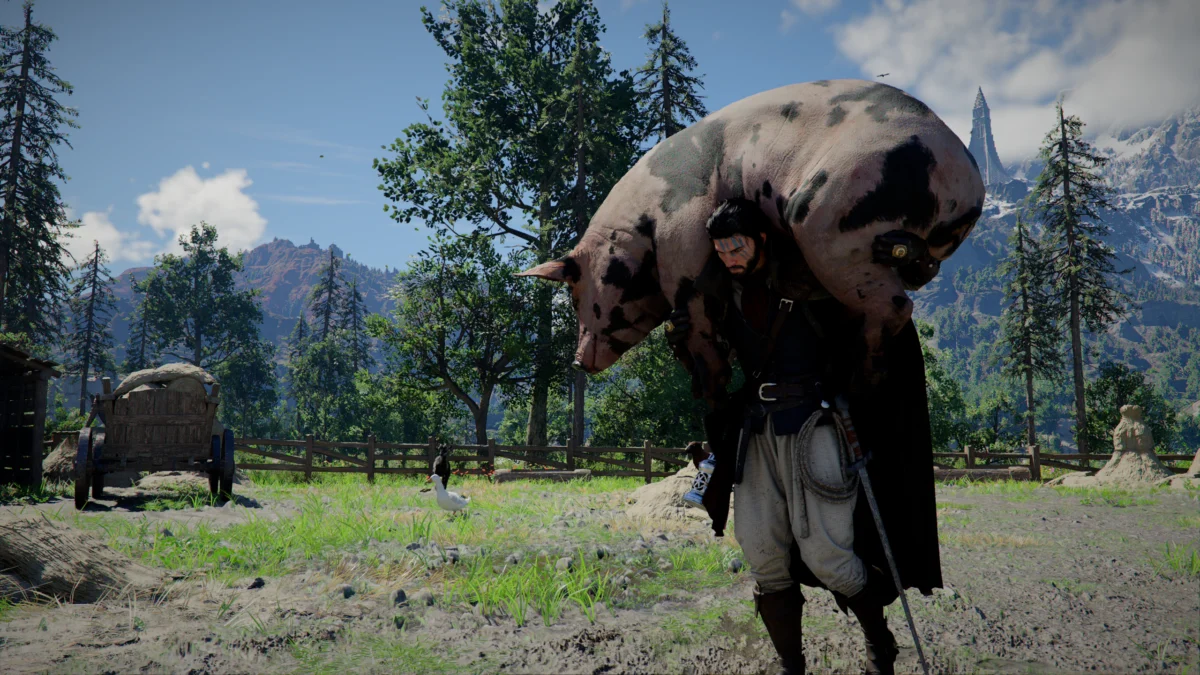
The Grand Paradox of Pearl Abyss’s Latest Epic
Pearl Abyss, the South Korean developer renowned for its visually stunning and mechanically deep MMORPG Black Desert Online, has unveiled its latest ambitious title, Crimson Desert. Positioned as a grand open-world action RPG, the game has been a subject of intense anticipation, promising an epic adventure set within a breathtaking, expansive world. However, early impressions from critics paint a complex picture: a game of astounding technical prowess and engaging gameplay mechanics that is, paradoxically, undermined by a bewildering narrative and user experience.
At its core, Crimson Desert presents itself as a titan among video games, a "champion bodybuilder" of interactive entertainment. Its colossal world pulsates with an undeniable sense of scale, rendered with cutting-edge graphical fidelity that sets a new benchmark for visual immersion. Complementing this stunning backdrop is a robust and multifaceted combat system, offering players a diverse arsenal of options that are both satisfying to execute and visually spectacular. Yet, beneath this muscular exterior, reviewers have identified significant structural weaknesses. An "incongruent story," "maddening systems," and "baffling UI" plague the experience, suggesting a product that, despite its outward strength, lacks the cohesive "connective sinew" to function as a truly unified and compelling whole. The prevailing sentiment is one of immense potential, tantalizingly close to greatness, yet hindered by fundamental design choices that beg for a comprehensive overhaul.
Chronology: From Grand Vision to Confounding Reality
Development History and Anticipation
The journey of Crimson Desert has been a fascinating, albeit somewhat convoluted, one. Initially conceived as a prequel to Black Desert Online and envisioned as a massively multiplayer online role-playing game, Pearl Abyss later pivoted its development strategy. The project was reshaped into a single-player, open-world action RPG with significant multiplayer elements, a decision aimed at broadening its appeal and allowing for a more focused, narrative-driven experience. This shift sparked considerable excitement, with trailers showcasing groundbreaking graphics, dynamic combat, and a vast, living world, setting high expectations for a next-generation fantasy epic. Gamers and industry observers alike eagerly awaited Pearl Abyss’s interpretation of a modern action RPG, curious to see how their expertise in world-building and combat systems would translate into a primarily single-player format. The promise of a deep, engaging world without the typical MMORPG grind, coupled with the visual fidelity Pearl Abyss is known for, created a significant buzz, positioning Crimson Desert as a potential contender for one of the most significant releases of its generation.
The Player’s Initial Journey and Kliff’s Unfolding Saga
The game wastes no time in establishing its visual grandeur. Players are thrust into the world, often beginning their journey "trudging along a twilight-dappled ridge at sunset," an initial moment described as "one of the most visually breathtaking scenes in recent memory." This immediate immersion into a beautifully crafted environment sets a high bar, promising an adventure of epic proportions.
The narrative centers on Kliff, a member of the Greymanes, a warrior sect displaced from their homeland of Pailune. Their plight stems from the relentless warmongering of the Black Bears, invaders seeking to subjugate the Paulinese people and erase the legacy of the Greymanes’ slain king. Kliff’s personal saga begins dramatically: defeated and cast into a river by the formidable leader of the Black Bears, he is miraculously resurrected by an unknown magic. This resurrection grants him passage into a mysterious realm known as The Void, bestowing upon him otherworldly abilities that become central to his quest. His mission is clear: to rally the scattered Greymanes, reclaim vengeance against the Black Bears, and secure a new home for his people. This grand objective propels Kliff into a sprawling political landscape, forcing him to navigate the intricate webs of power, rubbing elbows with influential counts, shrewd coinmasters, and cunning courtesans, while also contending with the continent’s myriad blackguards and brigands. The setup, replete with themes of war, betrayal, and political intrigue, draws clear inspiration from popular dark fantasy narratives, most notably Game of Thrones, complete with "c-bombs and rEGioNaL bRiTiSh acCEnTs" that aim for a gritty, authentic feel, though the execution of these accents—ranging from "Sean Bean, Scottish and what your cousin sounds like after two semesters at Oxford Brookes"—can sometimes feel disjointed, especially given the characters supposedly share a common origin.
Supporting Data: A Deep Dive into Strengths and Flaws
The World: A Visual and Experiential Triumph
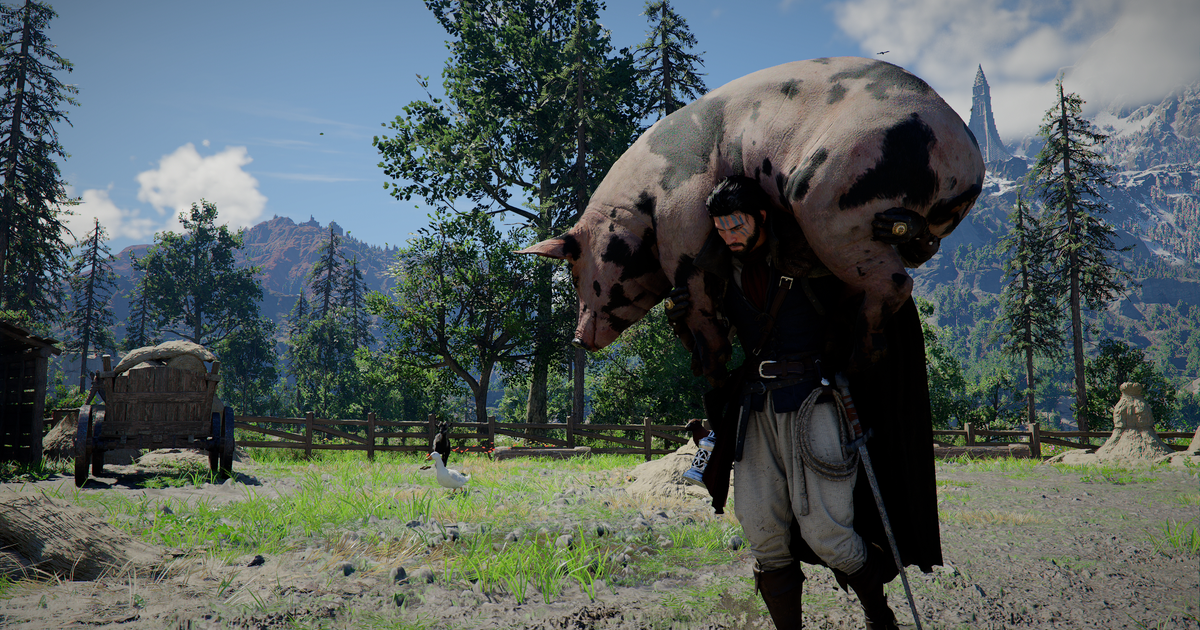
The most undeniable triumph of Crimson Desert lies in its world-building. Pearl Abyss has leveraged its considerable technical prowess to craft a "gigantic world" that truly "bulges with incredible scale." The graphical fidelity is nothing short of "shining," presenting environments that are not only vast but also meticulously detailed and stunningly realized. From the aforementioned "twilight-dappled ridge" that greets players with an unforgettable sunset vista, to the sweeping panoramas of "high cliffs and yawning valleys," every corner of the landscape feels handcrafted and alive. The environmental diversity is impressive, moving through lush forests, arid deserts, bustling cities like Delesyia, and treacherous mountain ranges, each area contributing to a sense of grand adventure.
Exploration in Crimson Desert is designed to be an experience in itself. The ability to glide across vast ravines on magical wings offers a breathtaking sense of freedom and verticality, allowing players to appreciate the sheer scope of the world from above. Complementing this aerial traversal is horseback riding, which provides a more grounded yet equally immersive way to cover distances, galloping across open plains and winding paths. These modes of transport transform simple travel into an "epic quality of a grand adventure," inviting players to lose themselves in discovery. This sandbox environment is perhaps the game’s greatest asset, a canvas of unparalleled beauty and opportunity that beckons exploration and promises countless untold stories within its sprawling borders. It’s a world that feels genuinely alive and reactive, with dynamic weather systems, day-night cycles, and diverse ecosystems that contribute to its immersion. This commitment to environmental design ensures that, even when other aspects falter, the sheer joy of existing within and traversing this world remains a powerful draw.
Combat: A Masterclass in Dynamic Action
Beyond its visual splendor, Crimson Desert delivers an equally impressive "muscular combat system" that is both deep and immensely satisfying. The game empowers Kliff with a "wealth of options," allowing players to tailor their fighting style to their preferences and adapt to various enemy encounters. The combat feels weighty and impactful, a stark contrast to the often floaty mechanics found in other open-world titles.
Kliff has access to an "awesome array of styles." Players can engage in "chunky sword-and-board action," wielding heavy blades and shields to block incoming attacks and deliver powerful counter-blows. This style offers a visceral, defensive-offensive balance that rewards precise timing and tactical positioning. Alternatively, for those seeking a more agile and spectacular approach, Kliff can unleash a "spectacular selection of unarmed grappling combos." These over-the-top, almost fantastical martial arts moves, featuring throws, slams, and intricate hand-to-hand sequences, stand in stark contrast to the game’s otherwise "quite grounded fantasy setting." This incongruity, however, is not a flaw but a charm, making the grappling feel uniquely powerful and incredibly fun, leading players to "fall in love" with its sheer extravagance.
The combat system’s depth is "unassumingly deep once you’ve got the hang of everything you can do." It encourages players to experiment with different abilities, weapon types, and magic, constantly refining their approach. This depth truly shines in larger engagements, where players "come to crave the larger battles where you take on almost Musou-like hordes of enemies," slicing through swathes of foes with satisfying efficiency. Furthermore, the game features "genuinely tough boss battles" that demand strategic thinking, mastery of Kliff’s various abilities, and impeccable execution, providing a challenging yet rewarding experience that tests players’ skills. The inspiration from games like Dragon’s Dogma is evident here, particularly in the tactile nature of combat and the sense of power Kliff wields, while the scale of some encounters hints at the grandiosity found in titles like The Witcher 3.
The Narrative Conundrum: A Story Lacking Cohesion
While the world and combat are pillars of excellence, Crimson Desert‘s narrative is its most glaring Achilles’ heel. The "incongruent story" is a recurring criticism, described as lacking the "connective sinew" that binds a compelling plot together. This isn’t merely a matter of a weak story, but rather one that feels fundamentally disjointed and often nonsensical, leading to "maddening systems and genuinely odd characterisation."
Kliff, the designated protagonist, embodies much of this narrative inconsistency. The decision to feature a pre-defined main character is "doubly strange" given Pearl Abyss’s reputation for Black Desert Online‘s "intensely detailed character creator." This choice feels like a missed opportunity, as if the developer is "packing away one of the best toys in its box for basically no reason," denying players the agency to craft their own hero in a world seemingly built for personal exploration.

Kliff’s characterization itself is a source of considerable frustration. His tone and demeanor "massively incongruent and completely changes from scene to scene." One moment, he is portrayed as a "stoic badass, catching punches and twisting arms like the Terminator," embodying the fierce warrior persona. The next, he is inexplicably "purring like a housecat serving soup to randos who’ve magically appeared to help build a tent." This jarring oscillation between personalities prevents any genuine connection with the character, making his motivations and actions difficult to follow or empathize with.
The dialogue further exacerbates these issues, often being "hilariously sparse." A prime example cited is a side quest where an NPC asks, "Are you up to the task?" to which Kliff simply replies, "Yes." The exchange ends there, devoid of any depth or personality, leaving players with a sense of emptiness. This "flat and uneven storytelling" extends to critical plot points, where events that should logically be challenging or earned simply "just happen." The quest to reunite the scattered Greymanes, a "key plot thread of the first 20+ hours," culminates in them inexplicably appearing at the player’s camp, casually greeting Kliff "like it’s nothing." This narrative convenience undermines the gravity of the quest and the player’s efforts.
Perhaps most concerning are instances where the narrative veers into problematic territory, such as the "Goldleaf" guild of "money-lending goblin merchants" besieging the city of Hernand. This particular depiction has drawn criticism for its use of "stereotypes," causing reviewers to throw their "head in [their] hands" due to its insensitive and uninspired portrayal. Such narrative choices indicate a broader lack of sensitivity and foresight in the game’s storytelling department.
The Baffling User Interface and Quality-of-Life Woes
Beyond the narrative, Crimson Desert is "stuffed with baffling UI decisions" that actively hinder the player experience and make routine tasks a chore. The inventory system, in particular, is singled out for its frustrating design, seemingly "designed to simulate the experience of carrying your food home when you don’t want to pay for a carrier bag."
Unlike most modern RPGs, enemies in Crimson Desert do not have a viewable inventory. This means players must first ensure they have sufficient space for everything an enemy might be carrying before initiating the loot process. Crucially, players "can’t see what you’re picking up before it’s added to your bag." This creates a maddening loop: players are forced to "grab every piece of junk before immediately throwing it away" because they cannot selectively loot or preview items. This constant inventory management, cluttered with unwanted items, becomes a significant impediment to the flow of gameplay, breaking immersion and transforming simple looting into a tedious chore.
The most egregious example of this UI mismanagement is the handling of in-game currency. Enemies frequently "drop pouches of change which need to be manually opened before they’re added to your cash total." This micro-interaction, repeated countless times throughout the game, is an unnecessary and time-consuming step. The reviewer humorously illustrates this absurdity with an analogy: "It’s like how billionaires would need to drop the downpayment on a New York apartment for it to be worth their time to pick it up. The effort of opening these bags is simply not worth a palmful of copper." This design choice highlights a fundamental misunderstanding of player convenience and basic game economy principles, turning what should be a seamless acquisition of resources into a persistent annoyance that detracts significantly from the overall enjoyment. Such baffling UI decisions and quality-of-life woes indicate a lack of polish and user-centric design that stands in stark contrast to the game’s otherwise cutting-edge presentation.
Official Responses: Pearl Abyss’s Stance and Future Outlook
As of the initial wave of reviews, Pearl Abyss has yet to issue a comprehensive official response addressing the specific criticisms regarding Crimson Desert‘s narrative inconsistencies and perplexing UI. Typically, developers monitor critical feedback closely, especially for a high-profile release of this magnitude. It is common practice for studios to acknowledge the reception, express gratitude for player and critic engagement, and outline plans for post-launch support.
Given Pearl Abyss’s extensive history with Black Desert Online, a game that has seen continuous updates, refinements, and content additions over many years, there is an expectation that Crimson Desert will also receive ongoing development support. The challenge for Pearl Abyss will be to prioritize which aspects to address. While graphical enhancements and new combat abilities are often easier to implement, a "full revamp of 99% of its narrative content" is a monumental undertaking, potentially requiring significant resources and a fundamental rethinking of the game’s core story arc. Addressing the UI and quality-of-life issues, however, might be more achievable in the short to medium term. Past experience suggests that Pearl Abyss is capable of responding to community feedback, and the stark contrast between the game’s strengths and weaknesses presents a clear roadmap for potential improvements. The developer’s commitment to evolving its titles post-release will be a critical factor in determining Crimson Desert‘s long-term success and whether it can ultimately shed its current narrative baggage.

Implications: The Road Ahead for Crimson Desert and Pearl Abyss
For Players and the Gaming Community
The mixed reception of Crimson Desert presents a complex proposition for prospective players and sparks a significant debate within the gaming community. For those who prioritize breathtaking visuals, expansive open-world exploration, and deeply engaging combat mechanics above all else, Crimson Desert offers an unparalleled experience. It is a game that can deliver moments of pure, unadulterated awe and exhilarating action. However, for players who value a coherent, well-written narrative, compelling character development, and intuitive user interfaces, the reviews serve as a strong cautionary tale. The game forces a difficult trade-off: embrace its undeniable strengths while tolerating, or actively combating, its significant narrative and design flaws.
This dichotomy fuels the ongoing discussion about the balance between technical prowess and holistic game design. Can a game with such egregious narrative and UI issues still be considered great if its core gameplay and world are exceptional? Crimson Desert challenges players to define their own metrics for enjoyment, potentially polarizing opinions between those who can overlook its shortcomings and those who find them insurmountable. For Pearl Abyss, this reception means navigating a discerning audience, many of whom hold the studio to a high standard set by their previous work.
The Future of Crimson Desert
The most poignant takeaway from the critical assessment is the recurring phrase, "if only." Reviewers consistently suggest that Crimson Desert "could genuinely be one of the best games of the generation, if only it underwent a full revamp of 99% of its narrative content." This highlights the immense, yet currently unrealized, potential residing within the game. The question then becomes one of feasibility: can Pearl Abyss realistically undertake such a massive narrative overhaul? Rewriting and re-implementing almost an entire story, including character dialogue, quests, and core motivations, is an incredibly costly and time-consuming endeavor, rarely seen post-launch for a single-player experience.
More realistically, future updates might focus on addressing the more tangible issues, such as the "baffling UI decisions" and quality-of-life improvements. Streamlining the inventory system, automating coin collection, and clarifying quest objectives are changes that could significantly enhance the player experience without requiring a complete narrative rewrite. Expansions could also provide opportunities to introduce new story arcs that are more cohesive and better integrated, potentially offering a path to redemption for Kliff’s characterization. The long-term viability of Crimson Desert will hinge on Pearl Abyss’s commitment to iterative improvement and its ability to listen to and act upon player feedback, transforming a game of extraordinary parts into a truly cohesive and beloved whole.
Lessons for the Industry
Crimson Desert‘s launch offers valuable lessons for the broader video game industry. It underscores the critical importance of cohesive narrative and user-friendly design, even when a game boasts unparalleled visual fidelity and engaging core mechanics. The game serves as a stark reminder that technical excellence, while crucial, cannot fully compensate for fundamental flaws in storytelling, character development, and basic user experience.
Furthermore, Crimson Desert‘s development journey, from an MMORPG concept to a single-player action RPG, highlights the inherent challenges of transitioning development paradigms. Design philosophies and systems optimized for a persistent online world often do not translate seamlessly to a narrative-driven single-player experience, leading to incongruities like the cumbersome UI or the lack of character customization options in a game from a studio known for it. This situation emphasizes the need for a clear, consistent vision from the outset of development, ensuring that all elements—from the grand narrative to the smallest UI detail—work in harmony to create a unified and immersive player experience. Ultimately, Crimson Desert stands as a testament to the delicate balance between ambition and execution, showcasing how even the most spectacular achievements can be overshadowed when the foundational elements of compelling game design are overlooked.











No comments yet. Be the first to join the conversation!