

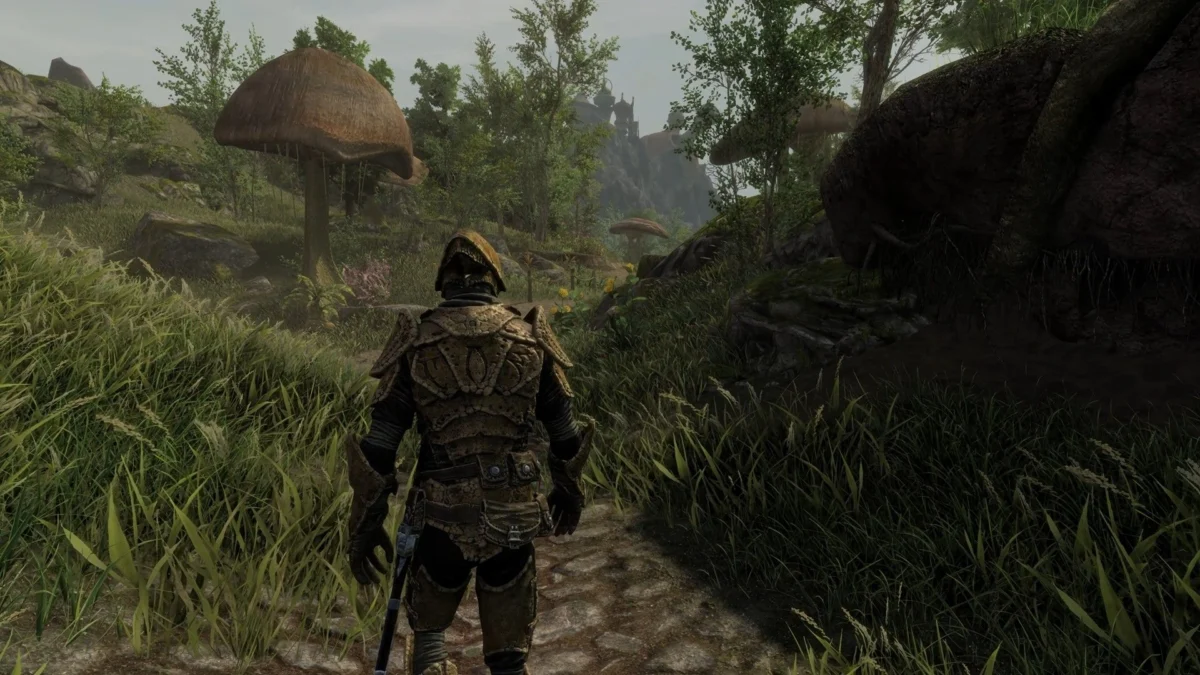
Vvardenfell Reborn: The Ambitious Skywind Mod Unveils Monumental Progress
Published May 10, 2026, 1:21 PM EDT
After an astonishing 14 years of development, the colossal fan-made project known as Skywind has unveiled its most significant update in years, signaling that the ambitious endeavor to recreate The Elder Scrolls III: Morrowind within The Elder Scrolls V: Skyrim‘s engine is moving closer to its long-awaited release. This volunteer-driven total conversion mod, a testament to the unwavering dedication of its creators, promises to bring the beloved, alien world of Vvardenfell to a new generation of players and offer veterans a stunningly revitalized journey.
The announcement, delivered via a comprehensive video released on the Skywind team’s official YouTube channel on May 8, 2026, detailed the extensive progress made since 2024. For two years, the team had largely worked in quiet dedication, a period that has now culminated in remarkable milestones across various development fronts. The sheer scale of the undertaking—essentially rebuilding one classic RPG inside another—underscores why Skywind stands as one of the most anticipated and technically challenging fan projects in gaming history.
Main Facts
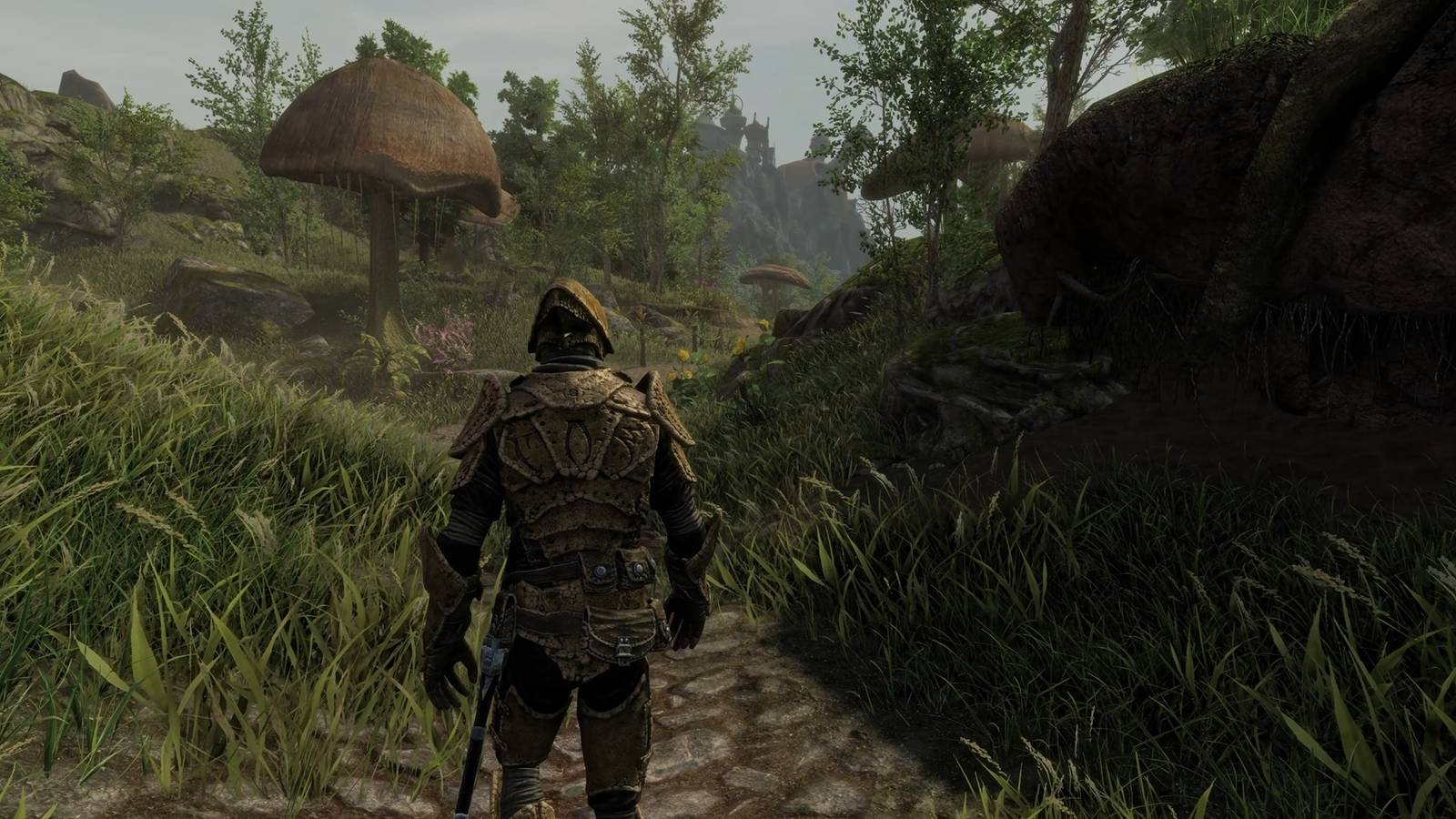
Skywind is not merely a graphical overhaul; it is a full recreation of The Elder Scrolls III: Morrowind, including its vast world, intricate quests, unique lore, and deep role-playing mechanics, all meticulously rebuilt within The Elder Scrolls V: Skyrim‘s Creation Engine. This means players will experience the iconic island of Vvardenfell, from the fungal forests of the Ascadian Isles to the volcanic ashlands of the Red Mountain, with modern graphics, enhanced physics, and the improved combat system of Skyrim, while striving to retain the original game’s distinctive atmosphere and challenging gameplay.
The latest update video confirmed substantial progress across key development areas:
- Art Assets: The vast majority of both 2D (textures, UI elements) and 3D (models for creatures, architecture, flora, items) art assets are now nearing completion. This represents countless hours of meticulous work, ensuring that every corner of Vvardenfell is faithfully rendered in high detail.
- Narrative and Audio: The extensive writing and voice acting components are also reported to be approaching their final stages. Morrowind is renowned for its deep lore and verbose dialogue, and recreating this with professional-quality voice acting for thousands of lines is a monumental task.
- World Design: A significant portion of the game world has been fully realized, with 10 of Morrowind‘s 13 distinct regions reported as being "nearly finished." This includes the careful placement of every tree, rock, and building to match the original game’s layout while enhancing it with Skyrim‘s engine capabilities.
- Animation: Approximately 75% of the animation work required for creatures, characters, and environmental elements has been completed, adding a layer of fluidity and realism to the game world.
Despite this impressive forward momentum, the Skywind team has candidly acknowledged several critical areas still requiring substantial effort before a release can be considered:
- Localization: Translating the immense amount of text and dialogue into multiple languages is a complex and time-consuming process.
- Clothing Assets: While creature and environmental models are largely done, the creation of a diverse range of clothing and armor pieces for NPCs and players remains an ongoing task.
- Red Mountain Region: The perilous and iconic Red Mountain, central to Morrowind‘s narrative, is one of the remaining regions that requires significant development attention.
- Voice Acting Mastering: While recording is nearing completion, the intricate process of mixing, editing, and mastering the vast library of voice lines to ensure consistent quality and immersion is still underway.
- Quest Implementation: The intricate web of Morrowind‘s quests, involving countless branching paths, faction storylines, and unique encounters, continues to be integrated and debugged within the Skyrim engine.
Due to these remaining challenges, the Skywind team has reiterated that they are not yet prepared to provide a definitive release window. The philosophy remains "it’s done when it’s done," a common mantra for volunteer-driven projects of this magnitude, prioritizing quality and completeness over arbitrary deadlines.
Upon its eventual release, Skywind will initially focus solely on content from Morrowind‘s base game. However, the team has confirmed that preliminary work has already begun on the beloved Tribunal and Bloodmoon expansions by the development teams furthest along, suggesting that the full Morrowind experience, including its add-ons, may eventually become available.
This community-driven initiative takes on even greater significance given the official landscape of Elder Scrolls remakes. While The Elder Scrolls IV: Oblivion received an official remaster in 2025, Morrowind has yet to be formally revisited by Bethesda Game Studios. This leaves Skywind poised to become the definitive modern way to experience the venerable classic, bridging the gap for players who appreciate modern graphical fidelity and gameplay refinements but yearn for the unique magic of the original Vvardenfell.
Chronology
The tale of Skywind is one of enduring passion, technical ambition, and the inherent challenges of large-scale, volunteer-led development.
The Genesis: Early 2010s
The seeds of Skywind were sown shortly after the monumental release of The Elder Scrolls V: Skyrim in November 2011. Skyrim quickly became a modding powerhouse, its Creation Engine proving remarkably flexible and its modding tools accessible to a dedicated community. Almost immediately, discussions began among Elder Scrolls fans about the possibility of porting older games into this new, more robust engine.
Morrowind, released in 2002, held a special place in the hearts of many, revered for its unique setting, deep lore, and challenging mechanics, yet its aging graphics and somewhat clunky interface presented a barrier for new players. The idea of experiencing Vvardenfell with Skyrim‘s improved visuals, combat, and physics became a tantalizing prospect. The Skywind project officially began in 2012, born from the collective desire of modders who had previously worked on similar, albeit smaller, initiatives.
Early efforts focused on laying the groundwork: reverse-engineering Morrowind‘s world data, importing landscape heightmaps, and beginning the arduous process of recreating every asset from scratch or adapting existing Skyrim assets. Initial volunteer recruitment was a grassroots effort, leveraging modding forums and community platforms to attract talent in 3D modeling, texturing, scripting, and concept art. Polygon, recognizing the burgeoning ambition of the project, first reported on Skywind in 2014, showcasing early in-game footage and highlighting the nascent but impressive progress, particularly in revamping environments like the Ashlands. This early media attention helped to solidify the project’s legitimacy and attract further contributors.
Years of Iteration and Growth: Mid-2010s to Early 2020s
The period from the mid-2010s to the early 2020s was characterized by the slow, methodical grind inherent in such a vast undertaking. Volunteer projects, by their nature, contend with high turnover. Contributors often work in their spare time, balancing real-world commitments with their passion for the mod. This meant that while some talented individuals stayed for years, others would contribute for a period and then move on, requiring constant recruitment and knowledge transfer.
During these years, the Skywind team focused on systematic development. This involved breaking down Morrowind‘s world into manageable sections, meticulously recreating each building, creature, and piece of flora. Scripting the unique spells, diseases, and faction systems of Morrowind within Skyrim‘s engine presented its own set of unique challenges, often requiring innovative workarounds. Voice acting, a massive undertaking for a game with thousands of lines of dialogue, began in earnest, with volunteers lending their voices to hundreds of characters.
There were periods of relative silence from the project, a natural consequence of the intense, head-down work required. These periods often led to speculation within the community about the project’s status, but they were typically followed by impressive development updates, showcasing significant leaps in progress. The "keeping their heads down for two years" mentioned in the recent update refers to one such period of focused, internal development between 2024 and 2026, culminating in the current public revelation of their extensive achievements.
The Recent Resurgence: 2024-2026
The past two years have evidently been a period of intense productivity for the Skywind team. The decision to maintain a lower public profile seems to have allowed the "100-plus volunteers" to make substantial breakthroughs. This phase has seen the consolidation of disparate assets, the near-finalization of many core systems, and a concerted effort to bring various departments—art, writing, voice acting, animation, and world design—to a state of near-completion.
The May 8, 2026, update video served as a powerful declaration of this resurgence, demonstrating a project that has moved far beyond conceptualization and into the advanced stages of implementation. The detailed breakdown of completed and remaining tasks provides a clear roadmap, indicating that while challenges persist, the finish line is now, for the first time in many years, truly within sight. This current phase represents a critical push towards integration, debugging, and polish, transforming thousands of individual contributions into a cohesive, playable experience.
Supporting Data
The Skywind project is a rich tapestry woven from technical ingenuity, community spirit, and a deep reverence for gaming history. Its scope is unprecedented for a fan project, demanding a level of coordination and sustained effort typically seen only in professional game development studios.
Technical Ambition and Engine Limitations
The decision to rebuild Morrowind in the Skyrim Creation Engine was both a blessing and a curse. Skyrim‘s engine offered significantly enhanced graphical capabilities, a more robust physics system, and a more streamlined combat experience compared to Morrowind‘s Gamebryo engine. This allowed for detailed environments, dynamic lighting, and realistic character animations that would be impossible in the original game.
However, the Creation Engine was not designed for Morrowind‘s unique mechanics. Morrowind featured a highly statistical combat system where hits were determined by dice rolls and character skills rather than direct weapon contact. It also boasted mechanics like levitation, comprehensive spellcrafting, and a more intricate attribute and skill system. The Skywind team has had to innovate extensively, often scripting custom solutions to emulate Morrowind‘s core gameplay elements within Skyrim‘s framework. This involves not just porting assets but reimagining how underlying game logic functions, ensuring that the "feel" of Morrowind is preserved despite the engine change. The sheer volume of new assets required—from unique creature models like the Kwama Forager and Cliffracer to the distinct architectural styles of the Great Houses—demonstrates the scale of the 3D and 2D art teams’ work.
The Volunteer Powerhouse
The backbone of Skywind is its "100-plus volunteers." These individuals hail from diverse backgrounds and geographical locations, united by their passion for The Elder Scrolls. Their roles span every aspect of game development: 3D modelers, texture artists, concept artists, animators, level designers, scripters, programmers, writers, voice actors, sound engineers, quality assurance testers, and project managers.
Managing such a vast, distributed, and unpaid workforce presents unique organizational challenges. The Skywind team operates with a hierarchical structure, typically involving project leads, department heads, and team leaders who coordinate efforts, assign tasks, and ensure consistency. Communication often relies on online platforms like Discord, forums, and specialized project management software. The motivations of these volunteers are varied: some are aspiring game developers seeking portfolio experience, others are seasoned professionals contributing their skills to a beloved franchise, and many are simply dedicated fans wanting to see their dream project realized. This dynamic, while powerful, also contributes to the extended development timeline, as volunteer availability can fluctuate dramatically.
Preserving Morrowind’s Essence
A core tenet of Skywind’s development is the meticulous preservation of Morrowind‘s unique essence. This goes beyond mere graphical updates; it involves capturing the original game’s lore, its often-unforgiving difficulty, and its sense of alien wonder. The team has committed to recreating every quest, every line of dialogue, and every environmental detail as faithfully as possible. This requires extensive research into Morrowind‘s original design documents and deep dives into its lore.
The challenge lies in balancing fidelity to the original with the enhancements offered by the Skyrim engine. For instance, while Skyrim‘s combat is more action-oriented, Skywind aims to integrate Morrowind‘s skill-based hit chances and spell failure mechanics, ensuring that players still feel the weight of their character’s stats. The distinctive soundscapes of Vvardenfell, from the mournful cry of the Cliffracer to the ambient sounds of the ashlands, are also being carefully recreated or re-recorded to ensure an authentic auditory experience.
The Modding Ecosystem
Skywind is a shining example within the broader Elder Scrolls modding ecosystem. It stands alongside other ambitious total conversion projects like Skyblivion (recreating Oblivion in Skyrim) and Tamriel Rebuilt (expanding Morrowind‘s original landmass). These projects demonstrate the incredible longevity and replayability that modding brings to Bethesda’s RPGs.
The Elder Scrolls community has consistently shown a desire for new content and reimagined classics, often filling the gaps between official game releases. These large-scale mods serve as a vital source of fresh experiences, keeping older titles relevant and introducing them to new audiences. The technical innovations and community management strategies developed by projects like Skywind often influence and inspire smaller modding teams, fostering a vibrant and self-sustaining creative environment. The very existence of such projects underscores the power of a dedicated fanbase to extend the life and legacy of beloved games far beyond their initial release.
Official Responses
The relationship between large-scale fan projects like Skywind and the intellectual property holders, in this case, Bethesda Game Studios and its parent company ZeniMax Media (now part of Microsoft’s Xbox Game Studios), is often a delicate one.
Bethesda’s Stance on Fan Projects
Historically, Bethesda Softworks has maintained a largely permissive and supportive stance towards its modding community. This open approach, particularly for The Elder Scrolls and Fallout series, has been a cornerstone of the games’ enduring popularity and longevity. Bethesda provides official modding tools (like the Creation Kit) and hosts platforms for mod distribution, implicitly endorsing fan creations.
However, this support comes with a critical caveat: fan projects must remain non-commercial. Skywind, like other total conversion mods, adheres strictly to this principle. It is developed entirely by volunteers, distributed for free, and requires users to own both Morrowind and Skyrim (and potentially their respective expansions) to play. This ensures that no copyrighted material is being sold or directly profited from by the mod team. Bethesda has generally allowed such projects to flourish as long as these conditions are met, recognizing them as a form of community engagement that ultimately benefits their franchises. Unlike some other publishers who might issue cease-and-desist orders for large fan projects, Bethesda’s hands-off approach has fostered an environment where ambitious creations like Skywind can thrive. The fact that Bethesda itself has not undertaken an official Morrowind remake further solidifies the space for Skywind to exist as the premier fan-made alternative.
The Absence of a Release Window
The Skywind team’s consistent refusal to provide a firm release date is a pragmatic and responsible decision, deeply rooted in the realities of volunteer-driven development. Unlike a professional studio with dedicated funding, strict deadlines, and full-time staff, Skywind’s progress is entirely dependent on the availability and commitment of its unpaid contributors.
This "it’s done when it’s done" philosophy is not a lack of commitment but rather an acknowledgement of the inherent unpredictability of such a massive project. Unexpected technical hurdles can arise, key volunteers might need to step away due to real-life obligations, and the iterative nature of development means that features might need more time for polish than initially anticipated. Announcing a premature release date would only lead to potential disappointment and pressure on a volunteer team. By managing community expectations upfront, the team can focus on delivering a high-quality product without the burden of external deadlines. This approach also allows for continuous improvement and refinement, ensuring that the final release is as polished and complete as possible, even if it means waiting a little longer.
Implications
The eventual release of Skywind will have far-reaching implications, touching upon the Morrowind fanbase, the broader modding community, and even indirectly, Bethesda’s future strategies.
For Morrowind Fans
For the legions of dedicated Morrowind fans, Skywind represents nothing short of a dream come true. Many have longed to revisit Vvardenfell with modern graphical fidelity and quality-of-life improvements without sacrificing the core identity of the original game. Skywind promises to deliver exactly that: a chance to re-experience a beloved classic with a fresh coat of paint, improved combat, and more dynamic environments, while still retaining its unique lore, challenging mechanics, and sense of alien wonder.
Moreover, Skywind will likely introduce Morrowind to an entirely new generation of players who might have found the original game’s dated graphics and mechanics too much of a barrier. These new players will be able to appreciate the intricate world-building, deep role-playing, and unique narrative that made Morrowind a landmark title, potentially converting them into fans of the wider Elder Scrolls universe. It’s a bridge between the past and the present, ensuring the legacy of one of gaming’s most influential RPGs continues to thrive.
For the Modding Community
Skywind stands as a monumental testament to the power, dedication, and technical prowess of the modding community. Its successful completion, whenever it arrives, will set a new benchmark for ambitious total conversion projects, inspiring other modders to tackle similarly grand endeavors. It showcases what a collective of passionate volunteers can achieve when united by a common vision and fueled by a love for a game.
The techniques, tools, and organizational strategies developed by the Skywind team over 14 years will undoubtedly become case studies for future large-scale mod projects. It validates the idea that fan-made content can rival, and sometimes even surpass, the scope of official releases, pushing the boundaries of what is possible within existing game engines. This project reinforces the modding community’s vital role as an incubator for talent, innovation, and unwavering passion.
For Bethesda and Future Elder Scrolls Titles
The existence and eventual success of projects like Skywind have several implications for Bethesda Game Studios. Firstly, it highlights the immense longevity and replayability that their games gain through modding support. The modding community essentially acts as an extension of the development team, continually generating new content and experiences that keep players engaged for decades.
Secondly, fan remakes like Skywind offer Bethesda valuable insights into what their player base truly values in older titles. The choices made by the Skywind team regarding which Morrowind mechanics to retain, enhance, or adapt provide a unique form of market research into player preferences. This feedback, albeit indirect, could potentially influence design decisions for future Elder Scrolls titles, including the highly anticipated The Elder Scrolls VI. It also demonstrates the demand for revisiting older titles, which could inform future official remasters or remakes.
Furthermore, these large-scale fan projects help bridge the significant gaps between official Elder Scrolls releases. With The Elder Scrolls VI still years away, Skywind offers a substantial, high-quality experience that keeps the franchise alive and vibrant in the collective consciousness of its fanbase.
The Future of Skywind
Upon its initial release, Skywind will provide the complete Morrowind base game experience, offering countless hours of exploration and adventure. However, the preliminary work already underway for the Tribunal and Bloodmoon expansions suggests that the journey won’t end there. The team’s commitment to eventually bringing the full Morrowind saga into Skyrim is a testament to their long-term vision.
Even after release, Skywind will likely require ongoing maintenance, bug fixes, and potential further enhancements, reflecting the continuous nature of game development. The legacy of Skywind will be multifaceted: a testament to community dedication, a technical marvel, and a definitive way to experience one of gaming’s greatest RPGs for generations to come. It will stand as a monument to the enduring power of fan creativity and the timeless appeal of Vvardenfell.











No comments yet. Be the first to join the conversation!