Nila Kartika Wati
In the rapidly evolving landscape of artificial intelligence, a seismic shift has occurred. For years, the domain of Large Language Models (LLMs) was dominated by a handful of proprietary "black-box" systems. However, the emergence of DeepSeek—a powerful, open-weights, and highly efficient AI model—has shattered this paradigm. By delivering performance that rivals industry giants like OpenAI’s GPT-4o, DeepSeek has democratized access to high-level reasoning and coding capabilities, sparking a global conversation about the future of open-source artificial intelligence.
The Genesis and Evolution of DeepSeek
DeepSeek originated in late 2022 as an ambitious research initiative emerging from the vibrant AI ecosystem in China. Founded by a team of elite researchers specializing in machine learning and computational linguistics, the project was built upon two foundational pillars: maximizing computational efficiency and fostering transparency through open-source accessibility.
A Chronology of Innovation
The trajectory of DeepSeek is characterized by rapid, iterative development cycles that have consistently pushed the boundaries of what is possible with efficient architecture:
- 2022: Initial research and foundational architectural design.
- 2023: The team introduced early variants focusing on specialized coding and mathematical reasoning, setting the stage for broader language understanding.
- 2024: DeepSeek V2 and subsequent iterations refined the Mixture-of-Experts (MoE) approach, allowing the models to handle significantly higher token counts.
- 2025: The launch of DeepSeek V3 and the R1 reasoning model solidified its position as a global contender, demonstrating that performance does not always require massive, closed-source infrastructure.
Technical Architecture: The Engine Behind the Power
The primary differentiator for DeepSeek lies in its architectural ingenuity. While many models rely on dense, monolithic structures that require enormous power to execute every single query, DeepSeek utilizes Mixture-of-Experts (MoE).
Understanding Mixture of Experts (MoE)
In a standard Transformer model, every parameter is activated during every inference step. DeepSeek’s MoE architecture, by contrast, functions like a specialized workforce. It routes input queries to a specific subset of "expert" sub-networks. This sparse activation drastically reduces the computational cost and latency of the model without sacrificing the depth or complexity of the output. It is this efficiency that allows the model to run locally on hardware that would struggle with other leading LLMs.
The Power of Context
DeepSeek V3 boasts a massive context window of 128,000 tokens. This is not merely a technical specification; it is a functional breakthrough. A context window of this size allows users to:
- Process entire technical manuals or legal documents in a single prompt.
- Maintain coherence over hours of complex, multi-turn coding sessions.
- Analyze massive datasets without the model "forgetting" the beginning of the conversation.
Comparative Analysis: DeepSeek vs. The Incumbents
When comparing DeepSeek against industry stalwarts like ChatGPT (GPT-4o), the differences are as much philosophical as they are technical.
| Feature | DeepSeek | ChatGPT (GPT-4o) |
|---|---|---|
| Licensing | Open Weights / Open Source | Proprietary |
| Accessibility | Free / Low-cost API | Freemium / $20 Monthly |
| Local Hosting | Yes | No |
| Architecture | Optimized MoE | Proprietary Dense/Sparse |
| Focus | Reasoning & Coding | Multimodal/Generalist |
DeepSeek is engineered for those who prioritize data sovereignty and high-performance reasoning. While ChatGPT remains the leader in multimodal versatility—offering native image generation, voice synthesis, and real-time video analysis—DeepSeek dominates in the realm of raw logic, mathematical precision, and code generation.
Implementing DeepSeek: From Web to Local Integration
DeepSeek has prioritized user accessibility across all tiers of technical expertise.
The Web Interface
For casual users, the official DeepSeek web platform provides a seamless experience, mimicking the chat-based interaction familiar to users of ChatGPT. It supports multi-language queries, with robust performance in Spanish and English, and includes a "deep think" mode that allows users to observe the model’s reasoning process before it provides a final answer.
Local Deployment: Privacy and Sovereignty
One of the most compelling aspects of DeepSeek is the ability to run it locally. This is a game-changer for businesses and individuals concerned with data privacy, as it ensures that proprietary data never leaves the local machine.
Using tools like Ollama, developers can pull the model directly:
# Example for pulling the R1 variant
ollama pull deepseek/r1:8b
ollama run deepseek/r1:8b
This local installation offers complete control, allowing for fine-tuning, system integration, and offline functionality that is impossible with cloud-dependent services.
Implications for the AI Industry
The success of DeepSeek sends a clear signal to the industry: the "moat" created by proprietary, closed-source models is narrowing.
Democratization of Intelligence
By providing a world-class model for free, DeepSeek has leveled the playing field for developers in emerging markets and smaller startups who cannot afford the prohibitive costs of enterprise-grade API licenses. This move encourages a more diverse range of AI-powered applications, moving the technology away from a centralized handful of providers toward a decentralized, community-driven ecosystem.
Official Responses and Academic Reception
The research community has lauded DeepSeek for its transparency. By releasing white papers that detail their training methodologies, including the specific datasets used and the architectural optimizations made, they have contributed significantly to the collective knowledge of the field. This stands in stark contrast to the trend of "secretive AI" that has dominated the industry since 2023.
Best Practices and Future Outlook
To extract the most value from DeepSeek, users should adopt specific strategies:
- Iterative Prompting: Given the model’s high reasoning capability, complex tasks should be broken down into steps.
- System Prompts: Utilize system-level instructions to define the model’s persona or technical constraints.
- Local Fine-Tuning: For specialized industries (e.g., medical or legal), use LoRA (Low-Rank Adaptation) to fine-tune the local version of DeepSeek on domain-specific data.
Looking Ahead
The horizon of AI is shifting toward efficiency. The era of building "bigger" models to solve "bigger" problems is being challenged by the era of building "smarter" models that run on less hardware. As we look toward the future, the integration of DeepSeek with autonomous agents, local data processing, and privacy-focused computing will likely define the next generation of software development.
Conclusion: The New Standard
DeepSeek is more than just another chatbot; it is a catalyst for a new era of open innovation. Its ability to combine high-level reasoning with accessibility and privacy-focused deployment makes it an essential tool for the modern digital toolkit. Whether you are a researcher optimizing a new algorithm, a student learning to code, or an enterprise looking to cut costs without compromising on quality, DeepSeek provides the infrastructure necessary to push the boundaries of your potential.
As the industry matures, the question will no longer be "which AI is the most powerful," but "which AI gives me the most control over my data and my future?" With DeepSeek, the answer is increasingly clear. The era of open, efficient, and transparent AI has officially arrived.
Beyond DeepSeek: Expanding Your Horizons
If you are interested in further exploring the open-source landscape, we recommend keeping an eye on the following projects and technologies:
- Llama 3 (Meta): A foundational model that continues to set the benchmark for open-weights performance.
- Mistral/Mixtral: Leaders in efficient architecture design.
- Prompt Engineering Techniques: Explore Chain-of-Thought (CoT) and Tree-of-Thoughts (ToT) to maximize the reasoning output of models like DeepSeek.
- Vector Databases: Essential for building RAG (Retrieval-Augmented Generation) systems that pair perfectly with local LLMs.

 Nana Muazin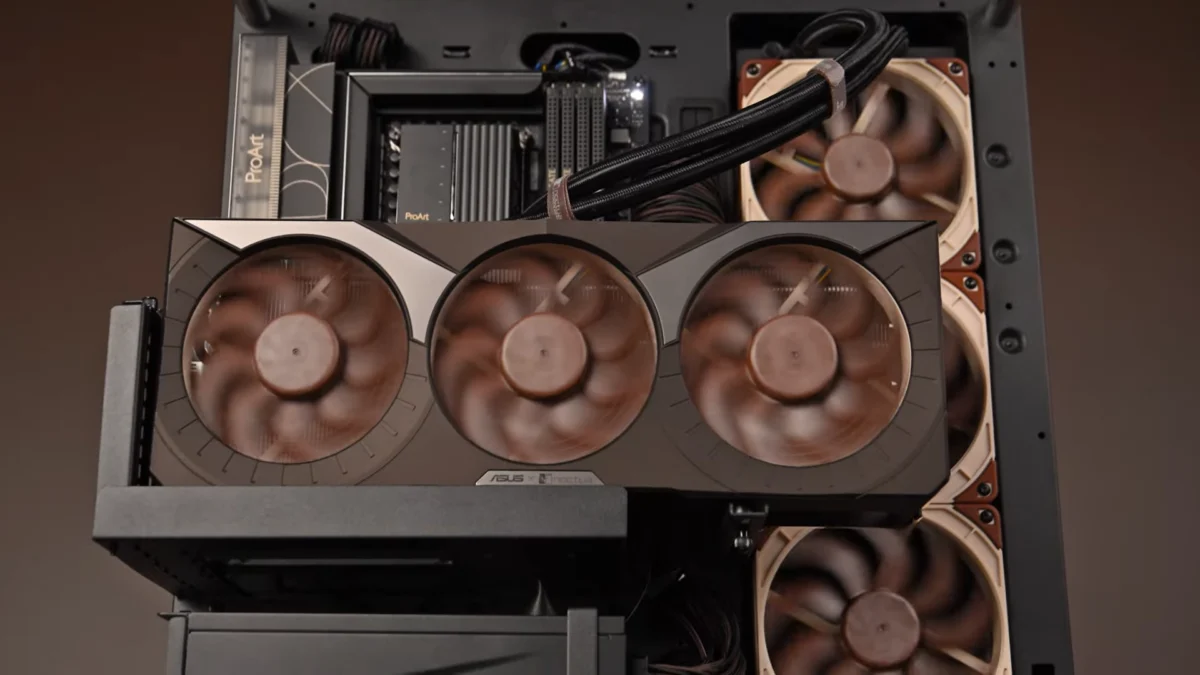
 Pevita Pearce