


Japanese language learning is often described as a journey of a thousand steps, but for many students, the most daunting hurdle is the acquisition of particles. These small, non-translatable words serve as the "glue" of the language, dictating the grammatical function of the nouns, verbs, and adjectives that surround them. Without a firm grasp of these markers, communication in Japanese remains fragmented and imprecise. This guide provides an in-depth exploration of the primary particles—ga, wa, o, ni, de, to, kara, made, mo, no, and toka—essential for achieving fluency.

The Pillars of Grammar: Subject and Topic Markers
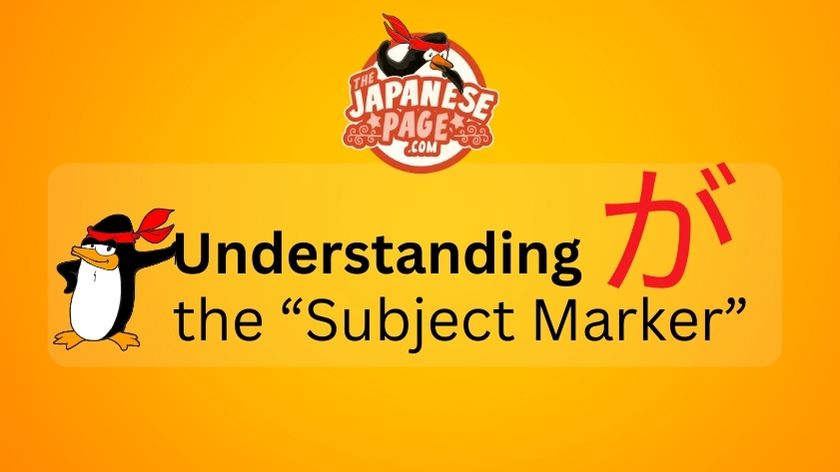
The distinction between ga (が) and wa (は) is arguably the most discussed topic in Japanese linguistics. While both can appear to perform similar functions to the English "subject," their roles are fundamentally different.
The Role of Ga (が)
Ga typically marks the subject of a sentence, particularly when introducing new information or answering an unspoken question. For example, in the sentence "Yesterday, there was a cat," the word "cat" takes ga because the listener did not previously know about the cat’s presence. Ga is also mandatory when using question words like dare (who), nani (what), or doko (where) as the subject, as well as in subordinate clauses. Furthermore, it serves as a marker for direct objects in sentences involving verbs of desire (hoshii) or ability (dekiru).

The Role of Wa (は)
Conversely, wa is the topic marker. It sets the stage for what the sentence is about. If the "cat" from the previous example becomes the focus of a follow-up conversation, the particle switches from ga to wa. Wa provides context, often implying "as for [topic]…" It is essential for contrast or emphasis, often replacing ga or o to highlight a difference between the subject and other possibilities.

Direction, Location, and Time: Navigating Space and Context
Japanese uses a specific set of particles to define where an action happens, where it is directed, and when it occurs.

Ni (に) vs. De (で)
The particle ni is a multi-purpose tool used for time, destination, and indirect objects. It indicates a specific point in time (e.g., 5:00 AM) or a destination of movement (e.g., going to Tokyo). It also marks the receiver of an action, functioning much like "to" or "for" in English.

De, on the other hand, indicates the location where an action takes place. While ni points toward a goal, de describes the setting of an activity. Additionally, de marks the means or instrument used to perform an action—such as traveling "by" train or eating "with" chopsticks.

Kara (から) and Made (まで)
These particles define boundaries. Kara denotes a starting point in time or space ("from," "since"), while made marks an ending point or limit ("until," "as far as"). They are frequently paired to show a range, such as "from 5:00 to 7:00."
Connecting Ideas: Lists and Relationships
To construct complex sentences, learners must utilize particles that connect nouns and clauses.

To (と) and Toka (とか)
To serves as an exhaustive "and." When listing items with to, you are implying that the list is complete. It also indicates relationships, such as performing an action "with" someone, and acts as a quotation marker when followed by verbs like iu (to speak).

Toka, by contrast, is used for non-exhaustive lists. It suggests that the items mentioned are merely examples from a larger, implied set. It is an excellent way to keep a sentence casual and open-ended.

Mo (も)
The particle mo translates to "also," "too," or "either." When used after nouns, it implies that the noun shares the same status or action as previously mentioned items. It can also be used to emphasize "both A and B" or to indicate "even" in the context of extreme examples.

The Possessive and Nominalization: No (の)
The particle no is the primary possessive marker, connecting two nouns to show ownership or relationship (e.g., "my book"). However, its utility extends further as a nominalizer. By placing no after a verb or adjective, the speaker turns that entire phrase into a noun, allowing for more fluid expression. It also serves as a limiter, helping to identify specific items among a group.

Chronology of Mastery
- The Foundation: Start by mastering wa and ga. Understanding these allows for basic sentence construction.
- The Setting: Once you can form a subject and topic, add ni and de to anchor your sentences in time and space.
- The Connection: Introduce to and no to link nouns and begin building descriptive sentences.
- The Complexity: Finally, incorporate kara, made, mo, and toka to add nuance, range, and list-making capabilities to your repertoire.
Implications for Language Acquisition
The rigid use of these particles is what separates a beginner from an intermediate learner. While English speakers often rely on word order to determine meaning, Japanese relies on these particles. Consequently, misusing a particle can fundamentally change the meaning of a sentence—for example, confusing a subject marker with a topic marker can shift the focus of a conversation entirely.

Students are encouraged to treat these particles not as rules to be memorized, but as tools to be observed. Reading native texts, listening to audio files, and repeatedly testing one’s understanding through drills are the only ways to internalize the subtle differences between markers that appear similar at first glance.

Official Guidance and Resources
For those seeking to master these particles, consistent practice is key. Professional educators often recommend the following for students:

- Contextual Learning: Do not learn particles in isolation. Learn them as they appear in natural sentences.
- Active Output: Practice writing sentences that contrast wa and ga to see how the meaning shifts.
- Utilizing Supplemental Materials: Many advanced learners utilize structured guides, such as the Makoto+ series, which provide printable lessons and audio files to help lock in the nuances of particle usage.
By dedicating time to these small but mighty elements of the Japanese language, students can unlock a higher level of proficiency, moving beyond simple phrases into the nuanced, expressive world of fluent Japanese communication.












No comments yet. Be the first to join the conversation!