Lina Irawan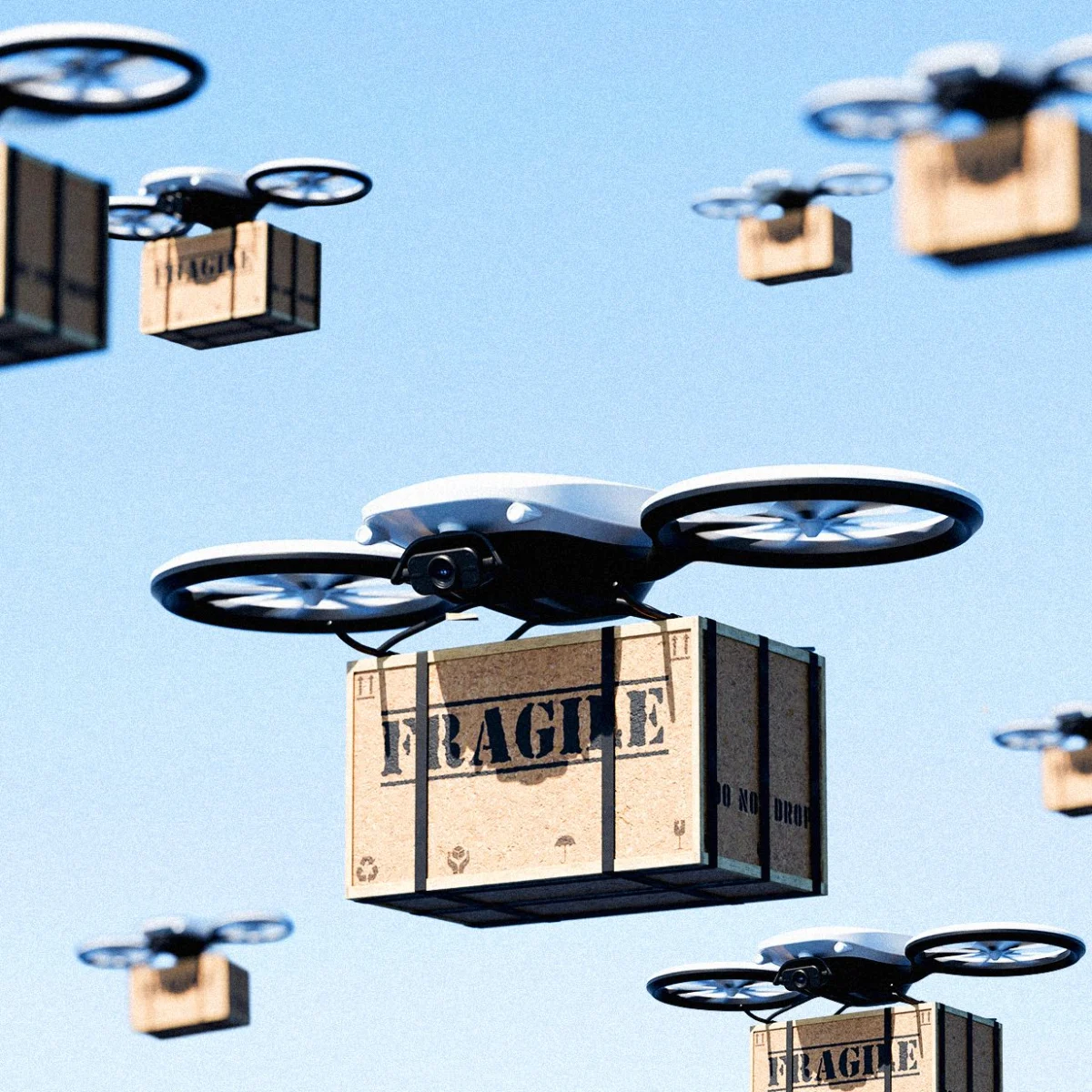
It’s a bird, it’s a plane, it’s a six-propeller, eight-foot-wingspan logistics vehicle navigating the most complex airspace in the world. As of this spring, the skyline over New York City’s East River has become a laboratory for the future of urban mobility. British drone operator Skyports is currently conducting a year-long pilot program, ferrying light cargo between Manhattan and Brooklyn in a high-stakes experiment that aims to determine if drone delivery can survive—and thrive—in the world’s most hectic urban environment.
While the drone industry has spent years proving its utility in the vast, empty expanses of rural Rwanda or the suburban sprawl of Texas, the New York City project represents a different beast entirely. It is a fundamental stress test for a technology that promises to revolutionize medical logistics but must first overcome the formidable hurdles of safety, regulation, and the ire of local residents.
Main Facts: The Anatomy of the Pilot Program
The project, spearheaded by the Port Authority of New York and New Jersey in collaboration with the New York City Economic Development Corporation (NYCEDC), commenced operations in early May. The drones, which operate on a daily weekday schedule, are currently restricted to transporting lightweight, non-hazardous cargo—primarily paper-based documentation—for a major, unnamed city healthcare system.
The long-term vision, however, is far more ambitious. Once the operational framework is validated, the program intends to transition to the transport of time-sensitive, non-biological medical supplies, such as pharmaceuticals. The drones utilize a fixed route that stays exclusively over water, keeping the heavy, buzzing machines away from the dense residential canyons of the city.
The program is not a free-for-all; it is a highly regulated, tightly supervised endeavor. Each flight requires a certified pilot to oversee operations, adherence to strict FAA guidelines, and a recurring, weekly permit from the NYPD. To ensure transparency, the city has even established a dedicated 311 portal for residents to register noise complaints or feedback regarding the drone activity.
A Chronology of Delays and Obstacles
The journey to the sky was not without its friction. Originally slated for an earlier launch, the project faced several logistical setbacks that delayed the maiden flight until May.
- The Regulatory Labyrinth: The project required the navigation of a dense web of bureaucratic layers, including the FAA, the Port Authority, the NYCEDC, and local community boards. Delays in obtaining the necessary NYPD permits served as a significant hurdle in the initial phase.
- Competing Aerial Tech: Perhaps most uniquely to New York, the program had to compete for airspace and "attention" at city heliports. The start date was pushed back in part because the same heliport slated for the drone launch was being used to demo electric vertical takeoff and landing (eVTOL) air taxis, another nascent technology fighting for a foothold in the city’s skies.
- The "Heliport Problem": New York City’s airspace is arguably the most congested in the nation. With three international airports and thousands of helicopter flights occurring over the city every month, the integration of automated drones is not merely a technical challenge; it is a diplomatic one.
Supporting Data: Why Drones, and Why Now?
To understand the necessity of this project, one must look at the failings of traditional urban logistics. In a city like New York, ground-based transportation is perpetually hampered by gridlock, road accidents, and the sheer inefficiency of delivering small medical parcels via multi-ton delivery trucks.
The "Last Mile" Paradox
According to Damon Lercel, an assistant professor specializing in aviation at Purdue University, medical drone projects are increasingly seen as a vital component of emergency infrastructure. "Typical ground transportation has its challenges, especially when there’s an accident or gridlock," Lercel explains. By bypassing the physical road network, drones can ensure that time-critical medical supplies reach patients with a consistency that traditional couriers simply cannot guarantee.
Noise and Public Perception
The noise profile of the Skyports drones is a primary concern. Generating between 60 and 100 decibels, the drones are roughly equivalent to a lawnmower. While this may seem acceptable in the context of the city’s ambient roar, the "leaf-blower" effect—a term coined by frustrated residents in Texas—has proven to be a point of significant friction. Previous reports from drone corridors in the South suggest that the persistent, high-frequency buzzing can disturb not only the peace of mind of residents but also local wildlife and pets.
Official Responses and Strategic Goals
The Port Authority is treating this as a fact-finding mission. Stephan Pezdek, the regional freight planning manager at the Port Authority, has been clear that the success of the pilot will not be measured by speed alone, but by a holistic assessment of value.
"Will there be enough regular flights—roughly one to two per hour—that the client healthcare system finds true value?" Pezdek asked in an email exchange. "Will deliveries make it to their destination faster and within the financial constraints of the current carriers? Will the community appreciate the work and not feel like it is a disruption?"
The agency is also carefully measuring the impact on patient care. The ultimate goal is to define whether a "corridor" of drone delivery is a viable replacement for road-based medical couriers. However, officials are quick to temper expectations. Amanda Kwan, a spokesperson for the Port Authority, emphasized that the current test is a strictly controlled environment. When asked about the potential for hobbyists to mimic these operations, her response was blunt: "Do not do this at home."
The Broader Implications: A Changing Sky
The NYC pilot is part of a global, if experimental, shift toward autonomous delivery. From Zipline’s established blood-delivery networks in Rwanda to the suburban expansion of Amazon’s Prime Air and Alphabet’s Wing in Texas, the industry is seeking to prove that drone logistics is more than just a tech-industry novelty.
Regulatory Evolution
The Federal Aviation Administration is currently finalizing rules that could significantly shorten the permitting process for "Beyond Visual Line of Sight" (BVLOS) operations. This shift is critical; until now, drone operators have been largely constrained by the requirement that a human pilot must maintain a line of sight with the aircraft. If the FAA succeeds in codifying safer, more efficient protocols for BVLOS flights, the barrier to entry for commercial delivery will plummet, potentially opening the door for widespread adoption of the technology.
The Urban Frontier
New York City serves as the ultimate test case. If a drone can navigate the congested, regulated, and noise-sensitive environment of the East River without causing a public relations crisis or a mid-air safety incident, it will provide a blueprint for every other major metropolis in the world.
Conversely, if the public outcry over noise becomes untenable, or if the "corridor" proves to be too complex to manage alongside traditional aviation, the NYC pilot could serve as a cautionary tale. It would signal that some cities are simply too dense, too loud, and too complicated for the current generation of drone technology.
As the Skyports fleet continues its daily commute over the water, the world is watching. We are witnessing the very first stages of an aerial logistics network that could, in the next decade, make the sight of a six-propeller delivery vehicle as mundane as the sight of a yellow cab. For now, however, it remains a rare and scrutinized spectacle, a tiny piece of the future testing its wings against the weight of the city’s past.


 Nana Wu
 Reynand Wu