

Introduction: The Beijing Backdrop
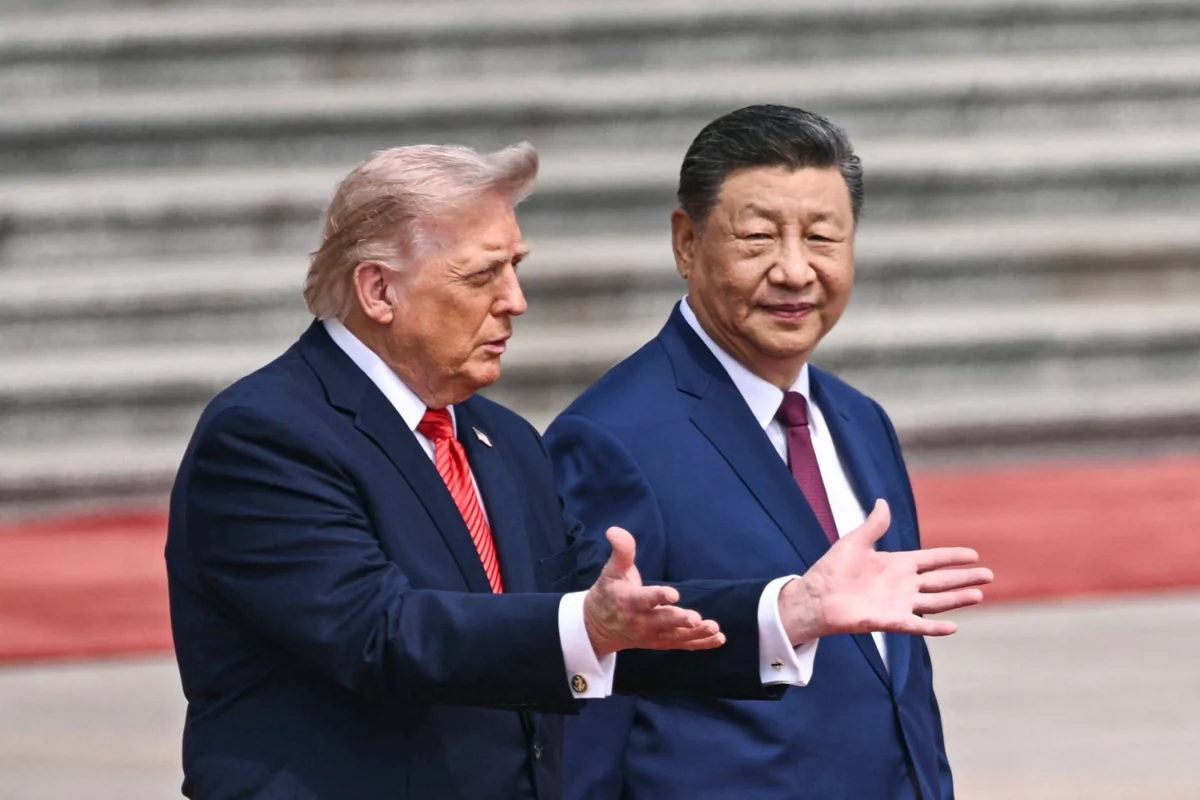
In an elaborate display of diplomatic pageantry at the Great Hall of the People in Beijing, U.S. President Donald Trump and Chinese leader Xi Jinping met this Thursday to navigate the most complex bilateral relationship of the 21st century. While the atmosphere was underscored by the customary red-carpet reception and warm personal overtures, the substance of the dialogue revealed deep-seated systemic frictions.
The summit served as a critical juncture for the world’s two largest economies. Behind the veneer of cordiality, President Xi delivered a stern, unequivocal message: the status of Taiwan remains the "red line" that, if crossed, could precipitate a direct conflict between the two superpowers. This warning, framed within a broader call for a "new positioning" of U.S.-China relations, underscores the shifting power dynamics on the global stage.
The Chronology: A Day of Contrasts
The day’s events began with a highly choreographed welcome ceremony. The visual optics were carefully managed, emphasizing stability and statecraft.
- Morning: President Trump arrived at the Great Hall of the People, where he was greeted by President Xi. The two leaders participated in a ceremonial review of the honor guard, a symbol of the gravity both nations accord to this meeting.
- Mid-Morning: The leaders moved into private sessions. During these discussions, the tone shifted from the ceremonial to the confrontational. Trump, consistent with his personal diplomatic style, lauded Xi’s leadership, expressing an optimistic vision for a future where ties are "better than ever before."
- Afternoon: The focus of the summit pivoted to the core geopolitical tensions. President Xi’s intervention regarding Taiwan dominated the conversation, serving as a reminder that Beijing’s confidence in its geopolitical standing has reached a new zenith.
- Evening: Formal statements were released, reflecting a delicate balance between public optimism and private warnings.
Core Geopolitical Friction: The Taiwan Question
The most significant development of the summit was the explicit linkage between Taiwan and the potential for kinetic conflict. Xi’s message was not merely a reiteration of the "One China" principle; it was an ultimatum regarding the trajectory of U.S. involvement in the region.
The "New Positioning" of Ties
Xi Jinping’s call for a "new positioning" of U.S.-China relations reflects a strategic departure from the historical framework of engagement. Beijing is no longer content to act as a junior partner or a subordinate to the post-World War II international order established by Washington. Instead, Xi is advocating for a bilateral framework defined by "mutual respect"—a diplomatic term that, in the context of Beijing’s rhetoric, implies an acknowledgement of China’s right to its sphere of influence and its domestic political prerogatives.
The Taiwan Red Line
The warning delivered by Xi regarding Taiwan suggests that Beijing is increasingly concerned by what it perceives as U.S. interference in its "internal affairs." By characterizing missteps regarding the island as a precursor to "conflict," Xi is raising the stakes of U.S. policy decisions. For Washington, this creates a profound dilemma: how to maintain a commitment to regional allies and the democratic status of Taiwan without triggering an inadvertent escalation that neither side can afford.
Supporting Data: The Economic and Military Landscape
To understand the gravity of these talks, one must examine the metrics of the current U.S.-China relationship.
- Economic Interdependence: Despite political tensions, bilateral trade continues to be a cornerstone of the global economy. However, both nations are increasingly pivoting toward "economic security" and "de-risking" supply chains, particularly in semiconductors and artificial intelligence.
- Military Parity: The rapid modernization of the People’s Liberation Army (PLA) has significantly altered the strategic balance in the Indo-Pacific. China’s investment in anti-access/area-denial (A2/AD) capabilities is specifically designed to challenge U.S. naval dominance in the Taiwan Strait.
- Diplomatic Alignment: Beijing has significantly expanded its footprint in the Global South, creating an alternative narrative to the U.S.-led international order. This has given China a broader coalition of support in international forums, further complicating Washington’s ability to build consensus against Chinese policies.
Official Responses and Strategic Interpretations
The reaction to the summit has been bifurcated, reflecting the deep polarization of opinion regarding the best approach to managing China.
Washington’s Perspective
Administration officials have characterized the meeting as a necessary "guardrail" effort. The U.S. strategy, as presented by the President, relies on the belief that personal rapport can mitigate systemic risk. By praising Xi, Trump seeks to create a channel of communication that can prevent accidental military escalation. However, critics in Washington argue that this approach risks appearing weak, potentially emboldening Beijing to push further on issues like maritime territorial claims in the South China Sea.

Beijing’s Perspective
For the Chinese leadership, the summit was an opportunity to project an image of equality. State media emphasized the importance of "mutual respect" and the need for the U.S. to "correct its misperceptions" about China’s rise. The focus remains on domestic stability and the long-term goal of national rejuvenation, with Taiwan serving as the ultimate test of Chinese sovereignty.
Implications: The Road Ahead
The implications of the Beijing summit are far-reaching and suggest a long, arduous period of "managed competition."
1. The Risk of Miscalculation
The most immediate risk is the potential for miscalculation. If Washington misreads the depth of Beijing’s commitment to the Taiwan issue, or if Beijing miscalculates the U.S. resolve to protect its regional interests, the likelihood of a localized crisis escalating into a broader conflict increases.
2. The Shift in Global Alliances
The "new positioning" of ties requested by Xi suggests that China will continue to push for a multipolar world. This will force smaller nations, particularly in Southeast Asia and Europe, to navigate a increasingly difficult diplomatic landscape. The era of "choosing sides" is being replaced by a more complex web of hedging, as countries seek to maintain economic ties with China while relying on the U.S. for security.
3. Domestic Political Pressures
In both the United States and China, domestic politics are driving foreign policy. For President Trump, the focus is on domestic economic wins and portraying himself as a strong negotiator. For President Xi, the focus is on maintaining the legitimacy of the Communist Party and ensuring that China is seen as a central actor in world affairs. Both leaders are operating within constraints that make compromise difficult.
Conclusion: A Fragile Equilibrium
The summit in Beijing was a stark reminder that the U.S.-China relationship is no longer defined by the optimism of the early 21st century. It is now defined by the reality of systemic rivalry and the ever-present shadow of conflict. While the personal rapport between the two leaders may provide a temporary cushion against the most severe outcomes, the fundamental disagreements—most notably on Taiwan—remain unresolved.
As the two powers move forward, the world will be watching closely. The stability of the global order now rests on the ability of Washington and Beijing to move from a relationship of mutual suspicion to one of strategic maturity. Whether such a transformation is possible, or whether the current trajectory leads to a permanent state of friction, remains the defining question of our time.
The summit, while notable for its pageantry, should be viewed as a single frame in a much larger, and potentially more turbulent, cinematic narrative. The "new positioning" of ties is not a destination, but a starting point for a period of testing, where every move on the board—be it in the Taiwan Strait or the global markets—will be scrutinized for its capacity to tip the delicate balance of peace into the abyss of conflict.
Quality journalism is more critical than ever. As we navigate these shifting geopolitical tides, your support ensures we can continue to provide the in-depth, nuanced reporting required to understand our changing world. Please consider subscribing to help us get the story right.












No comments yet. Be the first to join the conversation!