Nana Muazin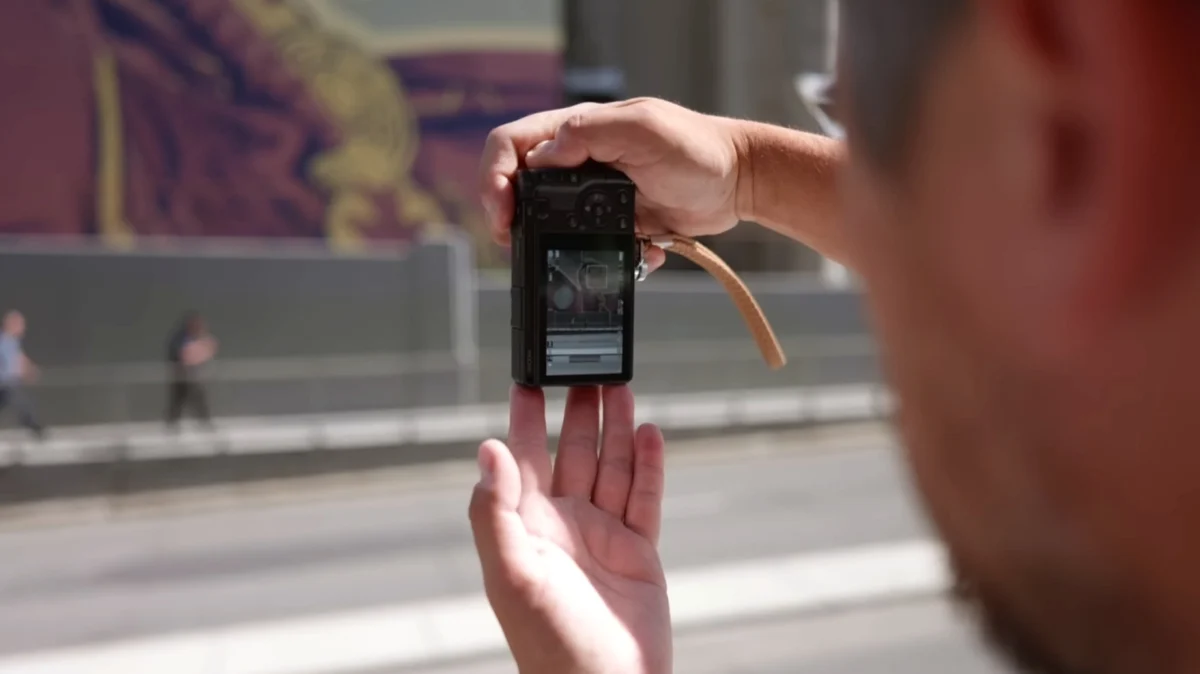
In an era where smartphone computational photography dominates the casual capture space, the market for dedicated compact cameras has shifted from a race for volume to a pursuit of pure, uncompromising quality. While heavyweights like the Sony RX1R series have long set the bar for professional-grade imaging in a small chassis, a new titan has emerged from the legacy of Japanese engineering. The Ricoh GR IV, released in September 2025, has not only captured the attention of street photographers and enthusiasts worldwide but has systematically dismantled the competition in the awards circuit, proving that the "pocket camera" is far from obsolete.
However, with a premium price tag of $1,499, the GR IV sits at a curious intersection of professional utility and luxury enthusiast gear. As it continues to collect accolades from prestigious design and technical institutes, the industry is left to wonder: Is this the definitive compact camera of the decade?
A Chronology of Acclaim: The Award-Winning Streak
The ascent of the Ricoh GR IV was not a slow burn; it was a meteoric rise that began almost the moment the product reached the hands of early adopters and reviewers.
The first major recognition came in October 2025, when the Japan Institute for Design Promotion awarded the GR IV the prestigious 2025 Good Design Award. This honor is rarely bestowed upon camera manufacturers, as it requires a product to transcend mere utility and demonstrate a harmonious integration of aesthetics, ergonomics, and social value. By October, the photography community had already begun to shift its collective focus toward the device’s refined tactile interface.
Momentum continued into November 2025, when the GR IV secured the 2025 DGP Gold Imaging Award in the highly competitive compact camera category. The Digital Camera Grand-Prix (DGP) is widely considered the gold standard for imaging excellence in Japan, focusing on a balance of hardware performance and real-world image quality.
The crowning achievement, however, arrived in April 2026. The Technical Image Press Association (TIPA), an international authority on photographic technology, named the Ricoh GR IV the "Best APS-C Compact Camera." This global recognition solidified the device’s reputation beyond domestic borders, cementing its status as a piece of hardware that experts globally agree represents the absolute ceiling of what a fixed-lens compact can achieve.
Decoding the Engineering: What Makes the GR IV Unique?
To understand the adoration, one must look past the spec sheet and into the 30-year legacy of the Ricoh GR line. The GR IV is not a radical departure; rather, it is a culmination of three decades of iterative refinement.
The Philosophy of the "GR"
Jurors at the DGP Imaging awards specifically highlighted the camera’s ability to honor its roots while pushing technical boundaries. The "GR philosophy"—which prioritizes a lightweight, stealthy form factor that disappears in the user’s hand—remains intact. Measuring just 4.3 inches wide and weighing a mere 9.2 ounces, it is a tool designed to be carried everywhere. Yet, beneath that familiar shell lies a massive leap in sensor and lens integration.
Technical Specifications and Imaging Prowess
The heart of the GR IV is its new F2.8 GR lens paired with a back-illuminated APS-C-like CMOS sensor. With roughly 25.74 million effective pixels, the camera produces images that rival full-frame systems in terms of color depth and dynamic range.
Key performance metrics include:
- Low-Light Capabilities: With a maximum ISO of 204,800, the camera pushes into territory previously reserved for flagship DSLRs and mirrorless cameras, allowing for handheld street photography in near-total darkness.
- Shutter Speed: The inclusion of a 1/16,000-per-second shutter speed provides photographers with the ability to freeze high-speed subjects or shoot wide open in bright daylight without the need for cumbersome neutral density filters.
- Autofocus and Stabilization: The GR IV introduced a revamped autofocus system that is significantly more responsive than the GR III, coupled with advanced image stabilization that compensates for angular, rotational, and shift blur.
The Price-to-Value Proposition: Is $1,499 Justified?
When evaluating a $1,499 compact camera, the question of value is inherently subjective. For a casual user looking for a travel camera, the price point may seem exorbitant. However, when viewed through the lens of a professional photographer, the value proposition changes.
The GR IV is not a "beginner camera." It lacks the beginner-friendly "scene modes" or the marketing fluff often found in entry-level mirrorless cameras. Instead, it is a specialist tool. For a wedding photographer, it is the perfect secondary camera to slip into a jacket pocket for candid moments. For a photojournalist, it is an unobtrusive device that allows for engagement with subjects without the intimidation factor of a large lens.
In this light, the $1,499 price tag reflects the cost of miniaturization. Cramming a high-performance APS-C sensor, a fixed prime lens, and sophisticated stabilization into a chassis that fits in a shirt pocket requires a level of engineering that is significantly more expensive than producing a larger, bulkier camera body.
Official Responses and Industry Reception
The reaction from the industry has been one of near-universal praise, albeit tempered with a recognition of the camera’s niche appeal. In various statements following the TIPA award ceremony, representatives from Ricoh emphasized that the GR IV was designed to listen to the "hardcore GR community."
"Our goal was never to make a camera for everyone," a lead engineer noted during a post-award interview. "Our goal was to make the definitive version of the camera that our users have been refining with us for thirty years."
Critics, while generally enamored, have noted that the camera’s reliance on a fixed focal length (the classic GR 28mm equivalent) remains its most divisive feature. Unlike a zoom-lens compact, the GR IV demands that the photographer "zoom with their feet." This is a feature, not a bug, according to the brand, as it forces a disciplined approach to composition that has become synonymous with the "GR aesthetic."
Implications for the Future of Photography
The success of the Ricoh GR IV sends a clear message to the camera industry: there is a thriving, affluent market for premium, specialized hardware. While manufacturers like Canon, Nikon, and Sony continue to battle over the mirrorless interchangeable-lens market, Ricoh has successfully carved out a high-margin, high-prestige segment that others have largely abandoned.
Looking ahead, the industry expects the GR IV to serve as a blueprint for the next generation of compacts. We are likely to see competitors attempt to mimic the "small-sensor-large-body" ratio, but they will face the daunting task of replicating the Ricoh ecosystem—which includes a cult-like following, a robust accessory market, and a unique color science that has been tuned for decades.
As we move into the latter half of the 2020s, the Ricoh GR IV stands as a testament to the endurance of the dedicated photographer. It reminds us that even as software and AI reshape the way we view images, there is no substitute for a quality lens, a large sensor, and a tactile interface that feels like an extension of the human eye.
Whether the next entry in the series can surpass the "award-winning" standard set by the GR IV remains to be seen. But for now, the Ricoh GR IV is not just a tool; it is the current standard-bearer for the art of compact, uncompromising photography. It is, quite simply, the camera to beat.

 Suro Senen
 Nana Wu