Basiran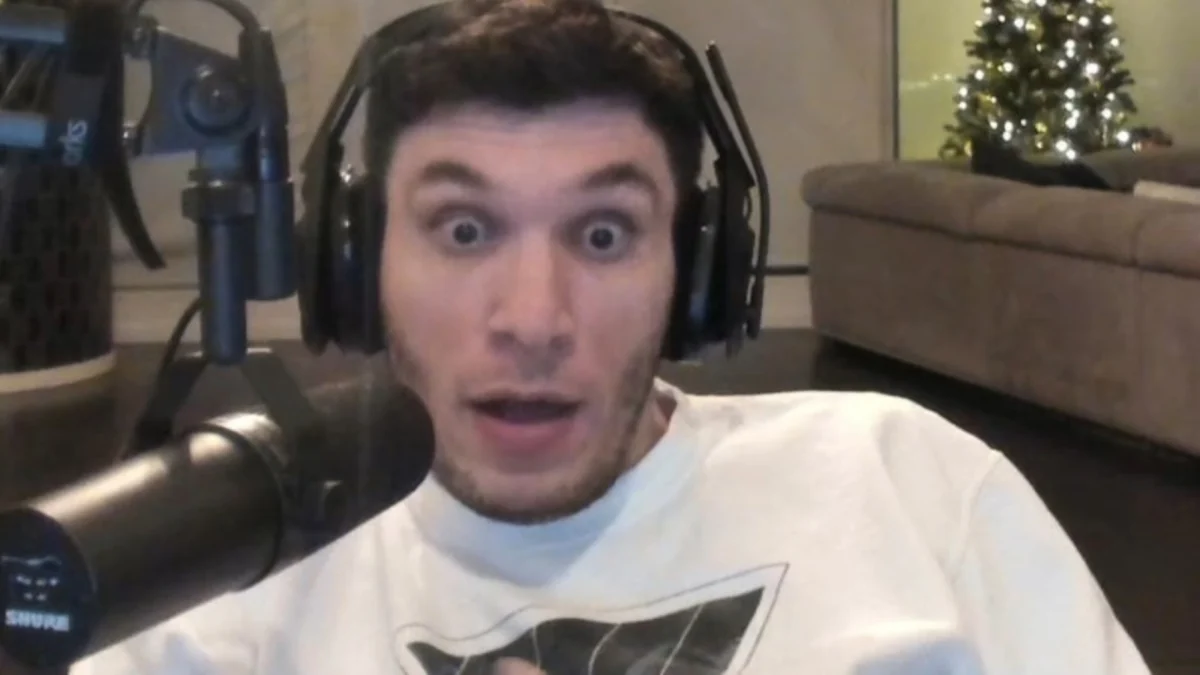
In the high-stakes world of professional streaming and competitive gaming, few platforms command as much influence as Valorant, Riot Games’ tactical hero shooter. However, even the most prominent content creators are not immune to the developer’s rigorous anti-cheat and integrity policies. Recently, popular Kick streamer Tyler "Trainwreckstv" Niknam found himself at the center of a firestorm after his Valorant account was hit with a significant 31-day suspension. While the streamer initially framed the punishment as an unfair reaction to his own gameplay performance, Riot Games officials have since countered, citing systemic rank manipulation and clear violations of the platform’s Terms of Service.
The Incident: A Streamer Silenced
The controversy erupted when Trainwreckstv took to X (formerly Twitter) to express his frustration, revealing a screenshot of a Valorant in-game notification stating his account would remain suspended until June 7, 2026. The notification cited "suspicious shifts in skill and unfair play" as the primary drivers behind the ban, a move triggered by a combination of automated gameplay reviews and reports from the community.
At the time of the infraction, Niknam was broadcasting live to his audience while participating in a 5-stack queue. His squad included several high-profile figures within the Valorant community, such as ProdCM, sinatraa, dapr, and Hamyontwitch. Trainwreck’s initial defense was dismissive, stating: “31 day f***ing ban for being bad at the game and playing live on stream with @ProdCM_ @sinatraa @dapr & @Hamyontwitch in a 5 stack.”
The narrative quickly gained traction, with fellow streamer xQc jumping to his defense, suggesting that the ban was a draconian overreach meant to punish casual players for simply queuing with more skilled friends. However, this interpretation was short-lived as Riot Games moved to provide transparency regarding the specific nature of the violation.
Chronology of the Escalation
To understand the severity of the situation, one must look at the timeline of events that led to the intervention by Riot’s anti-cheat division.
- The Broadcast: Trainwreckstv hosts a Valorant session, grouping with several well-known players. The stream features high-intensity matches that, according to later reports, resulted in an approximately 80% win rate across 50 games.
- The Suspension: Shortly after the session, Niknam’s account is flagged by Riot’s automated systems. The account is hit with a 31-day suspension.
- Public Outcry: Trainwreck posts the ban notice on X, framing it as an injustice and a penalty for his lack of skill relative to his teammates.
- The Counter-Narrative: Riot anti-cheat representative GamerDoc steps in to clarify the situation, alleging that the 5-stack was not composed of players on their own accounts.
- The Fallout: Leaked internal messages from GamerDoc begin to circulate, leading to further debate about the transparency of Riot’s moderation processes and the validity of the specific evidence against the streamer.
Analyzing the Mechanics of the Ban
The crux of the disagreement lies in the distinction between "playing with better friends" and "rank manipulation." While Valorant allows for 5-stack queues even with wide rank disparities—a feature intended to encourage social play—Riot Games draws a firm line when the integrity of the matchmaking system is compromised.
According to GamerDoc, the issue was not the social composition of the group, but rather the illicit tools used to secure those wins. "An Immortal player, with prior boosting bans on their main, was swapping between multiple lower-rank smurfs/shared accounts they did not own," GamerDoc stated. This behavior essentially rigs the matchmaking algorithm, allowing high-tier players to enter lobbies significantly below their actual skill level by using accounts that do not accurately reflect their MMR (Matchmaking Rating).
The Role of Account Sharing
Account sharing is a direct violation of Riot Games’ Terms of Service. By logging into accounts they do not own, players can circumvent the skill-based matchmaking (SBMM) intended to keep games fair. When a high-level player uses a "smurf" account, they effectively "boost" the rank of the accounts they are playing with, creating a cascade of unfair matches for the opposing teams.
Official Responses and Internal Policies
Riot Games has long maintained a "Community Pact" that serves as the moral and legal framework for player conduct. This document explicitly defines several categories of prohibited behavior, including:
- Boosting: Intentionally playing on another user’s account or grouping with players on alternative accounts to artificially inflate a rank.
- Smurfing: The practice of using secondary accounts to play against lower-skilled opponents, which ruins the competitive integrity of the ranked ladder.
- Win-Trading: Coordinated efforts to manipulate game outcomes for the benefit of specific accounts.
Riot’s response to the Trainwreck situation underscores their commitment to these rules. GamerDoc’s intervention was not merely an explanation but a warning that the company is actively monitoring high-level lobbies for patterns that deviate from standard competitive behavior.
Addressing the "Leaked Messages" Controversy
The situation was further complicated by leaked screenshots of messages attributed to GamerDoc. In these exchanges, the developer allegedly stated that Trainwreck was "getting carried every game" and implied that the ban would be permanent or at least non-negotiable.
GamerDoc later clarified that some of the language used was a result of a typo—specifically a misunderstanding of whether an account was "owned" versus "known." While some critics argued that this reflected poorly on the professional conduct of Riot’s staff, the developer maintained that the core facts of the violation—the use of borrowed, lower-rank accounts—remained the primary justification for the disciplinary action.
The Broader Implications for Streaming
This incident serves as a significant case study for the gaming industry, highlighting the tension between the "content-first" approach of streamers and the "integrity-first" approach of game developers.
The Responsibility of Creators
Streamers often operate in a grey area where they rely on high-level players to provide entertaining content. However, when those collaborations involve account sharing or bypassing matchmaking systems, streamers place their own platforms at risk. For a creator as large as Trainwreckstv, a 31-day ban is not just a loss of access to a game; it is a disruption of their business model and a public stain on their reputation.
The Evolution of Anti-Cheat
The Valorant ban highlights the sophistication of modern anti-cheat systems. Riot is no longer relying solely on detecting third-party software (like aimbots or wallhacks); they are increasingly utilizing behavioral analysis to detect human-driven manipulation. By tracking login patterns, hardware IDs, and win-rate anomalies, developers can now identify when a player is "smurfing" or boosting, even without traditional cheat software present.
Conclusion: A New Standard for Competitive Integrity
The 31-day suspension of Trainwreckstv is a clear signal that Riot Games is unwilling to look the other way when the competitive ecosystem is manipulated, regardless of the streamer’s size or influence. While the public debate continues regarding the fairness of the specific enforcement, the underlying lesson is clear: the Valorant ranking system is designed to be a meritocracy.
As developers continue to refine their detection methods, streamers and professional players alike will need to be increasingly cautious about who they invite into their lobbies. In the eyes of Riot Games, the rules apply to everyone, and the integrity of the match—for the thousands of other players in the queue—must always take precedence over the entertainment value of a single broadcast.
As of the latest reports, the ban remains in place, with the account scheduled for reinstatement on June 7, 2026. Whether or not this incident leads to a broader shift in how streamers approach high-level Valorant content remains to be seen, but it is certain that Riot’s commitment to maintaining a "clean" ladder is stronger than ever.

 Iffa Jayyana
 Azzam Bilal Chamdy