Nana Wu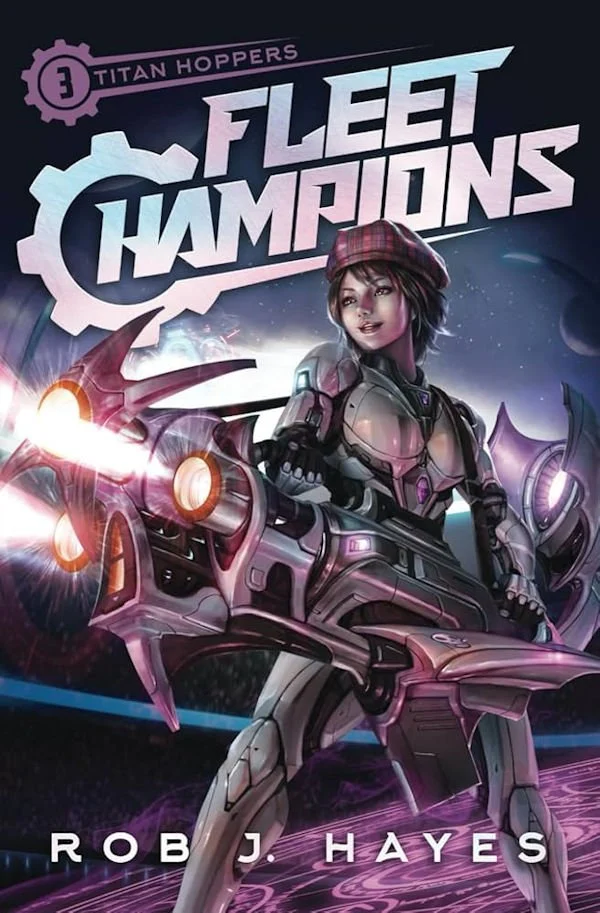
The literary landscape of space-faring progression fantasy has been fundamentally altered with the release of Fleet Champions, the latest installment in a series that has rapidly transcended its genre origins. Following the protagonists Iro and Emil—fresh off their harrowing survival of the Spire and the monumental opening of their Second Gates—the narrative shifts from the desperate struggle for survival to the complex, high-stakes politics of a galaxy teetering on the brink of total war.
As Iro and Emil transition from underground survivors to the poster-child "Heroes of the Fleet," the narrative trajectory of the series has moved toward a more mature exploration of power, consequence, and the psychological toll of perpetual combat.
The Chronology of Conflict: From Survival to Sovereignty
To understand the weight of Fleet Champions, one must look at the progression of the series thus far. Initially, the narrative was framed by the primal need for survival within the ship-bound civilization. Iro and Emil’s journey began as a classic "zero-to-hero" arc, characterized by rapid personal growth and the mastery of internal, systemic powers.
However, the narrative timeline has shifted significantly:
- The Spire Era: The characters were defined by isolation and the struggle to understand their own latent potential.
- The Second Gate Awakening: The opening of the Second Gates marked a turning point, elevating the protagonists to a tier of power that forced the political powers-that-be—the Home Fleet—to acknowledge their utility.
- The Raider Ultimatum: The current conflict is triggered by the Raider Fleet, an antagonist force that has moved beyond simple resource theft to demand direct control over the protagonists’ wing.
- The Martial Tournament: To circumvent a total, unwinnable war, a diplomatic compromise was reached: a tournament. This event serves as the primary stage for Fleet Champions, turning the protagonists’ growth into a spectator sport with existential consequences.
Supporting Data: The Mechanics of Power and Progression
In the realm of progression fantasy, "leveling up" is often treated as a linear, mechanical process. Fleet Champions distinguishes itself by "leveling sideways." Rather than simply increasing their raw output, Iro and Emil are forced to redefine the nature of their strength.
The Philosophy of "Sideways" Growth
The narrative challenges the standard tropes of the genre by questioning the "rules" of power. When characters are confronted with obstacles that appear insurmountable through traditional strength, they do not simply grind for more power. Instead, they seek alternative approaches, forcing themselves to evolve in ways that defy the expectations of their mentors and the systems they inhabit. This shift highlights a departure from the "might makes right" philosophy toward a more nuanced understanding of tactical and existential adaptability.
The Emotional Cost of Combat
While the spectacle of the tournament—the "crash-boom" of powers clashing—is present, the data provided by the character arcs suggests that the cost of this growth is high. Iro’s development, in particular, serves as a focal point for this theme. As he moves deeper into his own potential, he struggles with the "weight of rage." His evolution is not just toward greater capacity for destruction, but toward the internal battle of maintaining his humanity while possessing the capability to obliterate opposition.
Implications: The Macro-Political Landscape
The tournament is not merely a contest of skill; it is a tactical theater. The inclusion of the "Black Cloaks"—a shadowy, enigmatic faction whose motives remain largely opaque—adds a layer of geopolitical intrigue to the proceedings. Their interest in the tournament outcomes suggests that Iro and Emil are being utilized as pawns in a much larger, potentially cosmic, game involving the mystery of the Titans and the long-term survival of the fleets.
The broader implications are clear: the series is moving away from the insular focus of individual advancement toward a sweeping space opera. The "found family" dynamic is no longer a given; it is a recurring point of tension. The loyalty shared between the crew is tested by the crushing pressure of the tournament, serving as a reminder that in a world of escalating power, the only thing that remains constant is the fragility of human connection.
Critical Analysis: A Shift in Narrative Weight
The critical reception of Fleet Champions has highlighted its departure from traditional genre tropes. By leaning into the "consequences" of power, the author has created a narrative environment where every victory feels precarious.
The Evolution of the Protagonist
Iro has evolved from a conventional hero archetype into a more morally ambiguous figure. The text explicitly notes that his "cold exterior" may be a performance, but one that is increasingly bleeding into his actual psyche. This exploration of the "darker edge" of heroism is a hallmark of modern, mature fantasy, moving the series into a space that rewards readers who appreciate psychological complexity over simple power fantasies.
The "Brutal" Ending and Future Outlook
The conclusion of Fleet Champions has been described as "brutal" and "open." Rather than providing a clean resolution, the ending forces the reader to confront the reality of loss. However, it also preserves a core of hope, suggesting that while the world is becoming more dangerous, the protagonists’ resolve is also sharpening.
The implication for the future of the series is that the stakes are no longer just about the characters’ lives, but about the very structure of the universe they inhabit. The mystery of the Titans remains the gravitational center of the plot, pulling all other conflicts into its orbit.
Official Perspective: Thematic Escalation
While the author has not released an "official statement" on the series’ direction, the text itself serves as a manifesto of intent. The themes of Fleet Champions represent a deliberate pivot:
- From Power to Consequence: The story is no longer about how strong Iro and Emil can get, but about what that strength does to them and the people they are sworn to protect.
- From Linear to Holistic Growth: The "sideways" progression confirms that the series is prioritizing creativity and identity over mere statistical improvement.
- From Survival to Responsibility: The characters are transitioning from agents of their own fate to pillars of a fleet, a transition that brings the burden of leadership and the trauma of war to the forefront.
Conclusion: A Benchmark for the Genre
Fleet Champions stands as a significant milestone in contemporary science fantasy. By refusing to rest on the laurels of its earlier, more straightforward progression, the series has managed to elevate its stakes while deepening its characterizations. It succeeds in being "wildly entertaining" in its martial displays while simultaneously providing a grim, thoughtful look at the intersection of power and morality.
As the series continues, the primary question for the audience is no longer "How will they win?" but "What will they lose in the process?" With its sharp, emotionally charged narrative and its refusal to adhere to predictable genre patterns, Fleet Champions has cemented its place as a standout work that challenges both the characters and the reader to define what true strength actually entails.
For those who have followed the journey from the Spire to the tournament arena, the path forward is as daunting as it is compelling. The series has grown teeth, and it is clear that the final reckoning with the Titans and the mysteries of the fleet will be as intellectually demanding as it is physically cataclysmic.

 Laily UPN
 Evan Lee Salim