


For as long as book culture has existed, the "To-Be-Read" (TBR) pile has been a source of quiet, mounting anxiety. It is the physical manifestation of our literary aspirations, a towering monument to our intent, and, quite often, a reminder of our failure to keep pace with our own ambitions. Yet, a paradigm shift is occurring among bibliophiles and intellectuals. Many are moving away from the guilt associated with unread volumes, embracing instead the concept of the "anti-library." Far from being a sign of neglect, this collection of unread books is increasingly viewed as a vital, intellectual, and emotional safety net.
The Philosophy of the Anti-Library: A New Perspective on Knowledge
The term "anti-library" was coined by the polymath Umberto Eco and later popularized by essayist and risk analyst Nassim Nicholas Taleb. In his seminal work, The Black Swan, Taleb argues that a library should be viewed not as a trophy case of what one has conquered, but as a map of what one has yet to discover.
"Read books are far less valuable than unread ones," Taleb writes. "The library should contain as much of what you do not know as your financial means, mortgage rates, and the currently tight real-estate market allows you to put there."
This perspective fundamentally alters the relationship between the reader and the shelf. The unread book is not a failure; it is a promise. It is an investment in future knowledge and a safeguard against the stagnation of the mind. Whether it is a thousand-title backlog on Goodreads or physical stacks collecting dust in a home office, these unread books serve as a "cushion"—a reserve of potential experiences waiting for the precise moment in time when the reader is ready to receive them.
Chronology of the Unread: A Personal History of Discovery
The journey of the reader is rarely linear. It is often dictated by the "mood reader" phenomenon—the tendency to choose books based on the psychological or emotional state of the moment rather than a rigid schedule.
The Tolkien Threshold
For many in the Science Fiction and Fantasy (SFF) community, there are "foundational" works that loom large. For the author of this piece, J.R.R. Tolkien’s The Lord of the Rings remained an unread staple for years, creating a sense of imposter syndrome within the fantasy writing community. However, the "gap" in reading proved to be a fortuitous delay. By waiting until life circumstances allowed for a shared experience—first through the audiobooks enjoyed by a dyslexic son, and later through reading aloud to younger children—the work transformed from a solitary obligation into a communal, living memory.

The Long Game: Tad Williams and the Osten Ard Saga
Some books require a gestation period that spans decades. Tad Williams’s The Dragonbone Chair was purchased in the author’s youth, only to migrate across state lines and through various life stages before being revisited. The challenge of aging eyes and the desire for a tactile, screen-free experience led to the purchase of updated trade paperback editions. This cycle—from gift to shelf-filler to eventually being read—illustrates that an anti-library is not a static graveyard, but a dynamic, evolving collection that waits for the reader to catch up to the material.
Supporting Data: Why We Collect What We Do Not Read
Psychologically, the impulse to acquire books often exceeds our capacity to consume them, a phenomenon sometimes jokingly referred to as tsundoku in Japanese. However, there is a rational basis for this behavior.
- The "Shiny Object" Syndrome: In the SFF genre, the rapid churn of new releases often eclipses older titles. The excitement of the "new and shiny" naturally draws attention, pushing older, perhaps more substantial works into the background.
- The Emotional Anchor: Books often function as markers of identity. We buy books not just for the content, but for the version of ourselves we hope to become by reading them.
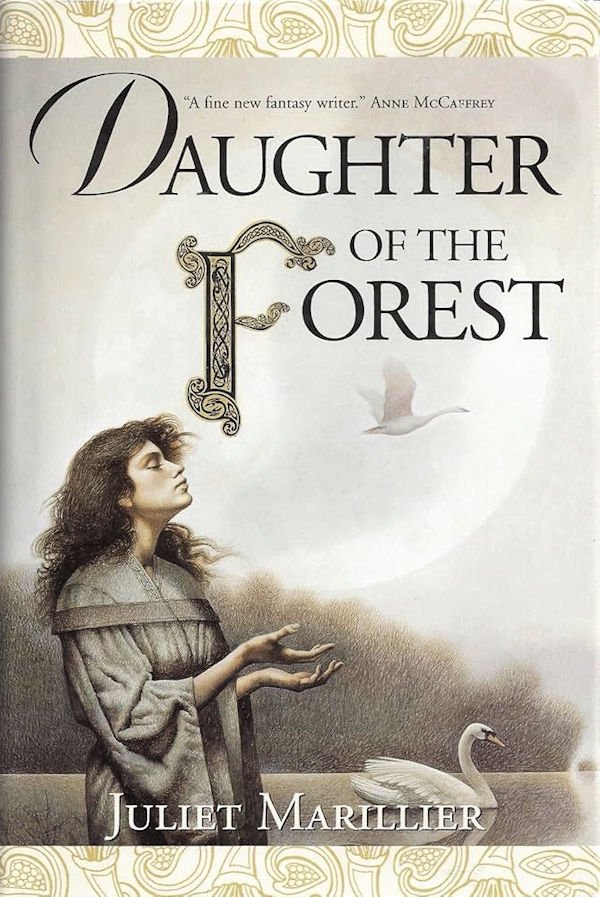
- The Accessibility Factor: The rise of digital ecosystems, such as Audible subscriptions or e-reader platforms, has made the barrier to entry lower. This has allowed readers to "re-discover" titles they previously ignored, such as Juliet Marillier’s Wolfskin, which recently found a new audience through audio accessibility.
Official Responses and Literary Shifts
Literary critics and authors alike have begun to publicly normalize the anti-library. The industry’s shift toward recognizing that reading is a "seasonal" activity has gained traction. Rather than viewing the reading process as a task to be completed, it is increasingly treated as an organic exploration.
When readers encounter a title like Rachel Neumeier’s Tuyo—a book that has sat on a TBR list since 2020—they are often surprised by the depth of the discovery. Finding a series that resonates deeply, only to realize it spans twelve books, turns a "gap" into an opportunity for sustained engagement. This realization—that one’s taste is not just a list of finished books, but a sprawling, infinite network of interests—is the core takeaway for the modern reader.
Implications: The Future of the Reader’s Identity
The implications of embracing the anti-library are profound for both the individual and the publishing industry.
For the Reader: Reduced Guilt and Increased Curiosity
By accepting that one will never read every book on their shelf, the pressure to "clear the list" vanishes. This encourages more experimental reading. If a book is sitting in the anti-library, it is because it held enough promise to be acquired; giving oneself permission to read it only when the mood strikes allows for a deeper, more meaningful connection with the text.
For the Publishing Industry: The Long Tail
Publishers often focus on the "new release" window, but the anti-library provides a "long tail" for backlist titles. Readers are constantly cycling back to older works. Marketing strategies that highlight these "foundational" books to a new generation—or to older readers who finally have the time—are proving to be essential.
The Philosophical Conclusion
The unread books on our shelves define our intellectual horizon. They represent the boundaries of our current knowledge and the vast potential of our future. Whether it is the works of Jennifer Roberson, Jacqueline Carey, or Victoria Goddard, these titles are not failures of time management. They are the components of a curated life.
As we continue to navigate a world increasingly dominated by digital screens and fleeting content, the physical or virtual anti-library stands as a bastion of permanence. To have a large collection of unread books is to acknowledge that we are lifelong students. It is to accept that the gaps in our reading are not voids, but spaces for future growth.
In the final analysis, our library—both read and unread—is an extension of ourselves. If the goal is to cultivate a mind that is constantly expanding, then there is no better place to live than within a library that is always, somehow, unfinished. We should not fear the menacing gaze of the unread spine; instead, we should welcome it as the quiet, patient company of a thousand stories waiting for the right moment to be told.









No comments yet. Be the first to join the conversation!