Introduction: The Universal Scourge of Sand
"I don’t like sand. It’s coarse and rough and irritating and it gets everywhere." When Anakin Skywalker delivered this line in 2002’s Star Wars: Episode II – Attack of the Clones, it was met with immediate derision. For years, the line served as a punchline, a shorthand for the perceived clunkiness of George Lucas’s prequel dialogue. Yet, looking back from the vantage point of modern genre analysis, one must admit that Anakin’s sentiment is deeply, almost painfully, relatable.
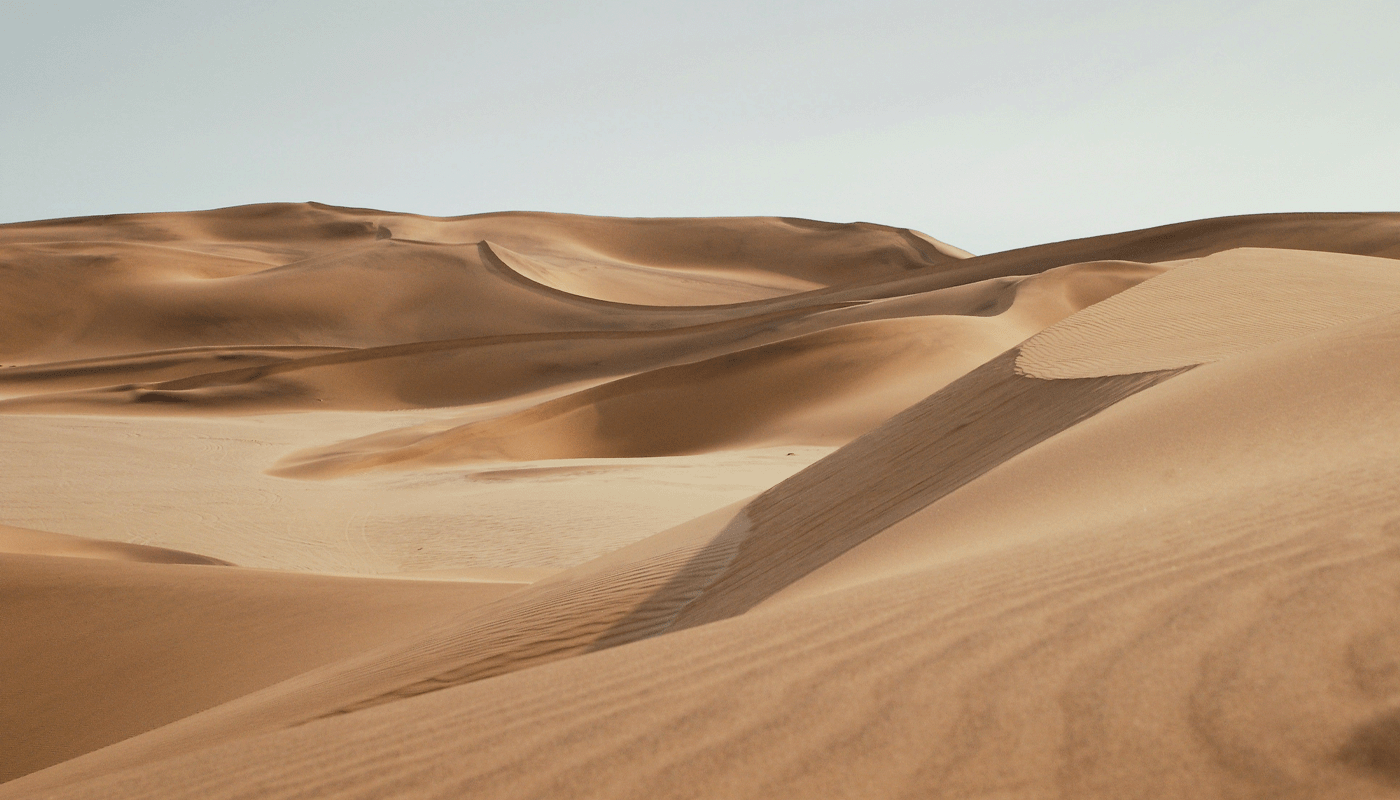
Sand is, by its very nature, an invasive geological phenomenon. It is the "annoying glitter" of the natural world—a substance that infiltrates seams, degrades machinery, and defies containment. While most of us do not harbor the traumatic memories of a childhood spent in slavery under the twin suns of a backwater desert planet, the visceral dislike for sand is a human universal. Paradoxically, however, this very quality—its relentless, suffocating, and transformative nature—has made the desert one of the most potent settings in the history of science fiction. From the arid dunes of Arrakis to the sun-bleached remnants of a futuristic Earth, the desert serves as a crucible for character, a canvas for ecological collapse, and a terrifying reminder of human vulnerability.
The Chronology of Arid Worlds
The obsession with desert landscapes in speculative fiction is not a modern trend, but it has evolved significantly over the last century.

- The Early Period (1930s–1950s): Science fiction writers of the mid-20th century, influenced by the burgeoning understanding of planetary sciences and the romanticism of the "Wild West," began to treat other planets as barren frontiers. Ray Bradbury’s The Martian Chronicles (1950) established Mars not just as a location, but as a mythic desert, a place of ghosts and ancient, dry civilizations.
- The Age of Ecology (1960s–1980s): Frank Herbert’s Dune (1965) fundamentally shifted the paradigm. Arrakis was no longer just a backdrop; it was the protagonist. Herbert introduced the concept of the desert as a complex ecosystem that dictates the culture, religion, and survival strategies of its inhabitants.
- The Anthropocene Disasters (1990s–Present): Contemporary writers have pivoted away from alien worlds to focus on "cli-fi" (climate fiction). As concerns regarding desertification and resource scarcity rise on Earth, authors like Hugh Howey and Nnedi Okorafor have utilized the desert as a metaphor for the consequences of human-led ecological collapse.
Supporting Data: The Science of Desolation
To understand why these settings resonate, one must look at the environmental constraints that desert planets impose on storytelling.
Thermal Stress and Resource Scarcity
In any narrative set in an arid environment, water becomes the primary currency. Whether it is the "stillsuits" of Dune or the desperate scavenging in Hugh Howey’s Sand, the scarcity of moisture dictates the social stratification of the world. Data from sociological studies of survivalist communities suggests that when resources are restricted to the point of existential threat, social structures revert to rigid, often authoritarian, hierarchies. Science fiction captures this effectively: in a desert, the person who controls the water controls the morality of the tribe.
The Psychological Toll of Isolation
The vast, featureless expanse of a desert creates a "sensory deprivation" effect. Psychological studies on extreme isolation indicate that long-term exposure to monotonous landscapes leads to hallucinations, temporal distortion, and a breakdown of the ego. This is perfectly illustrated in Stephen King’s Beachworld, where the desert is not merely a place, but a malevolent, sentient force that actively dismantles the sanity of those stranded upon it.

Case Studies: Five Visions of the Sandy Frontier
1. The Cage of Sand by J.G. Ballard
J.G. Ballard is the poet laureate of the surreal landscape. In The Cage of Sand, he posits a scenario where Martian sand has been dumped on Cape Canaveral to save a planet, leaving the infrastructure of the space age half-buried. Ballard ignores the scientific impossibility of the premise to focus on the aesthetic and emotional resonance of the site. The result is a haunting meditation on loneliness and the obsolescence of human ambition.
2. Beachworld by Stephen King
King is best known for horror, and Beachworld is a masterclass in atmospheric dread. The story follows two astronauts who crash-land on a planet that is nothing but endless, shifting dunes. Here, the sand is a character—a hungry, mesmerising presence that lures the protagonists into a fatal trance. It serves as a stark reminder that in the vacuum of space, we are not conquerors; we are merely visitors waiting to be consumed.
3. Sand by Hugh Howey
Set in a future Earth where the "old world" is buried under massive, shifting dunes, Howey’s work is a masterclass in world-building. The characters in Sand are forced to become "divers," using high-tech suits to traverse the suffocating depths of the earth. The grit and the claustrophobia of this narrative provide a visceral, tactile experience that grounds the science fiction in a very human struggle for survival.

4. Noor by Nnedi Okorafor
Okorafor’s Noor takes the desert aesthetic and injects it with a vibrant, Afrofuturist energy. The protagonist, AO, is a woman whose body is a testament to both trauma and technological triumph. By placing her journey within a perpetual, swirling sandstorm in the Nigerian desert, Okorafor turns the desert into a space of transformation, proving that even in the most hostile environments, the human spirit—and the human body—can adapt and endure.
5. The Strange by Nathan Ballingrud
Ballingrud’s The Strange is perhaps the most ambitious of the lot, blending the sensibilities of a Western with the eerie, fantastical elements of Martian colonization. By channeling the spirit of True Grit into a landscape inspired by Bradbury, Ballingrud explores the pain of loss and the desperate, often violent need for connection in a world that feels perpetually cold and indifferent.
Official Perspectives: The Creator’s Intent
Why do creators keep returning to the sand? Many speculative fiction scholars argue that the desert acts as a "narrative vacuum." Because there is so little in a desert to hide behind, characters are forced to reveal their true nature.

"The desert is the great clarifier," says literary critic Dr. Aris Thorne. "In a forest, you can hide. In a city, you can blend in. In a desert, you are exposed to the elements and to yourself. Writers use the desert to strip away the artifice of civilization so that they can examine the raw, pulsing heart of the human condition."
Implications for the Future of the Genre
The enduring popularity of the "desert planet" trope suggests that as our own world faces increasing temperatures and the expansion of arid zones, our literature is reflecting those anxieties. We are no longer just looking at the desert as a far-off, exotic location; we are beginning to see it as a potential blueprint for our own future.
The desert in sci-fi is a mirror. It forces us to ask: What would I sacrifice to survive? What happens to my culture when the water runs out? How do I keep my humanity when the world around me is as cold and shifting as a dune?

Conclusion
Whether we view the sand as Anakin Skywalker does—as an irritant that ruins everything it touches—or as a sacred, transformative space, we cannot deny its power. It is the ultimate boundary, a threshold between the known world and the terrifying infinite. As long as humans continue to dream of the stars and fear for our own planet’s future, the desert will remain the definitive stage for our stories. It is vast, it is cruel, and it is beautiful—and it is, inevitably, exactly where we are heading.