

In the ongoing digital arms race for user privacy, WhatsApp is once again shifting the goalposts. For years, the Meta-owned messaging giant has provided users with tools to scrub their digital footprint, most notably through its "Disappearing Messages" feature. However, a significant limitation has long frustrated privacy-conscious users: the "brute force" nature of the existing timers. Currently, if a user sets a message to vanish, it does so based strictly on the passage of time—whether the recipient has opened the message or not.
According to the latest reports from the eagle-eyed beta watchers at WABetaInfo, that is about to change. WhatsApp is currently testing a more nuanced, "read-receipt-dependent" deletion feature for iOS, signaling a move toward a more intuitive and flexible privacy experience.
The Core Innovation: Intelligence Over Persistence
The current implementation of disappearing messages on WhatsApp allows users to set a timer for 24 hours, seven days, or 90 days. While effective for general cleanup, this approach is flawed for nuanced communication. If a user sends a sensitive message and sets a 24-hour timer, the message will vanish in 24 hours regardless of whether the recipient ever saw it. This can lead to frustration, where vital information is lost to the ether before it can be processed by the intended party.
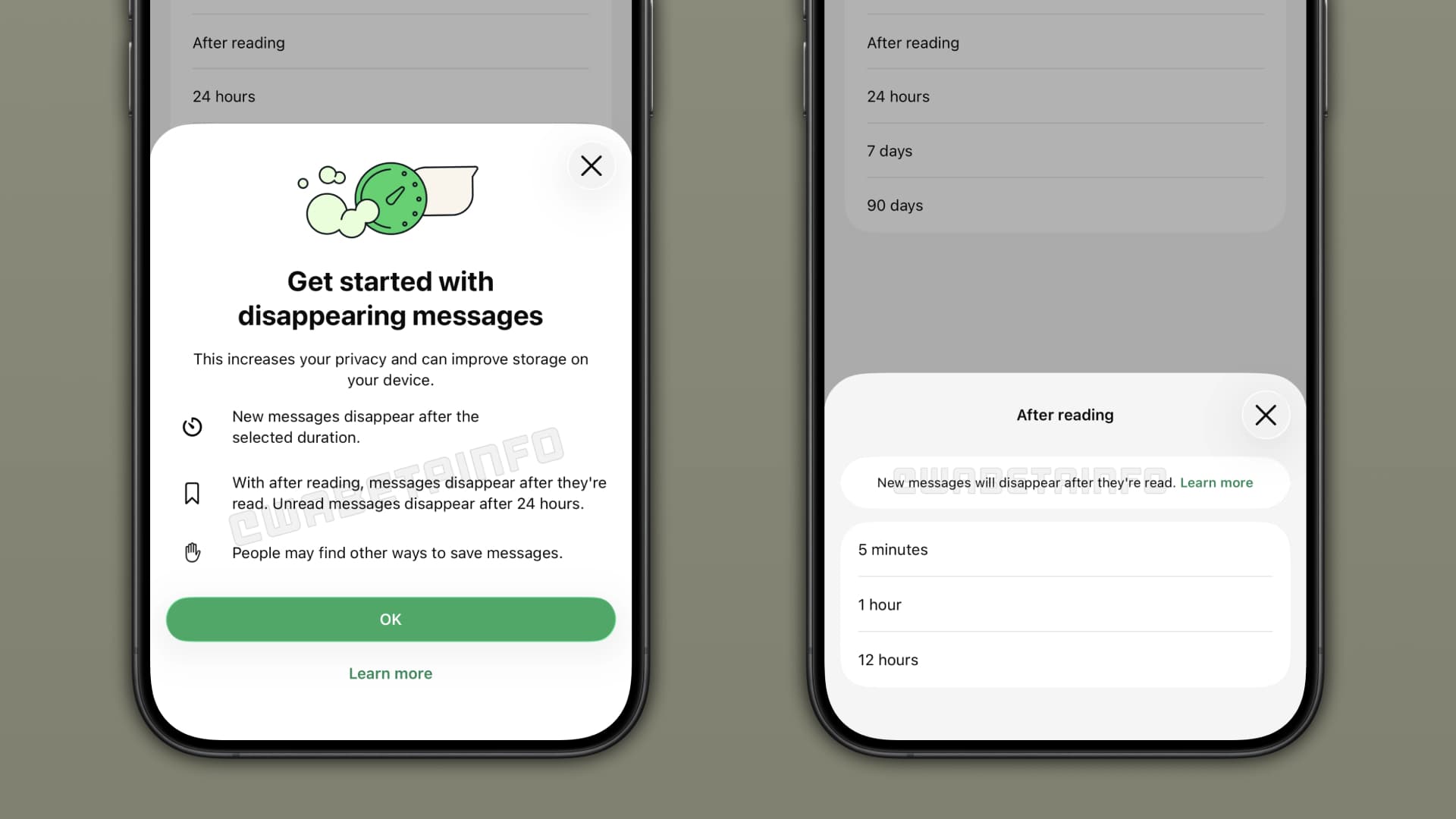
The new feature under development introduces an "after reading" logic. This allows a sender to ensure that the content of a message is actually consumed before the timer begins its countdown. By shifting the trigger from "time sent" to "time read," WhatsApp is aligning its automated deletion protocols with the actual behavior of human communication.
How the Mechanism Functions
Based on the beta testing observed on iOS, this update introduces specific, shorter-duration timers. Once the recipient opens the message, the clock begins to tick. Users can select from intervals such as five minutes, one hour, or 12 hours.
Crucially, the system is designed to be asynchronous. If a user sends a message with a five-minute "after reading" timer, the message will be purged from the sender’s device once that period expires. However, if the recipient is offline or fails to open the message, it will remain on their device until they finally view it. Once they do, their own local timer kicks in, ensuring that the window of visibility is controlled and equitable for both parties. Importantly, for messages that remain unread, a 24-hour safety net persists; if a message is ignored for a full day, the system will delete it regardless of whether it was opened, preventing forgotten, unread messages from clogging up user storage.

A Chronology of Privacy Development at WhatsApp
To understand the gravity of this upcoming update, one must look at the timeline of how WhatsApp has evolved from a simple SMS replacement into a sophisticated, privacy-focused communication hub.
The Foundation: End-to-End Encryption
The bedrock of WhatsApp’s reputation was established in 2016 when the platform implemented full end-to-end encryption (E2EE) for every message, photo, and call. This ensured that only the sender and recipient could read the contents of a communication, effectively locking out Meta, internet service providers, and malicious actors.
The Introduction of Disappearing Messages (2020)
In November 2020, WhatsApp introduced the first iteration of Disappearing Messages. At the time, it was a binary "on/off" switch with a fixed seven-day duration. This was a direct response to the increasing demand for "ephemeral" messaging—a trend popularized by platforms like Snapchat and Signal.
Expansion and Refinement (2021–2025)
By late 2021, WhatsApp expanded its temporal options, offering 24-hour and 90-day windows. Following this, the company introduced "View Once" media—a feature that allows photos and videos to be seen only once before self-destructing. The current testing phase on Android (which began in April 2026) and now iOS represents the logical next step: merging the permanence of text-based chat with the ephemeral nature of "view-once" media.
Supporting Data and User Behavior
Privacy is no longer a niche concern for tech enthusiasts; it is a primary driver of app adoption and retention. According to various market research reports, over 65% of mobile users indicate that "privacy features" are a top-three factor when choosing a messaging application.
WhatsApp’s shift toward more granular control is a calculated move to retain its massive global user base, which now exceeds two billion monthly active users. The "after reading" feature is particularly significant because it addresses the "contextual anxiety" of digital communication. Users often hesitate to share sensitive information—be it financial details, temporary passwords, or private thoughts—because they fear the data might sit on a device indefinitely, vulnerable to unauthorized access if that device is lost or compromised.

By providing a mechanism that guarantees a message is "consumed and destroyed," WhatsApp lowers the barrier to entry for secure, private communication. The move to bring this feature to iOS after a successful testing stint on Android suggests that the company is aiming for feature parity across the two dominant mobile operating systems.
Official Stance and Corporate Strategy
While WhatsApp has not issued a formal press release detailing a global rollout date, the company’s silence is typical of its development cycle. Meta’s strategy typically involves a prolonged "Beta-to-Public" pipeline. By pushing these features through the TestFlight ecosystem on iOS and beta channels on Android, the company gathers telemetry on how these features impact battery life, server load, and user sentiment.
Company spokespeople have consistently stated in previous forums that their goal is to provide "a digital living room" where conversations feel as private as they would in a physical space. The integration of more flexible timer settings is a direct manifestation of this philosophy. By giving users more control over the "life cycle" of a message, WhatsApp is effectively positioning itself as a professional, yet secure, alternative to email for sensitive, time-bound communication.
Implications for the Digital Landscape
The implications of this update are far-reaching, affecting both casual users and enterprise environments.
1. Enhanced Security for Sensitive Data
For users in professions where confidentiality is paramount—such as journalists, lawyers, or medical professionals—this feature provides an additional layer of security. It minimizes the amount of "data residue" left on a device, reducing the risk of accidental exposure during physical device theft or cloud backups.
2. A Shift in Digital Etiquette
The introduction of "after reading" timers changes the etiquette of messaging. It places a subtle pressure on the recipient to engage with the content within a reasonable timeframe. It also changes the power dynamic of the conversation; the sender now has the agency to decide how long a message should exist in the world.
3. Impact on Forensic Recovery
From a law enforcement and forensic perspective, this update makes the recovery of ephemeral data significantly harder. As encryption and self-deletion become more advanced, the ability for third parties to "pull" chat history from a device—even with physical access—continues to diminish. This is a massive win for privacy advocates but remains a point of contention for regulatory bodies concerned with digital surveillance.
4. Competitive Pressure
Competitors like Telegram and Signal have long offered granular, timer-based deletion. By adopting these features, WhatsApp is effectively neutralizing one of the primary competitive advantages held by "privacy-first" apps. This keeps users within the Meta ecosystem, preventing the fragmentation of their social networks.
Final Thoughts: The Road Ahead
As we look toward the potential public release of this feature, it is clear that WhatsApp is evolving from a simple utility into a robust privacy platform. While the absence of an official launch date leaves room for speculation, the consistency of the testing across both Android and iOS points to a near-future release.
For the average user, the takeaway is simple: your conversations are becoming more fleeting and, by extension, more secure. The "brute force" era of disappearing messages is ending, replaced by an era of intelligent, user-defined privacy. Whether you are sending a one-time secret or just tidying up your chat history, the ability to ensure your messages vanish precisely when they have served their purpose is a welcome advancement in the modern digital age.
As the development continues, users are encouraged to keep their applications updated and monitor the settings menu for new timer options. In an age where digital footprints are often permanent, the power to "let go" is becoming the most valuable feature of all.












No comments yet. Be the first to join the conversation!