

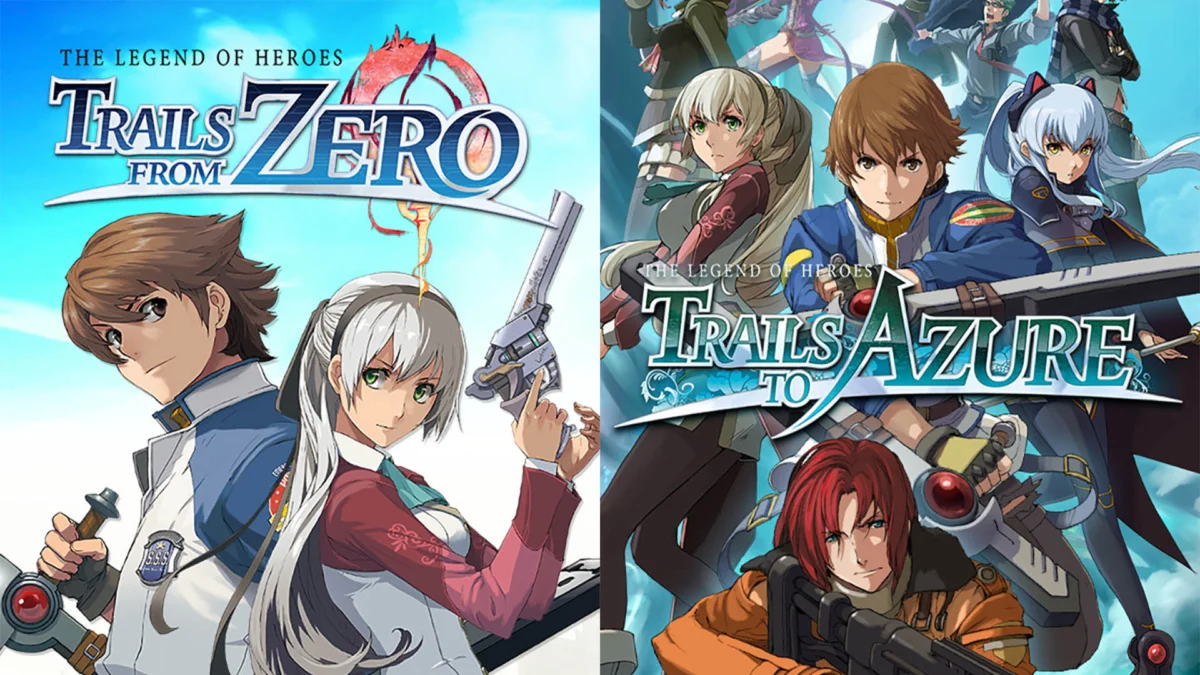
In a major announcement that underscores the enduring legacy of Nihon Falcom’s storied RPG franchise, publisher NIS America has officially confirmed that The Legend of Heroes: Trails from Zero and The Legend of Heroes: Trails to Azure are making their way to the next generation of hardware. Both titles, which serve as the pivotal "Crossbell Arc" of the overarching Trails saga, are slated for a worldwide release on both the PlayStation 5 and the successor to the Nintendo Switch this coming autumn.
This release marks a significant milestone for fans of the franchise, as the games will be available both as individual digital downloads and as a bundled physical collection, catering to both the convenience-seeking digital consumer and the dedicated collector.
Main Facts: Bringing the Crossbell Arc to Next-Gen
The announcement highlights a distinct approach to the hardware capabilities of each platform. While both titles are beloved for their intricate world-building and turn-based combat systems, the technical implementation on the PlayStation 5 and the Switch 2 offers players different ways to experience the journey of Lloyd Bannings and his allies.
On the PlayStation 5, NIS America has promised substantial performance enhancements, including support for 4K resolution and a fluid 120FPS frame rate, aiming to bring the vibrant, anime-inspired art style of the games to life with newfound clarity and smoothness. Conversely, the Switch 2 version—while likely benefiting from its hardware’s improved internals—is touted to feature unique peripheral support: mouse input. This inclusion is a nod to the PC roots of these titles, allowing players to navigate the user-intensive menus and tactical combat screens with the precision often preferred by veteran JRPG fans.
Chronology: The Journey of the Special Support Section
To understand the significance of these releases, one must look at the chronology of the Trails series. The Crossbell Arc occupies a vital narrative space between the Trails in the Sky trilogy and the Trails of Cold Steel saga.
The Legend of Heroes: Trails from Zero
The story begins with Lloyd Bannings, a young police investigator returning to his hometown of Crossbell. Crossbell is a city-state caught in a precarious geopolitical tug-of-war between the Erebonian Empire to the west and the Republic of Calvard to the east. As a neutral territory with a booming economy, it is a hotbed of intrigue and corruption.
Upon his return, Lloyd finds that his aspirations of joining the force are met with a bureaucratic twist: he is assigned to the Special Support Section (SSS), a newly formed, underfunded, and often overlooked division tasked with performing odd jobs and minor civic duties. He is joined by an eclectic team:
- Elie MacDowell: The granddaughter of the city’s mayor, driven by a desire to improve Crossbell’s political landscape.
- Randy Orlando: A charismatic, womanizing ex-soldier with a mysterious past.
- Tio Plato: A reserved but brilliant tech genius who wields advanced orbal hardware.
The Legend of Heroes: Trails to Azure
Picking up just a few months after the conclusion of Trails from Zero, the sequel sees the SSS thrust into the spotlight. Having earned fame and public trust through their heroic actions in the first game, the team now faces a far more dangerous reality. The temporary peace in Crossbell begins to fracture as international tensions escalate, and various clandestine organizations emerge with motives that threaten to dismantle the city’s autonomy. The game serves as a climax to the Crossbell saga, forcing Lloyd and his allies to grapple with the reality that their home is destined to become the focal point of a massive, continent-spanning conflict.
Supporting Data: Why Crossbell Matters
The Trails series is renowned for its continuity, often referred to by fans as a "literary" approach to game design. Every character, location, and piece of political lore introduced in the Crossbell games has long-term repercussions in the later Cold Steel and Daybreak titles.
For many Western fans, the Crossbell games were unavailable for years, existing only through fan-translated patches for the original PSP releases. When NIS America finally localized these titles in 2022 and 2023, they were met with critical acclaim for their mature writing, deep character development, and complex political themes. By bringing these games to the PS5 and Switch 2, NIS America is ensuring that these essential narrative building blocks remain accessible to a new generation of players who may have entered the series through later entries.

Official Perspectives: The Developer-Publisher Synergy
While Nihon Falcom remains the creative engine behind the series, NIS America’s role as the Western publisher has been transformative. In past statements, representatives from both companies have emphasized the importance of preservation.
"The Trails series is not just about a single hero; it is about the world itself," a spokesperson for the publishing team noted during a recent briefing. "By bringing Zero and Azure to the newest platforms, we aren’t just selling games—we are maintaining the integrity of the series’ history. The performance enhancements on PS5 and the unique input options on the Switch 2 are our way of ensuring that whether you are a console player or a PC purist, the experience remains premium."
Implications for the Future of the Franchise
The decision to re-release these titles on next-generation consoles suggests several key implications for the future of the Trails franchise:
1. Unified Narrative Accessibility
With the release of these versions, nearly every major entry in the Trails series will be playable on modern, current-gen consoles. This removes the "barrier to entry" that has historically plagued the franchise, where newcomers were often intimidated by the sheer volume of lore and the difficulty of tracking down older games.
2. Market Longevity
The Trails series has a reputation for being a "slow burn." By keeping these titles in circulation, Nihon Falcom and NIS America are capitalizing on the "long tail" of sales. RPG fans often discover the series years after a release, and keeping these games available on storefronts like the PlayStation Store and the Nintendo eShop ensures that the franchise remains a staple for years to come.
3. Setting the Stage for Future Localizations
The success of these ports will likely influence the speed and scope of future localizations. As the series moves into the Daybreak (Kuro no Kiseki) arc and beyond, the continued support of the earlier games proves to publishers that there is a sustainable, dedicated audience for deep, text-heavy JRPGs in the West.
4. Technical Evolution
The inclusion of mouse support on the Switch 2 version is particularly interesting. It signals a shift in how handheld-hybrid consoles are being viewed—not just as gaming devices, but as versatile platforms capable of handling UI-heavy, strategy-based experiences that were once the exclusive domain of the PC. If this feature is well-received, it could become a standard for future JRPG ports to the platform.
Conclusion: A Must-Play for JRPG Enthusiasts
As the autumn release window approaches, the anticipation for these titles is high. Whether you are a veteran of the Erebonian Empire who wants to understand the origins of the Crossbell conflict, or a newcomer looking for a story-driven RPG that respects the player’s intelligence, The Legend of Heroes: Trails from Zero and The Legend of Heroes: Trails to Azure remain essential pillars of the genre.
With improved performance, a cohesive narrative, and a legacy that spans over a decade, the Crossbell duology serves as a masterclass in how to build a living, breathing world. As Lloyd Bannings prepares to take his place on the next generation of consoles, it is clear that the "Trails" legacy is stronger than ever. Fans should keep an eye on official NIS America channels for pre-order information and the specific release dates for the physical bundle, which is expected to be a highly sought-after item for collectors.











No comments yet. Be the first to join the conversation!