

In an unprecedented move to protect fan culture and curb the growing tide of retail exploitation, McDonald’s Japan and the digital marketplace giant Mercari have implemented a multi-layered strategy to secure the launch of the highly anticipated Chiikawa Happy Meal campaign. As the popular anime franchise prepares to hit the golden arches, both companies are taking aggressive measures to ensure these collectible figures reach genuine enthusiasts rather than becoming fodder for predatory resellers.
The Chiikawa Phenomenon: A Two-Phase Release
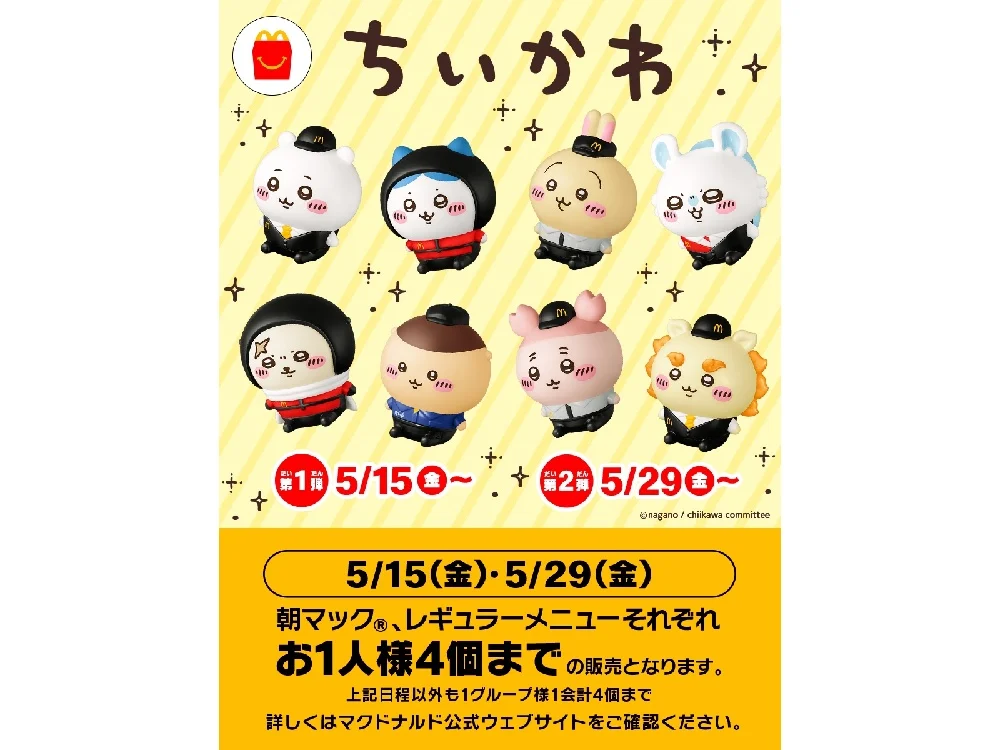
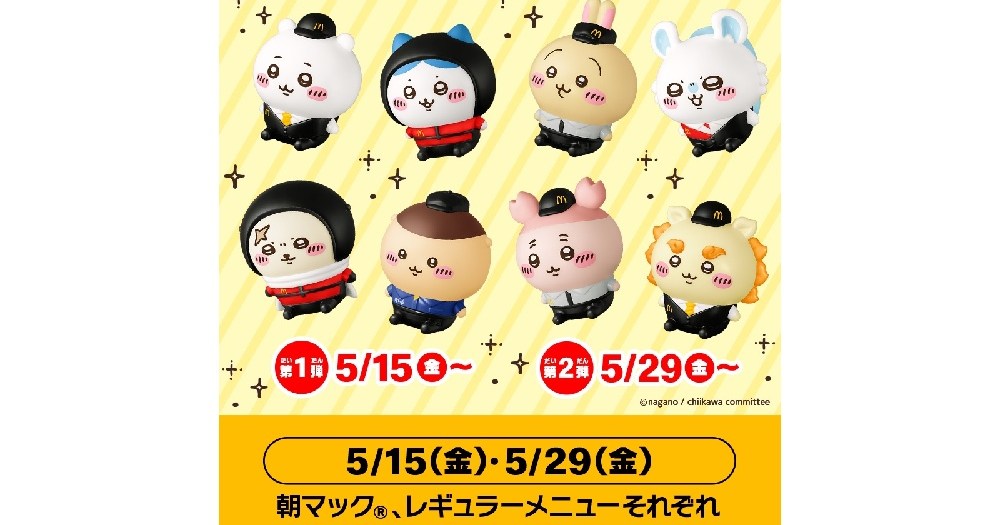
Chiikawa, a whimsical and beloved franchise centered on small, adorable creatures navigating a sometimes surreal world, has captured the hearts of millions across Japan. When McDonald’s announced that the cast—including Chiikawa, Hachiware, Kuri-Manju, and Rakko—would be appearing in exclusive, uniform-clad figure sets, the anticipation was immediate.
To manage the expected surge in demand, McDonald’s Japan has structured the campaign into two distinct phases. The first wave, featuring the main quartet, is scheduled for release between March 15 and March 28. A second wave, showcasing Usagi, Momonga, Shisa, and Furuhonya, will follow from May 29 to June 11. While the rollout is designed to manage crowds, the primary challenge remains the specter of "scalpers"—individuals who exploit limited-edition promotions to bulk-buy inventory, often at the expense of children and loyal fans.
A History of Retail Chaos
The decision to implement strict anti-scalping policies did not emerge in a vacuum. Over the past two years, McDonald’s Japan has become a central battleground for professional resellers. The problem reached a boiling point in 2025, following several high-profile incidents that tarnished the brand’s image and frustrated the public.
The Chronology of Escalation
- August 2025 (Pokémon Cards): A chaotic rollout of Pokémon promotional cards resulted in massive crowds at various branches. The resulting supply-chain strain and reports of aggressive behavior among resellers drew widespread media condemnation.
- August 2025 (One Piece Cancellation): The situation grew so dire that McDonald’s was forced to indefinitely postpone a planned One Piece Happy Meal campaign, fearing that the anticipated demand would lead to further disorder and potential safety risks at their restaurants.
- September 2025 (Sanrio Trial Run): In response to the One Piece debacle, McDonald’s piloted new, restrictive purchasing policies during a Sanrio character campaign. These measures served as the blueprint for the current Chiikawa strategy.
The issue is not merely one of availability; it is also one of ethics and waste. Scalpers frequently purchase dozens of Happy Meals at a time, discarding the food entirely to extract the toys. In a society that places a high premium on food security and public etiquette, the sight of mountains of uneaten burgers and fries left on street corners or restaurant tables has fueled significant public outrage.
McDonald’s Counter-Offensive: Stricter Purchasing Protocols
For the Chiikawa launch, McDonald’s Japan is enforcing a rigid set of rules designed to choke off the supply chain for bulk resellers.
Day-One Restrictions (May 15 and May 29)
On the opening day of each wave, the following rules apply:
- App-Exclusive: Purchases must be facilitated through the official McDonald’s Japan mobile application.
- Quantity Caps: Customers are limited to a maximum of four Happy Meals per designated time block (morning, afternoon, and evening).
- In-Store Requirement: Orders must be placed for in-store pickup, effectively eliminating the possibility of bulk-buying via delivery services.
Ongoing Restrictions (May 16–28 and May 30–June 11)
Following the initial launch day, restrictions remain stringent:
- Transaction Limits: A hard cap of four Happy Meals per customer, per transaction.
- Delivery Limitations: While official McDonald’s delivery channels remain open, third-party delivery services like Uber Eats are strictly prohibited from processing Happy Meal orders for the duration of the campaign.
These measures aim to force a "one-to-one" relationship between the customer and the product, ensuring that the toys are distributed to individuals intending to keep them rather than sell them.
The "Mercari Factor": Closing the Secondary Market
Perhaps the most significant development in this conflict is the intervention of Mercari, Japan’s largest second-hand marketplace. Historically, platforms like Mercari have served as the primary destination for scalpers to "flip" their goods at inflated prices. By taking a percentage of each transaction, the platform inadvertently profited from the very scalping culture that now threatens its public reputation.
The Policy Shift
In a landmark statement, Mercari announced a total prohibition on the listing of the new Chiikawa Happy Meal figures. The company clarified that it would not only remove existing listings but also actively ban the accounts of users attempting to circumvent these rules.
"We cannot guarantee a safe and secure trading environment," the company noted in an official statement. While Mercari stopped short of a permanent, site-wide ban on all Happy Meal toys, they indicated that the restriction on Chiikawa items will remain in place as long as the volatility of the market persists.
The Implications: A Shift in Corporate Responsibility
The collaboration between a major retail chain and a secondary market platform represents a profound shift in how Japanese corporations view their social responsibility.
Damage Control and Brand Image
For Mercari, the ban is a clear exercise in "damage control." The company has faced increasing criticism for enabling a culture of greed. By distancing itself from the scalping of Chiikawa figures, Mercari is attempting to preserve its status as a community-driven marketplace rather than a haven for predatory capitalism.
The "Test of Patience"
By imposing an indefinite, rather than permanent, ban, Mercari is gambling on the patience of scalpers. If resellers cannot offload their inventory quickly, the investment of time and money becomes inefficient. Scalping relies on high-velocity turnover; if the window for selling is closed, the incentive to bulk-buy vanishes.
Conclusion: Will the Strategy Succeed?
While these measures are a significant step forward, experts note that they are not a total cure. Determined scalpers may still attempt to find loopholes, such as recruiting third parties to make purchases or utilizing smaller, less-regulated social media platforms to conduct transactions.
However, by forcing a "time lag" between the purchase and the potential resale, McDonald’s and Mercari have successfully increased the cost of doing business for scalpers. If this strategy proves effective, it could set a new industry standard, effectively ending the era where pop culture collectibles were used as instruments for retail exploitation. For the fans who simply want to enjoy a burger and a Chiikawa toy with their family, these new protocols offer a rare, welcome bit of breathing room in an increasingly aggressive consumer landscape.












No comments yet. Be the first to join the conversation!