Nana
Nana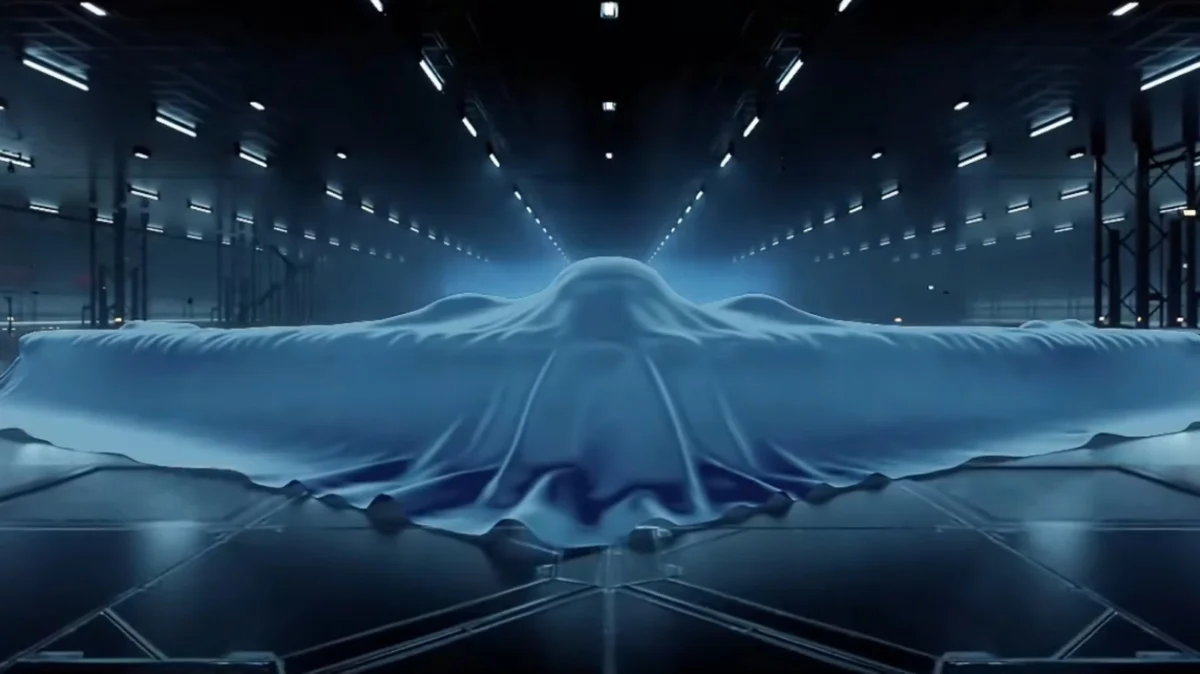
For nearly a decade, the global defense community has been playing a high-stakes game of cat and mouse with a phantom. The Xi’an H-20, China’s ambitious next-generation long-range stealth bomber, represents a potential paradigm shift in the People’s Liberation Army Air Force (PLAAF) power-projection capabilities. Yet, despite the immense resources of one of the world’s most formidable military-industrial complexes, the H-20 remains a subject of intense speculation, shrouded in secrecy and persistent delays. As we enter 2026, the question remains: is the H-20 a revolutionary strategic asset nearing deployment, or is it a project mired in the technical and systemic hurdles that have stalled its progress for years?
Main Facts: The Strategic Ambition
The H-20 is intended to be China’s answer to the United States’ long-range strike capability, serving as a counterpart to the B-2 Spirit and the forthcoming B-21 Raider. By design, the aircraft is expected to feature a flying-wing configuration, emphasizing low-observable (stealth) characteristics to penetrate contested airspace.
Its primary mission profile—should it reach full operational capability—is to provide the PLAAF with intercontinental reach. Military analysts suggest the H-20 is designed to carry a massive payload, potentially exceeding 45 tons, capable of delivering both conventional and nuclear ordnance. If the projected ranges of 6,000 to 8,000 miles are accurate, the H-20 would grant China a true "second-strike" capability that could hold targets across the Pacific—and potentially the U.S. mainland—at risk, fundamentally altering the strategic calculus of the Indo-Pacific region.
A Chronology of Anticipation and Delay
The saga of the H-20 began in 2016, a year of significant posturing for the Chinese military. Ma Xiaotian, then the chief of the Chinese air force, publicly acknowledged that the nation was in the process of developing a new-generation long-range bomber. This admission was interpreted by global observers as a formal declaration of China’s intent to join the elite club of nations possessing strategic stealth aviation.
The Missing Milestone (2018–2019)
Expectations reached a fever pitch in 2018 when various state-affiliated media outlets teased that the H-20 would make a grand debut at the 70th-anniversary parade of the PLAAF in 2019. This was the moment the world expected to see the "Flying Wing" take its place in the sky. When the parade concluded without a single sighting of the aircraft, skepticism regarding the program’s developmental maturity began to grow.
The Era of Rumors (2020–2024)
The ensuing years were characterized by a drip-feed of disinformation, 3D renderings, and unsubstantiated claims. In 2021, a flurry of leaked digital models circulated online, prompting a wave of intense debate among aviation enthusiasts and defense contractors. By 2022, rumors intensified, with various reports claiming the aircraft was in its final stages of flight testing. However, the anticipated rollout never materialized.
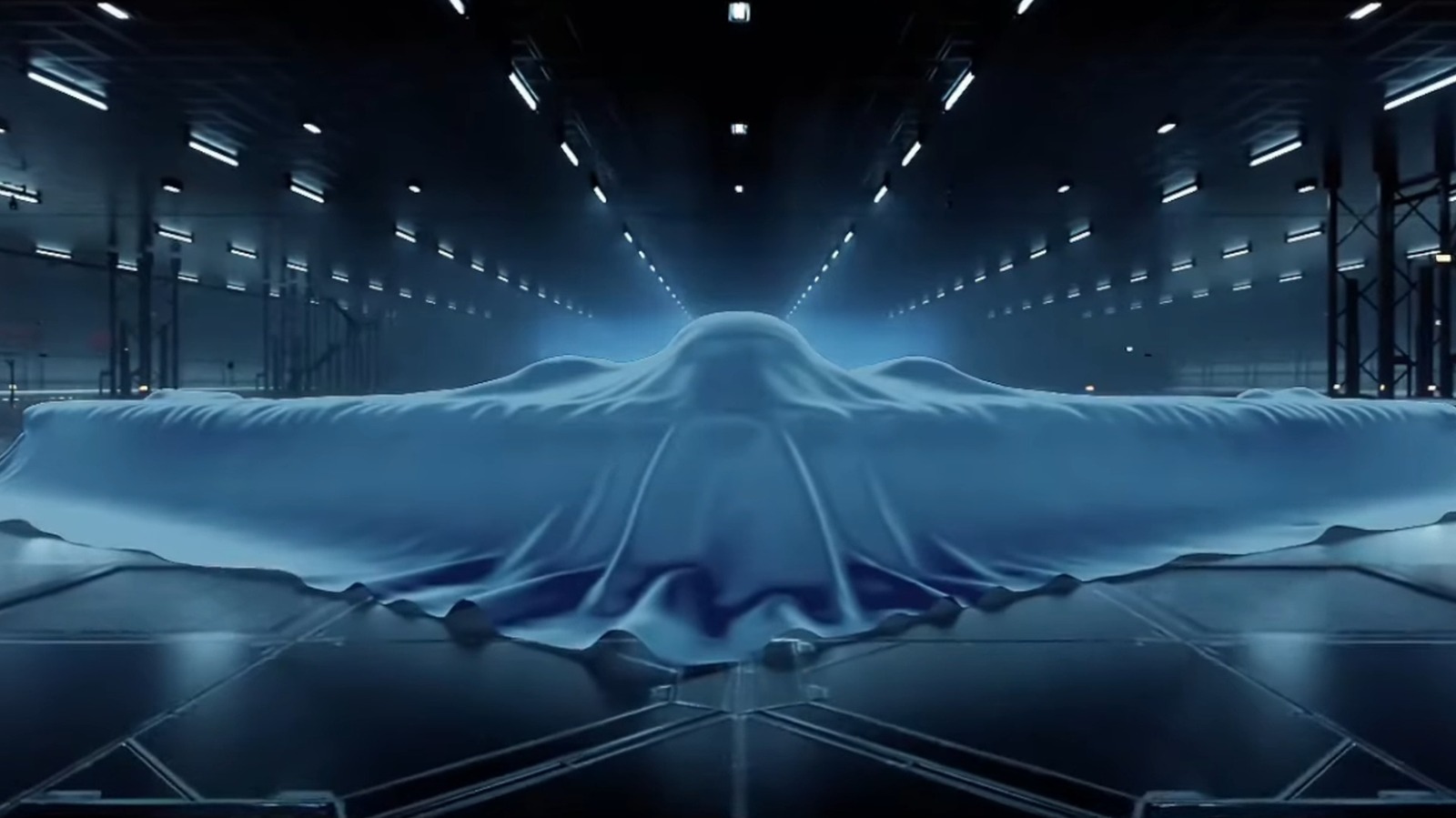
The cycle of "coming soon" rhetoric hit a plateau in 2024 when Air Force Deputy Commander Wang Wei addressed the delays. Rather than citing specific engineering challenges or technical failures, the official stance remained vague, characterizing the project as a work in progress that would arrive when "the time is right."
The 2025 "Test Flight" Controversy
The most significant recent development occurred in early 2025, when footage surfaced on Chinese social media platforms appearing to show an unidentified, large, flying-wing aircraft in formation with a Shenyang J-16 fighter. For a brief moment, it seemed the wait was over.
However, the clip’s authenticity was immediately challenged by experts. The intersection of sophisticated CGI, generative AI video tools, and the state-controlled nature of Chinese media information flow makes it impossible to verify the footage. If the clip was indeed a genuine test flight, it marks the first concrete physical evidence of the H-20 in the air. If it was a sophisticated disinformation campaign, it underscores the lengths to which China may go to maintain the perception of military advancement even when production realities lag behind rhetoric.
Supporting Data and Technical Specifications
While official details remain state secrets, intelligence reports from the United States and independent think tanks have pieced together a plausible profile of the H-20 based on leaked imagery and procurement patterns.
Projected Performance Metrics:
- Range: Estimates vary between 5,281 miles (8,500 km) and 8,000 miles (13,000 km), likely bolstered by in-air refueling capabilities.
- Payload: A projected 45-ton capacity, placing it in a similar weight class to modern heavy bombers.
- Stealth Profile: The incorporation of a flying-wing design, internal weapons bays, and radar-absorbent materials indicates a primary focus on deep-penetration missions where detection avoidance is paramount.
- Propulsion: Likely subsonic, utilizing high-bypass turbofan engines optimized for fuel efficiency and low thermal signature rather than speed.
Official Responses and Intelligence Assessments
The silence from Beijing is often contrasted with the detailed analysis provided by Western intelligence. The U.S. Department of Defense’s 2024 annual report to Congress, "Military and Security Developments Involving the People’s Republic of China," provides a more sobering assessment than the optimistic timelines suggested by Chinese domestic media.
The Pentagon’s report suggests that the H-20 is not expected to be a significant military factor until at least the 2030s. This gap between the "imminent" releases teased in China and the "next decade" assessment by the U.S. suggests that the program is facing substantial hurdles. Analysts point to the complexity of integrating advanced stealth coatings, long-range engine reliability, and the sophisticated sensor-fusion avionics required for a modern strategic bomber as likely culprits for the decade-long stall.
Implications: The Strategic Landscape
Why does the H-20 matter, even if it is a decade away? The implications of a fully operational H-20 are profound.
1. Shift in Deterrence
Currently, China relies heavily on its DF-series ballistic missiles for long-range power projection. The addition of a stealth bomber provides a "recallable" and "reusable" platform—assets that offer more flexibility than a ballistic missile in a crisis. A bomber can patrol, loiter, and project presence in a way that a missile cannot.
2. A Challenge to Regional Hegemony
The Pacific theater is increasingly dominated by anti-access/area-denial (A2/AD) strategies. An H-20 that can operate deep within a "contested" zone without being detected would force the United States and its allies to rethink their base vulnerabilities, particularly in Guam and the broader Pacific island chain.
3. The Cost of Prestige
The H-20 is as much a symbol of technological maturity as it is a weapon of war. For the Chinese state, the ability to build a world-class stealth bomber is a signal of parity with the United States. The extended delays, however, risk turning that symbol into a liability. If the H-20 is perceived as a "paper tiger"—a weapon that never quite makes it to the flight line—it may undermine the very deterrence it was designed to project.
Conclusion: Waiting for the Takeoff
As of 2026, the Xi’an H-20 exists in a state of suspended animation. It is a project that has survived multiple leadership changes, shifted its timeline repeatedly, and managed to stay relevant through rumors and fleeting glimpses of potential test footage.
Whether the H-20 eventually emerges as a game-changing strategic asset or becomes a cautionary tale of overambitious procurement remains to be seen. What is clear, however, is that the Chinese military-industrial complex has entered a new phase of strategic competition. Even if the H-20 is not yet operational, its shadow is already being felt in the halls of power from Beijing to Washington. The world continues to watch the skies, waiting to see if this ghost of the hangar will finally emerge into the light, or if it will forever remain a mystery trapped in the limbo of high-stakes military development.


 Suro Senen
 Evan Lee Salim