


The landscape of consumer electronics is currently defined by the glass rectangle in your pocket. For nearly two decades, the smartphone has reigned supreme as the primary portal to the digital world. However, whispers from the corridors of Amazon’s hardware division, Lab126, suggest that the tech giant is contemplating a future where the current iteration of the mobile device becomes obsolete. While rumors of a revived "Fire Phone" have circulated under the mysterious internal codename "Transformer," the reality of Amazon’s vision appears to be far more nuanced—and perhaps more radical—than simply releasing another handset.
The Core Facts: What Is "Project Transformer"?
Earlier this year, industry chatter reached a fever pitch regarding a secret initiative at Amazon dubbed "Project Transformer." The premise of the rumors was simple: Amazon was looking to re-enter the smartphone market, a space it famously exited in 2014 after the disastrous launch of its original Fire Phone. The reported goal was to integrate the company’s powerful Alexa voice assistant and its broader ecosystem of services into a new mobile device that could serve as a hub for the modern, AI-driven home.
However, in a recent interview, Panos Panay, Amazon’s newly appointed head of devices and services—formerly of Microsoft’s Surface division—sought to temper expectations. When asked directly about the rumors, Panay was non-committal but notably firm about the company’s current trajectory. "It’s just not the goal," Panay stated, noting that there is "no clear path that makes sense" for a traditional smartphone launch at this time.
Yet, despite these denials, the industry remains skeptical. Panay’s refusal to issue a flat, categorical "no" has left the door ajar. The ambiguity suggests that while a standard smartphone may not be on the roadmap, Amazon is actively prototyping hardware that seeks to redefine the "phone" category entirely.
A Chronology of Amazon’s Hardware Ambitions
To understand why Amazon is being so cautious, one must look at the company’s turbulent history with consumer hardware.
2014: The Fire Phone Fiasco
Amazon’s first foray into the smartphone market was, by all objective metrics, a failure. The Fire Phone, with its gimmicky "Dynamic Perspective" 3D technology and a lack of access to the Google Play Store, sold a paltry 140,000 units before the company was forced to write off $170 million in unsold inventory. It remains a cautionary tale in the tech industry about the difficulty of breaking into a saturated market dominated by Apple and Samsung.

2015–2020: The Alexa Pivot
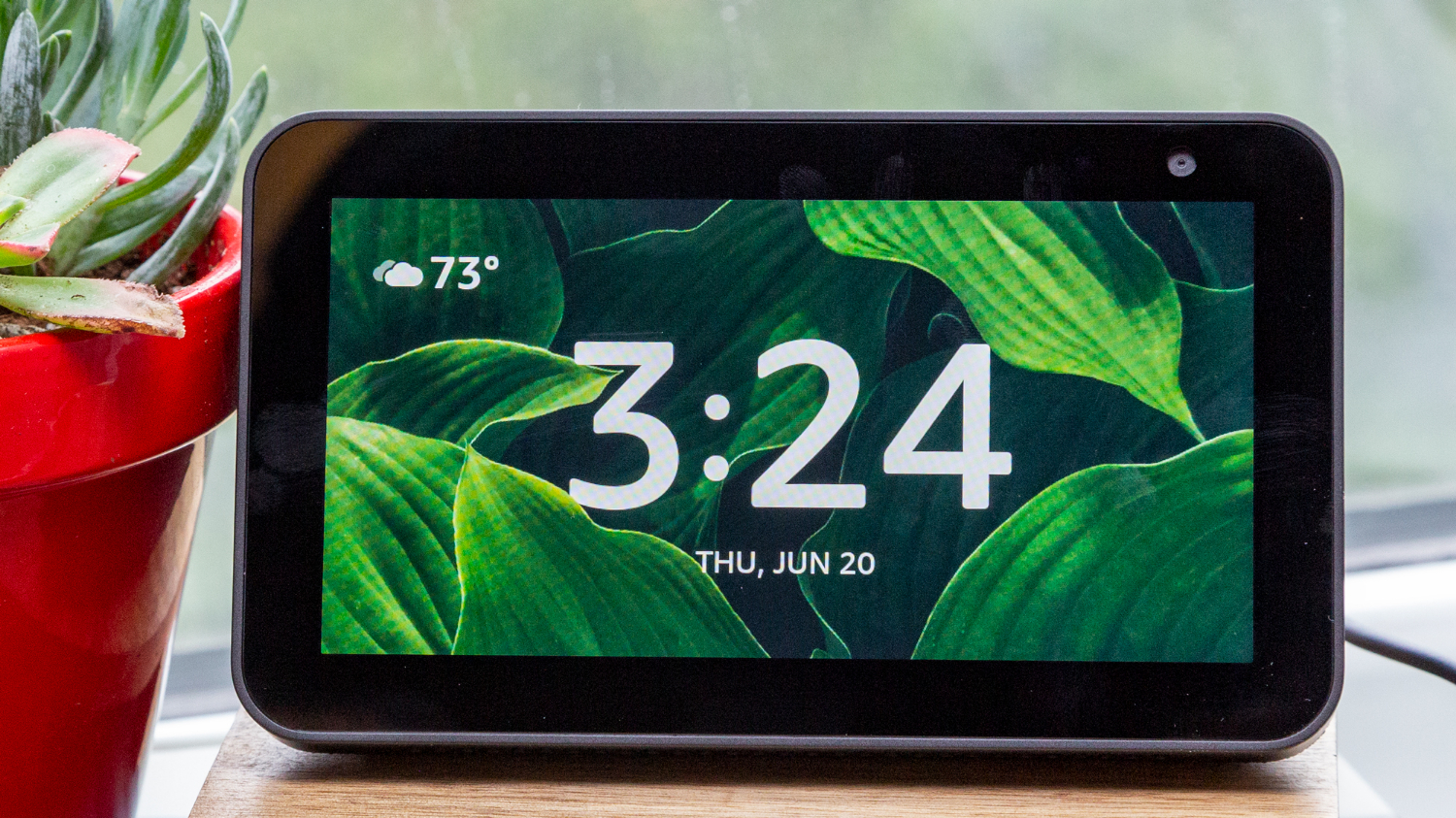
Following the Fire Phone debacle, Amazon successfully pivoted to the smart home. The Echo line of speakers and the Echo Show series of displays became the gold standard for voice-activated computing. This period solidified Amazon’s reputation as an innovator in ambient computing, proving that users wanted Alexa in their lives—just not necessarily in their pockets.
2023–2024: The Rise of the AI Peripheral
With the explosion of generative AI, companies like OpenAI, Rabbit, and Humane began touting the "post-smartphone" era. These companies argued that wearable AI devices could replace the need for constant screen time. This shift in the market likely reignited discussions at Amazon regarding "Project Transformer," as the company looked to determine how its massive Alexa infrastructure could survive in an age where users are looking at their phones less frequently.
The Evolution of the Form Factor
Panos Panay’s comments regarding the future of the smartphone are perhaps the most telling aspect of the recent discourse. He acknowledged that the smartphone as a form factor is not going anywhere in the immediate future, but he added a significant caveat: it is poised for a "major transformation" over the next decade.
This transformation is likely tied to the integration of multimodal AI. If a device can "see" what you see, "hear" what you hear, and process requests through a sophisticated LLM (Large Language Model), the need for a screen becomes secondary. The "Transformer" project is rumored to be exploring both high-end smart devices and "dumb" phone designs—phones that act as simple communication hubs for AI-driven peripherals, such as smart glasses or pins.
The Influence of Past Traumas
It is impossible to ignore the influence of Panay’s professional background on this strategy. During his tenure at Microsoft, Panay oversaw the development of the Surface Duo—a dual-screen Android device that was praised for its hardware design but criticized for its buggy software and lack of a clear market fit. This experience, combined with Amazon’s own history, suggests a company that is currently allergic to "half-baked" product launches. Amazon is no longer interested in competing on specs; they are interested in competing on utility and integration.
Implications: A World Without Screens?
The implications of Amazon’s pivot are profound. If the goal is to shift users away from the "look-down" experience of current smartphones, the company is betting on a future of ambient intelligence.
- The Ecosystem Advantage: Unlike startups trying to break into the hardware space, Amazon has the world’s largest retail and cloud infrastructure. A "Transformer" device would likely serve as a master key to Amazon’s ecosystem—Prime Video, Music, Shopping, and home automation—creating a "sticky" experience that other AI hardware manufacturers cannot replicate.
- Wearable Integration: Panay confirmed that Amazon is working on a "whole new set of form factors." This strongly implies that the company is looking at wearables—glasses, rings, or earpieces—that offload the heavy lifting of AI processing to either the cloud or a companion device carried in a pocket or bag.
- The "Phone" as a Gateway: The concept of a "dumb" phone that simply acts as a secure, high-speed gateway for wearable AI is a compelling vision. It would solve the battery and thermal issues currently plaguing standalone AI pins, while keeping the user’s primary interface focused on the real world rather than a digital screen.
The Competitive Landscape: OpenAI and Beyond
Amazon is not operating in a vacuum. The race to define the post-smartphone era is crowded. Sam Altman and Apple’s former design chief, Jony Ive, are reportedly collaborating on an AI device that promises to fundamentally change how we interact with technology. Similarly, Meta’s Ray-Ban smart glasses have already proven that consumers are willing to wear tech on their faces if it adds tangible value, such as live translation or visual navigation.
For Amazon, the challenge is maintaining its edge in voice control while transitioning to the visual and multimodal capabilities of modern AI. Alexa has long been the "brain" of the home; "Project Transformer" is clearly an attempt to ensure that brain remains relevant when the user leaves the house.
Conclusion: The Long View
While it is tempting to view Panos Panay’s comments as a simple denial of a new phone, a more nuanced reading suggests a strategic realignment. Amazon is not building a phone because the "phone" as we know it is a dying concept. Instead, the company is likely architecting a system of interconnected devices—a "Transformer" network—that will render the traditional smartphone unnecessary in the coming years.
The path to this future is undoubtedly fraught with risk. Amazon must overcome its own legacy of hardware failures and prove that it can iterate as fast as the AI industry demands. However, if the company succeeds, it will not just be launching a new product; it will be successfully transitioning the world into an era where technology is felt, heard, and experienced, rather than just watched.
As we look to the next decade, the question isn’t whether Amazon will release a new phone. The question is whether they will be the ones to finally kill the one we have now. For now, the "Transformer" remains a mystery, but one that points toward a very different—and perhaps much quieter—digital future.












No comments yet. Be the first to join the conversation!