

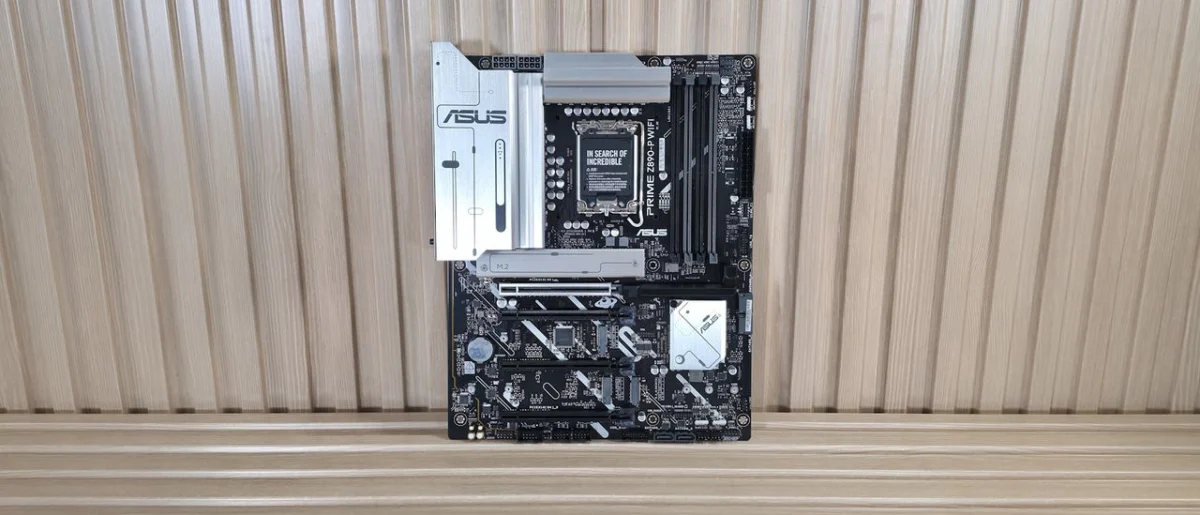
The landscape of modern computing is shifting rapidly with the introduction of Intel’s latest Core Ultra processors. As enthusiasts and professionals look to upgrade to the LGA 1851 socket, the motherboard market has become saturated with high-end, premium-priced boards. Amidst this sea of luxury features, the Asus Prime Z890-P Wi-Fi ($229.99) emerges as a pragmatist’s choice, aiming to provide a reliable, stable, and feature-rich foundation for the Z890 platform without the "early adopter" tax often associated with flagship models.
Main Facts: What the Prime Z890-P Brings to the Table
At its core, the Asus Prime Z890-P is designed for users who prioritize functionality over flair. It is an ATX motherboard that supports the latest Intel Core Ultra "Plus" series processors, including the 270K and 250K variants, while maintaining the thermal and electrical headroom to support the flagship Core Ultra 9 285K.
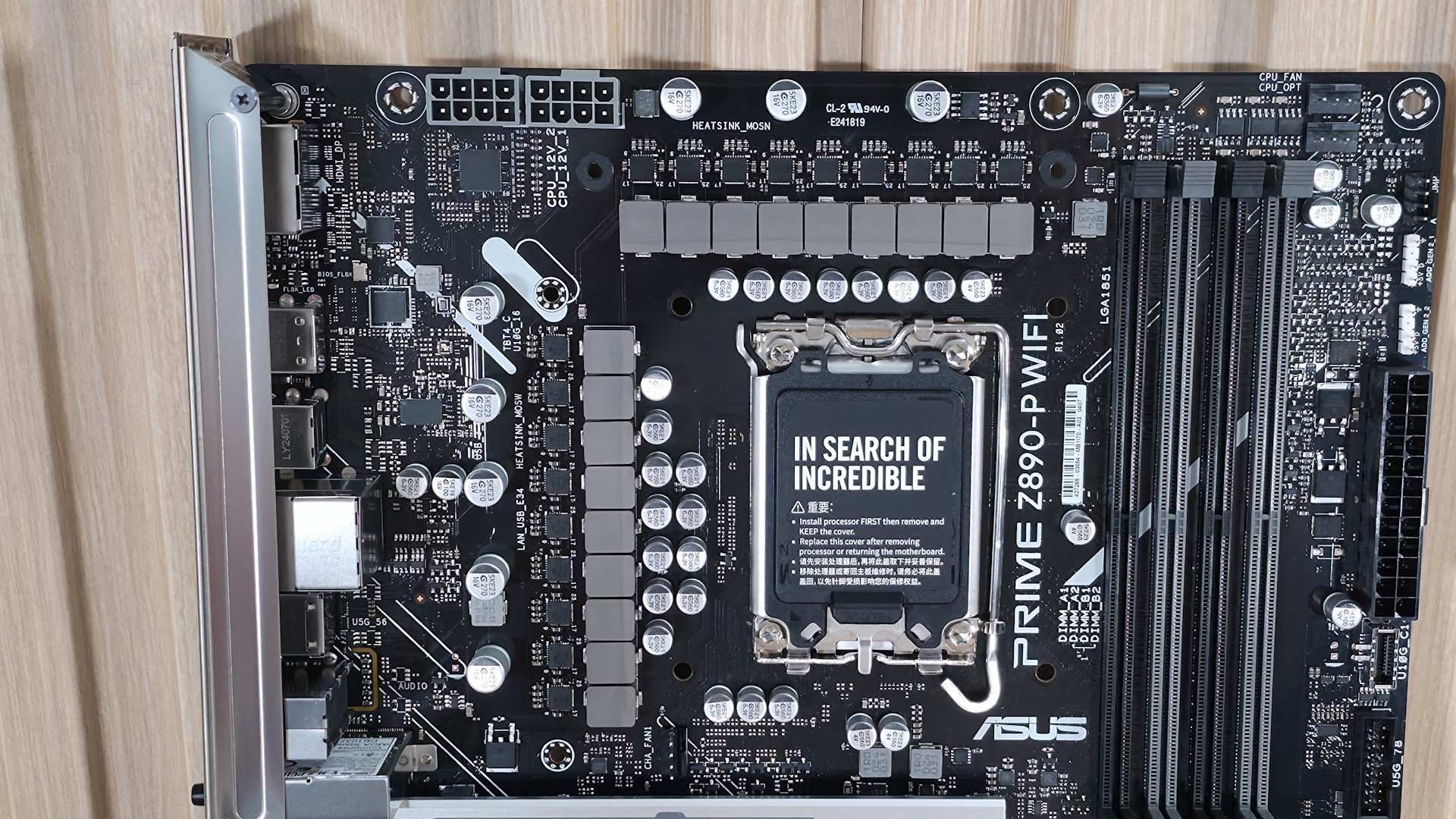
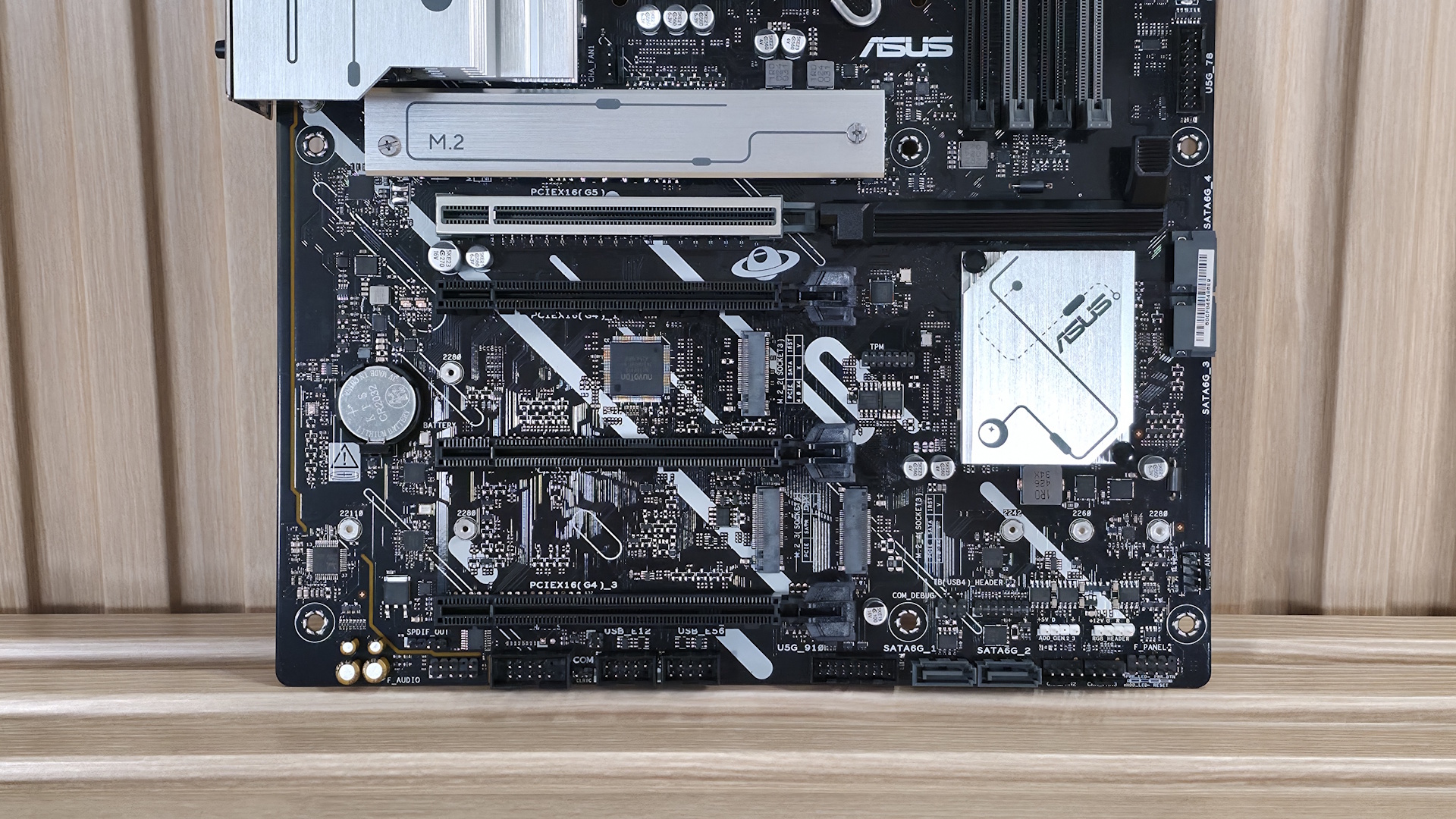
The board features an 18-phase power delivery design, utilizing 14 dedicated Vcore stages with 80A MOSFETs. This configuration ensures that even under heavy multi-threaded workloads, the power delivery remains stable. Connectivity is robust for a budget-tier board, headlined by a Thunderbolt 4 (40 Gbps) Type-C port, integrated Wi-Fi 7 capabilities, and a total of four M.2 sockets—one of which is PCIe 5.0 x4 compliant for next-generation storage speeds.
Chronology and Development: The Z890 Evolution
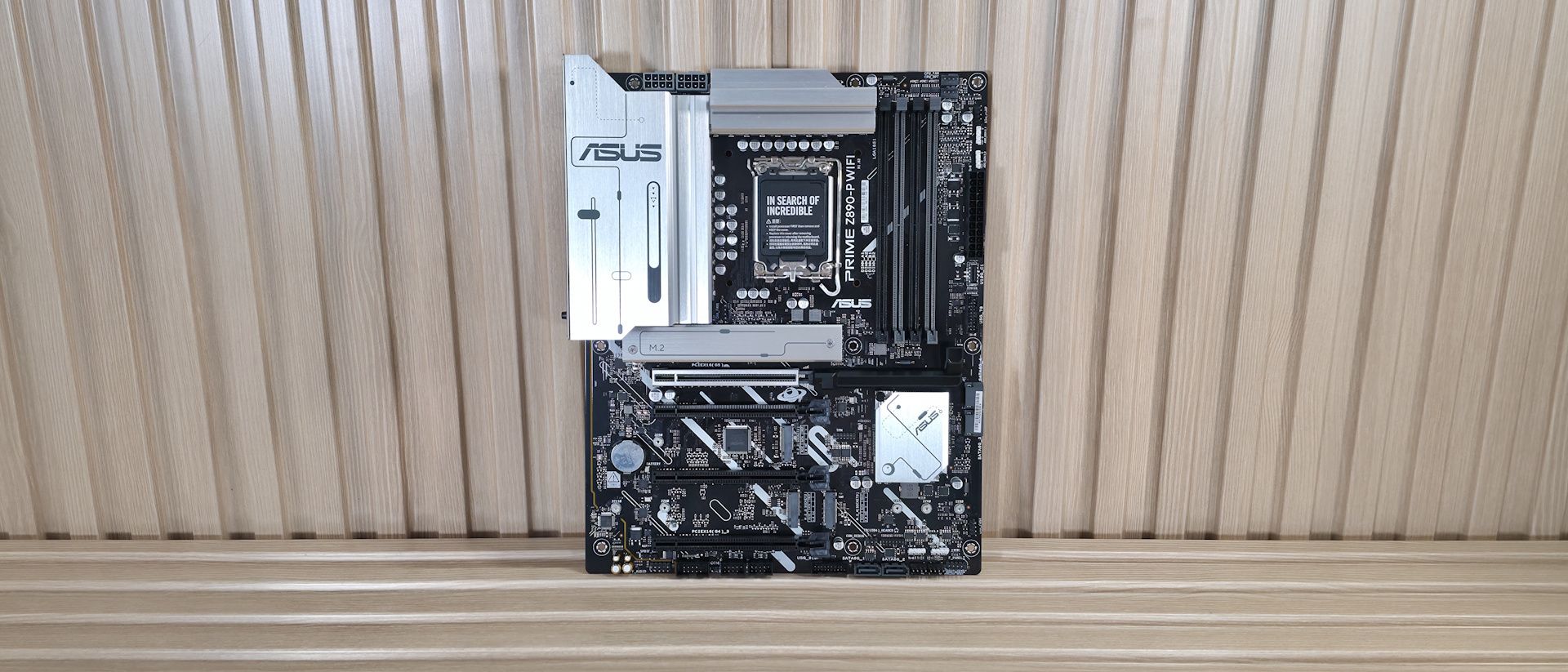
The release of the Z890 chipset marks a significant transition for Intel, moving to the LGA 1851 socket. Asus, a dominant player in the motherboard industry, has historically positioned its "Prime" series as the "workhorse" of its lineup. While the "ROG" (Republic of Gamers) series focuses on extreme overclocking and aesthetic extravagance, the Prime Z890-P focuses on what Asus describes as "expert engineering to unleash the full potential of Intel Core processors."
During our testing cycle in the Tom’s Hardware labs, we put the board through a rigorous suite of benchmarks. The board arrived as a successor to previous Z790 budget offerings, refined to handle the specific power and memory requirements of the new Intel Core Ultra architecture. The development focus here was clearly on "EZ DIY" features—such as simplified M.2 installation and BIOS-level optimization tools—to lower the barrier to entry for users building their first high-end PC.
Supporting Data: Performance and Technical Analysis
Power Delivery and Thermal Management
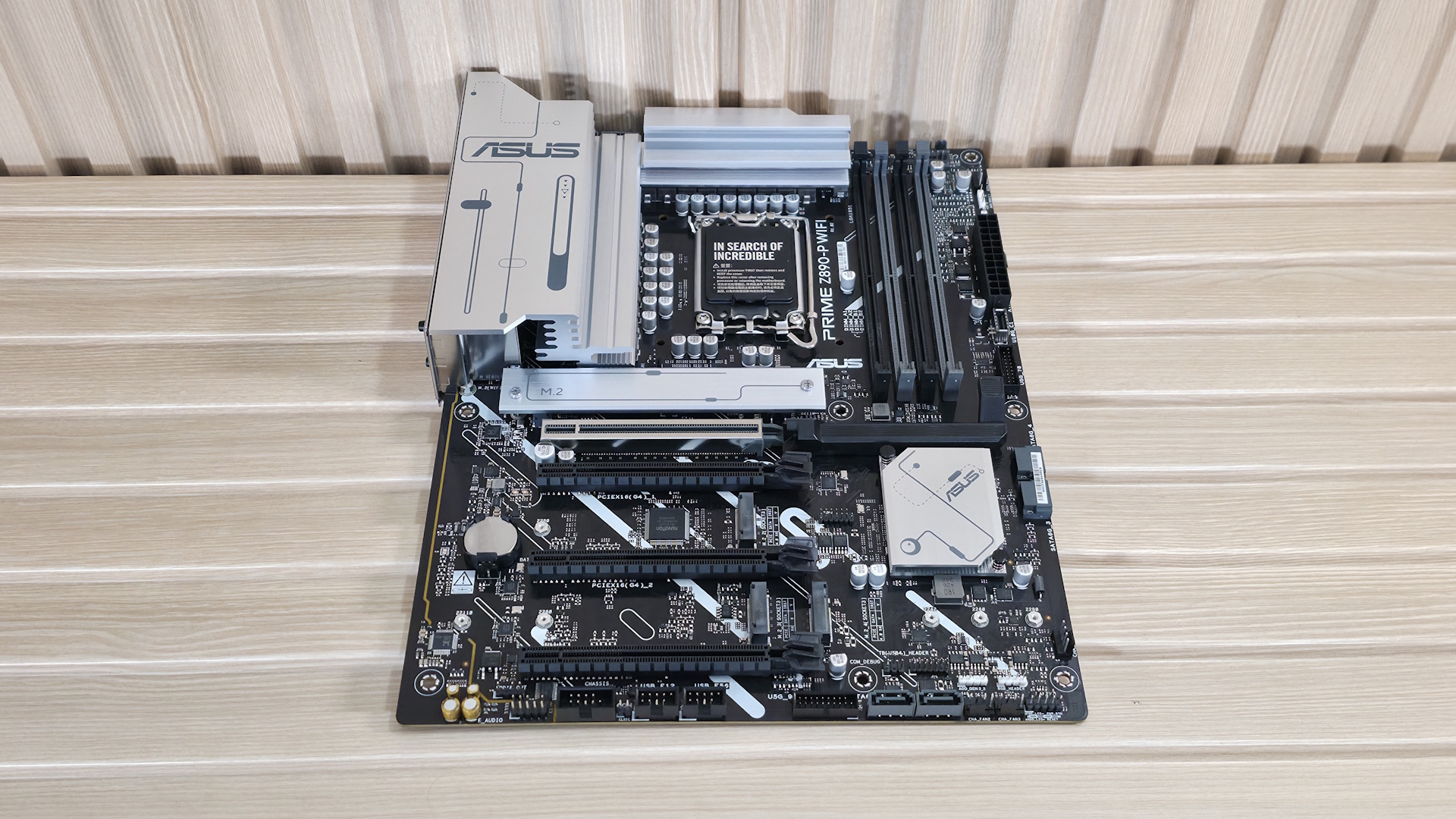
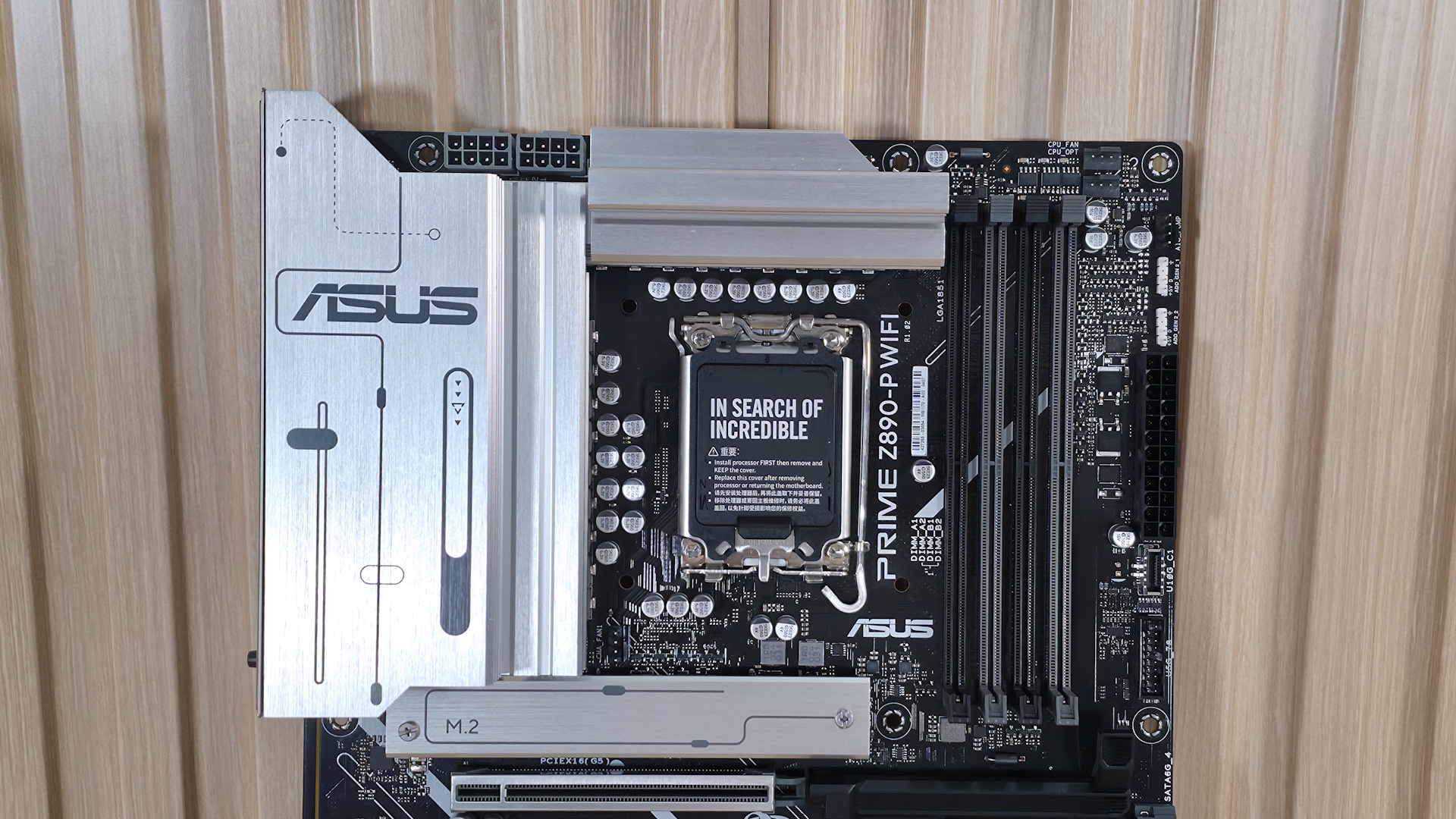
The Prime Z890-P utilizes a Digi+ VRM controller paired with Vishay SIc639 DrMOS components. In our stress tests, the 1,120A total capacity proved more than sufficient for the Core Ultra 7 270K. The VRM heatsinks are connected via a thermal pad, and while they lack the heatpipe complexity of premium Z890 boards, they successfully managed thermals during prolonged 100% load scenarios. We advise users to ensure adequate case airflow to maximize the longevity of these components.
Memory Compatibility
One of the most critical aspects of the Z890 launch has been memory stability. The Prime Z890-P officially supports DDR5-8666+ MT/s (OC). During our testing, we encountered some friction with our baseline DDR5-7600 kit, which failed to stabilize, though our DDR5-8200 kit functioned flawlessly. This underscores the importance of checking the motherboard’s Qualified Vendor List (QVL) before purchasing RAM.
To mitigate these challenges, Asus has implemented "AEMP III" (Asus Enhanced Memory Profile) and "DIMM Fit Pro." These features provide granular control over clock drivers and timings. While these tools are a boon for enthusiasts, they are buried in the BIOS and may require a learning curve for those unaccustomed to manual memory tuning.
Expansion and Connectivity
The board features a "Safeslot" reinforced PCIe 5.0 x16 slot for the primary GPU. Below this, the board provides three additional PCIe 4.0 slots. For storage, the four M.2 sockets allow for massive capacity, but users should note that the primary PCIe 5.0 M.2 slot shares space with the primary graphics slot; large heatsinks on M.2 drives may interfere with bulky GPU coolers.
The rear I/O is sufficient but utilitarian. With eight total USB ports, some users might find the count limiting if they have a large ecosystem of peripherals. The inclusion of Thunderbolt 4 is a major highlight, providing high-bandwidth connectivity for docks, external displays, or high-speed storage.
Aesthetic and Build Philosophy
The Prime Z890-P makes no attempt to hide its budget roots. The PCB is largely exposed black, punctuated by subtle white diagonal lines. There is no integrated RGB lighting, which is a departure from the "gamer-centric" aesthetic common in this price bracket. However, for those who want to customize their build, the board includes three 3-pin ARGB headers and one 4-pin RGB header, all managed via the Armoury Crate software. This "blank canvas" approach allows users to direct their budget toward high-performance components rather than paying for factory-installed lighting.
Official Responses and Industry Context
In discussions surrounding the Z890 launch, manufacturers have emphasized that the "budget" tier has evolved significantly. An "entry-level" board today often outperforms high-end boards from three generations ago. Asus representatives have noted that the Prime Z890-P is specifically intended for the "do-it-all" user—the creator who needs productivity, the gamer who needs speed, and the professional who needs reliability, all within a reasonable budget.
Implications for the Consumer
Who is this board for?
The Asus Prime Z890-P is an ideal choice for the user who is building a performance-oriented system but does not need the aggressive overclocking features or "bling" of the ROG series. It is perfect for:
- Content Creators: The inclusion of Thunderbolt 4 and high-speed PCIe 5.0 storage makes it an excellent foundation for video editing rigs.
- Productivity Users: The board’s stable power delivery makes it a great partner for the Core Ultra 7 and 9 processors in office or workstation environments.
- The Pragmatic Builder: If you want to put your money into a better GPU or a faster NVMe drive rather than a premium motherboard, this is the board to pick.
The Competition
The primary challenge for the Prime Z890-P is the crowded mid-range market. There are several refreshed Z790 boards and competitive Z890 options that offer similar feature sets for slightly less money. Potential buyers should look at the "hidden costs"—if you need more USB ports or high-end integrated audio (the board uses the basic Realtek ALC897), you might find the Prime Z890-P lacking.
Final Verdict: A Solid Foundation
The Asus Prime Z890-P Wi-Fi is a well-rounded, capable motherboard. It provides all the essential "fixins" for the Intel Z890 platform: robust VRMs, Wi-Fi 7, Thunderbolt 4, and plenty of M.2 expansion. While it won’t win awards for its aesthetic or extreme overclocking potential, its stability and intelligent BIOS features make it a reliable partner for your next PC build.
Pros:
- Reliable 18-phase power delivery suitable for high-end Core Ultra CPUs.
- Future-proof connectivity with Thunderbolt 4 and Wi-Fi 7.
- Excellent memory tuning tools (AEMP III) for those who know how to use them.
- Ample storage capacity with four M.2 slots.
Cons:
- Limited rear USB port count may frustrate peripheral-heavy users.
- Basic ALC897 audio codec lacks the high-end DACs found on premium boards.
- Memory compatibility can be finicky; stick strictly to the QVL.
- Lack of onboard RGB or extensive aesthetic shrouds.
In conclusion, for those who value performance over vanity, the Asus Prime Z890-P is a sensible, cost-effective, and highly capable choice for the modern Intel enthusiast. As we continue to test new Z890 boards, the Prime Z890-P sets a standard for what a modern, balanced motherboard should be.










No comments yet. Be the first to join the conversation!