

In the modern digital household, the home router has become the unsung hero—and frequently the primary bottleneck—of our daily lives. From streaming 4K media and high-stakes cloud gaming to managing a sprawl of smart home IoT devices, our networks are under more pressure than ever. Yet, if you look at the hardware powering your home, you are likely using a consumer-grade device intentionally limited by its manufacturer.
While the best Wi-Fi routers on the market offer impressive wireless speeds and sleek mobile apps, they are fundamentally "hobbled" at the periphery. They are designed for convenience, not for control. For those looking to move beyond the limitations of ISP-issued equipment, the solution doesn’t lie in spending hundreds of dollars on a "pro-sumer" router—it lies in the vast, secondary market of decommissioned enterprise hardware.
The Architecture of Limitation: Consumer vs. Enterprise
To understand why your current network setup feels inadequate, it is essential to distinguish between the two primary philosophies of networking hardware: consumer convenience and enterprise reliability.
Consumer Routers: Designed for the "Plug-and-Forget" User
Consumer routers, including those provided by your Internet Service Provider (ISP), are engineered with a specific demographic in mind. The priority is ease of use. Manufacturers intentionally simplify user interfaces, hide complex diagnostic tools, and restrict advanced features to prevent support calls.
If you have ever tried to configure a truly granular Quality of Service (QoS) rule, set up complex VLAN tagging, or implement robust traffic monitoring on a standard router, you have likely hit a software wall. These devices are designed to manage a handful of devices, typically 20 to 50, in a static environment. When you push them beyond their design intent, performance degrades, latency spikes, and the "set it and forget it" experience turns into a cycle of power-cycling the router every time the connection stutters.
The Enterprise Philosophy: Scalability and Redundancy
In contrast, enterprise networking gear—switches, firewalls, and access points—is designed for campus-scale installations. These environments, ranging from corporate offices to university dormitories, demand absolute uptime for thousands of concurrent users.

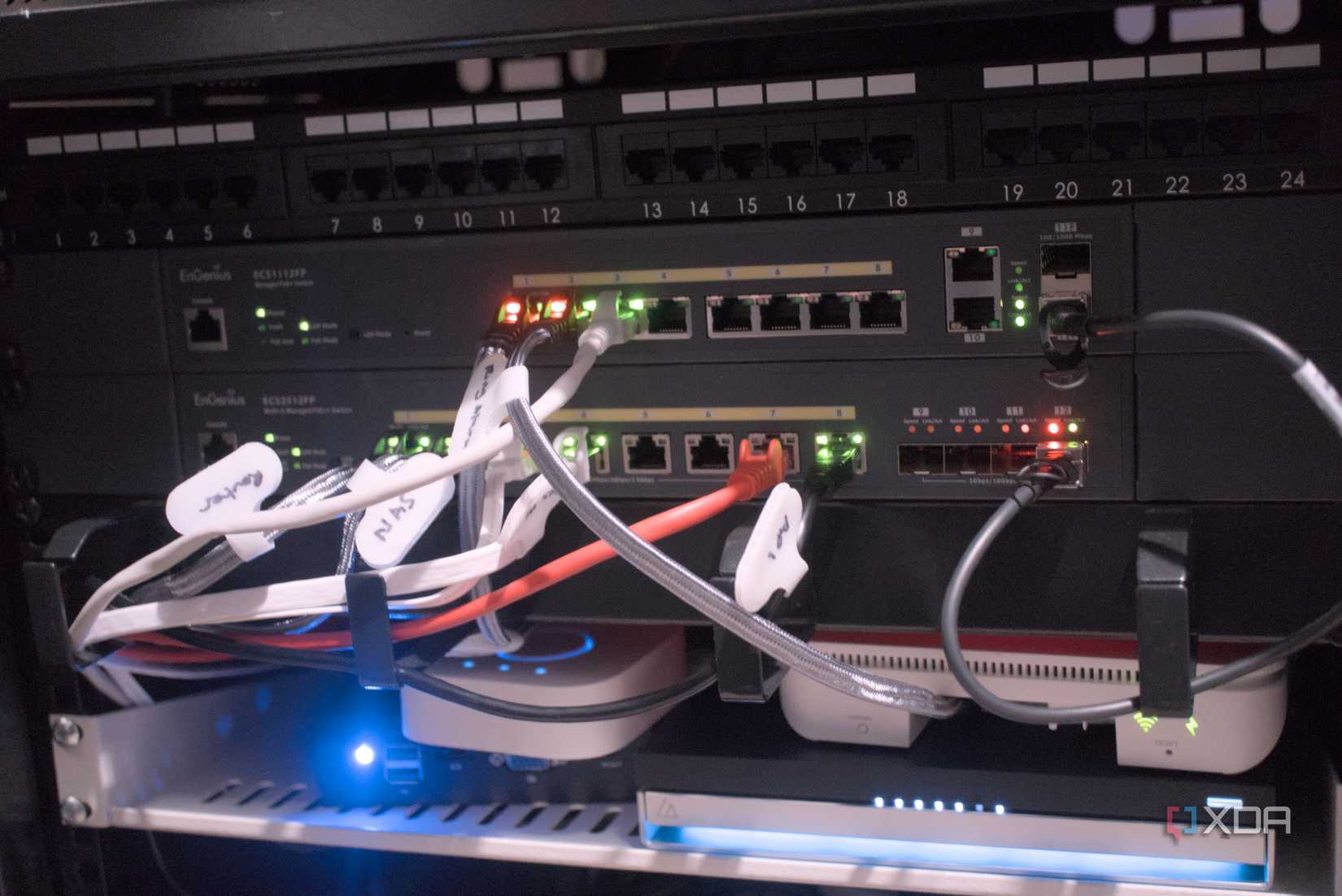
Enterprise hardware is built for longevity and modularity. Unlike a consumer router, which is an "all-in-one" appliance, enterprise networks are disaggregated. You have dedicated hardware for routing, dedicated hardware for switching, and dedicated hardware for wireless access. This modular approach allows for "surgical" upgrades; if you need more ports, you add a switch. If you need better security, you upgrade your firewall appliance.
The Economics of Upcycling: Why Enterprise Gear Is Cheaper
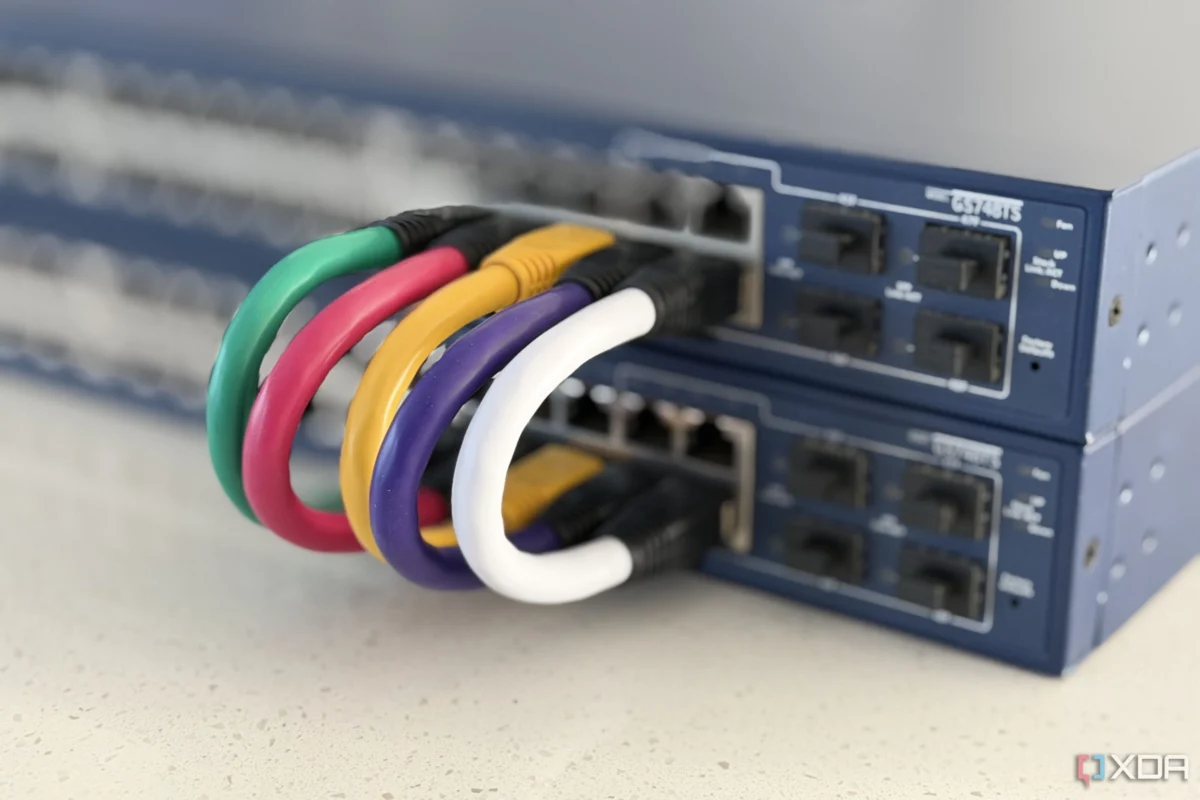
One of the most compelling arguments for adopting enterprise hardware is the cost. A brand-new, enterprise-grade 48-port managed switch with Power-over-Ethernet (PoE) can cost upwards of $2,000. However, when large corporations refresh their server rooms or decommission data centers, this hardware is often auctioned off in bulk.
On secondary markets like eBay or specialized IT liquidators, these units can often be found for a fraction of their original cost—sometimes for as little as $50 to $100. For the price of a mid-range consumer router, you can acquire hardware that offers:
- Massive Port Density: 24 or 48 ports of Gigabit Ethernet, compared to the standard 4 ports found on most home routers.
- High-Speed Uplinks: SFP+ ports capable of 10Gbps fiber connections.
- Advanced Management: Full CLI (Command Line Interface) or robust GUI control over every aspect of packet flow.
Supporting Data: Why "Predictability" Beats "Speed"
In the consumer space, marketing focuses almost exclusively on "Top Speed." You see boxes promising 6Gbps or 10Gbps aggregate throughput. However, in a real-world home environment, speed is rarely the issue—predictability is.
When multiple users stream video, perform backups to a NAS (Network Attached Storage), and conduct Zoom calls simultaneously, the network experiences "jitter." Enterprise switches solve this by implementing protocols like LACP (Link Aggregation Control Protocol). By bonding multiple physical Ethernet connections into a single logical pipe, you can effectively double or triple your bandwidth to high-demand devices like servers or workstations.
Furthermore, the implementation of VLANs (Virtual Local Area Networks) is a game-changer for the modern home. By isolating your smart lightbulbs, security cameras, and voice assistants onto a separate, restricted VLAN, you drastically reduce the "broadcast storm" traffic that slows down your primary devices, while simultaneously increasing your security posture.
Implementation: Building a Professional Home Lab
Transitioning to enterprise-grade networking is not merely about replacing a box; it is about changing how you think about your home infrastructure.
Chronology of an Upgrade
- Assessment: Audit your home. Identify which devices are wired (gaming PC, TV, NAS) and which are wireless.
- The Backbone: Acquire a used, managed enterprise switch. Ensure it supports VLANs and LACP.
- Segregation: Configure your VLANs. Place "untrusted" IoT devices on a guest or isolated network.
- Monitoring: Enable SNMP (Simple Network Management Protocol) or NetFlow on your switch to gain visibility into which devices are consuming your bandwidth.
- Scaling: As your needs grow, you can "stack" switches or add dedicated wireless access points to create a seamless, enterprise-grade mesh without replacing your entire network foundation.
Implications for the Modern User
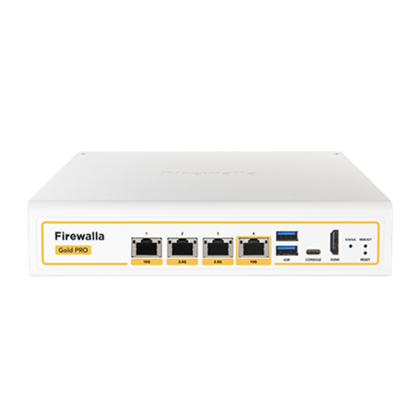
The shift toward "pro-sumer" or "recycled-enterprise" networking has profound implications for privacy and control. With a consumer router, your ISP often has remote access to your device for updates and management. By utilizing your own enterprise-grade firewall (such as OPNsense or pfSense running on dedicated hardware) and managed switches, you effectively reclaim sovereignty over your own local network.
However, it is important to note the barrier to entry. Enterprise hardware is not always user-friendly. It requires a fundamental understanding of networking concepts like IP subnets, VLAN tagging, and routing tables. The "support" you get with consumer hardware is replaced by community forums, white papers, and the "school of hard knocks."
Official Perspectives and Industry Trends
Networking industry leaders have noted a growing trend of "home-labbers" creating demand for used enterprise gear. While manufacturers like Cisco, Juniper, and Aruba continue to target the enterprise sector, they are increasingly aware that the hobbyist market provides a massive pipeline of future network engineers.
"The best way to learn how the internet works is to break your own network," says a veteran network architect. By forcing yourself to configure an enterprise switch, you learn the mechanics of how data packets are routed, how traffic is prioritized, and how to troubleshoot connectivity issues at the OSI layer level. This knowledge is invaluable, transforming the home network from a utility into a sandbox for professional development.
Conclusion: Is It Worth the Effort?
Moving to enterprise-grade networking hardware is not for everyone. If your primary goal is to have a single, easy-to-manage Wi-Fi box that covers your living room, the current consumer market is sufficient. But for those who demand reliability, who want to secure their IoT devices, and who want to manage a home network that actually performs under load, the path is clear.

Buying ex-enterprise hardware is, quite simply, the most efficient way to achieve a professional-grade home infrastructure. It is an investment in learning, stability, and control. While you may have to deal with loud fans, power-hungry rack-mount units, and a steeper learning curve, the result is a network that is as robust as the ones used by the world’s largest corporations—right in your own home.











No comments yet. Be the first to join the conversation!